
The Richard Andrews murder case began with what looked like a routine stolen truck stop.
A young man was pulled over in Moses Lake, Washington, after officers spotted a truck connected to a stolen vehicle report. Inside the vehicle was 27-year-old Isaiah Thomas, a former college football player who appeared disoriented, emotional, and difficult to read. At first, police thought they were dealing with a possible vehicle theft. But within hours, that stop would connect to a missing 75-year-old man, a shallow grave, a family turning against itself, and a crime scene that looked like someone had tried very hard to erase what happened.
The missing man was Richard Andrews.
And the first strange clue was that the truck Isaiah was driving may not have been stolen at all.
Richard Andrews Murder Case Begins With a Truck Stop
Officers first encountered Isaiah after a gray Chevy Silverado was reported stolen. The situation seemed tense from the beginning because officers noticed ammunition in the front seat, raising concern that Isaiah might be armed. When they asked him to step out, he admitted he had a pocket knife. He also made a comment about wanting a lawyer, which immediately stood out to officers.
Then the stop took an unexpected turn.
Officer Alvarado recognized Isaiah from high school. He remembered him as a standout athlete, someone who had gone on to play football at a higher level. But the person standing in front of him now seemed completely different.
When officers called Isaiah’s mother, Cassie Thomas, she explained that the truck belonged to Richard Andrews, Isaiah’s grandfather. According to her, Richard may have allowed Isaiah to use it. That meant police no longer had clear evidence of a stolen vehicle.
So they let Isaiah go.
But Officer Alvarado still felt something was wrong. He even followed Isaiah afterward and tried to speak to him privately, telling him that if he needed help, he could call. Isaiah appeared like he wanted to say something, but he never did.
That hesitation would matter later.
Richard Andrews Is Reported Missing
Soon after the truck stop, Richard’s daughter Kelly called police to report that her father was missing. Richard Andrews was 75 years old and lived in Moses Lake. His family said they had not seen him for roughly a day and a half. His phone was still ringing, his wallet was still at the house, and his family could not confirm that he had gone to his property as some had suggested.
When officers arrived at Richard’s home, they found several family members already gathered.
That is when Isaiah appeared again.
He told officers he had last seen his grandfather talking to someone outside. He said Richard was near a vehicle, speaking through a window, and that he later looked down and Richard was gone. But his answers were vague. He could not give a clear time. He seemed casual compared to the rest of the family.
That contrast immediately caught Sergeant Rodriguez’s attention.
Some family members were clearly worried.
Isaiah seemed defensive.
Cassie, his mother, seemed unusually calm.
And then one family member mentioned Richard’s shop.
Family Members Find Something Near the Shop
Richard’s shop was a few miles away, and family members believed he might be there if he was not at home. When a deputy followed family members to the shop, they noticed something unusual in the yard.

There were signs that a truck may have backed up near the grass.
There appeared to be disturbed ground.
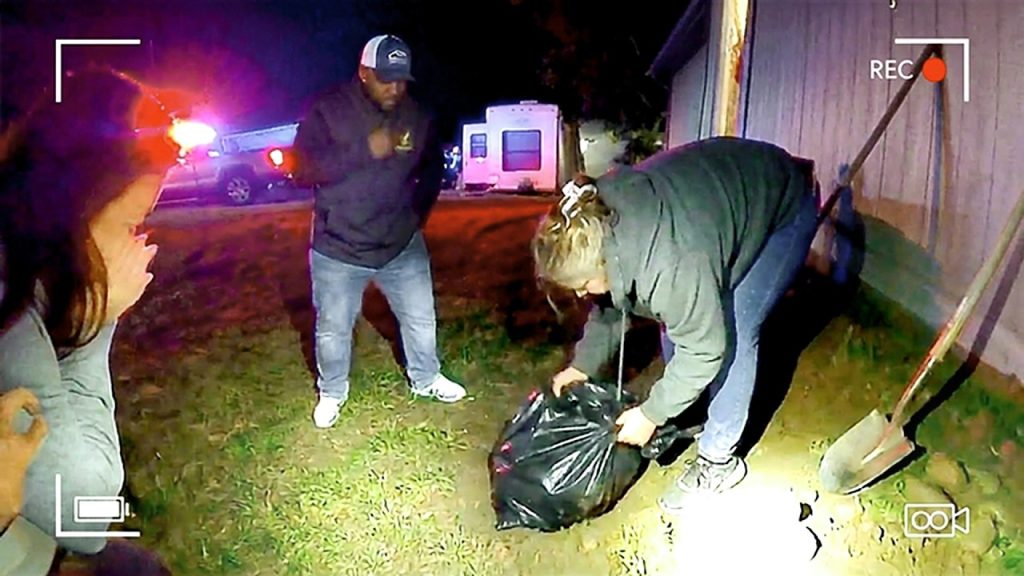
Family members started digging.
Then everything changed.
Buried in a shallow grave outside his own shop was the body of Richard Andrews. His daughter Kim recognized him immediately by part of his leg and the jeans he always wore. What had started as a missing person report was now a homicide investigation.
The scene quickly became chaotic.
Family members were crying, yelling, and accusing Isaiah almost immediately. Kim said she knew this would happen. She claimed her nephew had done it and told officers there might be a rifle back at the house.
But at that moment, police did not have enough evidence to say who killed Richard.
They only knew one thing.
This was now a crime scene.
Cassie Told Police to Arrest Her Own Son
One of the most disturbing parts of the Richard Andrews murder investigation came before the body was even officially processed.
Cassie, Isaiah’s mother, had already made a shocking statement to police. She told the sergeant to get out of his car, get her son, and put him in cuffs. That sudden shift confused officers because moments earlier she had not seemed especially alarmed. Now she was insisting that her own son needed to be arrested.
That raised a serious question.
Did Cassie know something?
Or was it a mother’s instinct after seeing her son’s behavior?
Later, detectives would ask her exactly that. Cassie explained that Isaiah’s reaction did not match the rest of the family. Everyone else was worried, but Isaiah seemed detached and defensive. To her, that felt wrong.
She said she just knew.
But knowing and proving are not the same thing.
And detectives still needed evidence.
The Crime Scene Looked Carefully Covered Up
As officers examined the area around Richard’s shop, they noticed signs of a possible cover-up.
Burnt debris was scattered in the grass. A section of lawn appeared to have been cut out, replaced, and watered, as if someone had tried to make the ground look untouched. That detail suggested the person responsible may have taken time to hide the grave.
Investigators were not yet sure whether Richard was killed at the shop or only buried there. So they cleared the shop and searched for signs of a struggle.
Inside, they noticed something strange.
A shower appeared to have been recently used.
That raised the possibility that whoever was involved may have been there not long before officers arrived. But the shop itself did not show obvious signs that Richard had been killed inside.
So detectives shifted focus back to Richard’s house.
That search would become critical.
Detectives Find Bleach, Blood, and a Knife
When detectives entered Richard’s home with a search warrant, the smell of bleach stood out immediately. Surfaces had been wiped down, and the house showed signs of a cleanup. But whoever cleaned the scene did not erase everything.
Detectives found blood on the back door handle.
Then they found a knife hidden in the living room, still in its sheath, with visible red stains.
Those details changed the case.
Now investigators had evidence suggesting Richard’s home may have been connected to the killing. The shallow grave explained where the body was found. The house may have explained where the violence happened.
The Richard Andrews murder case was no longer just about family suspicion.
It was becoming a forensic case.
Isaiah’s Shoes Become a Key Detail
After Isaiah was taken to the Grant County Jail on probable cause, officers returned to collect his clothing. When they examined his shoes, they noticed dirt and possible dried blood.
That detail did not establish everything by itself.
But it mattered.
Richard had been found buried outside the shop. Tire tracks and disturbed ground had been noticed near the scene. If Isaiah’s shoes carried material connected to the burial area or blood evidence, that could help place him closer to the crime than his statements suggested.
Still, investigators were careful.
The case was complicated because Richard’s truck was reportedly used by several family members. A tarp connected to another relative had been found around the body. Family members were making accusations against one another. Rumors were spreading. And detectives still had to separate emotion from evidence.
Family Interviews Make the Case More Complicated
As detectives interviewed Richard’s relatives, the investigation became even more tangled.
Greg, Richard’s son-in-law, told investigators that a brown and gray tarp from his property was missing. That mattered because Richard’s body had reportedly been wrapped in a similar tarp. Greg’s statement created two possibilities: either he had accidentally incriminated himself, or someone used his tarp to make him look involved.
Other family members focused heavily on Isaiah. They described him as paranoid, unpredictable, and sometimes volatile. His father, Anthony, told detectives he believed Isaiah’s behavior may have been affected by heavy marijuana use and repeated head trauma from football. Kim also described past episodes involving weapons and said she feared Isaiah could hurt someone again if released.
Those interviews painted a troubling picture.
But detectives still needed physical proof.
Autopsy Results Change the Investigation
A week later, the autopsy results came in.

According to the script, Richard Andrews died at his home from a severe knife wound to the neck that caused significant blood loss. He also had signs of blunt force trauma to the head and bruising around both eyes.
That finding was crucial.
It supported the theory that Richard had not simply been buried at the shop. He may have been attacked at the house first, then moved and concealed later.
Now the pieces began to line up:
Richard was missing.
His wallet and phone remained behind.
His body was found buried outside his shop.
The ground appeared manipulated.
Burnt debris suggested destroyed evidence.
The house smelled like bleach.
Blood was found on a door handle.
A stained knife was recovered.
Isaiah had been in Richard’s truck and was described by family as behaving strangely.
The case still had unanswered questions, but the direction of the investigation had become much clearer.
Why the Richard Andrews Murder Case Hit So Hard
The Richard Andrews murder case is disturbing because it was not discovered by strangers.
It was discovered by his own family.
They were the ones searching.
They were the ones digging.
They were the ones who found him.
Then, almost immediately, they began accusing one another.
That is what makes this case different from many homicide investigations. Police were not just managing a crime scene. They were managing a family collapse in real time.
A mother suspected her son.
A father confronted his firstborn.
An aunt accused her nephew.
A son-in-law feared he may have been framed.
And detectives had to treat every emotional statement carefully because grief can reveal truth, but it can also distort it.
The Biggest Question Is Who Knew What
The most haunting part of this case is not only that Richard was killed.
It is how many people seemed to sense something was wrong before investigators fully understood it.
Officer Alvarado felt Isaiah was off during the truck stop.
Cassie told police to arrest her son before the body was fully processed.
Anthony seemed to fear Isaiah’s behavior before the discovery.
Kim immediately blamed Isaiah after finding Richard.
Greg noticed the tarp and tire tracks.
Everyone had a piece of the story.
But nobody had the whole truth.
That is why the Richard Andrews murder investigation feels so unsettling. The warning signs were there, but they were scattered across different people, different places, and different moments. By the time police connected them, Richard was already gone.
The Richard Andrews murder case began with a mistaken stolen truck stop and a former athlete sitting behind the wheel of his grandfather’s vehicle.
It ended with a 75-year-old man found buried outside his own shop, a family consumed by suspicion, and detectives following a trail of bleach, blood, a stained knife, disturbed ground, and unanswered questions.
Richard Andrews was first reported missing.
Then he was found in a shallow grave.
And once investigators saw the cover-up, the case became far darker than anyone expected.
Do you think the family’s instincts helped expose the Richard Andrews murder, or did their accusations make the investigation harder for police to untangle?
For related investigative coverage and police traffic stop analysis, explore Navyago legal and enforcement reporting. Official case summaries and public safety records are cataloged via the Department of Justice archives.
Frequently Asked Questions
How did the Richard Andrews murder case begin?
The investigation began when officers in Moses Lake, Washington, stopped a truck linked to a missing 75-year-old man, Richard Andrews, and questioned 27-year-old Isaiah Thomas.
Where did investigators find Richard Andrews?
Family members searching the property noticed disturbed earth and cleaning supplies near Richard Andrews’s workshop, leading detectives to a shallow grave outside the building.
What physical evidence did detectives recover at the property?
According to investigative records, deputies recovered blood evidence, bleach bottles, a knife, and footwear impressions that connected the workshop cleanup to the homicide investigation.