
Dashcam Arrest Lawsuit Video: 7 Source Facts
Dashcam arrest lawsuit video coverage from PoliceActivity centers on a Eugene, Oregon trespass call, an arrest that escalated after handcuffing, and a later civil lawsuit seeking up to $1 million. The key point for readers is narrow: the source describes allegations, policy findings, charges, and video context, but it does not by itself decide legal liability.
What the dashcam arrest lawsuit video says happened
The source video is a PoliceActivity upload titled Dashcam Captures Arrest That Sparked Million Dollar Lawsuit. According to the video page description, Eugene police responded on January 11, 2025, to a trespassing call on the 3000 block of River Road after the reporting party for a vacant property scheduled for demolition said a man was removing scrap boards and metal.
The description identifies the man as 41-year-old Jehoshaphat Commandest. It says the reporting party had previously allowed a neighbor to clear materials, and that neighbor had told Commandest he could collect scrap. PoliceActivity’s source note says the property-side report nevertheless described Commandest as being on the land without authorization.
That distinction matters because it frames the encounter as more than a simple headline about a lawsuit. This dashcam arrest lawsuit video source presents a disagreement over access to scrap material, an on-scene police response, an arrest, later court filings, and a department policy review. Each layer should be read separately.
Why the trespass call matters to the timeline
According to the PoliceActivity description, Commandest was near a pickup truck on adjacent property when Officers Stephen Lahm and Lindsey Collier arrived. The source says he told officers he believed the property had been abandoned and said he was willing to return the materials if the reporting party wanted them back.
Those details do not end the legal analysis, but they are important for readers trying to understand why a civil complaint could focus on what happened after the first contact. In this dashcam arrest lawsuit video source account, the disputed scrap removal brought officers to the scene, while the lawsuit focuses on the conduct and force described during the arrest process.
The dashcam arrest lawsuit video therefore has two timelines. The first timeline is the trespass call and the property-side report. The second timeline is the handcuffing, escort toward a patrol vehicle, alleged strikes, reported Taser use, charges, complaint, policy findings, resignation, and later civil lawsuit.
What the lawsuit and later review are reported to claim
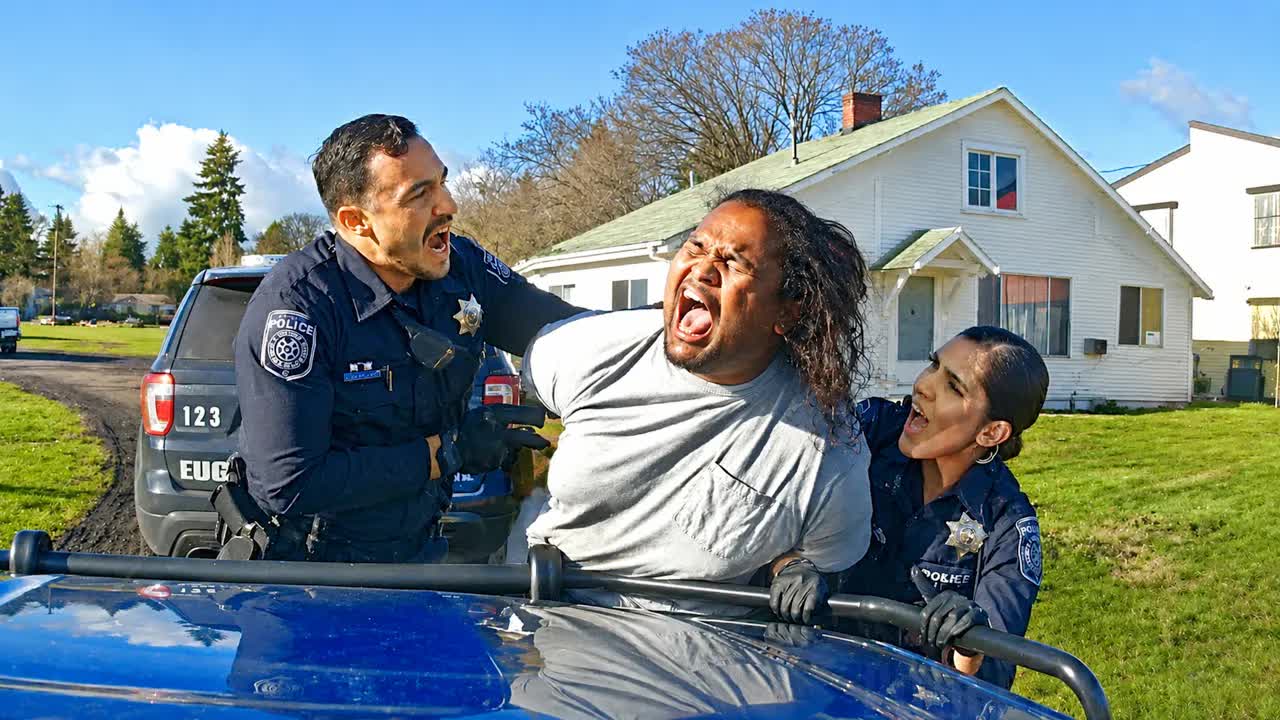
PoliceActivity states that, according to later lawsuit allegations and dashcam footage, Commandest cooperated with officers, was handcuffed without resistance, and was being escorted toward a patrol vehicle before the encounter escalated. The article uses that phrasing deliberately: these are source-attributed claims, not a court finding quoted here as a final judgment.
The source description says court filings claim that Officer Lahm repeatedly struck Commandest in the face, briefly grabbed him by the throat, and used a Taser multiple times after Commandest turned his body during the escort. Because the description frames those points as claims from court filings, readers should treat them as allegations in a civil case unless a final ruling says otherwise.
The same source says Commandest was taken to Lane County Jail and charged with second-degree criminal trespass and resisting arrest. It further says the resisting charge was later dismissed and that Commandest pleaded guilty to trespass in December 2025. Those criminal-case details are separate from the civil lawsuit over the reported use of force, which is why this dashcam arrest lawsuit video recap keeps the two tracks apart.
PoliceActivity’s description also says Commandest filed a formal complaint days after the incident and that the Eugene Police Auditor’s office sustained findings that Lahm’s force violated department policy. It says Lahm resigned from the department on November 21, 2025, and remained under a state professional-standards review, while Officer Collier continued to serve.
In July 2026, according to the source page, Commandest sued the city, the police department, and both officers for excessive force, negligence, and battery. The description says the lawsuit seeks up to $1 million and alleges injuries including a traumatic brain injury, ruptured blood vessels in one eye, and significant facial bruising.
What readers should not assume from the dashcam arrest lawsuit video alone
A short public-safety video can make an incident feel easy to judge, but the careful reading is narrower. The video and its description can document what PoliceActivity chose to publish, what the source says court filings allege, and what the source reports about later administrative findings. They do not replace the full civil docket, every exhibit, every response from defendants, or a final court ruling.
Readers also should not merge the criminal and civil parts of the story. A trespass plea, a dismissed resisting charge, a department policy finding, and a civil excessive-force claim answer different questions. One may affect public understanding of the case, but each belongs to its own process.
That is why Navyago’s recap keeps the language source-based. It says “according to the source,” “the lawsuit alleges,” and “the description says” because public reporting on police conduct has to separate visible footage, allegations, official review, and final legal outcomes.
How to read the allegations carefully
The strongest way to read this source is to keep the verbs attached to their evidence. “The video shows” is different from “the source description says.” “The lawsuit alleges” is different from “a court found.” “The auditor’s office sustained findings,” as reported in the source description, is different from a jury verdict or settlement agreement. Those distinctions can sound technical, but they are what prevent a public-interest article from turning a source package into an unsupported conclusion.
The source description gives readers a detailed sequence, but it still summarizes other records. When it mentions court filings, it is pointing to a legal document rather than reproducing the full docket. When it mentions a formal complaint, it is pointing to an administrative review process rather than quoting every interview or finding. When it mentions injuries alleged in the lawsuit, it is describing claims from the civil case rather than a medical finding independently reviewed in this article.
That does not make the source unimportant. It makes the source useful in a specific way. PoliceActivity collected a public-facing video package and description that names the incident, location, reported criminal charges, later complaint, policy finding, resignation, state standards review, and civil lawsuit. Navyago’s dashcam arrest lawsuit video coverage organizes those points so a reader can understand the story without losing the legal boundaries.
A careful reader also should avoid assuming that every person in the article has had a full chance to respond inside the video page itself. Civil litigation normally includes complaint allegations, answers, motions, discovery, possible settlement talks, and sometimes trial findings. The public source here is enough for a source-based explainer, but it is not the whole litigation record.
Seven source facts to keep straight
The seven points below summarize the dashcam arrest lawsuit video source package without converting allegations into findings.
1. The call began as a trespassing report. PoliceActivity says officers responded after a vacant-property reporting party said a man was removing scrap boards and metal from a property scheduled for demolition.
2. The source describes a disputed permission issue. The description says a neighbor had been invited to clear materials and had told Commandest he could collect scrap, while the property-side report said Commandest lacked authorization.
3. The source says the man was already handcuffed before the alleged force escalated. PoliceActivity frames this as a point from the lawsuit and dashcam footage, not as Navyago’s independent legal conclusion.
4. The criminal charges and civil claims are separate. The source says Commandest faced trespass and resisting charges, that the resisting charge was dismissed, and that he later pleaded guilty to trespass.
5. The lawsuit is reported to seek up to $1 million. The source says the July 2026 lawsuit names the city, the police department, and both officers, alleging excessive force, negligence, and battery.
6. A policy review is reported in the source description. PoliceActivity says the Eugene Police Auditor’s office sustained findings that Lahm’s force violated department policy.
7. A lawsuit is not the same as a final verdict. The civil allegations, reported injuries, and requested damages still need to be understood as claims unless and until the legal process produces a final outcome.
What the case may mean for public-safety review
For readers, the useful angle is not whether one short clip can settle every factual dispute. It is how a local incident can move through several accountability layers: the first 911 or property call, the officer response, the arrest report, jail booking, criminal charges, a public complaint, an auditor finding, employment consequences, professional-standards review, and a later civil lawsuit.
That layered path is also why source-first articles should avoid emotional shortcuts. A dashcam arrest lawsuit video can involve injuries, public trust, officer safety, property rights, and due-process concerns at the same time. Any one of those pieces can be overclaimed if the article treats the video as the whole record.
As with Navyago’s LAPD stolen pickup shooting video recap, the practical reader question is what can be verified from the source package and what remains open. Here, the source package supports a concise timeline and a list of reported claims. It does not support declaring civil liability or assigning motive.
The public-safety lesson is therefore procedural. When an arrest becomes a lawsuit, the details that matter often include the starting call, the legal basis for detention, the person’s conduct after police arrive, whether restraints were already in place, how force was documented, whether supervisors or auditors reviewed the incident, and what the civil complaint asks a court to decide.
For agencies, those questions often become training, supervision, and documentation questions. For residents, they become transparency questions: what can the public see, what records are cited, who reviewed the conduct, and what process remains open. For courts, they can become narrower legal questions about reasonableness, injury, causation, damages, qualified immunity, local policy, or settlement value. The source video does not answer all of those questions, but it explains why the incident drew public attention.
For search readers who arrive from the phrase dashcam arrest lawsuit video, the simplest takeaway is this: start with the verified source package, then separate the incident timeline from the legal timeline. That approach keeps the article useful even if later court filings, statements, or public records add more detail after the PoliceActivity upload.
Which records would matter next
If a reader wants to follow this dashcam arrest lawsuit video beyond the source video, the most useful next records would be the civil complaint, any answer filed by defendants, court orders, settlement notices, and later docket entries. Those records would clarify how each side frames the facts and whether any claim is dismissed, narrowed, settled, or decided.
Administrative records would answer a different set of questions. A public complaint file, auditor summary, discipline record, resignation documentation, or state professional-standards update could explain what the department or oversight system concluded about policy. Those records are not the same as damages findings, but they matter for public accountability.
Criminal-case records would answer still another set of questions. They would show the exact charging language, dismissal basis for the resisting count, plea date, plea terms, sentence if any, and whether the trespass case is fully closed. Again, that is separate from the civil lawsuit, even though all parts grew out of the same January 2025 incident.
Until those records are reviewed directly, the source-based article should remain narrow. It can say what PoliceActivity reported, what the lawsuit is described as alleging, what charges the source says were filed or dismissed, and what policy finding the source says was sustained. It should not say that the lawsuit has already been won, that the city has accepted liability, or that any officer had a specific motive unless a reliable later record says so.
Questions readers can ask before sharing
Before sharing a dashcam arrest lawsuit video or any short law-enforcement clip, readers can ask a few practical questions. What is the original source? Does the post include the date, location, people named in the record, and the reason officers were called? Does the article separate what the footage appears to show from what a lawsuit alleges and from what an agency review reportedly found?
Another useful question is whether the headline is narrower than the evidence. In this case, a narrow headline says the video is tied to a lawsuit and identifies seven source facts. A broader headline that declares who was legally right or wrong would go beyond the source package reviewed here.
Readers should also watch for timeline compression. Public clips often combine months of later developments into a few paragraphs: an incident date, a complaint, a review, a resignation, a standards process, and a civil filing. Those facts are related, but they did not happen at the same time and they should not be treated as if one automatically establishes the next.
Finally, readers should consider whether the article gives a path back to the source. This Navyago page includes the visible YouTube embed, the source URL, and the source thumbnail from the same video ID so that readers and citation systems can trace the article back to the exact PoliceActivity upload rather than a vague summary.
Source Video
Sources
Sources: Primary source: PoliceActivity, Dashcam Captures Arrest That Sparked Million Dollar Lawsuit, uploaded August 3, 2026. This dashcam arrest lawsuit video article uses the video page description, source thumbnail, and available caption/source package as the factual basis. Claims about the lawsuit, injuries, policy findings, and charges are attributed to the source description and should be read as reported or alleged unless a court or agency record establishes a final outcome.
Frequently Asked Questions
What is the dashcam arrest lawsuit video about?
The dashcam arrest lawsuit video is about a Eugene, Oregon trespass response that PoliceActivity says later became a civil lawsuit. The source describes a scrap-material dispute, an arrest, alleged force after handcuffing, reported policy findings, and a lawsuit seeking up to $1 million.
Does the video prove the lawsuit allegations?
No. The video and description are important source material, but a public video alone does not decide a civil lawsuit. The article treats force, injury, negligence, and battery points as allegations or reported findings unless a final legal decision establishes them.
Why does the dismissed resisting charge matter?
According to the source description, the resisting charge was dismissed while Commandest later pleaded guilty to trespass. That distinction matters because the criminal case outcome and the civil excessive-force allegations answer different legal questions.
Why is the source thumbnail used in the article?
Navyago’s YouTube source workflow uses the original source-video thumbnail or an exact uploaded copy when a video is the approved source. That keeps the featured image, body image, source note, and embedded video tied to the same video ID.