
LAPD stolen pickup shooting coverage centers on a June 9, 2026 Los Angeles incident in which PoliceActivity says officers approached a gray pickup, saw a handgun, followed a vehicle pursuit, and later exchanged gunfire after a crash and foot chase. The source reports one officer was hurt but protected by a ballistic vest.
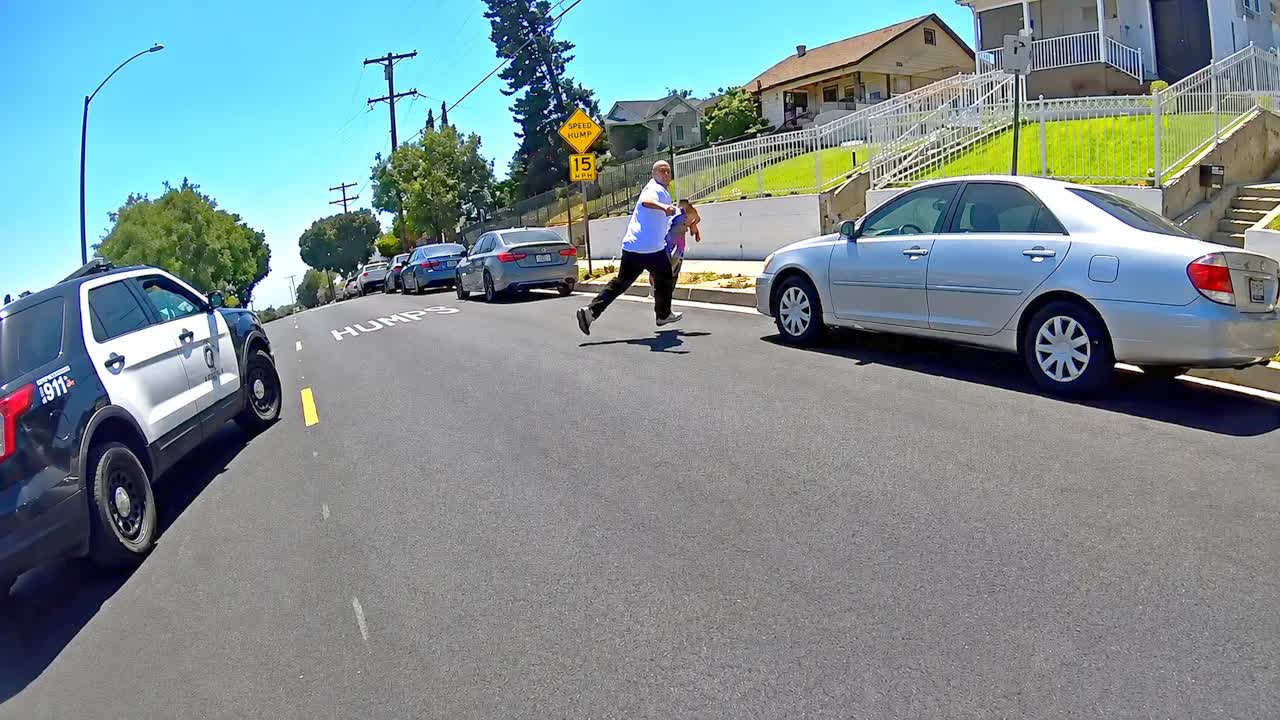
This LAPD stolen pickup shooting article is a source-based explainer, not a court finding or an internal affairs decision. It relies on the PoliceActivity video titled “Suspect Opens Fire on LAPD Cops After Crashing Stolen Pickup Truck” and its accompanying description. Where the source states charges, injuries, evidence recovery, or police observations, the wording below keeps those facts attributed.
Table of Contents
What The LAPD Stolen Pickup Shooting Source Video Says Happened
According to the PoliceActivity description, the LAPD stolen pickup shooting began when Los Angeles Police Department officers assigned to the Newton Patrol Division were in the area of Washington Boulevard and Alameda Street at around 1:47 p.m. on June 9, 2026. The source says they observed a gray pickup truck displaying a temporary paper license plate and also saw a pedestrian standing in the roadway near the driver side of the vehicle.
The description states that officers approached to investigate and observed the driver, identified in the source as 35-year-old Marco Flores, in possession of a handgun. PoliceActivity says officers attempted to detain him, but he fled in the vehicle at a high rate of speed. Officers then initiated a pursuit that continued into the Hollenbeck Area. That is the first key LAPD stolen pickup shooting sequence readers should keep separate from later allegations.
The pursuit ended after the pickup crashed into a fence, according to the source. The description says Flores left the vehicle and ran. During the foot pursuit that followed, the source states that he produced a handgun and fired at officers. That gunfire led to an officer-involved shooting. The source reports that one officer was struck in the chest, but the round did not penetrate the officer’s ballistic vest.
The source also says Flores was struck by gunfire, fell, and dropped the handgun. Officers took him into custody, secured the firearm, and requested medical aid. The Los Angeles Fire Department transported him to a hospital, where the source says he was treated for multiple gunshot wounds and listed in critical but stable condition. The source states that he was expected to survive.
LAPD Stolen Pickup Shooting Timeline From The First Approach To The Foot Chase
The first stage of the LAPD stolen pickup shooting timeline was an observation, not yet a completed court finding. The source places officers near Washington Boulevard and Alameda Street and says they saw a gray pickup with a temporary paper license plate. A pedestrian was standing near the driver side. Those details explain why officers approached, but they do not by themselves prove every later allegation.
The second stage began when officers reportedly saw a handgun. The source says officers attempted to detain the driver after observing him with the weapon. It then describes the driver fleeing at high speed. The LAPD stolen pickup shooting pursuit moved from the Newton area into the Hollenbeck Area, which matters because the event quickly changed from a street contact into a broader public-safety risk.
The third stage was the crash. PoliceActivity says the pickup struck a fence. At that point, the source says the driver left the vehicle and ran. Many LAPD stolen pickup shooting details become harder for readers to interpret at this point because dashcam, bodycam, radio traffic, and physical movement may not all line up neatly in one camera angle. This is why the article avoids claiming more than the public source describes.
The fourth stage was the reported gunfire during the foot pursuit. According to the source, Flores produced a handgun and fired at pursuing officers. Officers returned fire in an officer-involved shooting. The source says one officer was struck in the chest but was protected by a ballistic vest, and no additional officers or community members were injured. That reported vest strike is central to the LAPD stolen pickup shooting record.
The fifth stage was custody and medical response. The description says Flores fell, dropped the handgun, and was taken into custody after officers secured the weapon. Los Angeles Fire Department personnel responded and transported him for treatment. That final stage is important because it shows the source sequence did not end with the shooting itself; evidence control, medical aid, and later booking decisions were also part of the official process described by the source.
7 Source Facts Readers Should Separate
A short video title can make the case feel simple, but the LAPD stolen pickup shooting article needs separated facts. These seven points come from the PoliceActivity source description and should not be merged into unsupported conclusions.
- The initial contact began with a vehicle observation. The source says officers saw a gray pickup truck with a temporary paper license plate near Washington Boulevard and Alameda Street, which started the LAPD stolen pickup shooting source timeline.
- The source says officers observed a handgun before the pursuit. That is the source basis for the attempted detention described in the video page.
- The vehicle pursuit reportedly continued into the Hollenbeck Area. The article should describe that as reported by the source, not as a full LAPD stolen pickup shooting pursuit-policy review.
- The pickup crash changed the event into a foot pursuit. PoliceActivity says the pickup hit a fence and the driver ran from the vehicle.
- The source says gunfire came from the fleeing person during the foot chase. The description states that Flores produced a handgun and fired at pursuing officers.
- One officer was struck but the vest stopped the round. The source reports a chest strike, no vest penetration, non-life-threatening injuries, hospital treatment, and later release.
- The firearm and vehicle status are source-reported evidence points. The description says the firearm was recovered and booked as evidence and that the pickup was determined to be a reported stolen vehicle.
Keeping those LAPD stolen pickup shooting points separate prevents the article from turning a public source video into a verdict. A reported stolen vehicle is not the same as a full court record. A charge is not a conviction. A video description can summarize what police say and what the release shows, but a final legal conclusion requires records and review beyond the YouTube page.
Why The Officer Injury Matters In The Source Record
The officer injury is one of the most important LAPD stolen pickup shooting details in the source description because it changes how readers should understand the risk described by the release. PoliceActivity says one officer was hit in the chest by gunfire during the foot pursuit. The round reportedly did not penetrate the ballistic vest, and the officer’s injuries were described as non-life-threatening.
That detail should be handled with care. It supports the source’s account that the event involved live gunfire directed at officers, but it still does not replace the full investigative record. A responsible public-interest explainer can say what the source reports, why the reported vest strike matters, and why the officer was transported for treatment. It should not use that fact to declare every tactical decision lawful or unlawful.
The source also reports that no additional officers or community members were injured. That is relevant because the incident reportedly moved through a public area, involved a vehicle pursuit, included a crash, and then became a foot pursuit. Public safety analysis often asks who was nearby, whether uninvolved people were exposed to risk, and how officers balanced apprehension with containment. The source description answers some of those questions but not all of them.
For this LAPD stolen pickup shooting explainer, Navyago uses the same source-first reading method applied in other police pursuit coverage, including its explainer on police pursuit PIT maneuver risks. The video matters, but the useful reader question is not only what looks dramatic. It is what the source record says, what evidence is identified, and what remains open.
What The Charges Do And Do Not Prove
The PoliceActivity description says Flores was charged with four felony counts of attempted murder, six felony counts of assault with a semiautomatic firearm upon a peace officer, three felony counts of assault with a semiautomatic firearm, one felony count of fleeing a pursuing peace officer’s motor vehicle while driving recklessly, and one felony count of possession of firearm by a felon with a prior.
Those are serious LAPD stolen pickup shooting charges as described by the source. The source also states that if convicted as charged, Flores faces multiple life sentences in state prison. That statement is conditional. It does not mean the article should call him guilty, state a motive, or predict an outcome. A charge describes what prosecutors allege; a conviction requires legal process.
Legal-safe wording is especially important because the source names a living person, describes officer injury, and refers to pending felony counts in the LAPD stolen pickup shooting record. This article therefore uses phrases such as “the source says,” “according to the description,” “charged with,” and “if convicted as charged.” Those phrases may feel repetitive, but they protect readers from confusing a source summary with an adjudicated record.
The description also says Flores was in critical but stable condition and was expected to survive. That medical status belongs in the source-based record, but it should not be expanded into unsupported medical speculation. The article does not infer intent, impairment, mental state, or motive from the source video.
What The Public Video Cannot Answer
The LAPD stolen pickup shooting public video gives viewers a source release, but it is not the entire case file. It does not include every dispatch entry, every officer report, all scene photographs, medical records, complete ballistic analysis, prosecutor filings, defense filings, or a final court result. It also does not give readers the full internal review that may examine policy compliance, supervision, pursuit decisions, and use-of-force standards.
Camera footage can also be limited by angle, movement, audio quality, lighting, compression, and editing. A dashcam may show the vehicle path but not every hand movement. A bodycam may show immediate officer perspective but not the complete scene. A chaptered YouTube release can help the public follow the order of events while still leaving important questions for official records.
That limitation does not make the LAPD stolen pickup shooting source useless. Public releases can be valuable because they give readers a timeline, identified evidence, visible sequence, and official claims to track. But a source video is best read alongside later public records if those records become available. Until then, the safest article is narrow: it explains what the source says happened and what cannot yet be concluded from the source alone.
Public-Safety Lessons From The Los Angeles Pursuit
The first LAPD stolen pickup shooting lesson is that a street contact can escalate quickly when a weapon is reportedly seen. According to the source, officers approached a vehicle and then observed a handgun. That moment changed the risk calculation. Readers should avoid treating the incident as a simple traffic stop, but they should also avoid treating a short description as the entire justification record.
The second lesson is that crashes can create new risks after a pursuit seems to end. A vehicle that hits a fence may stop moving, but the people inside can still run, hide, discard evidence, or create additional danger. The source says the driver fled on foot and produced a handgun during that foot pursuit. That is the point where vehicle-pursuit analysis and officer-involved shooting analysis begin to overlap.
The third lesson is that protective equipment can change injury outcome without eliminating danger. The reported vest strike matters because it may have prevented a more serious injury. At the same time, the article should not turn equipment performance into a broader conclusion about policy, tactics, or criminal liability. Those are separate review questions.
The fourth LAPD stolen pickup shooting lesson is reader discipline. Police videos often invite instant certainty from social media. A better public-interest approach is to identify the source, separate allegations from outcomes, note what evidence is reported, and wait for records that can confirm or update the first public account. That is the standard this Navyago article applies.
FAQ About The LAPD Stolen Pickup Shooting
What happened in the LAPD stolen pickup shooting video?
According to PoliceActivity, the LAPD stolen pickup shooting video shows officers approaching a gray pickup in Los Angeles, seeing a handgun, pursuing the vehicle after the driver fled, and later exchanging gunfire after a crash and foot chase.
When did the incident happen?
The source description says the incident happened on June 9, 2026, at around 1:47 p.m. in Los Angeles, California.
Was an officer injured?
Yes. The source says one officer was struck in the chest by gunfire, but the round did not penetrate the ballistic vest. The officer was treated for non-life-threatening injuries and later released.
What charges are listed in the source description?
The source says Flores was charged with multiple felony counts, including attempted murder, assault with a semiautomatic firearm upon a peace officer, reckless fleeing, and firearm possession by a felon with a prior. Those are charges, not convictions.
Does the video prove the final legal outcome?
No. The video and description are source material. A final legal outcome depends on court records, evidence review, and any later official findings.
Source Video
Source Note
Sources: Primary source video: PoliceActivity, “Suspect Opens Fire on LAPD Cops After Crashing Stolen Pickup Truck,” uploaded July 17, 2026, https://www.youtube.com/watch?v=S-BYARHOzRk. The source description places the LAPD stolen pickup shooting incident in Los Angeles on June 9, 2026, identifies the driver as Marco Flores, and states that the pickup was determined to be a reported stolen vehicle. This article was prepared on August 3, 2026 and does not make a final finding about guilt, civil liability, officer policy compliance, motive, or investigative outcome.