
Gabriel Ramirez manhunt coverage centers on the February 23-24, 2026 Missouri search that followed the fatal shooting of a Christian County deputy during a traffic stop. Public reporting and a later Midwest Safety recap say the search ended the next day after officers located suspect Richard Bird. This explainer separates source-backed facts from claims that still need attribution or fuller official records.
Navyago reviewed the exact Midwest Safety upload, its automatic English captions, the source thumbnail, and public reporting from Governor Mike Kehoe’s office, KCUR, and KY3 accessed on August 24, 2026. Those sources align on the broad sequence: Deputy Gabriel Ramirez was shot on February 23, 2026; a regional overnight manhunt followed; Deputy Michael Hislope was also killed during the apprehension effort on February 24. Even so, the available public record is still narrower than a full case file, so this article keeps motive, operational detail, and final legal conclusions out of bounds.
Gabriel Ramirez Manhunt: What the Video and Public Sources Say
The Midwest Safety upload says the Gabriel Ramirez manhunt began after a traffic stop south of Highlandville, Missouri turned into a fatal shooting on February 23, 2026. KCUR reported that Christian County Sheriff Brad Cole identified the suspect as Richard Bird and said the search stretched through the night into the next day. Governor Mike Kehoe’s office later ordered flags flown at half-staff for Deputies Gabriel Ramirez and Michael Hislope, confirming both names in an official memorial context.
According to KCUR, Bird was located on February 24, 2026 near a mobile home park south of Branson, where the encounter ended with Bird and Deputy Hislope dead. KY3 reported that two additional officers were injured during that capture attempt. Those details are supported by named public sources, but this article still avoids claiming a full operational timeline that the public record does not provide.
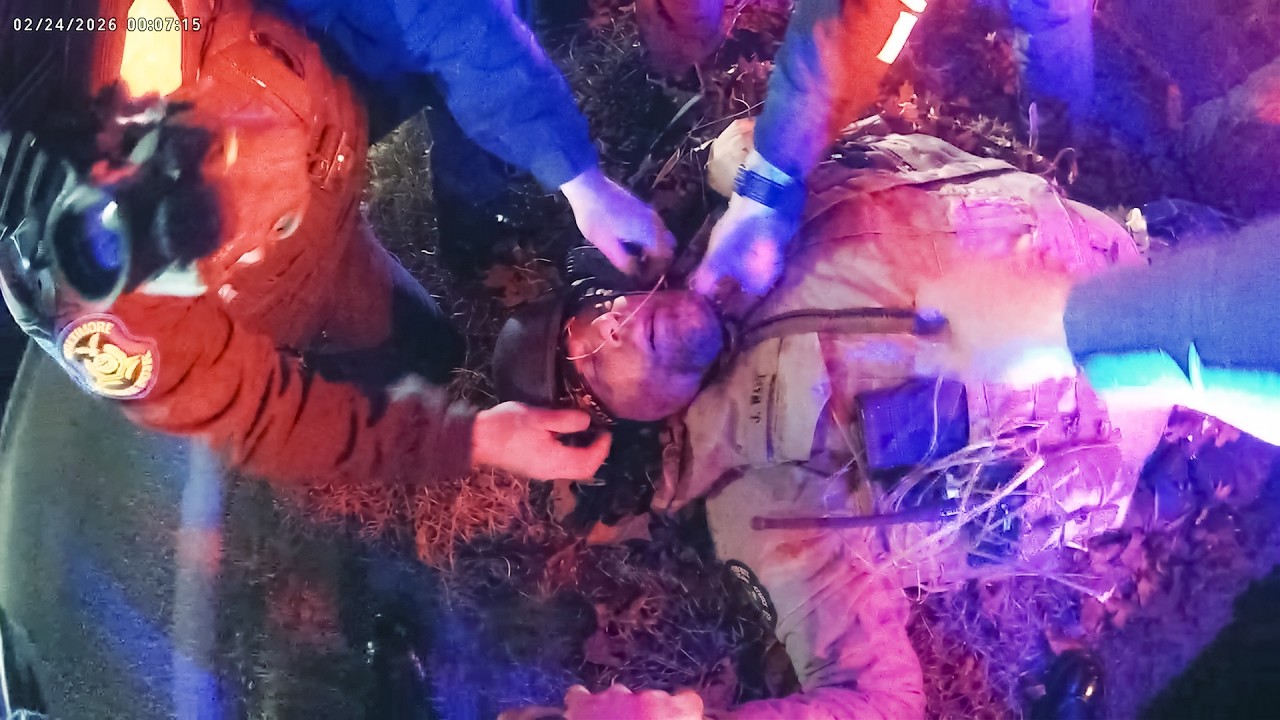
The recap itself is edited and narrated, not a raw full-length evidence release. That matters because the Gabriel Ramirez manhunt record available to ordinary readers is built from layers: sheriff statements summarized by local news, an official governor memorial order, and a later YouTube explainer that packages the event for a general audience. Useful reporting should tell readers which layer supports each claim instead of flattening all of them into one supposedly complete account.
Seven Source-Locked Facts From the Missouri Deputy Shooting and Manhunt
1. The manhunt followed a February 23, 2026 traffic-stop shooting
The core date is consistent across the public record reviewed for this Gabriel Ramirez manhunt article. KCUR reported that Ramirez, a Christian County deputy, was shot during a traffic stop south of Highlandville on February 23, 2026. The Midwest Safety recap uses the same date as the starting point for the overnight search. That agreement makes the event date stable, even though other details still require careful attribution.
2. Public reporting identifies Deputy Gabriel Ramirez as the first officer killed
Local reporting and the governor’s memorial order identify Gabriel Ramirez as the deputy who was fatally shot at the start of the case. KCUR also described him as a 30-year-old U.S. Army veteran. This article treats those biographical details as reported public facts, not as an invitation to add private information or emotional embellishment that the public sources did not supply.
3. The search crossed jurisdictions and continued overnight
The Gabriel Ramirez manhunt was not described as a brief local perimeter. KCUR said multiple agencies joined the hunt after the shooting, and the Midwest Safety video frames the response as a major regional search. The public sources do not provide a minute-by-minute command log, but they do support the larger point that the case moved quickly from a traffic stop to a broad interagency operation.
4. Deputy Michael Hislope was also killed on February 24, 2026
Governor Mike Kehoe’s half-staff order says Deputy Michael Hislope was killed the next day while officers attempted to apprehend the same gunman. KCUR similarly reported that Bird was found on February 24 and that Hislope died during the encounter. Because those reports are public and named, this article can state the second deputy death as source-backed fact while still avoiding speculation about each tactical step in the final exchange.
5. Two more officers were reportedly injured during the capture attempt
KY3 reported that two additional officers were injured in the February 24 encounter. That detail matters because it shows the Gabriel Ramirez manhunt did not end with a simple arrest scene. It ended with more casualties and therefore with more unanswered questions about positioning, timing, and the exact sequence of fire than a short recap video can fully resolve.
6. Public sources name Richard Bird as the suspect, but motive remains outside the confirmed record
KCUR attributed the suspect identification to Sheriff Brad Cole, naming Richard Bird as the man officers were seeking. That supports using Bird’s name in a narrowly sourced way. What it does not support is a confident statement about motive, state of mind, or a long explanatory narrative about why the shooting happened. The public reporting reviewed for this article is strong enough on identity and timeline, not on psychology.
7. The source title is broader than the reporting standard Navyago should use
The Midwest Safety video title uses the phrase “wanted cop killer.” Navyago’s standard is narrower. The article can explain that the title exists and can describe the public reporting that a deputy was shot and that Bird was the suspect named by law enforcement. It should not import the title’s rhetoric as if it were an unqualified judicial finding. That is one of the most important discipline checks in any Gabriel Ramirez manhunt explainer.
How the Traffic Stop Became an Overnight Regional Search
One reason the Gabriel Ramirez manhunt drew broad attention is that the public story changed fast. The initial event was a traffic stop in southern Missouri. Within hours, the case had shifted into a search involving multiple agencies, public warnings, and heightened concern across the Branson area. That transition from one roadside stop to a regional security problem is what turned the case from local incident into major state news.
KCUR’s reporting is useful here because it anchors the shift to statements from Sheriff Brad Cole rather than to generalized internet retelling. It places the overnight search in concrete locations south of Highlandville and later near Branson. That gives readers enough geographic frame to understand the scale of the operation without needing exact addresses, private property details, or unverified rumor about who saw what at each stage.
The Midwest Safety recap adds narrative shape, but readers should not mistake edited structure for a complete official timeline. A recap channel chooses where to begin, what voice-over to add, and which moments deserve emphasis. That can help audiences follow the event, yet it also compresses uncertainty. In the Gabriel Ramirez manhunt, public sources support the broad arc from February 23 shooting to February 24 confrontation. They do not yet deliver every dispatch decision, route choice, or tactical handoff in between.
This distinction matters because manhunt stories attract overconfident retelling. Once a case ends, people often assume the sequence was obvious from the start. Publicly available reporting does not support that kind of hindsight certainty here. The officials and reporters cited in this article establish the dates, the identities, the second deputy death, and the two injured officers. They do not eliminate the need for later investigative detail.
What Public Reporting Says About Deputies Gabriel Ramirez and Michael Hislope
The Gabriel Ramirez manhunt should not be reduced to a suspect-centered internet story because two named deputies anchor the public record. KCUR reported that Ramirez was a 30-year-old Army veteran. Governor Mike Kehoe’s memorial order later named both Ramirez and Hislope, making clear that the manhunt had already become a double line-of-duty death case by the time the public flag order was issued.
That official memorial context matters for two reasons. First, it confirms that Michael Hislope’s death was not a rumor amplified by commentary channels. Second, it reminds readers that the case involves actual institutions – a sheriff’s office, state officials, and regional agencies – rather than just viral video language. When reporting on the Gabriel Ramirez manhunt, that institutional record is far more valuable than social-media shorthand.
At the same time, this article does not add biographical material simply because the deputies’ names are public. The public-interest value lies in the verified sequence and the limits of what is known, not in turning memorial coverage into a biography project. Readers deserve a clear source-based account of how the event unfolded and which facts come from which public document or news report.
That same restraint applies to the two injured officers mentioned by KY3. The report is enough to establish that additional officers were hurt. It is not enough to publish medical detail, prognoses, or identity claims unless those details appear in authoritative public records. In a case as sensitive as the Gabriel Ramirez manhunt, narrow language is a strength, not a weakness.
Why Navyago Does Not Adopt “Cop Killer” as Its Own Finding
The most obvious trap in this story is the source title itself. “Wanted cop killer” is strong, emotionally loaded language. A recap channel can choose that framing. A source-first explainer has a different job. It should tell readers what officials and reporters publicly said, identify the suspect named in those sources, and avoid substituting one channel’s rhetoric for the publication’s own verified conclusion.
In the Gabriel Ramirez manhunt context, this is not word games. It is a legal-safety discipline. The public record reviewed here supports that Deputy Gabriel Ramirez was fatally shot during a traffic stop and that Richard Bird was the suspect named by the sheriff in reporting carried by KCUR. It also supports that Michael Hislope died during the February 24 apprehension attempt. What it does not provide is a final court process, because the suspect was reported dead during the search. That makes precise wording even more important.
Navyago can still be plainspoken without becoming reckless. It can say the suspect named in public reporting was sought after Ramirez was shot. It can say the official memorial order referred to the same gunman in connection with Hislope’s death. It can say local reporting described Bird as the suspect located near Branson on February 24. Those are informative statements. They are also more defensible than simply recycling the recap title.
Readers should expect this standard from any article dealing with shootings, manhunts, or officer deaths. If a source-first article sounds slightly more careful than a viral headline, that usually means the article is doing its job.
What the Edited Recap Verifies – and What It Does Not
The Midwest Safety upload is still useful for a Gabriel Ramirez manhunt explainer because it packages the event around a specific set of names, dates, and claims that readers are already searching for. It gives the topic a stable video ID, a stable thumbnail, and a visible public record of how one large recap channel framed the case. That matters for duplicate control and for exact-source transparency.
But an edited recap does not function like a full bodycam release or a sheriff’s investigative file. It does not prove each radio exchange, every officer movement, or the total evidentiary record gathered after the shootings. It also does not remove the need for separate corroboration. That is why this article leans on the governor order and on local reporting rather than pretending the YouTube narration alone is enough.
Another limit is emphasis. Recap channels naturally focus on the most dramatic parts of a case. In the Gabriel Ramirez manhunt, that can push attention toward pursuit, capture, and confrontation while flattening the uncertainty that remains around sequence and decision-making. Readers should treat the video as one public layer in the story, not as the story’s complete and final form.
For more source-first public-interest explainers, readers can browse Navyago’s Crime News section. A related example, 96 Year Old Missing Man Found, follows the same editorial rule: lock the exact source, show what the public record supports, and say clearly where the record runs out.
What Still Remains Unverified in the Gabriel Ramirez Manhunt
Even with several corroborating sources, the public record still leaves important gaps. The Gabriel Ramirez manhunt sources reviewed here do not provide a complete tactical timeline of the initial traffic stop, every movement during the overnight search, or a technical reconstruction of the February 24 confrontation. That means the article should not invent details about approach angles, weapon handling, negotiation attempts, or exact officer positions.
Motive is another unresolved zone. Public reporting reviewed for this article identifies the suspect and the broad sequence, but it does not establish a final motive narrative that Navyago should present as fact. Online audiences often rush to fill those gaps with speculation about prior relationships, ideology, or intent. A responsible article resists that urge unless a public charging document, sworn testimony, or authoritative investigative release supports it.
The same caution applies to injury detail for the two surviving officers. KY3 reported that two officers were injured, which is enough to describe the larger seriousness of the event. It is not enough to publish treatment specifics, long-term outcomes, or names unless those details later appear in reliable public sources. The absence of that information is not a flaw in the article; it is the truth about the current public record.
Finally, readers should recognize the date gap between the incident and the recap upload. The public shooting and manhunt happened on February 23-24, 2026. The Midwest Safety source was uploaded on August 14, 2026. That does not make the recap unusable. It simply means the article should identify both time frames clearly so readers do not confuse the upload date with the event date.
How to Read Manhunt Recap Videos Responsibly
First, lock the exact source. This article is tied to Midwest Safety upload YjMj3IDYo8I; the source note, thumbnail, body image, and iframe all use that same ID. A different Branson-area clip, deputy shooting video, or social-media montage cannot be substituted to fill gaps. Exact source matching is the simplest way to stop unrelated footage from being mixed into one false narrative.
Second, separate source layers. In the Gabriel Ramirez manhunt, one layer is the recap channel. Another layer is local reporting that attributes information to Sheriff Brad Cole. A third layer is the governor’s memorial order. Each layer has a different purpose and level of detail. Good reading means asking which source supports a sentence before assuming the whole bundle is one official record.
Third, watch for emotional compression. Officer deaths, overnight searches, and final confrontations are the kinds of events that push headlines toward maximum intensity. That can make strong phrases feel more certain than the underlying public record really is. If an article pauses to say “according to KCUR” or “the governor’s order says,” that is usually not weakness. It is evidence discipline.
Fourth, prefer dated facts over floating rumor. This case has stable past dates: February 23, 2026 for Ramirez’s shooting, February 24, 2026 for the final encounter in public reporting, and August 14, 2026 for the Midwest Safety upload. When newer reporting appears, compare it against those dates. Stories built only from social reposts, anonymous comments, or recycled clips usually blur that timeline instead of clarifying it.
Finally, remember the human stakes. The Gabriel Ramirez manhunt is not merely a suspense story. The public record reviewed here involves two deputies killed and two more officers injured. Source-first reporting should help readers understand what happened and what remains uncertain without turning loss into spectacle.
Frequently Asked Questions
Who was Gabriel Ramirez in the public reporting?
KCUR reported that Gabriel Ramirez was a Christian County deputy and a 30-year-old U.S. Army veteran who was fatally shot during a traffic stop on February 23, 2026.
When did the Gabriel Ramirez manhunt end?
Public reporting reviewed for this article says the search ended on February 24, 2026, when officers located suspect Richard Bird near Branson, Missouri.
Was Deputy Michael Hislope also killed during the search?
Yes. Governor Mike Kehoe’s half-staff order and local reporting say Deputy Michael Hislope was killed during the February 24 attempt to apprehend the same gunman.
How many other officers were reportedly hurt?
KY3 reported that two additional officers were injured during the final encounter. The public reporting reviewed here did not provide detailed medical updates.
Does the source video prove motive or every tactical detail?
No. The Midwest Safety recap supports the broad public timeline, but it is an edited narrated package, not a full investigative or courtroom record.
Source Video