
Athens church arson case coverage traces the St. Mark Zion Church fire, the death of secretary Linda Buchanan, the witness and forensic evidence described by Midwest Safety, and the April 2026 jury verdict reported by the channel. The source supports a documented explainer, but primary court and laboratory records remain the best evidence for current case status.
Midwest Safety presents released police footage, witness interviews, and narration about the St. Mark Zion Church fire, the death of church secretary Linda Buchanan, the investigation of Kyle Hickox, and the later court outcome reported by the channel. The channel published Church Arsonist Thought Nobody Was Watching on August 31, 2026. Navyago reviewed the public video page, source description or captions, exact thumbnail, and duplicate-source result on September 1, 2026. The article reports the source; it does not replace the underlying police, prosecutor, medical, or court file.
Seven Athens Church Arson Case Source Facts
The seven points below preserve the distinction between visible footage, participant statements, channel narration, and a final official finding. Attribution is especially important where the source discusses violence, arrest, private family history, or disputed intent.
1. The response began as a major church fire
The released footage places officers and firefighters at a heavily involved fire at a century-old church in Athens, Tennessee. Responders pushed bystanders back because of heat, falling material, power-line concerns, and the scale of the fire. The source does not give a precise incident date in its narration, so this article does not invent one. For the Athens church arson case, the next verification layer is the original 911 or dispatch record with timestamps. Until that dispatch record is public, this detail remains attributed to the approved source.
2. Early information did not yet establish arson
The source records people discussing a possible spark or fallen power line and the location of a kitchen. Those comments show why the first response was uncertain. They were preliminary observations at an active scene, not final fire-cause findings, and investigators still needed scene examination and witness evidence. For the Athens church arson case, the next verification layer is the complete unedited camera files and chain-of-custody notes. The source supports the reported location sequence, while synchronized files would clarify the exact timing.
3. Witnesses were worried that Linda Buchanan was inside
During the response, witnesses repeatedly told officers that church secretary Linda Buchanan's car was present and that she might still be in the building. Midwest Safety later says detectives found Buchanan's body after the fire was extinguished and the church was safe enough to enter, and that investigators determined she had been killed before the fire was set. For the Athens church arson case, the next verification layer is the incident report and every supplemental officer narrative. Navyago therefore treats the reported discovery and fire-cause sequence as the channel's account unless the complete incident file confirms it.
4. A man seeking water became an important witness lead
Maintenance workers told officers that a disheveled man had asked them for water, mentioned a former boss, and then went toward the church. One witness said someone let the man inside. The source later says witnesses reported a man running from the building. These accounts were leads that required identification and corroboration, not proof by themselves. For the Athens church arson case, the next verification layer is scene measurements, photographs, and physical-evidence logs. Scene records are the stronger source for distances, positions, and recovered physical evidence.
5. Officers identified Kyle Hickox and first approached him for questions
Midwest Safety says officers recognized Kyle Hickox from a recent welfare-related call and visited his home the next night. The footage shows officers asking about his movements and requesting photographs to compare with witness descriptions. Hickox initially spoke with them, while officers said they were trying to rule people in or out. For the Athens church arson case, the next verification layer is medical examiner or treating-provider records where lawfully public. Medical details remain source-attributed unless a lawfully public examiner or treating-provider record confirms them.
6. Investigators obtained a warrant and reported a forensic match
The source says Hickox initially agreed to a search but his wife refused, prompting investigators to seek a warrant. Midwest Safety reports that surveillance footage placed him near the scene, a judge approved the warrant, and investigators recovered shoes with blood later confirmed as matching Linda Buchanan. The warrant papers and laboratory report remain the primary records for those claims. For the Athens church arson case, the next verification layer is the charging, prosecutor, or administrative-review documents. The recovery details should be checked against the official evidence inventory if that record becomes public.
7. The source reports charges and an April 2026 jury conviction
Midwest Safety says Hickox was charged with Buchanan's murder, arson, and abuse of a corpse. The channel further reports that a McMinn County jury convicted him in April 2026 of first-degree murder, arson, and abuse of a corpse, with parole eligibility no earlier than 51 years. Current court records should be checked for the judgment and any appeal. For the Athens church arson case, the next verification layer is the final court docket and any correction issued after the source upload. The conviction and parole-eligibility details are reported by the channel and should be read with the underlying judgment and current appeal record when available.
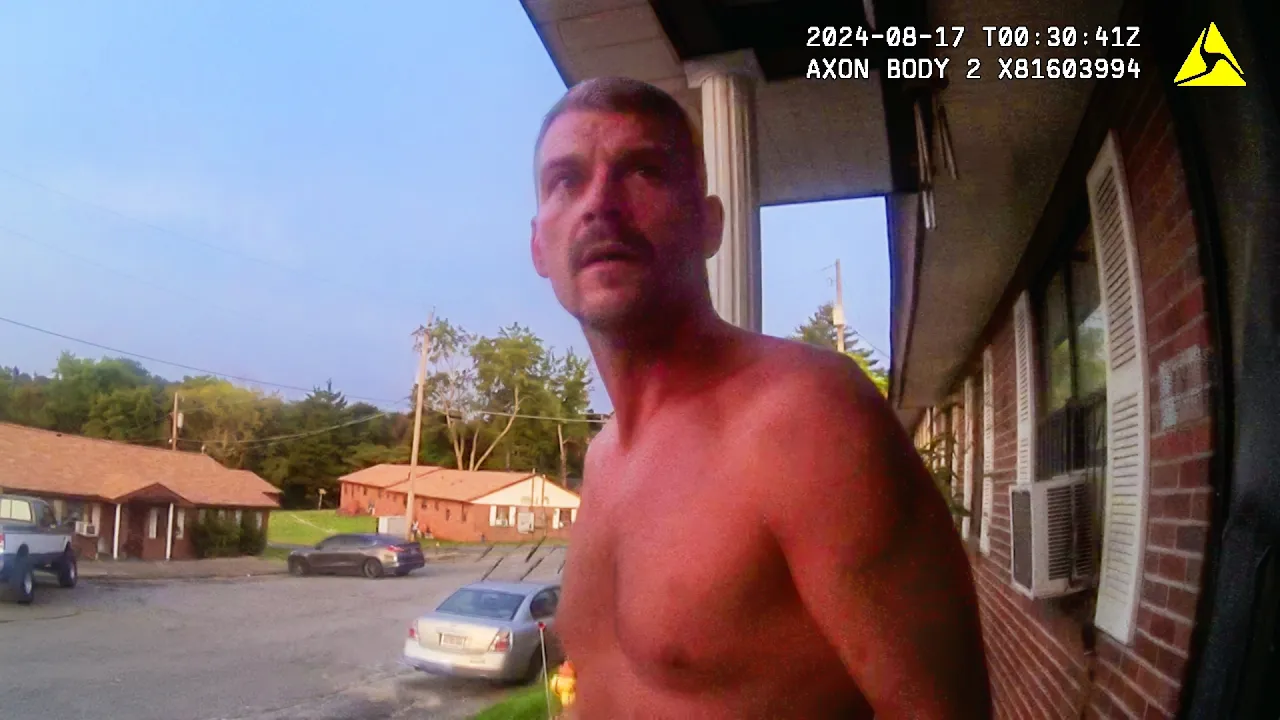
How the Athens Church Arson Case Timeline Fits Together
Midwest Safety's source reconstructs a fire at a historic Athens church, the discovery that secretary Linda Buchanan had been killed before the fire, and the evidence that led investigators to Kyle Hickox. The video reports that a McMinn County jury convicted Hickox in April 2026. This explainer separates early suspicions, investigative steps, forensic claims, and the reported verdict. The order matters because a dispatch report, an officer’s direct observation, a witness interview, and a later prosecutor or court conclusion answer different questions. Combining them into a single dramatic claim would erase the evidentiary steps between an emergency and a final decision.
The Athens church arson case timeline should be read from the earliest verified contact forward. Calls and messages explain why responders acted. Camera footage can document portions of the encounter. Interviews add participant accounts. Physical evidence and official records test those accounts. Later proceedings determine which propositions are supported under the relevant legal standard.
Chronology alone does not prove causation or motive. A person appearing before or after an event does not establish intent, and a camera view may omit activity outside its frame. The source is useful because it organizes public material, but readers should keep each claim attached to the evidence that actually supports it.
What the Athens Church Arson Case Source Can Establish
Midwest Safety presents released police footage, witness interviews, and narration about the St. Mark Zion Church fire, the death of church secretary Linda Buchanan, the investigation of Kyle Hickox, and the later court outcome reported by the channel. The released media can help establish words spoken, visible movement, sequence, location, and the immediate response. It is less reliable for depth, off-camera conduct, unrecorded communications, medical causation, or a person’s private state of mind.
A source-based explainer also has a copyright and dignity boundary. Navyago paraphrases the source instead of reproducing a transcript, uses only one embedded player, and uses the exact source thumbnail as the required featured and body media. It does not publish graphic frames, private addresses, or unnecessary information about victims and minors.
The original thumbnail, iframe, source note, and source pack all point to video ID ElSKXj8hWA4. That exact-match rule prevents a nearby incident or generic image from being substituted for the approved source. It also makes the article easier for readers, Google, and citation systems to trace.
Claim-by-Claim Verification for the Athens Church Arson Case
A useful source article does more than list claims. It shows readers which primary record would test each point and prevents channel narration, witness statements, or allegations from being upgraded into final findings without evidence.
Verification check 1: The response began as a major church fire
For the Athens church arson case, the strongest next check is dispatch chronology. It would show when the first information reached responders, which details were firsthand, and which details were relayed by another person. Readers can compare its timestamps and source labels with the channel's timeline.
Verification check 2: Early information did not yet establish arson
For the Athens church arson case, the strongest next check is unedited synchronized media. It would preserve pauses, camera limits, and events before and after the published edit instead of asking a short sequence to carry the entire account. A complete synchronized release would also show what the edited sequence leaves outside the frame.
Verification check 3: Witnesses were worried that Linda Buchanan was inside
For the Athens church arson case, the strongest next check is signed incident narratives. They would identify the author of each observation and allow later reviewers to compare recollection with timestamps, audio, and physical evidence. Those signatures help distinguish direct observation from information relayed by others.
Verification check 4: A man seeking water became an important witness lead
For the Athens church arson case, the strongest next check is scene and laboratory evidence. It would test distance, location, object identity, damage, and other propositions that a compressed online image cannot reliably measure. These records are more suitable than video alone for measurement claims.
Verification check 5: Officers identified Kyle Hickox and first approached him for questions
For the Athens church arson case, the strongest next check is medical or examiner findings. Where lawfully public, they would distinguish an observed injury from medical causation and keep non-graphic reporting tied to a qualified record. A qualified public finding is the appropriate basis for medical causation.
Verification check 6: Investigators obtained a warrant and reported a forensic match
For the Athens church arson case, the strongest next check is charging or administrative decision. It would state the governing standard, the evidence reviewed, and whether the decision addresses criminal law, workplace policy, or another process. The written review should identify both the decision-maker and the standard applied.
Verification check 7: The source reports charges and an April 2026 jury conviction
For the Athens church arson case, the strongest next check is current court docket. It would show whether allegations became charges, were dismissed, produced a plea or trial finding, or remain unresolved after the source upload. The latest docket is the best place to check whether later proceedings changed the reported status.
Records Needed to Verify the Athens Church Arson Case
A careful follow-up should obtain the complete primary record appropriate to this incident: dispatch chronology, unedited video, reports, evidence logs, medical or autopsy findings where public, charging decisions, and the final docket. A later record may confirm the channel’s summary, narrow it, or correct it.
Dates and identifiers deserve particular attention. The source upload date is not necessarily the incident date. An arrest date is not a conviction date. A policy finding is not automatically a criminal judgment, and a civil allegation is not automatically a damages award. Keeping those categories separate prevents a source recap from overstating procedural status.
When records conflict, the strongest approach is to name the conflict and prefer the most direct, current, and accountable source. A signed court order generally carries more weight for case status than channel narration. Original footage carries more weight for visible sequence than a reaction clip, but it still may not answer legal questions outside the frame.
Legal and Public-Safety Cautions for This Source Video
Police contact, detention, citation, arrest, charging, administrative review, civil litigation, and conviction are separate stages. The Athens church arson case source may show or describe several of them, but readers should not collapse the stages into a declaration of guilt. Where a final official conclusion is reported, this article identifies who reached it.
A murder and arson prosecution requires incident-specific proof. Investigators and jurors may consider witness credibility, fire-origin evidence, surveillance, forensic testing, warrants, interviews, and alternative explanations. The source reports a jury verdict, but the written judgment and appellate record remain the accountable sources for the precise legal result and any later change.
This article does not infer mental illness, intoxication, hidden motive, criminal character, or institutional misconduct from appearance or edited behavior. Those claims require reliable evidence. It also avoids inviting harassment of named people. Public-interest reporting should help readers understand a process, not turn a serious event into spectacle.
What Remains Unknown After the Athens Church Arson Case Source
The source package does not put the complete dispatch log, fire-origin report, scene photographs, autopsy, witness statements, surveillance files, warrant affidavit, blood-testing report, interview recordings, charging documents, trial transcript, verdict forms, sentencing judgment, or current appeal docket on the article page. It also does not state the exact fire date in the narration. Those primary records are needed to verify every date, forensic step, legal count, sentence detail, and post-verdict development.
Other gaps may include material recorded before or after the published edit, communications outside camera range, witness corrections, laboratory testing, agency policy, and later appeal records. An evidence gap is not proof for either side. The accurate label is unknown until a dependable record addresses it.
The source was reviewed on September 1, 2026. Legal status, medical outcomes, agency findings, and public records can change after an upload. Anyone citing this article for a current status should check the newest primary record and preserve the source date.
How Readers Can Evaluate the Athens Church Arson Case Responsibly
Readers should keep four stages separate: the emergency response, the witness-led investigation, the forensic and warrant process, and the jury verdict reported by the source. Early theories about a power line were not final findings, witness identification was not a conviction, and the reported blood match required laboratory documentation. The later verdict changes the procedural status, but the current judgment and appeal record remain the best sources for present-day case status.
First, verify the exact source video and channel. Second, watch the full available sequence rather than a clipped repost. Third, mark each statement as direct observation, participant claim, channel narration, or official finding. Fourth, look for later corrections and case records. This four-step method reduces the risk of repeating a dramatic but unsupported conclusion.
More source-attributed coverage appears in Navyago’s Crime News section. The editorial method stays the same across cases: answer the reader directly, use one canonical source package, preserve due process, identify what remains unknown, and link readers back to the original material.
Frequently Asked Questions
What is the Athens church arson case source video about?
It follows the response to a historic church fire, the investigation into Linda Buchanan's death, and the court outcome that Midwest Safety reports.
Who was Linda Buchanan?
Midwest Safety identifies Buchanan as a 69-year-old church secretary, teacher, and longtime member of the St. Mark Zion Church community.
What evidence does the source say linked Kyle Hickox to the case?
The channel reports witness descriptions, surveillance evidence, and shoes carrying blood later matched to Buchanan; the underlying records are the strongest verification sources.
Was Kyle Hickox convicted?
Midwest Safety reports that a McMinn County jury convicted him in April 2026 of first-degree murder, arson, and abuse of a corpse.
Where should readers verify the current case status?
Check the final judgment, sentencing record, and current McMinn County or Tennessee appellate docket for any post-verdict changes.
Source Video