
West Valley City remains the focus of a detailed public police video review following a critical incident recorded on October 25, 2026. According to the video description provided by PoliceActivity, law enforcement officers responded to a commercial location where an individual was reportedly located inside a storage outbuilding.
Overview of the Incident Location and Response
According to the video description published by PoliceActivity, the events unfolded on October 25, 2026, in West Valley City, Utah. Law enforcement officers received a dispatch call directing them to the Town Place Suites located at 5473 High Market Drive. Hotel employees had contacted emergency services to report finding an unauthorized person inside a storage outbuilding on the property. When officers arrived at the specified address, they immediately initiated protocols to investigate the report and locate the individual inside the restricted structure.
Public safety responses to commercial properties typically involve multiple officers securing the perimeter before making contact. In this instance, the source notes that officers approached the outbuilding where the suspect was believed to be hiding. The presence of hotel employees who provided the initial tip helped direct law enforcement straight to the storage area. Documenting these initial calls for service is a standard practice for agencies like the West Valley City Police Department, ensuring that every subsequent action taken by responding personnel is recorded in official police logs.
Understanding the physical layout of locations such as hotel storage outbuildings is essential for evaluating police video footage. Confined spaces present unique tactical challenges for law enforcement officers who must balance rapid apprehension with their own personal safety. The video description outlines how officers positioned themselves near the structure and began verbal engagement. This foundational step in police encounters is designed to de-escalate situations whenever possible and encourage voluntary compliance from individuals inside enclosed areas.
Initial Contact and Verbal Commands Given by Officers
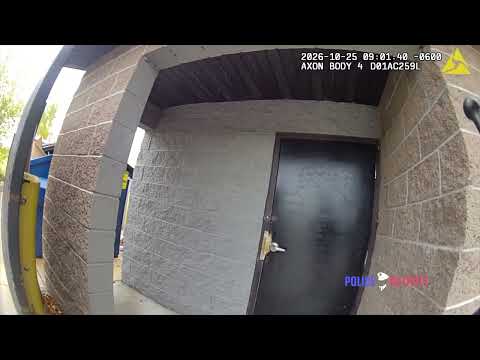
According to the video description, once officers arrived at the storage outbuilding, they identified themselves as law enforcement and issued clear commands. Officers instructed the person inside, later identified as 40 year old Sebastian Cerda Monti, to exit the building with his hands empty. The responding personnel continued to issue verbal warnings, demanding that the suspect drop whatever objects he was holding before stepping outside. Clear communication is a mandatory component of standard police procedure, intended to establish authority and provide the subject with an opportunity to surrender peacefully without violence.
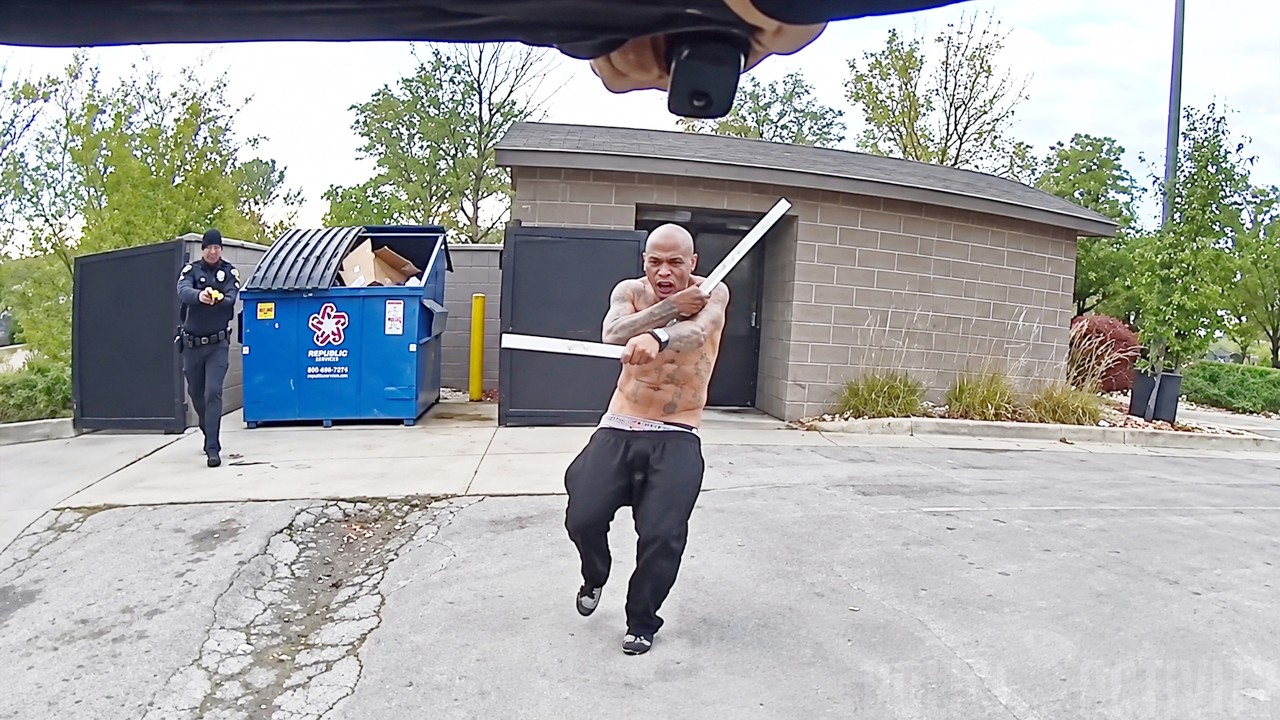
Despite repeated verbal commands from the officers, the door to the storage building swung open, but the suspect did not exit as instructed. The source states that an officer radioed dispatch to report observing the suspect holding an object that appeared to be a metal rod. During high stress incidents, officers must constantly update dispatch and fellow units regarding real time tactical observations. This ongoing communication helps supervisors and incoming backup units assess the threat level and prepare appropriate responses based on the evolving situation at the scene.
Public video formats provide a visual and auditory record of these commands, allowing the public to hear the tone and frequency of police instructions. However, video recordings alone cannot fully capture the sensory overload experienced by officers on the ground. Ambient noise, fear, and the physical constraints of the environment all influence how communication is perceived by both sides. Reviewing these audio transcripts helps oversight bodies determine whether officers followed departmental guidelines for verbal de-escalation before escalating their use of force options during the encounter.
Deployment of Less Lethal Pepper Spray
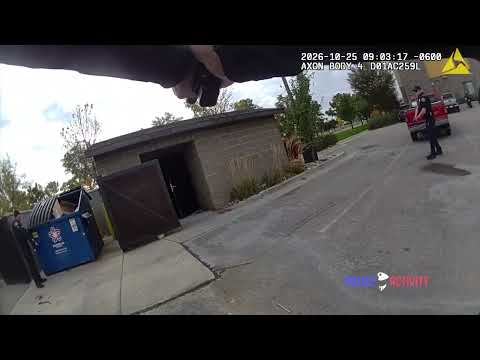
The video description explains that after the suspect failed to exit the building while holding suspected metal rods, officers considered alternative tactical options. An officer issued a verbal warning stating that OC spray, commonly referred to as pepper spray, would be deployed if the subject refused to comply with orders. Following this warning, the officer discharged pepper spray directly into the interior of the outbuilding. The officer then repositioned to a safer tactical spot while continuing to issue verbal commands for the man to come out of the structure.
Less lethal tools such as pepper spray are designed to incapacitate individuals temporarily and encourage compliance without resorting to lethal force. Police department policies strictly govern the deployment of chemical agents, requiring officers to evaluate the necessity and proportionality of the tool in each unique situation. The source notes that the officer repositioned immediately after deployment, a standard tactical movement intended to maintain distance and cover while waiting for the chemical agent to take effect on the person inside the enclosed space.
Evaluating the effectiveness of less lethal options relies heavily on synchronized video and audio evidence from body worn cameras or dash cameras. Viewers must remember that chemical agents do not affect every individual in the same manner, and highly determined subjects may continue their actions despite exposure. Official administrative reviews examine whether the deployment of pepper spray aligned with the agency training matrix and whether the subsequent tactical repositioning met established law enforcement standards for officer safety.
Suspect Actions and the Discharge of Firearm
According to the video description, the situation escalated rapidly after the deployment of pepper spray. Video footage shows the man exiting the outbuilding and running directly toward the officer while holding and swinging objects that appeared to be metal rods. In response to this perceived threat, an officer discharged his firearm. The sudden transition from verbal negotiations and less lethal deployment to a lethal force encounter highlights the extreme volatility inherent in routine police calls involving uncooperative individuals.
When an individual charges officers with metal rods, responding personnel must make split second decisions to protect their lives and the lives of bystanders. The legal standard for using lethal force requires an objectively reasonable belief that there is an imminent threat of death or serious bodily harm. Public safety videos capture these fast moving dynamics, but investigators rely on frame by frame forensic analysis to measure distances, reaction times, and the exact positioning of both the officer and the suspect during the critical seconds of the shooting.
It is important to emphasize that a video description documents the sequence of events as observed, but it does not determine legal guilt or final administrative outcomes. Every officer involved in a shooting is entitled to a thorough, impartial investigation by independent oversight authorities or state investigators. Presuming innocence and awaiting the final findings of a comprehensive fact finding process are vital components of the due process system that applies to all parties involved in critical police incidents.
Immediate Emergency Medical Care Rendered
The source reports that immediately after the firearm was discharged, officers on the scene initiated emergency medical care for the injured man. Providing prompt medical aid is a mandatory requirement for modern law enforcement agencies following any critical incident involving the use of force. Officers are trained in tactical combat casualty care and basic life support techniques designed to stabilize trauma victims while waiting for specialized medical professionals to arrive at the location of the incident.
According to the video description, fire personnel arrived at the scene shortly after the shooting and assumed full care of the patient. Emergency medical services personnel possess advanced life-saving equipment and training necessary to treat severe trauma injuries sustained during violent encounters. The transition from police first aid to professional firefighter and paramedic care is a coordinated effort documented in official dispatch logs and emergency response reports maintained by the municipality.
While video recordings show the immediate aftermath of the medical response, they rarely capture the full scope of ongoing clinical interventions performed by medical staff. Official hospital reports and medical examiner findings provide the definitive medical record regarding the cause and manner of death. Reviewing these medical timelines ensures complete transparency in documenting how quickly emergency services were dispatched, arrived, and attempted life saving measures following the critical incident.
Role of Public Video in Law Enforcement Transparency
The publication of police videos by channels like PoliceActivity plays a significant role in modern public safety discussions. Access to raw footage allows citizens, journalists, and researchers to examine the actions of law enforcement officers and the behavior of suspects during critical incidents. However, relying solely on short video clips can lead to misunderstandings without the context of complete investigative files, departmental policies, and full audio radio transmissions that accompany formal reviews.
Video technology cannot reveal the internal thoughts, fears, or specific training history of the officers involved in a dynamic encounter. Cameras offer a fixed focal perspective that may distort spatial distances, lighting conditions, and the actual field of view experienced by human eyes under high stress conditions. Therefore, professional investigators supplement video evidence with forensic mapping, ballistic analysis, witness interviews, and expert consultations to build an accurate and complete reconstruction of the event.
For readers seeking to verify the details of this incident, reliance on official public records is essential. Freedom of information requests, district attorney review letters, and state Bureau of Investigation reports provide the verifiable facts needed to understand the full context of the shooting. Engaging with public safety news responsibly requires patience, adherence to due process principles, and an understanding that video footage represents only one piece of a complex investigative puzzle.
Due Process and the Independent Investigation Process
In any case involving an officer involved shooting, the American justice system mandates a rigorous, independent investigation. The West Valley City Police Department, alongside outside investigative entities such as the local district attorney office or state investigative agencies, examines every aspect of the October 25, 2026 incident. This process includes gathering all body camera footage, audio recordings, ballistic evidence, and forensic reports to determine whether the use of force complied with state law and departmental policy.
Due process guarantees that both the officers involved and the rights of the public are thoroughly respected through a transparent and methodical review system. Speculation or premature conclusions drawn from social media video descriptions undermine the integrity of ongoing investigations. Investigators must interview every available witness, analyze forensic trajectories, and review past interactions or dispatch records before issuing a final comprehensive report on the justification or administrative standing of the shooting.
The outcome of these administrative and criminal reviews is typically published in formal public clearinghouses or district attorney memorandum reports. These documents outline the legal reasoning behind whether criminal charges will be filed against the officer or if the use of force is found to be legally justified under the circumstances. Citizens are encouraged to follow official municipal channels for updates rather than relying on unverified internet commentary regarding complex legal investigations.
Verifying Public Safety Claims and Safety Lessons
Evaluating public safety incidents requires a commitment to factual verification using official law enforcement and municipal records. When watching police videos, viewers should note the specific timestamps, locations, and agency names provided in the source metadata. Cross referencing these details with press releases issued by the West Valley City Police Department helps separate verified facts from online speculation, ensuring that public discussions remain grounded in accurate information.
Safety lessons derived from such incidents often focus on improving crisis intervention techniques, enhancing less lethal options, and refining tactical protocols for handling uncooperative individuals in confined spaces. Law enforcement agencies continuously review critical incident footage during in service training to identify tactical strengths and areas where communication or positioning could be improved. These internal reviews are vital for minimizing risks to both police officers and members of the community during future high risk encounters.
Ultimately, understanding police videos demands critical thinking, respect for the investigative process, and an awareness of the limitations inherent in recorded media. By focusing on verified facts from official sources, readers can better comprehend the challenges of modern policing and the importance of accountability, transparency, and due process in maintaining public trust within West Valley City and communities nationwide.
Analysis of Commercial Property Security Responses
Commercial properties such as hotels frequently encounter security challenges involving unauthorized individuals accessing storage or utility outbuildings. The initial dispatch in West Valley City underscores the reliance property managers place on local law enforcement when confronted with trespassing concerns. Security protocols at such facilities dictate that employees should not attempt physical confrontations, instead contacting emergency services to manage trespassers safely.
When officers arrive at a commercial lodging site, they must quickly assess the structural layout of outbuildings, which often feature limited entry points and poor interior lighting. These architectural constraints can significantly increase tactical risks for responding personnel who must navigate confined spaces while issuing commands. Reviewing how officers approach these structures provides valuable insight into standard operational procedures during property-related service calls.
Training curricula for commercial security and patrol officers frequently examine how to balance property protection with personal safety during initial investigations. Understanding the mechanics of these responses helps property owners implement better preventative measures, such as enhanced perimeter lighting and secure locking mechanisms, to reduce the likelihood of unauthorized entry into storage areas.
Evaluating Less Lethal Force Options in Confinement
The use of pepper spray inside a storage outbuilding highlights the tactical considerations surrounding less lethal force options in enclosed environments. Chemical agents are designed to incapacitate or disorient noncompliant subjects, thereby reducing the need to resort to firearms. However, deploying such agents within a restricted space requires careful evaluation of wind, ventilation, and the physical positioning of both officers and suspects.
Law enforcement agencies maintain strict policies regarding when and how less lethal tools should be integrated into an unfolding tactical scenario. Officers are trained to assess whether a subject’s actions pose an immediate threat that warrants chemical intervention prior to attempting physical apprehension. The transition from chemical spray to lethal force, as documented in the source video, demonstrates how rapidly an encounter can shift based on sudden suspect movements.
Independent oversight investigators closely review the deployment timing of less lethal options to determine if departmental guidelines were strictly followed. Analyzing these details within public safety reports helps researchers understand the practical limitations and advantages of intermediate weapons during volatile confrontations inside physical structures.
Investigative Protocols Following Critical Incidents
When an officer-involved shooting occurs, standard municipal protocol initiates a complex series of investigations involving multiple independent agencies. These protocols are designed to guarantee transparency and objectivity by separating the internal review process from the active patrol division. Forensic specialists examine the precise location on High Market Drive, collecting ballistic evidence, mapping trajectories, and securing physical items such as the metal rods referenced in the report.
In addition to physical evidence collection, investigators compile comprehensive audio and video logs from body-worn cameras, dash cameras, and dispatch recordings. Witness statements from hotel employees and responding personnel are transcribed and compared against the recorded digital timeline. This meticulous assembly of facts forms the comprehensive investigative file submitted to district attorneys for legal review.
Public reporting of these investigative steps ensures that communities remain informed while the formal judicial process unfolds. Oversight boards and independent watchdogs rely on these exhaustive records to evaluate agency policies, equipment effectiveness, and adherence to constitutional standards during critical incidents.
Importance of Media Literacy in Public Safety Reporting
The consumption of raw police video through digital platforms necessitates a high degree of media literacy among the general public. Viewers frequently encounter edited or unedited footage released by third-party archives without the full context of the surrounding investigation. Understanding that a video recording represents only a visual snapshot of a complex event is essential for maintaining an objective viewpoint.
Media analysts emphasize that digital recordings cannot fully convey the psychological pressure, sensory overload, or split-second decision-making environment experienced by officers on scene. Consequently, responsible reporting requires strict adherence to factual descriptions provided by primary sources without sensationalizing the details. Preserving the presumption of innocence for all individuals depicted in public safety videos remains a foundational ethical standard.
Promoting accurate public understanding involves educating audiences on how to read police reports, where to find official municipal updates, and why due process takes precedence over instant online commentary. By grounding discussions in verified facts and structural transparency, explainers help bridge the gap between raw digital media and formal legal accountability.
More source-attributed coverage appears in the Crime News section.
Frequently asked questions
Where did the incident take place?
The incident occurred at the Town Place Suites located at 5473 High Market Drive in West Valley City, Utah.
When did the shooting happen?
According to the source, the incident took place on October 25, 2026.
Who was the suspect identified as in the video description?
The suspect was identified as 40 year old Sebastian Cerda Monti.
What object was the suspect reported to be holding?
The suspect was reported to be holding objects that appeared to be metal rods.
What medical care was provided after the shooting?
Officers immediately provided emergency medical care, and fire personnel subsequently arrived to assume care.
Source video