
Portland officer involved shooting footage released by the channel PoliceActivity provides a recorded public record of an emergency response in Oregon. According to the video description, officers arrived at Southwest Broadway following reports of an assault involving a box cutter and subsequent law enforcement intervention.
Overview of the Portland Officer Involved Shooting Incident
The incident documented in the source video occurred on Thursday, October 15, 2026, starting at 4:34 p.m. Portland Police Officers were dispatched to the area of Southwest Broadway and Southwest Washington Street following emergency calls regarding an assault with a weapon. According to the source, dispatchers updated responding units while they were en route to the scene, indicating that the individual involved was armed with a box cutter and attempting to attack additional people.
The timeline provided in the source description outlines a rapid sequence of events spanning only a few minutes from the initial emergency call to the arrival of law enforcement personnel. Officer Daniel Hall located the individual outside a hotel in the 400 block of Southwest Broadway at approximately 4:39 p.m. This timeline highlights the compressed nature of street level interventions where officers must process unfolding threats and make split second tactical decisions based on live information.
Arrival and Observations by Law Enforcement
When Officer Daniel Hall arrived at the location on Southwest Broadway, the source description notes that he exited his patrol vehicle and immediately observed a critical emergency situation in progress. The suspect, identified in the official records as 36-year-old Eric Jonathan Hurtado, was actively engaged in stabbing a bystander outside a hotel. The sudden appearance of a violent assault requires arriving officers to transition instantly from transit mode to active threat mitigation.
Public safety video platforms frequently highlight these initial moments to demonstrate the unpredictable environments police officers encounter daily. While the source details the physical actions observed upon arrival, digital recordings capture only selected angles and visual fields. Independent verification of broader environmental factors typically requires supplementary evidence such as surrounding surveillance cameras, complete radio transmission logs, and formal investigative summaries from oversight agencies.
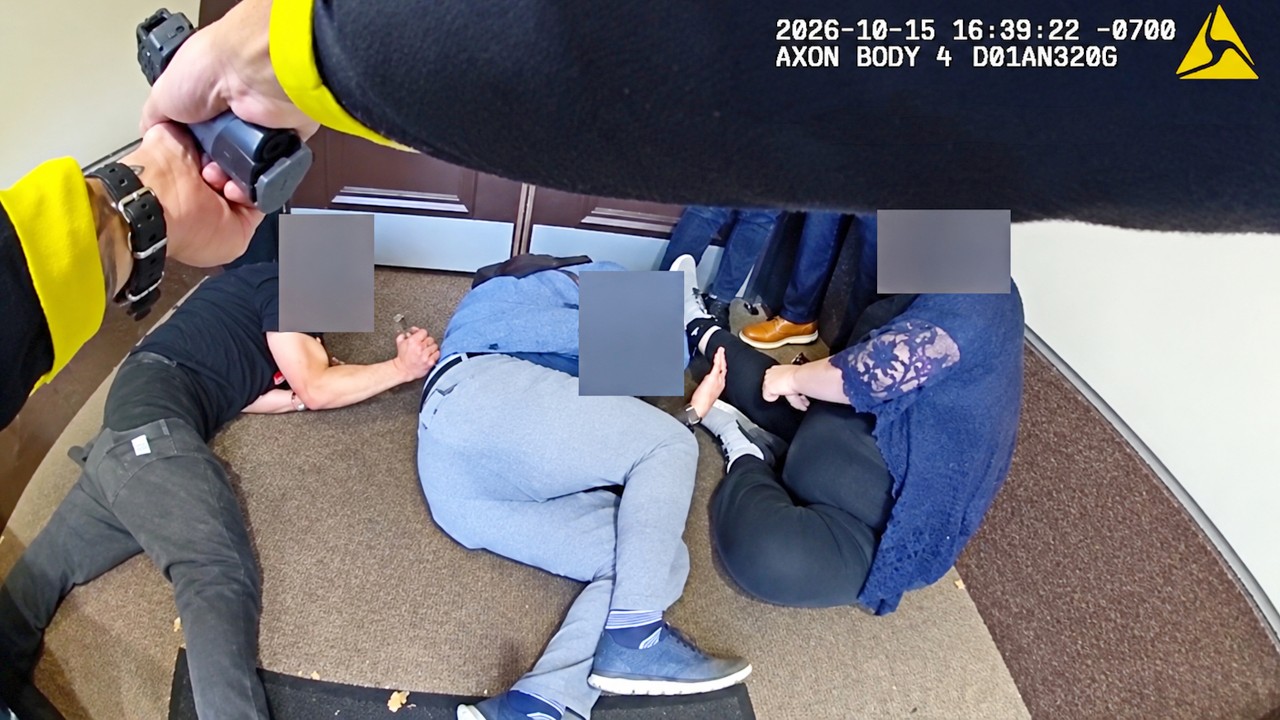
Officer Intervention and Discharged Firearm
According to the source description, Officer Daniel Hall discharged his department issued firearm two times, striking the suspect once after observing the ongoing attack on a bystander. The deployment of lethal force is among the most heavily scrutinized actions in modern policing, subject to rigorous internal reviews, policy evaluations, and independent criminal investigations by local authorities to determine adherence to constitutional standards and department rules.
Following the initial shots, the source notes that the suspect fell to the ground but continued trying to stab the person he had just attacked. This detail illustrates the persistent nature of active threats where neutralizing a suspect may not immediately end the physical danger. Officer Hall then gave verbal commands for everyone to step out of the immediate area, secured the physical scene, and seized the weapon involved in the confrontation.
Medical Aid and Post Incident Scene Management
After securing the location and disarming the suspect, law enforcement personnel transitioned to providing emergency medical assistance. The source states that Eric Jonathan Hurtado was given trauma first aid at the scene before being transported to a hospital. Despite additional lifesaving measures administered by medical professionals, the suspect was subsequently pronounced deceased.
Scene management following critical incidents involves preserving evidence, interviewing witnesses, and coordinating medical responses. According to the source, investigators recovered a box cutter at the location, along with the detached blade found on the ground near where a victim had been lying. Standard protocols require forensic teams to catalog every piece of physical evidence to reconstruct the precise sequence of events during independent reviews.
Injuries Sustained by Victims and Bystanders
The violent encounter impacted multiple individuals in the vicinity of Southwest Broadway and Southwest Washington Street. The source details that two people sustained serious but non-life-threatening injuries from being stabbed by Hurtado, with one attack occurring inside a business and another taking place outside the hotel. Both injured individuals were transported by emergency medical services to a hospital for treatment.
In addition to the hospitalized victims, the source mentions that Hurtado physically engaged two other people in the area who fortunately did not require hospital transport. The psychological and physical impact on bystanders and direct victims underscores the wide radius of harm associated with sudden street assaults and highlights the critical role of timely emergency medical interventions.
Analysis of the Available Video Source Format
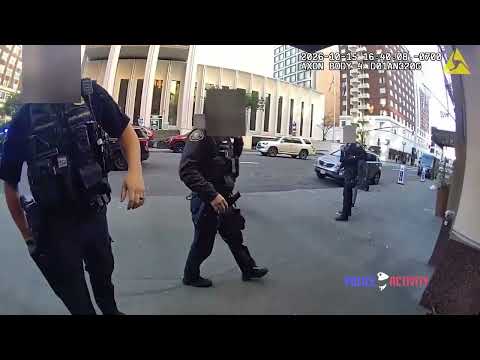
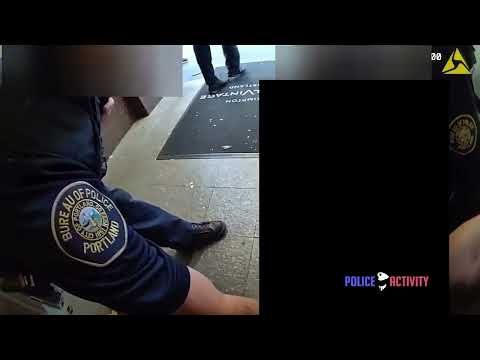
The source video published by PoliceActivity includes specific timestamp markers that delineate different perspectives recorded during the event. The video features bodycam footage from Officer Daniel Hall starting at the 0:00 mark, followed by bodycam footage from a witness officer at 1:42, and additional witness officer bodycam footage beginning at 3:20. These multi-angle recordings offer a more comprehensive look at the scene than any single viewpoint could provide.
However, viewers must understand the inherent limitations of body worn camera footage. Cameras capture light and sound from a fixed chest level position, which does not replicate the full peripheral vision, depth perception, or physiological stress experienced by an officer in real time. Analyzing police video requires caution, recognizing that video evidence is merely one component of a thorough, multi-layered investigative file that includes forensic reports and expert testimony.
Due Process, Verification, and Investigation Standards
Public safety explainers emphasize the importance of due process and formal investigative procedures following any critical incident involving law enforcement. In jurisdictions across the United States, officer involved shootings trigger mandatory investigations conducted by specialized homicide units, district attorney offices, and internal affairs divisions. These independent bodies examine every facet of the encounter, from initial dispatch notes to ballistic reports and medical examiner findings.
Readers seeking to verify details beyond what is visible in a social media video should consult official press releases from the Portland Police Bureau, public records requests, and findings published by oversight boards. Presuming innocence for all involved parties until a full legal review is concluded remains a cornerstone of the justice system, ensuring that transparency and fairness guide the public understanding of complex events.
Safety Lessons and Community Preparedness
Incidents involving sudden weapon attacks in crowded urban centers raise important questions regarding community safety and situational awareness. Law enforcement agencies frequently advise citizens to maintain awareness of their surroundings, identify exit routes in public spaces, and immediately report suspicious or aggressive behavior to emergency services via 911. Understanding how police respond to active threats helps communities comprehend the chaotic environment officers face upon arrival.
While technology such as body worn cameras and public video publishing channels provide unprecedented visibility into police operations, they also place significant responsibility on viewers to interpret information objectively. By relying on verified facts from official sources rather than speculation, the public can better engage with discussions surrounding law enforcement training, public safety policies, and community resilience.
Review of Police Dispatch and Response Timelines
The timeline provided in the source record offers a clear chronological framework of the emergency response. The initial dispatch call went out at 4:34 p.m. on Thursday, October 15, 2026, directing officers to the intersection of Southwest Broadway and Southwest Washington Street. Just five minutes later, at 4:39 p.m., Officer Daniel Hall located the suspect in the 400 block of Southwest Broadway. This tight five-minute window highlights the speed at which patrol officers mobilize during high-priority weapons calls.
Analyzing dispatch timelines allows public safety analysts to evaluate the efficiency of urban policing operations. In densely populated downtown areas, traffic congestion and pedestrian crowds can easily impede patrol vehicles. Despite these logistical hurdles, the responding officer arrived while the attack was actively occurring, enabling a direct intervention that halted further violence against the bystander on the sidewalk outside the hotel.
Every second counts when victims are being actively targeted with cutting instruments like box cutters. The precise time markers noted in the official description give investigators and the public a verifiable schedule of events to cross-reference against computer-aided dispatch logs and radio traffic recordings. Such documentation forms an essential pillar of transparency and accountability in contemporary law enforcement oversight.
Analysis of Evidence Recovery and Forensic Processing
Following the conclusion of the active phase of the incident, forensic evidence recovery became a primary focus for the responding police units. According to the video description, investigators recovered a box cutter at the scene. Furthermore, the specific blade for the box cutter was located on the ground right next to where a victim had been laying. These physical items provide tangible proof connecting the suspect to the reported assaults.
Forensic processing of weapons and surrounding areas involves careful documentation, fingerprint analysis, and DNA collection to establish a complete evidentiary chain. The location of the detached blade near the injured victim supports witness statements and officer observations regarding the physical struggle that took place on the pavement. Securing these items immediately ensures they are preserved for laboratory testing and subsequent legal proceedings.
Documenting the exact positions of weapons, blood evidence, and personal belongings helps forensic experts reconstruct the mechanics of the crime and the use of force encounter. Public reports that highlight these material details ensure that the narrative remains grounded in physical reality. As official investigations progress, forensic lab results add another layer of verifiable data to the public record surrounding the incident.
Role of Witness Officers and Multiple Bodycam Perspectives
The inclusion of multiple bodycam angles in the source video underscores the modern standard of comprehensive video documentation in police work. The description notes footage from Officer Hall as well as witness officers starting at 1:42 and 3:20 on the timeline. Witness officers arriving at a critical incident scene perform crucial roles, including establishing perimeter security, assisting with medical aid, and managing civilian bystanders.
When multiple officers record an event from different vantage points, investigators gain a panoramic view of the chaos and coordination on the ground. A single camera can miss important contextual details that happen just outside its frame, making secondary bodycam perspectives invaluable during internal reviews and independent investigations. These diverse viewpoints help corroborate officer statements regarding commands given, weapon retention, and the timing of medical interventions.
The presence of backup units also ensures that life-saving measures can be applied swiftly while other personnel manage the crowd and preserve the crime scene. Community members reviewing these multi-angle recordings can observe firsthand the cooperative teamwork required of police officers when handling dangerous, fast-evolving public safety emergencies in crowded urban environments.
Understanding Medical Response and Hospital Outcomes
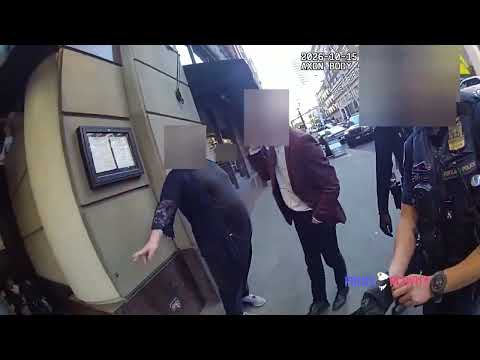
Emergency medical services and hospital care play a critical role in the aftermath of violent encounters. The source details that after trauma first aid was rendered at the scene by personnel, Eric Jonathan Hurtado was transported to a hospital. Despite additional lifesaving measures administered by medical staff at the facility, he was pronounced deceased. This outcome brings a tragic conclusion to an incident that began as a routine patrol dispatch for a weapons assault.
Concurrently, the two victims who suffered serious but non-life-threatening injuries were also transported to a hospital for professional medical treatment. The prompt mobilization of ambulances and paramedics is essential for stabilizing trauma patients in critical condition. Medical professionals operate under strict emergency protocols to address stab wounds and other severe physical injuries sustained during public altercations.
Explainer reports must address medical outcomes with neutrality and precision, adhering strictly to the facts provided in official summaries. By documenting both the lifesaving efforts at the scene and the subsequent hospital transports, the narrative reflects the full human impact of the event on all participants. These medical details complete the chronological accounting of the police response and its aftermath.
More source-attributed coverage appears in the Crime News section.
Frequently asked questions
Where did the incident occur?
The incident occurred in the area of Southwest Broadway and Southwest Washington Street in Portland, Oregon.
When did the event take place?
The event took place on Thursday, October 15, 2026, starting at approximately 4:34 p.m.
Who was identified as the suspect in the official records?
The suspect was identified as 36-year-old Eric Jonathan Hurtado.
Which officer discharged his firearm during the response?
Officer Daniel Hall discharged his department issued firearm during the intervention.
What weapon was recovered at the scene?
A box cutter and its detached blade were recovered at the scene by law enforcement.
Source video