
The Secret SS Plot To Replace Hitler With Himmler In 1945 is the kind of late-war story that feels unreal because it sits inside the final collapse of Nazi Germany. The source video from Mark Felton Productions describes a little-known conspiracy among senior SS figures who reportedly considered removing Adolf Hitler and placing Heinrich Himmler at the head of a desperate new regime.
This article is a military-history recap, not a police-case article. The key question is political and strategic: by early 1945, with Germany losing the war on multiple fronts, did parts of the SS begin to see Hitler himself as the obstacle to survival?
For related Navyago context, see Navy ship and Latest Stories.
Table of contents
Why The Plot Mattered
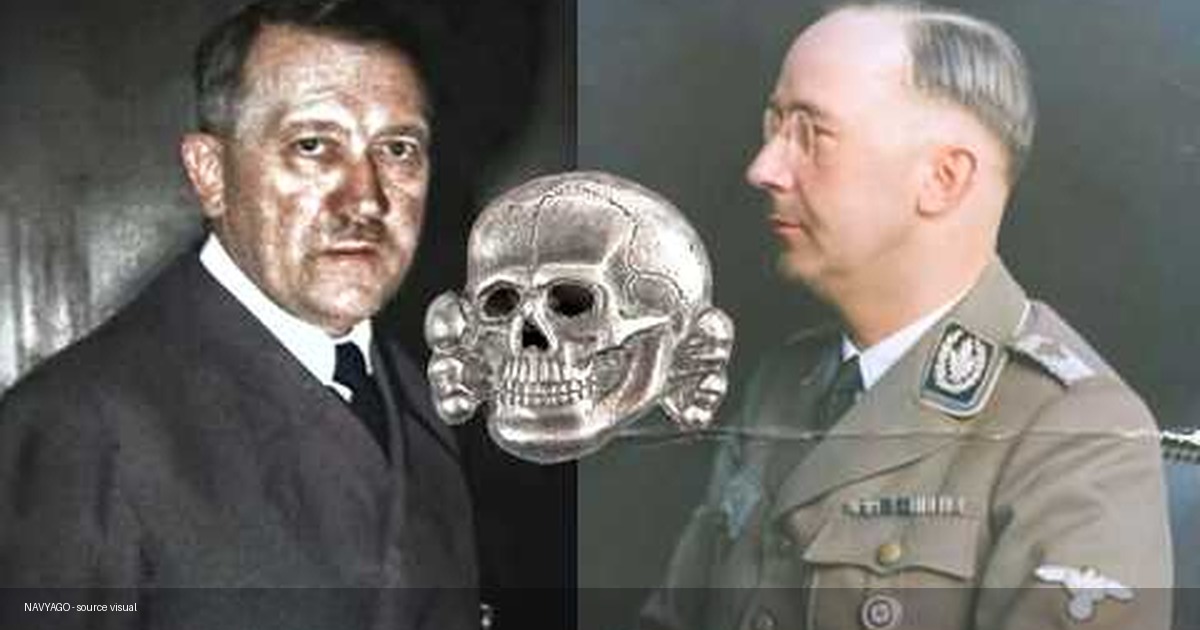
By 1945, the war was no longer a contest Germany could plausibly win. The Western Allies were pushing from one side, the Soviet advance was crushing in from the other, and Hitler’s command decisions had become increasingly detached from military reality.
The video argues that dissatisfaction was no longer limited to army officers like the men behind the July 1944 plot. It had also appeared inside the SS, the very organization usually associated with fanatical loyalty to Hitler.
That is what makes the story powerful. A plot inside the SS would not have been a democratic resistance effort. It would have been a survival move by men who understood that the regime was approaching destruction and that Hitler might drag everyone down with it.
Himmler At The Center
Heinrich Himmler was central because he controlled the SS, police, security services, and a vast bureaucratic machine. Yet the source stresses a paradox: despite enormous power, Himmler repeatedly hesitated.
He had already been involved in secret contacts and peace feelers behind Hitler’s back. He had reason to believe the war was lost. Senior military figures reportedly urged him to act. Still, the recurring theme is that Himmler could not bring himself to make the decisive move.
That hesitation matters. A conspiracy can exist on paper, in private conversations, and in the hopes of ambitious men. But without a central actor willing to seize authority, it remains a dangerous rumor rather than a coup.
The SS Generals Named
The video names several senior SS figures connected to the alleged plotting, including Felix Steiner, Richard Hildebrandt, Curt von Gottberg, Otto Ohlendorf, and Walter Schellenberg. Each belonged to a different part of the Nazi power structure, from military command to intelligence and internal security.
The shared concern, according to the recap, was that Hitler’s leadership had become catastrophic. Some figures reportedly saw Himmler as the only man with enough institutional power and foreign contacts to end the war in the West before Germany was completely destroyed.
That does not make the plot noble. It makes it revealing. These were men inside a collapsing dictatorship trying to calculate whether loyalty, self-preservation, and power could still be rearranged before defeat became total.
Peace Feelers And Fear
The most important pattern is the overlap between coup talk and peace feelers. Himmler and Schellenberg were linked to contacts through neutral channels, including Sweden and Switzerland. The aim was not unconditional moral reform. It was a separate understanding with the Western Allies.
The video also highlights how outside observers began to detect the tension. Reports, diaries, and intelligence summaries suggested that Himmler was being discussed as a possible guarantor of a post-Hitler arrangement.
But timing defeated the scheme. By April 1945, Berlin was collapsing, Hitler was in the bunker, and the Allied demand for surrender left little room for a last-minute SS reshuffle. Himmler would eventually be exposed, rejected, captured, and dead within weeks.
Final Takeaway
The strongest takeaway is that late-stage dictatorships can fracture from inside without becoming morally better. The SS plot described in the source was not a clean rescue of Germany. It was a final power calculation by men trapped inside a failing regime.
For Navyago readers, the story is useful because it shows how military defeat, intelligence channels, personality weakness, and institutional fear collided in the final months of World War II.
FAQ
Was this the same as the July 1944 plot?
No. The July plot was centered on army officers trying to kill Hitler in 1944. This source focuses on later SS-linked discussions in 1945 around Himmler and a possible replacement of Hitler.
Did Himmler actually overthrow Hitler?
No. The source presents Himmler as central but hesitant. He pursued contacts and peace feelers, but he never successfully removed Hitler or took power.
Source: https://www.youtube.com/watch?v=bdv5tS2KWZs