
black sea strike scenario is the focus of this Navyago explainer, but the first thing readers need to know is simple: the source video itself says parts of the story are dramatized and hypothetical. This is not a confirmed report of a real US and NATO strike. It is a military scenario built around real systems, tactics, and current geopolitical tensions.
Handled correctly, that still makes it useful for Navyago. The value is not in treating the narrative as news. The value is in studying the scenario’s logic: maritime surveillance, drones, air defenses, anti-ship weapons, fuel networks, radar sites, and the way logistics can decide whether an army can keep fighting.
For related Navyago context, see Navy ship and Latest Stories.
Table of Contents
Table of ContentsThis Is A Hypothetical Scenario
The video description includes an explicit disclaimer: some elements are fictional and designed as a “what if” analysis. That matters. Without that warning, the story could be misread as a confirmed battlefield update.
So this Navyago article treats the video as scenario analysis. The ships, aircraft, missiles, drones, and air-defense concepts are real-world military categories, but the particular chain of events should be read as a dramatized exercise.
How Readers Should Use The Disclaimer
The disclaimer is not a minor footnote. It controls the whole article. A black sea strike scenario can use real military vocabulary and still remain a hypothetical chain of events. Readers should therefore treat the video as a way to understand operational logic, not as proof that a specific strike has happened.
That distinction protects the reader from two common mistakes. The first mistake is treating every aircraft, drone, missile, or fuel depot mentioned in the scenario as if it appeared in a confirmed battlefield report. The second mistake is dismissing the entire video because it is hypothetical. Scenario analysis can still teach useful lessons when the boundaries are clear.
Navyago’s job is to keep those boundaries visible. This article explains the logic of logistics, surveillance, targeting, and maritime pressure while repeating the source warning that the sequence is dramatized. That is the safest way to make the story useful without turning a what-if exercise into false news.
Why Logistics Are The Center
The core idea is that a modern army can be weakened without attacking every front-line unit. If fuel, ammunition, rail movement, radar coverage, and command links are disrupted, armored forces can become stranded even if their vehicles remain intact.
That is why the source focuses on ships, drones, fuel depots, radar sites, and transport routes. The target is not only a single vehicle or warship. The target is the network that lets combat power keep moving.
In that sense, the scenario reflects a real military principle: logistics are often more decisive than raw firepower. A tank without fuel, a launcher without targeting data, or a drone swarm without coordination becomes far less dangerous.
Why Fuel, Radar, And Transport Matter
Fuel is the easiest example for readers to understand. A force can have capable vehicles, aircraft, and weapons, but those systems lose tempo if fuel distribution is interrupted. In a Black Sea setting, that can mean ports, rail links, road convoys, storage sites, and transfer points all become part of the operational picture.
Radar matters because a strike scenario is also a visibility contest. One side tries to detect aircraft, ships, drones, or missiles early enough to react. The other side tries to confuse, saturate, distract, or blind that detection network. A single radar site is not the whole defense, but it can be a key node in the larger chain.
Transport matters because ammunition and repair capacity have to keep moving. If a scenario focuses only on explosions, it misses the slower pressure that can decide a campaign. The source video is most useful when it pushes readers to ask how supplies move, who protects those routes, and what happens when a route becomes too risky to use.
Drones And Maritime Surveillance
The scenario uses maritime patrol aircraft, surface drones, cruise missiles, anti-radar weapons, and air-defense saturation to show how detection and targeting are connected. A P-8 Poseidon, for example, is valuable because it can watch maritime space and pass information into a wider network.
Surface drones represent another trend. They can threaten ships at lower cost and from multiple angles, forcing defenders to spend ammunition, attention, and radar time against small fast targets.
The result is a contest of systems. One side tries to see, track, and coordinate. The other tries to blind sensors, overwhelm defenses, and break the supply chain behind the front.
What The Scenario Teaches
The first lesson is that any article about this source must keep the disclaimer visible. Calling the scenario real would be misleading.
The second lesson is that modern naval conflict is not only ship versus ship. It is aircraft, satellites, drones, coastal missiles, electronic sensors, logistics hubs, and political risk all interacting at once.
The third lesson is that cheap systems can impose expensive decisions. A drone or decoy can force a defender to reveal a radar, spend a costly interceptor, or shift assets away from another mission.
What Readers Should Not Overclaim
Readers should not describe this black sea strike scenario as a confirmed NATO operation. They should not say a named unit carried out the sequence unless a reliable public source confirms it. They should also avoid claiming that the video reveals secret plans, hidden orders, or a real-time attack.
What readers can say is narrower and stronger: the scenario illustrates how logistics can become a target, how drones and maritime surveillance can interact, and why public military analysis often uses fictional sequences to explain real concepts. That wording keeps the article useful without making unsupported claims.
The same caution applies to headlines and social posts. A dramatic headline may help people understand why logistics matter, but it should not erase the source disclaimer. Navyago keeps the disclaimer in the article because it is part of the evidence, not a legal decoration.
Political Risk And Public Language
A black sea strike scenario also carries political risk because readers may connect a hypothetical sequence to real governments, alliances, and current conflicts. That is why public language matters. The article can discuss NATO, Russia, maritime surveillance, and logistics pressure as concepts in the source, but it should avoid writing as if a confirmed decision has been made.
Careful wording does not make the article weak. It makes the analysis more durable. A reader can learn why fuel depots, port access, radar coverage, and drone pressure matter without being told that a fictional sequence is an official plan. This is especially important when a video uses dramatic language to explain military pressure.
The best way to read the source is to ask what the scenario teaches if the fictional chain is removed. The answer is still useful: supply lines are vulnerable, maritime sensors shape targeting, drones can complicate defense, and logistics can become the center of a campaign. Those lessons remain valuable even when the specific sequence is not a confirmed event.
Navyago therefore frames the article as a source-based explainer. It gives readers the operational logic, preserves the source disclaimer, and leaves room for future updates if a verified public record later supports a real-world claim. Until then, the responsible status is scenario analysis. That small distinction is the difference between analysis and rumor, and it is the reason this article keeps the what-if label visible for readers.
Final Takeaway
The video works best as a military thought experiment. It dramatizes how a coalition might target the supply network behind an enemy force, especially in a contested maritime region like the Black Sea.
For Navyago readers, the responsible takeaway is not “this happened.” The takeaway is that future naval and land campaigns may be decided by who protects logistics, controls sensors, and keeps enough ammunition and fuel moving under pressure.
Frequently Asked Questions
Is the Navy Vector video a factual report?
No. The source description says parts of the video are dramatized and hypothetical. This article treats it as a scenario analysis.
Why focus on logistics?
Because fuel, ammunition, radar, and transport networks decide whether combat units can continue operating after the first strike.
How should readers describe this video?
Readers should describe it as a clearly labeled scenario analysis about Black Sea logistics, drones, maritime surveillance, and supply pressure. They should not describe it as a confirmed strike report.
What is the main Navyago takeaway?
The main takeaway is that logistics can be as important as front-line firepower. Fuel, radar, ammunition, ports, and transport routes shape whether military power can keep moving after the first exchange.
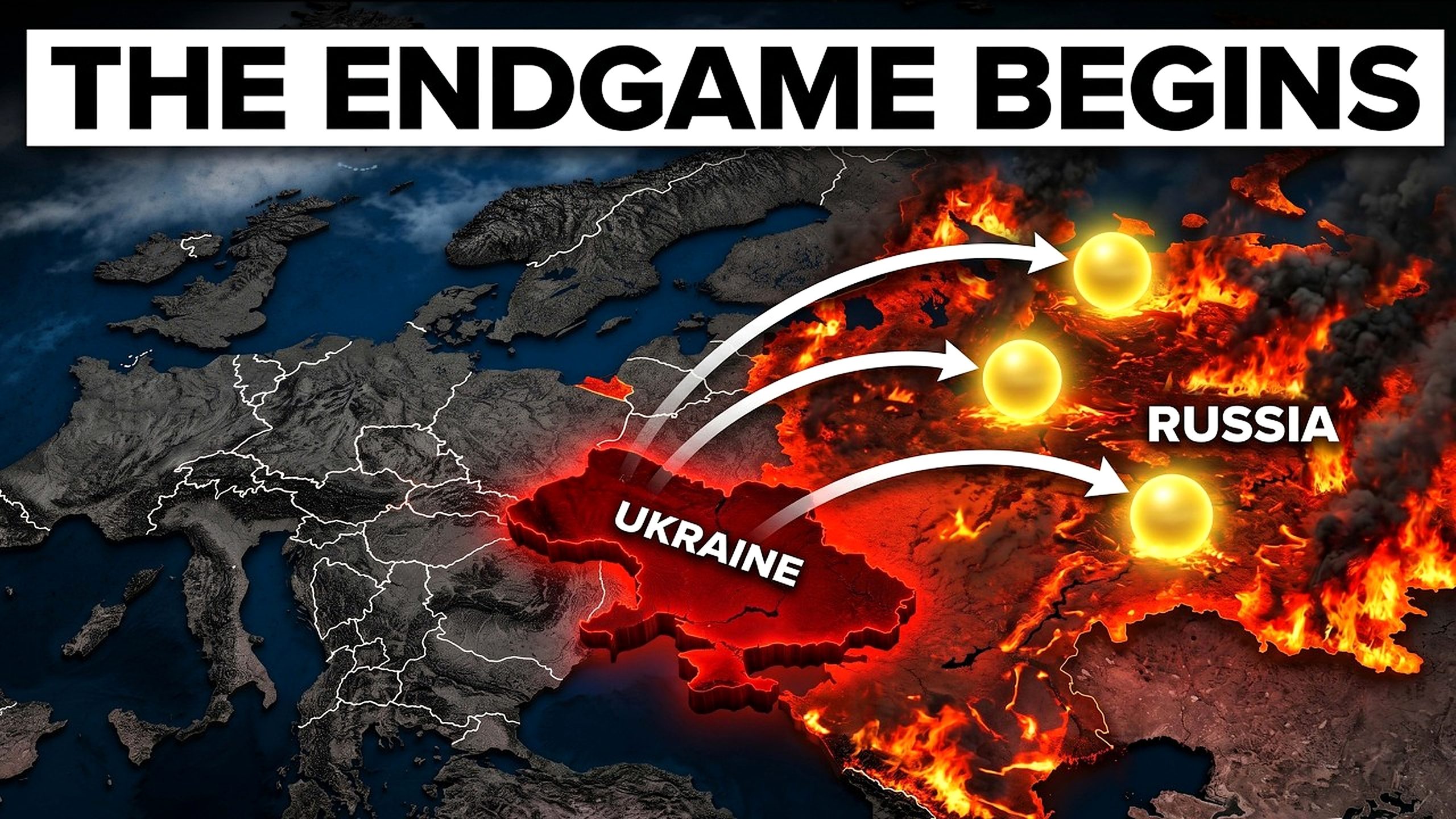
Source Video
Source: https://www.youtube.com/watch?v=-1PysiZfCU8