
Wheelchair lift electrical contactor recall 26V472000 covers certain 2024-2025 Phoenix and 2025-2026 Metrolite transit buses equipped with S-Series wheelchair platform lifts. According to NHTSA, a failed electrical contactor may keep the lift controls from stopping movement, increasing injury risk; dealers will install two diodes free of charge.
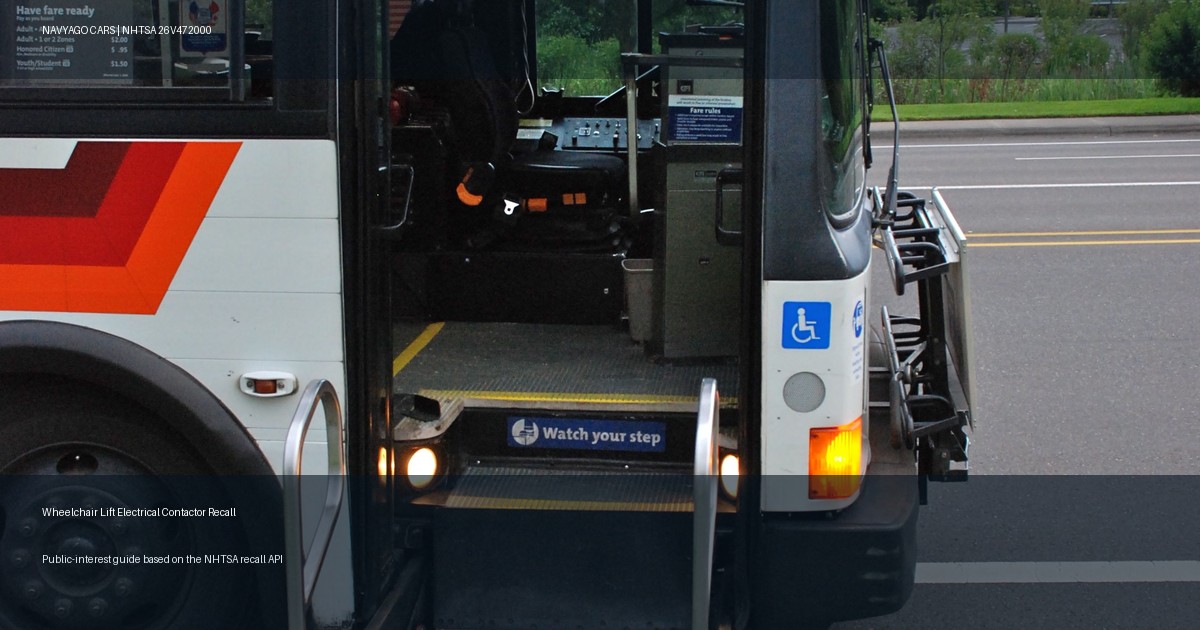
This article is a source-based recall explainer for fleet operators, drivers, riders, caregivers, and readers tracking adaptive mobility equipment safety. It uses the public NHTSA campaign API for campaign 26V472000 as the source of record. Where the source is narrow, the article stays narrow: it explains the vehicles named by NHTSA, the reported control-wiring risk, the planned free remedy, and the practical owner steps without adding unsupported claims.
Wheelchair lift electrical contactor recall: what NHTSA says
The NHTSA campaign record for 26V472000 names Coach and Equipment Mfg. Corp. as the recalling manufacturer. The component category is adaptive or mobility equipment, specifically wheelchair lift or ramp controls and control wiring. The agency record says the buses are equipped with certain S-Series wheelchair platform lifts, and the issue is an electrical contactor that may fail.
The practical concern is not a cosmetic label problem or a feature preference. NHTSA’s consequence field says a wheelchair lift that continues moving while occupied increases injury risk. That makes the recall important for more than the vehicle owner. The affected equipment can involve riders who rely on accessible boarding, drivers who operate the lift, agencies that schedule the vehicle, and maintenance teams responsible for removing risk from daily service.
The official API lists 131 potential units affected. That is a smaller number than many passenger-vehicle recalls, but the usage context matters. A transit bus or mobility vehicle may serve many riders across a route, shuttle contract, school program, medical transport schedule, or community transit network. A low unit count can still matter when the equipment supports people with limited mobility.
Which Phoenix and Metrolite buses are listed?
The NHTSA results for campaign 26V472000 return four model-year entries. They list 2024 Phoenix, 2025 Phoenix, 2025 Metrolite, and 2026 Metrolite transit buses. The summary field describes the affected group as certain 2024-2025 Phoenix and 2025-2026 Metrolite transit buses equipped with certain S-Series wheelchair platform lifts.
Readers should treat those model-year entries as a starting point, not as a VIN-level decision. Vehicle recalls are applied by VIN and equipment configuration. A bus that appears to match the year and model description may not be included, and a fleet record may need confirmation through the manufacturer, the NHTSA campaign lookup, or the VIN search route. Navyago is not listing a separate VIN database here because the official source for this article is the public NHTSA campaign API and lookup page.
For operators with multiple similar vehicles, the safest workflow is administrative: match fleet IDs to VINs, check the official recall lookup, contact Coach and Equipment if the status is unclear, and keep a written maintenance note once the remedy is completed. That kind of record matters because accessible equipment is not optional for riders who depend on it.
Why the lift-control risk matters
A wheelchair platform lift is different from a convenience accessory. It is part of the boarding system for riders who cannot use ordinary steps. When the lift operates normally, the rider, mobility device, attendant, or driver expects controlled movement and a predictable stop. The NHTSA summary says the contactor failure may prevent the controls from stopping the lift, so the safety question is direct: can the operator reliably stop motion when someone is on the platform?
NHTSA’s consequence statement is short, but it points to the central risk. A lift that continues to move while occupied can place the rider in a vulnerable position. The article does not claim that injuries have occurred because the API record used here does not say that. It also does not claim that every S-Series lift has this condition. The verified statement is narrower: the listed buses equipped with certain lifts are under recall because the electrical contactor may fail and prevent the controls from stopping movement.
That distinction matters for legal-safe reporting. Recall articles should help readers act on official information, not speculate about fault, defect rates, or individual maintenance quality. The useful reader question is whether a specific vehicle is included and whether the free remedy has been completed. The official campaign number, 26V472000, is the anchor for that check.
What owners and operators should do now
Owners and fleet operators should first identify any Phoenix or Metrolite buses in service that match the model years in the NHTSA record. The next step is to check the official NHTSA recall lookup and the manufacturer’s records for each VIN. A fleet that uses these vehicles for paratransit, shuttle, medical, senior, airport, or community mobility work should also tell dispatch and maintenance staff which vehicles are being checked.
The NHTSA remedy field lists Coach and Equipment customer service at 1-800-724-8464. Operators can use that contact to confirm applicability, remedy scheduling, and any documentation needed for a fleet record. Because owner notification letters are expected to be mailed August 3, 2026, some owners may see the public NHTSA record before the mailed notice arrives.
If a fleet has an internal safety or accessibility officer, this recall belongs in that workflow too. The issue touches vehicle safety, rider accessibility, and maintenance accountability. A practical operator note can record the campaign number, VIN check date, contact person, remedy appointment date, and the date the diode installation is completed. That keeps the response tied to the official record rather than memory or informal messages.
Individual riders who see a notice about a vehicle they use should not attempt to diagnose the lift. The better action is to ask the operator whether the vehicle is affected and whether the recall remedy has been completed. Riders can also share the NHTSA campaign number with a transit provider when asking for status.
Free wiring remedy and notification timing
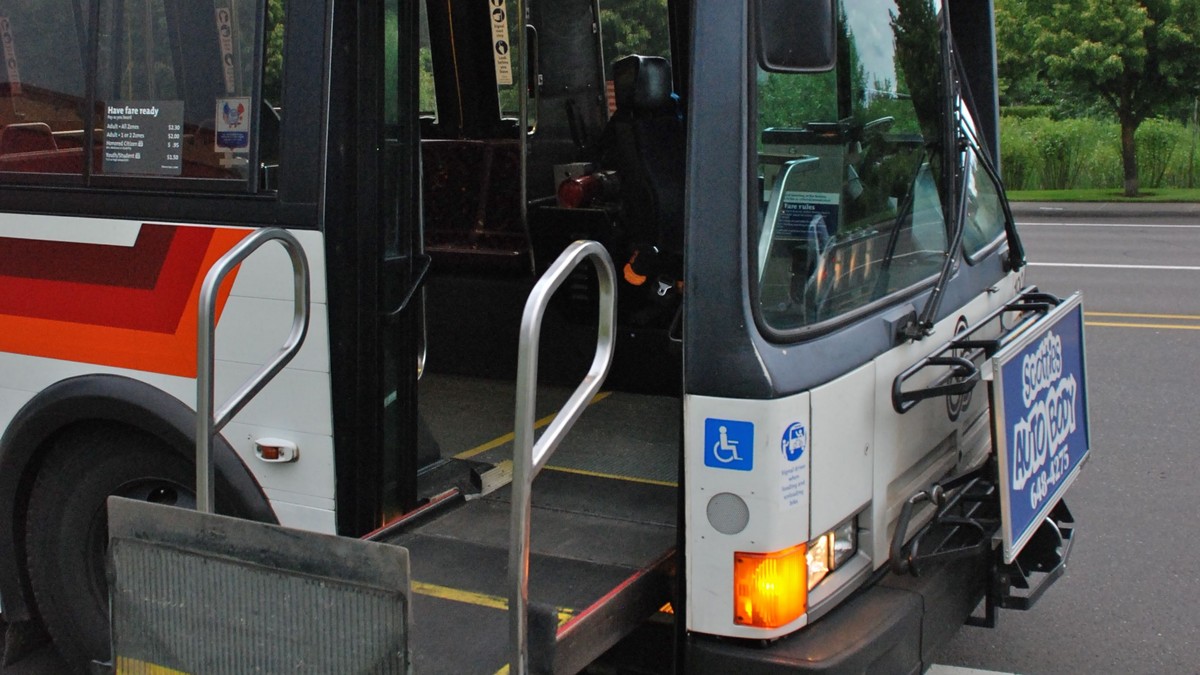
The remedy listed by NHTSA is specific: dealers will correct the wiring by installing two diodes, and the work is free of charge. The public record does not provide a labor time estimate, a parts shortage note, or a separate inspection procedure in the fields available through the campaign API. Navyago is therefore not adding those details.
Owner notification letters are expected to be mailed August 3, 2026. That date helps explain why an operator may have an official public record before a paper or email notice has been processed internally. For larger fleets, the letter may go to an administrative contact rather than the driver who uses the vehicle every day. That is one reason fleet managers should connect recall tracking with maintenance scheduling.
Because the remedy is tied to wiring correction, operators should keep the final repair documentation. A completed recall record can help during inspections, contract reviews, insurance conversations, and rider-safety reviews. The important point is not to create paperwork for its own sake. It is to make sure the bus that returns to service has a traceable remedy linked to NHTSA campaign 26V472000.
Why this recall is a public-interest safety issue
Vehicle recalls are often framed as owner news, but accessibility equipment recalls have a broader public-interest layer. A wheelchair lift can be the difference between independent travel and no trip at all. When a lift is unreliable, riders may face missed appointments, delayed transfers, unsafe boarding, or reduced confidence in a service they depend on.
This recall also shows why source-based reporting should keep the equipment function clear. The affected part described by NHTSA is the electrical contactor and related control wiring, not the rider’s mobility device and not the entire transit system. Clear wording helps avoid unnecessary alarm while still making the safety issue visible to the people who can act on it.
For Navyago readers who follow car and transport safety, this campaign sits next to other recall coverage such as our Ford Bronco engine harness recall guide. The vehicle types are different, but the reader task is similar: identify the campaign number, check whether the vehicle is included, understand the official risk statement, and confirm the free remedy.
What the NHTSA flags do and do not say
The API record for campaign 26V472000 lists parkIt as false, parkOutSide as false, and overTheAirUpdate as false. In plain English, the source record used here does not label this as a park-outside campaign, does not mark it as a park-it instruction, and does not describe the remedy as an over-the-air update.
Those flags should not be stretched beyond their meaning. They do not replace the recall remedy, and they do not tell a fleet to ignore the issue. They simply show that the public NHTSA API fields do not include those particular warnings for this campaign. Operators should still follow manufacturer and dealer instructions for affected vehicles and keep the remedy process documented.
The recall is also not a broad statement about every accessible transit bus or every wheelchair lift. The official record names certain Phoenix and Metrolite transit buses equipped with certain S-Series wheelchair platform lifts. That is why VIN and fleet-record checks remain the most precise way to decide what action applies to a specific bus.
FAQ
What is wheelchair lift electrical contactor recall 26V472000?
It is an NHTSA campaign for certain Coach and Equipment Phoenix and Metrolite transit buses equipped with S-Series wheelchair platform lifts.
How many buses are listed in the NHTSA record?
The NHTSA campaign API lists 131 potential units affected for campaign 26V472000.
What risk does NHTSA describe?
NHTSA says the electrical contactor may fail and prevent the controls from stopping the wheelchair lift, which can increase injury risk while occupied.
What is the listed remedy?
NHTSA says dealers will correct the wiring by installing two diodes free of charge.
When are owner letters expected?
The NHTSA record says owner notification letters are expected to be mailed August 3, 2026.
Source note and citation
This article is based on the public NHTSA campaign API for 26V472000. Navyago paraphrases the official manufacturer, model-year entries, component category, potential unit count, summary, consequence, remedy, notification timing, customer-service contact, and API flags. The article does not add unsupported claims about crash history, injury history, defect rate, compensation, contract compliance, or the condition of any individual bus.
Primary source: NHTSA campaign API for 26V472000. Public campaign lookup: NHTSA recall lookup for 26V472000. VIN lookup: NHTSA recalls by VIN. Image sources: wheelchair lift fully lowered photo and wheelchair lift fully raised photo on Wikimedia Commons.