
Florida Traffic Stop Turns Into Canal Escape as Suspect Makes One Critical Mistake
A Florida traffic stop quickly escalates when a suspect runs into a canal, leading to multiple charges and a deeper look at how one decision changed everything.
A routine traffic stop in Flagler County, Florida should have been a simple conversation between officers and a suspect, but within seconds, it turned into a chaotic chase that raises a bigger question about how quickly one bad decision can spiral out of control. When deputies attempted to stop a white SUV with two men inside, they were not responding to a violent crime in progress, but rather following up on a report from a neighbor who claimed he had just been assaulted. Instead of pulling over and talking, the passenger suddenly jumped out of the vehicle and started running, instantly shifting the situation from a calm investigation into an active pursuit.
“
”
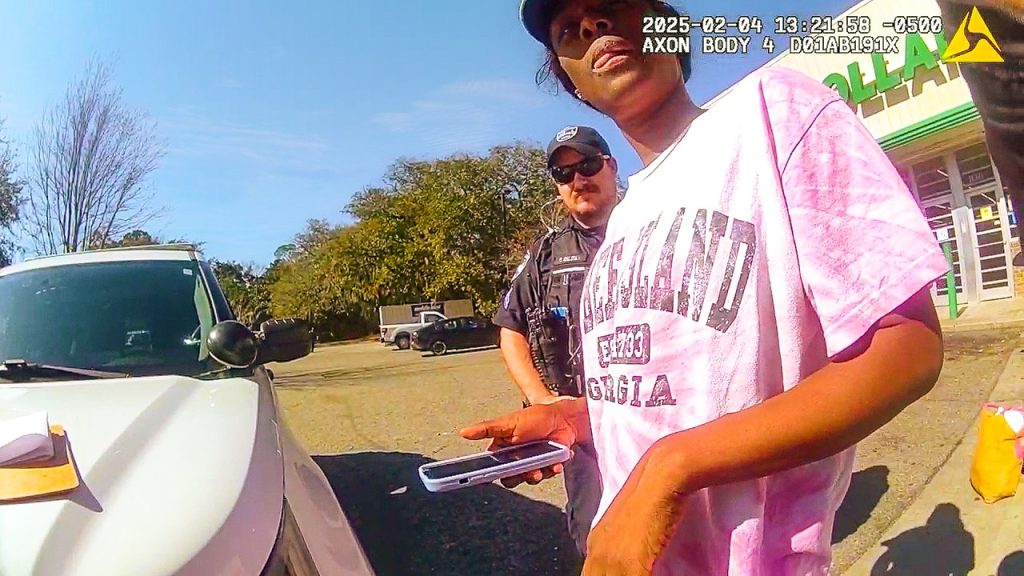
What makes this moment critical is not just the act of running, but what it represents. Officers were not chasing an armed suspect or responding to an immediate threat. They simply wanted to hear both sides of a story involving a reported fight. But the second the suspect chose to flee, everything changed. As deputies shouted commands and warned him to stop, the suspect ignored them and ran straight into a nearby canal, submerging himself in the water in an attempt to avoid being detained. This decision did not create distance from the situation, it amplified it. What started as a possible misdemeanor investigation was now turning into something far more serious.
“
”
Standing waist deep in the canal, the suspect continued to resist, questioning why he was being stopped and insisting that officers did not want to hear his side of the story. The irony in that moment is hard to ignore. Officers repeatedly told him that they were trying to understand what happened, but his refusal to cooperate only escalated the consequences. Deputies warned him in real time that continuing to run or resist would result in additional charges, including felony escape. Those warnings were not threats, they were predictions based on how these situations always unfold.
Eventually, the suspect climbed out of the canal and attempted to flee again through a wooded area, but by that point, multiple units had already positioned themselves around the perimeter. With aerial support being prepared and officers closing in from multiple directions, there was no realistic path to escape. He was quickly taken to the ground and restrained after a brief struggle. In that moment, the situation finally slowed down, but the damage had already been done. The conversation that officers initially wanted to have was now overshadowed by the suspect’s actions during the chase.
As deputies began questioning him after the arrest, the suspect admitted that running was a mistake. He explained that the incident started with a confrontation involving his neighbor, Kevin, who accused him of stealing a pack of cigarettes. According to the suspect, the situation escalated when Kevin made comments toward his family, leading to a physical altercation. He claimed that he felt threatened and reacted in the moment, but when officers later pointed out that the alleged victim was covered in blood while he had minimal visible injuries, the narrative became less clear. What could have been a straightforward case of conflicting stories was now complicated by his attempt to flee.
“
”
At the same time, officers also detained the driver of the vehicle, who failed to stop when deputies first activated their lights and sirens. Instead of pulling over immediately, the driver continued all the way to a residence, which officers interpreted as an intentional attempt to avoid the stop. This added another layer to the situation, showing how multiple decisions, even small ones, can compound into legal consequences. The individuals involved were not just being evaluated for the initial incident anymore, they were now facing charges related to their behavior during the encounter with law enforcement.
As the investigation continued, more context emerged about the confrontation that led to the call. The altercation reportedly stemmed from a personal dispute involving inappropriate comments and rising tensions between neighbors. Emotions escalated, and what might have been resolved with a conversation instead turned into a physical fight. But even then, that alone would not have resulted in the level of legal trouble that followed. It was the decision to run, to resist, and to avoid cooperation that ultimately transformed the situation.
“
”
The legal outcome reflected that shift. The suspect was charged with trespassing, resisting without violence, felony battery, and petty theft, although the theft charge was later dropped due to lack of evidence. He ultimately pleaded no contest and received a sentence that included time in county jail. Meanwhile, the driver also faced charges for resisting without violence. These outcomes highlight a pattern that law enforcement officers often point out, people rarely get into the most trouble for what started the incident, they get into trouble for what they do after.
This case serves as a clear example of how quickly control can be lost once a situation escalates. The moment the suspect chose to run, the focus of the interaction shifted completely. It was no longer about understanding what happened between two individuals, it became about pursuit, resistance, and enforcement. Every step he took away from officers added another layer of consequence, turning a situation that might have been resolved with a conversation into one that resulted in arrest, charges, and jail time.
“
”
There is also a broader point that applies beyond this single incident. Law enforcement encounters often begin with an opportunity for dialogue. Officers attempt to gather information, assess credibility, and determine what actually happened. But when someone decides to run or resist, they effectively close that window. At that point, the system responds not to what might have happened earlier, but to what is happening in that moment. Actions replace explanations, and decisions carry immediate consequences.
“
”
Looking at the full sequence of events, it becomes clear that this case was not defined by the original accusation, but by the chain of decisions that followed. A report of a fight led to a traffic stop, the traffic stop led to a foot pursuit, the pursuit led to additional charges, and those charges ultimately shaped the legal outcome. Each step built on the last, creating a situation far more serious than where it began.
So the question becomes unavoidable. If the suspect had simply stayed in the vehicle and talked to officers, how different would the outcome have been. Would it have remained a minor dispute between neighbors, or was the escalation inevitable. And more importantly, how often do situations like this unfold the same way, where the biggest consequences come not from the original act, but from the decision to run.
“
“