
Queen Creek police shooting outside church footage documents a rapidly escalating encounter in Arizona after relatives contacted authorities about troubling messages from an armed man. The video published by PoliceActivity combines a 911 call, a police phone conversation, drone footage, and officer body-camera clips. Readers searching queen creek police shooting outside church details can use the source sequence to separate what is shown from what is still under review. It is disturbing material, but it also provides a useful public-interest record of how officers moved from remote communication to an armed confrontation in a church parking lot.
`n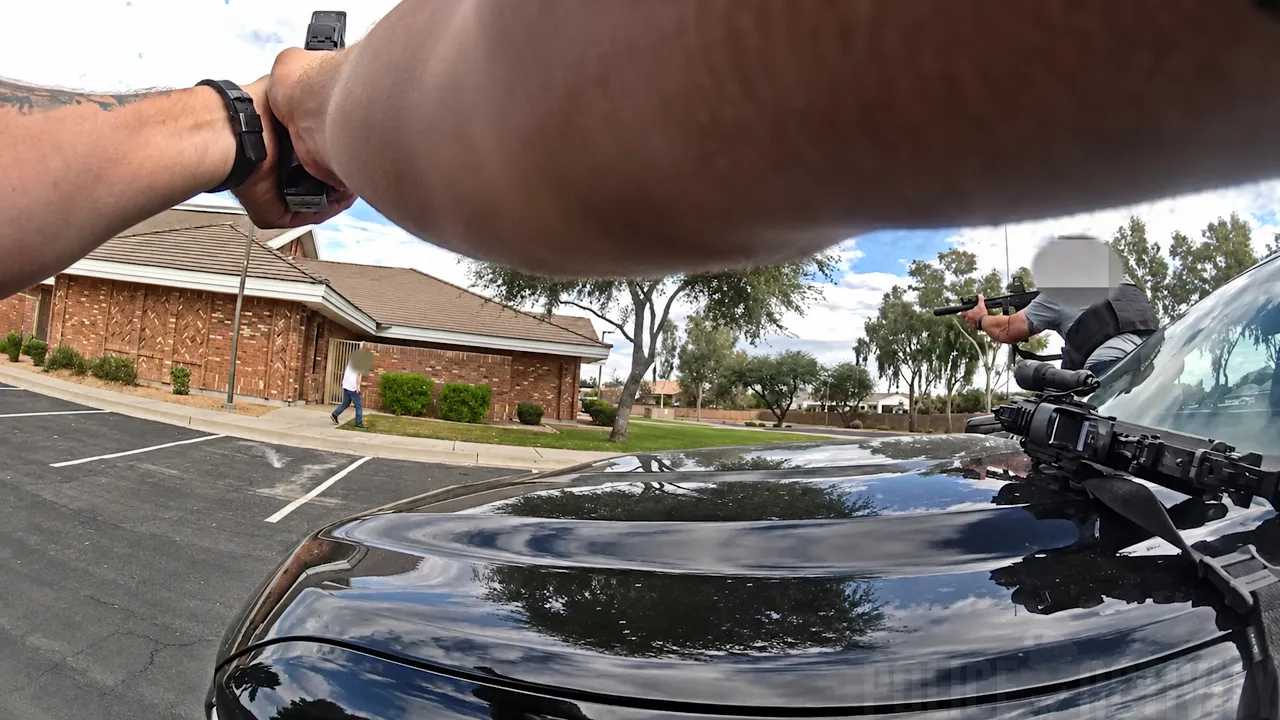 `n
`nThis article summarizes only what the released source shows and what the accompanying police account states. Queen creek police shooting outside church coverage should stay tied to the video, the call record, and the police account. It does not independently determine whether every tactical decision was justified. Officer-involved shootings are commonly reviewed through administrative, criminal, and sometimes civil processes, and a short edited video cannot replace a complete investigative file.
Table of contents
Queen Creek Police Shooting Outside Church: 7 Critical Facts
According to the description accompanying the PoliceActivity video, the queen creek police shooting outside church incident began on Wednesday, October 8, 2025, shortly before 2 p.m. in Queen Creek, Arizona. Family members reportedly told police that a man identified in the source as Bradley had sent concerning text messages, had access to firearms and vehicles, and was away from his residence. The source says officers first went to his home in an effort to locate him and begin de-escalation.
In the queen creek police shooting outside church timeline, police did not find him at the residence, but officers reached him by telephone. During that conversation, the man said he had a gun and declined to provide his location. Officers continued communicating while trying to find him. The video description says his vehicle was eventually located in the northwest area of a church parking lot near Chandler Heights and 204th Street shortly after 3 p.m.
The queen creek police shooting outside church encounter became more urgent when the man exited the vehicle and moved toward the church building. Police said bystanders were on another side of the property. The released footage shows officers issuing commands after the man acknowledged that he was armed. A less-lethal round was deployed, gunfire followed, and officers later used a Taser before approaching and removing a handgun from his waistband, according to the source account. The man was pronounced dead at the scene. PoliceActivity states that no officers or bystanders were injured.
What the Queen Creek Police Shooting Outside Church Emergency Call Reported
The opening portion of the queen creek police shooting outside church video presents an emergency call from a relative who said he was outside the United States with the man’s wife. The caller described messages that appeared to raise fears of self-harm and warned that the man reportedly had a firearm in his car. The caller also relayed a statement suggesting that the appearance of police could trigger an immediate reaction.
That queen creek police shooting outside church call is important because it establishes the information available to dispatchers before officers found the vehicle. Responding officers were not approaching a routine welfare check with no known hazards. Based on the caller’s report, they had reason to believe the person might be experiencing a severe crisis, possessed at least one firearm, could have access to additional weapons, and was alert to the possibility that police were searching for him.
At the same time, a caller’s account is preliminary information rather than a final factual finding. Dispatch information can be incomplete, emotional, or based on messages whose context is not fully understood. Officers must take credible warnings seriously while continuing to assess what they can directly observe. That tension—acting cautiously without treating every reported detail as conclusively proven—is central to understanding the response.
Police Contact and De-Escalation Efforts in the Queen Creek Police Shooting Outside Church Case
The released queen creek police shooting outside church audio includes an officer speaking calmly by telephone and asking what was going through the man’s mind. The officer said police wanted to make sure he was safe and did not harm himself. The man stated that he had a gun and warned against anyone approaching the vehicle. He also said he would not shoot at an officer, then ended the conversation without revealing his location.
Remote contact in a queen creek police shooting outside church response can create time and distance, two conditions that often help crisis negotiators and patrol officers reduce immediate danger. The officer’s questions were open-ended rather than accusatory, and the conversation focused on safety. However, the call did not produce the man’s location or an agreement to disarm. Once communication ended, police still had to locate him while considering the reported weapon and the possibility of danger to the public.
The source does not provide the complete call log, all text messages, every radio transmission, or the full duration of police communication. Viewers therefore should not assume the edited sequence contains every de-escalation effort. A complete review would normally examine dispatch records, phone records, officer reports, tactical planning, supervision, and whether specialized crisis resources were available.
What the Released Footage Shows in the Queen Creek Police Shooting Outside Church Parking Lot
Drone footage in the queen creek police shooting outside church release shows the vehicle parked near a large building identified by the source as a church. When the man exits, officers are positioned at a distance with cover and appear to be monitoring his movement. Body-camera audio captures an officer asking whether he is armed. He answers yes. Officers then repeatedly direct him to keep his hands visible, place a hand on his head, stop moving, and avoid reaching.
In the queen creek police shooting outside church footage, the man does not follow all of those commands. The video appears to show him continuing to move while officers focus on his waistband area. The source description states that he made motions toward a gun in his waistband and continued in the direction of bystanders. Because camera angles, compression, distance, and the speed of movement can affect perception, readers should be careful about claiming more precision than the footage supports.
After a less-lethal discharge, multiple gunshots are heard. Officers continue giving commands, including instructions to drop the gun and get down. The man remains upright or partially mobile for part of the sequence. Additional shots are then fired. The source says officers believed he again appeared to reach for the gun.
Officers do not immediately rush forward after the shooting. The video shows continued commands and a Taser deployment before the approach. Police said the Taser allowed officers to take the man into custody, remove the weapon, and begin lifesaving efforts. That delayed approach may look unusual to viewers, but an apparently injured person who may still have access to a firearm can remain a threat. Officers generally must balance urgent medical aid against the need to make the scene safe enough for responders to approach.
Why the Less-Lethal Sequence Matters
The Queen Creek police shooting outside church video includes a less-lethal attempt before officers fired their duty weapons. According to the source, a single-round less-lethal option was deployed but did not stop the man’s movement or produce compliance. Less-lethal tools are designed to reduce the likelihood of death, but they are not guaranteed to work. Heavy clothing, distance, aim, movement, pain tolerance, intoxication, mental state, and the specific device can all affect performance.
The presence of a less-lethal attempt does not automatically prove the later gunfire was lawful, just as its failure does not automatically make lethal force improper. The legal and policy analysis usually turns on what each officer reasonably perceived at the moment force was used: whether the person had access to a weapon, what movements occurred, where bystanders and officers were located, what warnings were given, and whether an immediate threat existed.
It is also important not to describe a less-lethal launcher as harmless. Such munitions can cause serious injury and are used under agency policy, not as casual warning shots. Investigators would likely examine who authorized or deployed the round, the distance involved, the intended target area, whether officers had coordinated lethal cover, and how the man’s actions changed after impact.
Questions the Video Cannot Answer
Released queen creek police shooting outside church footage can improve transparency, but it rarely answers every important question. First, the source does not include a complete unedited record from every available camera. A full investigation may contain additional body-camera views, drone video, surveillance footage, witness statements, photographs, measurements, and forensic evidence.
Second, the video does not establish the complete mental-health or medical context. Relatives’ concerns and the officer’s welfare-focused language suggest a crisis response, but the public should avoid diagnosing the man or assigning a motive. Medical history, toxicology, and private communications may be relevant, yet they must be handled carefully and may not become public.
Third, the footage does not resolve the precise legal review. Arizona law, constitutional use-of-force standards, department policy, and the facts reasonably known to each officer all matter. Different officers may have had different angles or information. Investigators also distinguish between the first volley and later shots, because each use of force is assessed in its own immediate context.
Finally, an edited public video does not show the final findings of any prosecutor, outside agency, internal review board, or civil court. Readers should look for official updates rather than treating online commentary as a verdict. Navyago applies the same caution in other source-based coverage, including its explainer on a bodycam-recorded escape from police custody.
Public-Safety and Crisis-Response Lessons
One queen creek police shooting outside church lesson is that relatives should report specific warning signs, access to weapons, vehicle information, phone numbers, and likely locations as quickly and accurately as possible. The caller in the released audio supplied several concrete details that could help police frame the risk. If a person may be suicidal or armed, family members generally should not attempt a surprise confrontation or independently retrieve weapons unless emergency professionals advise that it is safe.
A second queen creek police shooting outside church lesson is that communication alone may not resolve a crisis. Officers made telephone contact and used reassuring language, but the man did not disclose his location or agree to surrender the firearm. De-escalation is a process rather than a single phrase. It may include time, distance, cover, negotiation, less-lethal options, coordination with family, and limits on public access to the area.
A third lesson concerns public spaces. A church, school, store, or parking lot introduces people who may not know an emergency is unfolding. Police decisions can change when an armed person moves toward an occupied building or toward bystanders. Investigators should still verify where those people actually were and what officers could see, but their reported presence is a material part of the source’s explanation.
For community members who encounter a police perimeter, the safest response is usually to move away, follow clear directions, avoid sudden movement toward the scene, and refrain from approaching to record at close range. Recording from a lawful and safe location can support transparency, but entering a dangerous area can complicate both rescue and containment.
FAQ
When did the Queen Creek incident occur?
The PoliceActivity description says the Queen Creek police shooting outside church incident occurred on October 8, 2025. The source video was published on July 8, 2026.
Why did police first contact the man by phone?
According to the released account, officers were responding to family reports of concerning messages and firearm access. Telephone contact offered a way to check his welfare and attempt de-escalation before officers knew his location.
Was a less-lethal tool used?
Yes. The source states that officers deployed a single-round less-lethal option and that it was ineffective. The video later shows a Taser being used before officers approached.
Does the video prove the shooting was legally justified?
No. The video is relevant evidence, but a legal conclusion requires the fuller investigative record, applicable law, department policy, and review of what each officer reasonably perceived during each use of force.
Were any officers or bystanders injured?
PoliceActivity’s accompanying account says no officers or bystanders were injured. The armed man was pronounced dead at the scene.
Is the footage complete and unedited?
The public video combines selected segments from a call, phone contact, drone footage, and body cameras. Viewers should not assume it contains every recording or every moment investigators will review.
Source video
Source Note and Editorial Caution
This explainer is based on the PoliceActivity video titled “Arizona Police Shoot Armed Man Outside Church Entrance,†its accompanying description, and the audio and footage presented in that release. PoliceActivity attributes the incident account to Queen Creek police materials. The source URL is https://www.youtube.com/watch?v=LHsAU8hMJhc. The video contains lethal-force footage and may be distressing. This Queen Creek police shooting outside church source note is included so readers can verify the basis of the article.
Navyago has used attribution throughout because the released material represents a source account, not an independent adjudication. Details may change if Queen Creek officials, prosecutors, medical examiners, courts, or other reviewing bodies release additional records. This article will not characterize the deceased man’s intent, mental condition, or legal culpability beyond what the source directly supports.