
PIT maneuvers played a central role in a documented Arkansas incident where a driver allegedly attempted to evade law enforcement through city streets and highways. According to the video description, the October 1, 2026, pursuit involved speeds reaching up to 95 mph, multiple red light violations, and a final tactical vehicle intervention that concluded the event.
Overview of the Documented Arkansas State Police Pursuit
The available public record outlines a sequence of events starting on October 1, 2026, at approximately 10:32 a.m. Arkansas State Police Cpl. Stewart Condley was monitoring traffic near Calvary Temple Church on Highway 124 when he observed a blue Chevrolet Tahoe. The initial observation focused on a traffic infraction regarding a driver not wearing a seat belt. Public safety documentation shows that routine traffic stops can rapidly evolve into high speed pursuits when a motorist fails to yield to emergency lights.
According to the source text, the SUV initially continued at a slow speed before suddenly accelerating. The driver ran a red light and entered oncoming traffic lanes near a local Walmart store. Documented law enforcement actions in such scenarios prioritize stopping dangerous behavior while balancing the safety of the general public. Observers note that visual recordings of pursuits provide a raw look at tactical decisions made by troopers in real time.
As the incident progressed, the pursuit moved onto Highway 64 and various city streets. The summary notes that the driver engaged in high risk maneuvers to evade officers, including cutting through a parking lot, ignoring stop signs, and driving onto a pedestrian walkway. Police video formats capture these movements from dashboard and body mounted cameras, offering an objective view of the challenges faced by responding officers during mobile interventions.
Analysis of Tactical Vehicle Interventions in the Field
During the course of the event, Cpl. Condley attempted several tactical vehicle interventions, commonly referred to as TVIs or PIT maneuvers, to stop the fleeing SUV. The source states that the driver repeatedly managed to escape these initial attempts and continued fleeing. Vehicle intervention techniques require precise timing, speed matching, and spatial awareness to execute safely without causing catastrophic crashes involving innocent motorists.
Video footage of tactical vehicle interventions serves as a primary source for training and public review. While dashboard cameras show the physical execution of the maneuver, they do not always convey the internal calculations made by the driver. Law enforcement agencies evaluate these recorded engagements to ensure compliance with department policy, procedural standards, and the constitutional principles governing the use of force during vehicle pursuits.
The pursuit featured speeds reaching approximately 95 mph on open stretches and up to 80 mph on State Highway 7. High speed operations demand rigorous training in vehicle dynamics, braking thresholds, and environmental hazard assessment. When a fleeing vehicle weaves into opposing traffic or travels the wrong way around traffic circles, the potential for severe collisions increases significantly for all road users.
Progression of the Route Through Russellville Streets
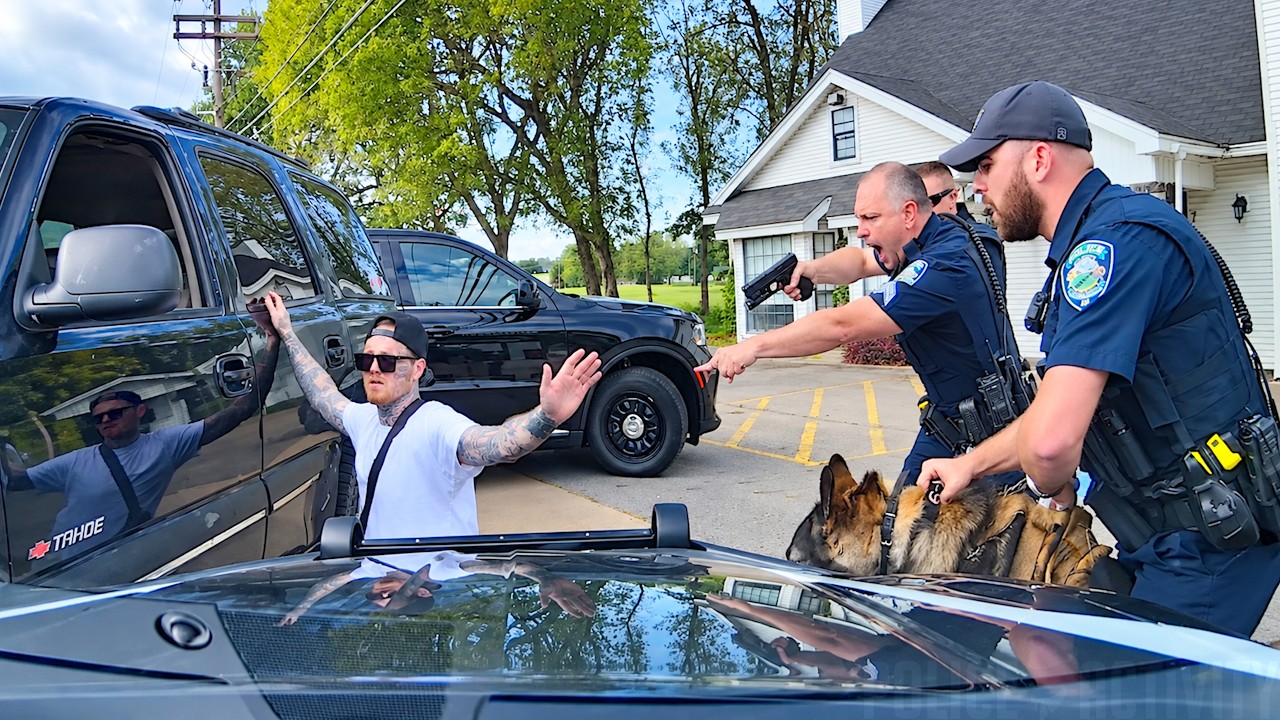
The documented route wound through multiple residential and commercial zones in Russellville, Arkansas. The driver traveled the wrong way around a roundabout before turning onto H Street, according to the incident report. Navigating unfamiliar or congested urban environments during an emergency response introduces unpredictable variables that require constant communication between primary units and assisting agencies.
Additional risks documented in the source description include ignoring a stop sign at North Arkansas Avenue and crossing multiple lanes of traffic. At the intersection of West H Street and North El Paso Avenue, the Tahoe nearly collided with a red Ford Ranger pickup. Near misses captured on public safety recordings highlight the inherent unpredictability of mobile pursuits and underscore why agencies continuously review pursuit authorization guidelines.
Russellville police officers assisted state troopers throughout the incident. Interagency coordination is a standard component of extended pursuits, ensuring that perimeter control, traffic diversion, and apprehension teams are positioned correctly. Public safety explainers rely on these documented cooperative efforts to explain how multiple jurisdictions respond to dynamic unfolding events on public roadways.
Resolution and Apprehension of the Suspect
With the danger continuing to escalate, Cpl. Condley carried out another tactical vehicle intervention that successfully brought the SUV to a stop. The final maneuver ended the mobile phase of the incident. Law enforcement professionals utilize these controlled interventions to terminate pursuits before suspects can enter dense pedestrian zones or cause catastrophic traffic collisions.
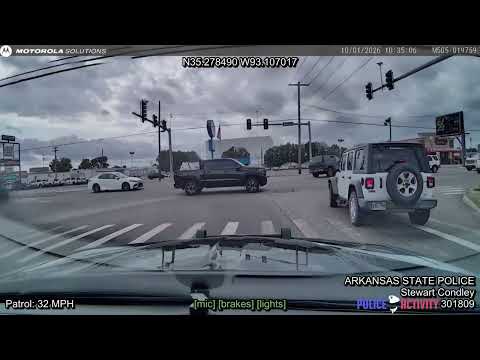
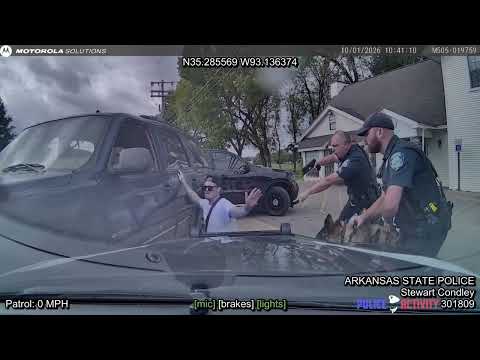
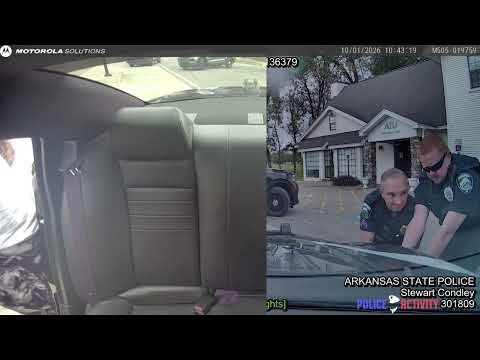
Following the stop, Russellville police officers assisted in taking the driver and a female passenger into custody without further incident. The source notes that the passenger was subsequently released without charges. Documented protocols require officers to separate occupants, investigate individual levels of involvement, and release individuals who lack demonstrable culpability in the reported offenses.
The driver was identified as 33-year-old Drake Cordero Rickerson of New Blaine. Following his apprehension, Rickerson was transported to the Pope County Detention Center for processing. The incident report also notes that the pursuit left the trooper’s patrol vehicle damaged and out of service, illustrating the physical toll that dynamic vehicle interventions can take on law enforcement equipment.
Legal Charges and Documentation of Evidence
Official records detail the specific allegations brought against the accused following the vehicle stop. According to the incident report, troopers found a small amount of suspected marijuana in a bag strapped to Rickerson. Physical evidence recovered at the scene is cataloged according to strict chain of custody rules to ensure integrity for subsequent judicial proceedings.
Rickerson faces multiple formal charges stemming from the October 1, 2026, incident. The listed charges include felony fleeing that allegedly created a substantial danger of death, felony criminal mischief, reckless driving, possession of a controlled substance, refusal to submit to arrest, and several traffic violations. Every individual facing criminal charges is presumed innocent until proven guilty in a court of law.
Public safety explainers emphasize that arrest charges represent initial allegations filed by law enforcement authorities. The formal judicial process requires prosecutors to present evidence before a judge or jury, where the accused has the right to legal representation and due process. Court records and upcoming hearings will determine the final legal outcome of these filed allegations.
Limitations of Video Evidence in Public Safety Reporting
Video recordings published by channels like PoliceActivity provide valuable visual documentation of public safety events, yet they possess inherent limitations. A dashboard camera captures only the perspective of the mounting vehicle, often missing peripheral actions, internal vehicle conditions, or audio communications among troopers. Analysts must rely on supplementary written reports to gain a complete picture of an incident.
Reviewing law enforcement media requires understanding the difference between raw footage and verified investigative files. While cameras record external actions in real time, they cannot reveal the subjective intent of a driver or the immediate mechanical state of a fleeing vehicle. Comprehensive reporting combines video analysis with official police summaries, court filings, and public records.
Due process standards ensure that video clips shared online do not replace formal courtroom adjudication. Independent journalists and media explainers use these recordings to inform the public about police operations while maintaining strict neutrality regarding the final guilt or innocence of any named individual. Public records remain the definitive source for verifying case developments.
Verifying Public Safety Records and Court Proceedings
Readers seeking to verify details of an arrest or ongoing court case should consult official municipal, county, or state repositories. Police department incident reports, jail booking logs, and court dockets are matters of public record that provide verified timelines and official charge sheets. These documents are essential for tracking cases beyond initial social media summaries.
Arkansas judicial databases allow interested parties to follow case numbers, scheduled court dates, and legal motions filed by defense counsel or prosecutors. Relying on primary government sources ensures accuracy when reporting on criminal justice matters. Public safety transparency depends on the availability of these accessible records for community oversight.
Understanding the administrative side of law enforcement involves reviewing agency policies on vehicle pursuits, use of force, and tactical interventions. Police oversight boards and internal affairs divisions examine video evidence alongside telemetry data to evaluate officer conduct. This multi-layered review structure helps maintain accountability within modern police departments.
Community Safety and Defensive Driving Lessons
Incidents involving high speed pursuits highlight critical lessons regarding road safety and defensive driving for the general public. When emergency vehicle lights and sirens appear in a rearview mirror, drivers are legally required to yield the right of way and pull over safely to the right shoulder. Reacting promptly prevents interference with responding units and reduces intersection collision risks.
Motorists are advised to avoid sudden lane changes or abrupt stops when emergency vehicles are navigating through traffic. Maintaining situational awareness through regular mirror checks and listening for sirens allows drivers to anticipate approaching hazards. Public safety campaigns continually reinforce these foundational rules to protect both civilians and responding personnel.
Law enforcement agencies evaluate pursuit outcomes to refine tactical training programs and minimize risks to bystanders. By studying past events documented on video, departments update guidelines regarding when to initiate or terminate a pursuit based on traffic density and environmental danger. Education remains a vital tool for fostering safer roadways across all communities.
Interpreting Law Enforcement Terminology and Procedures
Understanding public safety reports often requires familiarity with specific law enforcement terminology, such as tactical vehicle interventions and felony fleeing classifications. When a driver refuses to stop after a lawful command from a marked police vehicle, law enforcement agencies classify the action as evading or fleeing. Depending on the speed, environment, and potential for harm, this act can be elevated from a misdemeanor to a felony charge under state law.
The term tactical vehicle intervention encompasses several distinct maneuvers designed to stop a moving vehicle safely. While the television portrayal of police pursuits often highlights dramatic collisions, actual police training emphasizes controlled contact intended to minimize injury. Troopers undergo rigorous behind the wheel instruction to master the physics of weight transfer and vehicle dynamics required to execute a TVI effectively without losing control of their own patrol units.
Processing a suspect through the legal system involves distinct phases, starting with booking at a detention facility followed by an initial appearance before a judge. During this phase, formal charges are read, constitutional rights are explained, and conditions of release or bond are established. Terms like suspect, accused, and alleged ensure that media reports maintain neutrality and respect the legal presumption of innocence until a court renders a final verdict.
Recognizing the operational realities behind police terminology helps the public appreciate the complexity of field encounters. Law enforcement officers must make split second decisions based on training, departmental policy, and the immediate threat environment. By examining these procedures objectively through documented sources, readers gain a clearer understanding of how police agencies handle high risk situations on public roadways.
Evaluating the Broader Impact of Vehicle Recalls and Safety Equipment
While the primary focus of this incident centers on driver behavior and police intervention, public safety discussions frequently encompass vehicle integrity and safety equipment standards. Modern automobiles and sport utility vehicles are equipped with numerous safety features, ranging from mandatory seat belt reminders to advanced collision avoidance systems and reinforced passenger compartments designed to withstand severe impacts.
The initial trigger for the traffic stop documented in the source was the driver traveling without a seat belt. Seat belt compliance remains a cornerstone of automotive safety, engineered to keep occupants secured within their seats during sudden stops, swerves, or collisions. When motorists neglect to wear seat belts, the risk of severe injury or ejection during an unexpected crash or tactical intervention increases exponentially, underscoring the vital function of basic safety equipment.
Furthermore, the performance of vehicles during high speed maneuvers highlights the importance of robust manufacturing standards and regular mechanical maintenance. Patrol vehicles and civilian SUVs alike undergo rigorous testing to ensure braking systems, steering components, and stability controls function under extreme stress. When equipment fails or is operated beyond design limits, the potential for accidents escalates, impacting both law enforcement efficiency and civilian safety.
Evaluating public safety incidents through a comprehensive lens encourages a deeper appreciation for the intersection of human behavior, vehicle engineering, and regulatory standards. Whether examining driver compliance, police tactics, or automotive safety features, informed observers recognize that mitigating roadway risks requires vigilance from motorists, adherence to the law, and reliable equipment maintained to the highest industry standards.
More source-attributed coverage appears in the Crime News section.
Frequently asked questions
When did the documented pursuit take place?
The pursuit took place on October 1, 2026, starting at about 10:32 a.m.
Where did the incident occur?
The incident occurred in Russellville, Arkansas, moving across Highway 124, Highway 64, and State Highway 7.
Who was arrested following the vehicle stop?
Drake Cordero Rickerson, a 33-year-old from New Blaine, was taken into custody.
What charges did the driver face according to the report?
He faced felony fleeing, felony criminal mischief, reckless driving, drug possession, refusal to arrest, and traffic violations.
What happened to the passenger in the vehicle?
The female passenger was released without charges after being taken into custody.
Source video