
Cambridge police shooting details emerged after a public video release outlined an August 2026 encounter in Central Square where officers confronted a driver who allegedly pulled a revolver. According to the source description, the incident led to a judicial review that concluded the use of force was objectively reasonable under the circumstances.
Overview of the Cambridge Police Response
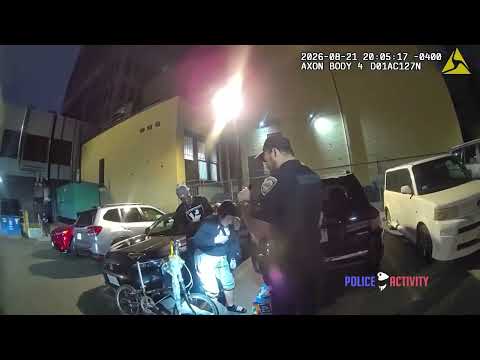
According to the video description provided by PoliceActivity, the incident took place on August 21, 2026, shortly before 8 p.m. in Cambridge, Massachusetts. Cambridge Police Officers responded to a 911 call reporting people loitering in a private parking lot located behind 675 Massachusetts Avenue in Central Square. The initial response involved multiple officers arriving at the scene to investigate the reported activity.
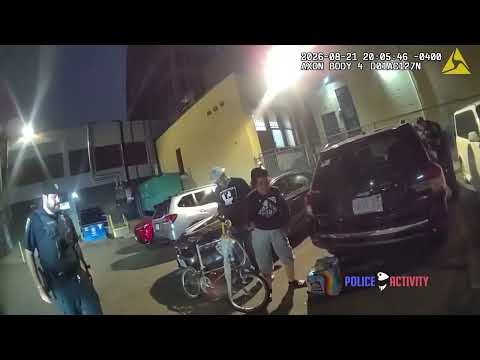
Officers James Nestor and Saimon Teclezghi arrived first at the location, followed by field training officer Donald Conrad and trainee Officer David Kerns. Upon arrival, the responding officers recognized two individuals at the scene. Furthermore, Officer Conrad recognized sixty-four-year-old William Woodworth, who was sitting inside a parked Jeep Compass within the private parking lot.
Prior History and Officer Recognition
The source notes that Officer Conrad had prior professional encounters with William Woodworth before the August 21 incident. Conrad reportedly recognized Woodworth from two previous police interactions that had occurred prior to this date. These past encounters formed part of the context for how the officers approached the vehicle during the 911 call investigation.
According to the video details, one of the prior incidents involving Woodworth had resulted in the recovery of a firearm by law enforcement. Another encounter, which took place about a month before the August 21 event, involved police finding crack cocaine and a double-sided machete. These details were documented in the background information released with the footage.
Interaction Inside the Jeep Compass
During the August 21 encounter, Officer Conrad questioned Woodworth about suspected drug use while the latter remained inside the Jeep Compass. Following this questioning, Conrad ordered Woodworth to exit the vehicle. The sequence of events escalated rapidly from this point onward as the driver began the process of getting out of the car.
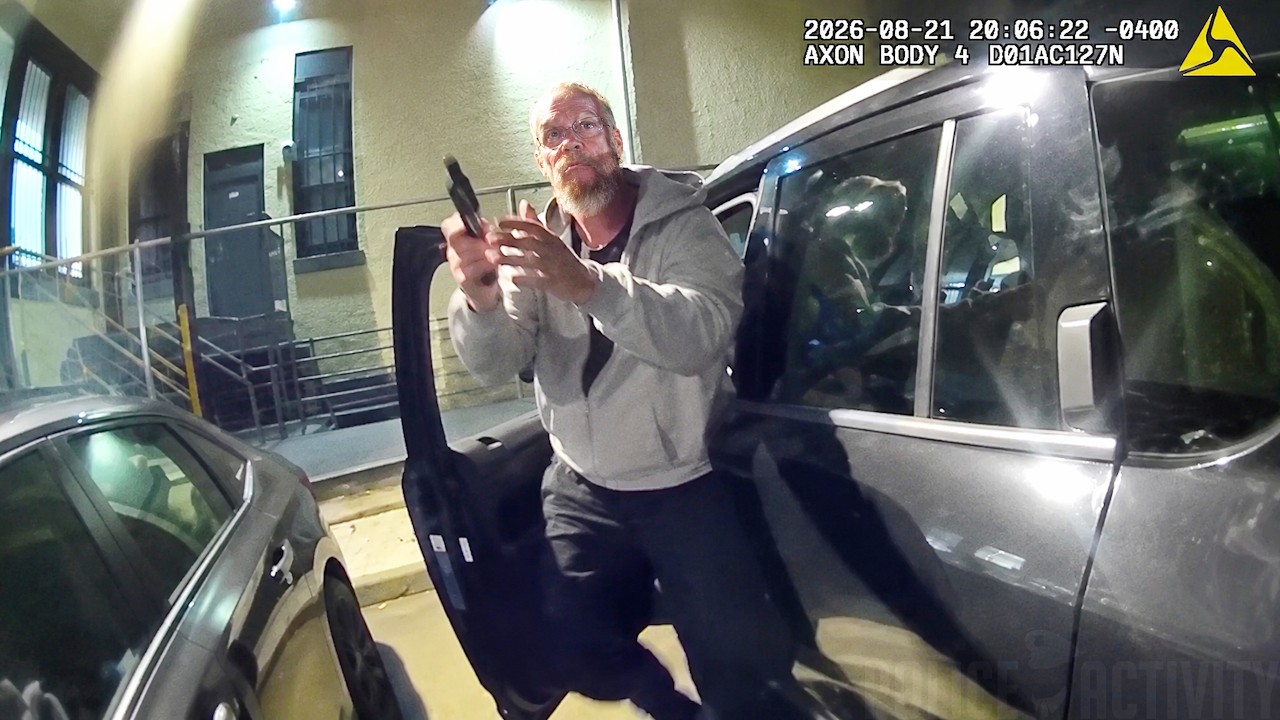
As Woodworth began to exit the Jeep, he reached under the driver seat and pulled out a point-three-eight-caliber revolver. According to the description, Officer Conrad repeatedly ordered him to leave the gun and put it down. Woodworth allegedly ignored these verbal commands and instead turned toward trainee Officer David Kerns, pointing the firearm at him with both hands.
Physical Struggle and Discharge of Firearms
In response to the weapon being pointed at him, Officer Kerns immediately grabbed Woodworth arms in an attempt to disarm him. As Woodworth and Officer Kerns engaged in a physical struggle inside or near the vehicle, Officer Conrad fired six times through the passenger-side window. During this sequence, Conrad firearm briefly malfunctioned and ejected a live round.
Concurrently, Officer Nestor, who heard the commotion and observed Woodworth pointing the gun at Officer Kerns, discharged one additional shot. The entire confrontation, spanning from Conrad initial interaction with Woodworth to the shooting itself, lasted less than sixty seconds according to the timeline provided in the video summary.
Medical Aid and Autopsy Findings
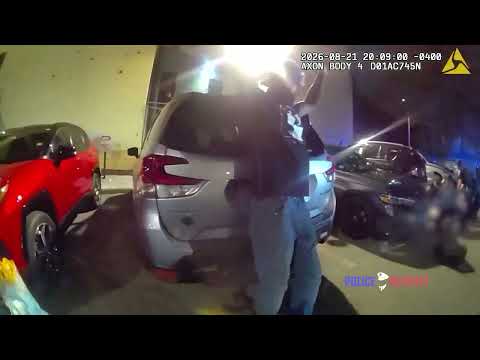
Following the gunfire, officers pulled Woodworth from the Jeep and immediately began administering first aid at the scene. Emergency medical interventions were attempted, but Woodworth was ultimately pronounced dead at the location. Investigators subsequently recovered his point-three-eight Special revolver, which was found loaded with five live rounds.
An official autopsy later determined that Woodworth suffered five gunshot wounds during the encounter. These injuries included wounds to his head, shoulder, and back. The physical evidence collected at the scene underwent standard investigative review alongside the witness statements and video recordings.
Judicial Review and Legal Findings
After reviewing all available evidence, Cambridge District Court Judge Holly Broadbent evaluated the actions of the officers involved. The judicial review encompassed body-camera footage, surveillance video, witness statements, and ballistic evidence collected from the scene of the shooting in Central Square.
Judge Broadbent concluded that the use of deadly force by Officer Conrad and Officer Nestor was objectively reasonable and justified. The court found that Woodworth had ignored commands to drop the firearm before pointing it directly at Officer Kerns, thereby creating an imminent danger to the officers and nearby civilians. Consequently, the judge determined that the officers were not criminally responsible for his death.
Understanding Police Video Formats and Limitations
Publicly released police videos, such as those shared by archive channels, provide a visual record of critical incidents but require careful contextual analysis. Viewers should note that body-camera footage captures events from a specific vantage point and may not fully reflect the entire sensory environment experienced by officers on the scene during high-stress encounters.
Verifying the facts of any officer-involved shooting relies on comprehensive public records, independent investigative findings, and judicial rulings rather than raw video alone. Official reports from district attorney offices, internal affairs divisions, and court documents offer the necessary framework to understand the legal standards applied to the use of force.
Public Safety Lessons and Due Process
Incidents reported in commercial parking lots highlight the complex nature of routine police responses to loitering and suspected narcotics activity. Law enforcement training protocols emphasize verbal de-escalation, rapid assessment of lethal threats, and the protection of both fellow officers and members of the public during sudden armed confrontations.
Due process ensures that every critical incident undergoes rigorous legal scrutiny by independent judicial authorities. Reviews by judges, such as the evaluation conducted by Judge Holly Broadbent in this case, serve to assess whether police actions align with established legal standards regarding the justified use of force in defense of life.
Surveillance Footage and Investigative Evidence
The investigative phase of the Cambridge police encounter relied heavily on gathering diverse forms of physical and digital evidence to reconstruct the timeline of events. Investigators collected surveillance video from commercial properties near 675 Massachusetts Avenue to establish the movements of individuals prior to the arrival of law enforcement units.
In addition to fixed security cameras, body-worn camera recordings from multiple officers provided synchronized audio and visual perspectives of the interaction inside the parking lot. Digital forensics teams examined these recordings alongside witness statements provided by individuals who observed the commotion from nearby locations in Central Square.
Ballistic evidence recovered from the scene underwent laboratory analysis to verify the operational status of the firearms involved and to match shell casings with the weapons discharged by the officers. The integration of forensic science with video review allows oversight authorities to evaluate the consistency of statements provided by personnel involved in critical incidents.
Tactical Positioning and Urban Space Constraints
Operating in urban commercial environments like Central Square presents distinct logistical challenges for police patrols responding to loitering or trespassing complaints. The parking lot behind 675 Massachusetts Avenue required officers to navigate parked vehicles, pedestrian walkways, and potential structural blind spots during their initial approach.
Tactical positioning during vehicle contacts is designed to minimize exposure while maintaining visual contact with occupants. When officers approach a vehicle whose occupants are known to have prior weapons involvement, standard operational caution dictates specific spacing and verbal command sequences to manage unexpected movements.
The rapid escalation that occurred within sixty seconds demonstrates how quickly urban patrol encounters can shift from routine investigations to high-risk armed confrontations. Training scenarios frequently emphasize spatial awareness and rapid threat assessment to prepare personnel for split-second decisions in confined public spaces.
Forensic Ballistics and Firearm Malfunction Analysis
The physical evidence recovered from the Jeep Compass included the point-three-eight-caliber revolver used by Woodworth, which forensic examiners inspected to determine its loaded capacity and operational condition. Investigators confirmed that the revolver contained five live rounds upon recovery following the physical struggle inside the vehicle.
During the exchange of gunfire, Officer Conrad experienced a mechanical firearm malfunction that resulted in the ejection of an unspent live round alongside discharged casings. Forensic firearms examiners analyze such malfunction events to assess weapon reliability, maintenance records, and the mechanical stress placed on service pistols during rapid deployment.
Ballistic experts also examined the trajectory of the six rounds fired by Officer Conrad and the single round fired by Officer Nestor. These physical measurements help correlate bullet impacts with the medical examiner autopsy findings regarding the wounds sustained by Woodworth during the encounter.
Administrative Review and Departmental Protocols
Beyond judicial evaluations conducted by courts like the Cambridge District Court, law enforcement agencies maintain internal administrative review processes for officer-involved shootings. These internal reviews evaluate whether responding personnel adhered to departmental Standard Operating Procedures, tactical guidelines, and use-of-force continuums.
Departmental policies outline the specific conditions under which officers are authorized to draw and discharge firearms to protect themselves or others from imminent death or serious physical injury. The review conducted by Judge Holly Broadbent provided an objective legal assessment, which serves as a foundation for internal administrative determinations within the police department.
Transparency in reporting administrative and judicial outcomes allows the public to understand the multifaceted oversight structure governing modern police departments. Regular reviews ensure that training curricula evolve in response to documented field encounters and legal standards.
More source-attributed coverage appears in the Crime News section.
Frequently asked questions
When did the Cambridge police shooting occur?
The incident occurred on August 21, 2026, shortly before 8 p.m.
Where did the encounter take place?
It took place in a private parking lot behind 675 Massachusetts Avenue in Central Square, Cambridge, Massachusetts.
Who reviewed the evidence and made a legal ruling?
Cambridge District Court Judge Holly Broadbent reviewed the evidence and issued findings.
What weapon was recovered from the vehicle?
Investigators recovered a point-three-eight Special revolver loaded with five live rounds.
What was the judicial conclusion regarding the officers?
The judge concluded that the use of deadly force was objectively reasonable and justified, and the officers were not criminally responsible.
Source video