
Alexandra Police Interview Video: 7 Critical Source Facts
The Alexandra police interview video from Red Tree Stories has drawn attention because it presents interrogation footage and a strong source title about alleged manipulation. This explainer keeps the claims narrow: it summarizes what the source presents, explains how to read police-interview footage, and separates visible behavior from legal conclusions.
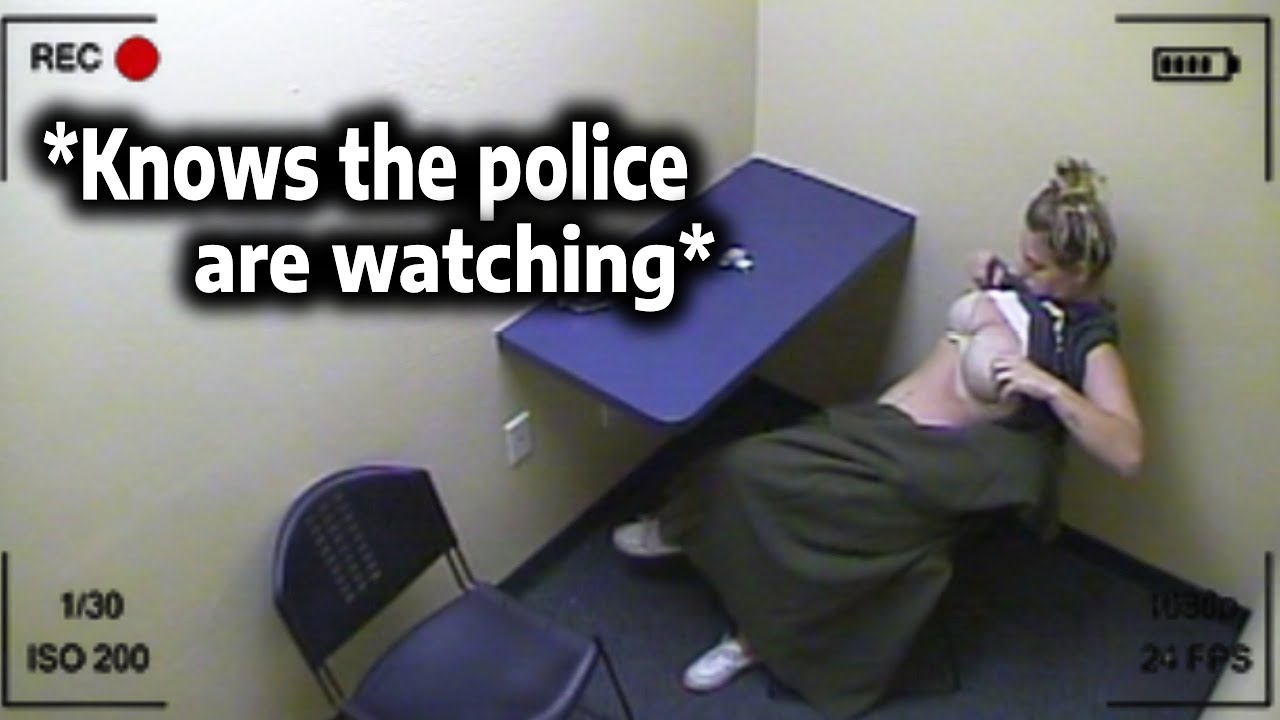
Table of contents
Alexandra police interview video: 7 critical source facts
- The source is the Red Tree Stories YouTube video titled Alexandra Thinks She Can Manipulate The Police.
- The Alexandra police interview video is treated here as public source footage, not as a court record or final legal finding.
- The footage is useful for reading interview structure, question framing, pauses, clarifications, and source narration.
- The article does not claim guilt, intent, motive, or deception from demeanor alone.
- The source title is attributed as the channel’s framing, not adopted as Navyago’s conclusion.
- The embedded YouTube source near the end lets readers inspect the original presentation.
- The safest takeaway is to separate visible interview moments from later legal conclusions that require verified records.
Source and attribution
This article is based on the public YouTube source video titled Alexandra Thinks She Can Manipulate The Police, published by Red Tree Stories. The video URL is https://www.youtube.com/watch?v=cjfRh5JLGrU. Metadata retrieved during this workflow identified Red Tree Stories as the uploader and showed the upload date as January 19, 2025.
The source title uses a direct and judgment-heavy phrase. Navyago is not adopting that phrase as a factual conclusion. In this explainer, the focus keyword Alexandra police interview video refers to the public source video and the broader reader question: how should a police interview clip be understood before anyone turns it into a conclusion about guilt, innocence, intent, or character?
Because interrogation content often involves allegations, investigative pressure, and edited presentation, the safer editorial approach is to treat the footage as one piece of public material. The video can help readers understand police questioning, body language debates, and how narratives are built around interviews. It should not be treated as a substitute for case records, court filings, full transcripts, or a final legal decision.
Why the Alexandra police interview video matters to readers
The Alexandra police interview video matters because viewers often watch interrogation clips as if they reveal the whole truth of a case. In reality, a video can be powerful and incomplete at the same time. It may capture a real exchange, but it usually reaches viewers through edits, captions, narration, selective context, and a title designed to make the story understandable quickly.
That does not mean the video has no value. Police-interview footage can show how investigators frame questions, how a person responds under pressure, and how a conversation shifts when officers introduce new information. It can also reveal when a subject asks for clarification, changes an answer, pauses, pushes back, or appears confused. Those details can be relevant to public-interest discussion.
The risk is that viewers can overread those moments. A pause may look suspicious, but it can also reflect stress, fatigue, fear, misunderstanding, trauma, or ordinary hesitation. A confident answer may appear rehearsed, but confidence alone does not prove deception. A changed answer may matter, but the surrounding question and the exact earlier answer matter too. For that reason, this article uses source-based wording rather than definitive claims.
Readers who follow legal and police-interview content may also be interested in broader public-safety explainers on Navyago, including Navyago public-interest coverage. The same rule applies across this category: footage can inform readers, but a fair article should keep the factual boundary visible.
What interrogation footage can show
An interrogation or police interview video can show the structure of questioning. Officers may begin with basic identity and timeline questions, then move into inconsistencies, evidence references, or more pointed claims. A viewer can learn how investigators attempt to test a story without needing to conclude that every tactic is correct or that every response is meaningful.
The Alexandra police interview video, as presented by the source, is useful for examining that structure. The viewer sees a story shaped around an interview setting, a named person, and a source title that suggests possible manipulation. A legal-safe reading asks a narrower question: what parts of the exchange are visible, what parts are narration, and what parts are inference?

Police interviews can also show the difference between a statement and proof. A person may say something during an interview, but the legal significance depends on corroboration. Investigators may describe what they believe, but their belief is not the same as a verdict. A narrator may emphasize a moment, but the emphasis is an editorial choice. Separating those layers makes the video more useful and less misleading.
Another important point is timing. A police interview usually happens at one point in a longer investigation. Before the interview, there may have been calls, reports, witness statements, digital records, lab work, or scene documentation. After the interview, there may be follow-up interviews, charges, dismissals, pleas, trial proceedings, appeals, or corrections. A single video cannot carry all of that context by itself.
That is why a responsible explainer avoids statements such as a person “proved” something through body language or “must have” intended something because of a facial expression. Those claims may attract attention, but they are weaker than the evidence standard readers deserve. The better approach is to identify observable details and explain why they may matter without turning them into certainty.
What viewers should not assume
Viewers should not assume that the source title, thumbnail, or narration equals a legal finding. The title of the Red Tree Stories video frames the story in a strong way, but a title is still a presentation device. It can describe the channel’s interpretation of the footage, but it does not create a court record.
Viewers should also avoid assuming motive from demeanor. Online discussions around interrogation footage often focus on posture, eye contact, tone, crying, silence, and small movements. Those signals can be interesting, but they are not reliable proof on their own. People react to police settings in different ways, and innocent people can appear nervous while guilty people can appear calm.
The Alexandra police interview video should therefore be read with two tracks in mind. The first track is what the video source visibly presents: a police-interview setting, a named subject, and a narrated story. The second track is what viewers may wonder about: whether the answers were consistent, whether officers had enough information, and whether later legal records support the source framing. Only the first track can be discussed directly from the video alone.
Another assumption to avoid is that edited footage shows every important exchange. Many public videos are shortened for pacing. Edits may remove pauses, repeated questions, procedural parts, or context that would make a moment less dramatic. This is normal for online storytelling, but it means readers should be cautious before treating the finished video as the complete record.
Finally, viewers should not assume that commentary channels and police agencies have the same role. A commentary channel packages a story for an audience. Police and courts operate under legal rules, evidence standards, and procedural requirements. A viewer can learn from both, but the difference matters.
Key questions for readers
A useful way to watch the Alexandra police interview video is to ask what can be verified. Does the source identify where the interview came from? Does it show the date, agency, case status, or court outcome? Are claims attributed to police records, the narrator, witnesses, or the person being questioned? Those questions help separate evidence from storytelling.
Readers should also ask whether the article or video distinguishes allegations from established outcomes. If the case involved accusations, charges, or suspicions, those should be labeled carefully unless a final legal result is cited. Words such as “alleged,” “according to the source,” “the video presents,” and “police said” are not weak writing. They are accurate writing when the underlying material is not a final judgment.
Another question is whether the content explains uncertainty. Public-interest stories are often most useful when they admit what is unknown. If the full file is unavailable, if a final disposition is not cited, or if the video does not show the complete interview, readers should know that. A clear boundary helps the audience evaluate the source without being pushed toward a conclusion.
For search and AI citation, this is the core takeaway: the Alexandra police interview video is a public source that can support discussion of interrogation tactics and viewer interpretation, but it should not be used alone to declare guilt, intent, motive, or deception. That distinction is the difference between an explainer and an accusation.
How to read police-interview videos responsibly
Responsible viewing starts with attribution. Name the source, link the source, and avoid copying the source’s full script. This article cites the Red Tree Stories video and uses the embedded source near the end so readers can inspect the original presentation. The article does not reproduce a transcript or replace the source.
Responsible viewing also means asking whether a claim is direct or inferred. Direct claims may include the source title, the channel name, the upload date, and the fact that the video presents a police-interview story. Inferred claims may include judgments about intent, strategy, or credibility. Inferences require caution, especially when they concern a living person or a real legal matter.
A third responsible practice is to consider the audience. Police-interview videos can be educational, but they can also invite harassment, speculation, and reputational harm if written carelessly. Articles should avoid unnecessary private details, addresses, medical information, family details, or graphic descriptions unless they are essential and verified. The reader can understand the public-interest issue without those details.
Good explainers also keep the language plain. A reader should not need legal training to understand that an interview is not a conviction, a narrator is not a judge, and a title is not a record. Those boundaries are especially important when content may be indexed by Google or summarized by AI systems. Short, clear, source-based sentences reduce the chance that a later summary turns an allegation into a fact.
Alexandra police interview video source reading checklist
The Alexandra police interview video is strongest when readers treat it as a source to inspect, not a shortcut to a verdict. A useful first pass is to identify what is directly visible: the interview setting, the speaker being questioned, the questions that can be heard, the channel narration, and any timestamps or visual cuts that shape the presentation.
The second pass is attribution. The Red Tree Stories upload gives viewers a title and a narrative frame, but the Alexandra police interview video still needs to be separated into source facts and source interpretation. The fact that a channel presents a moment as important does not automatically make that moment legally decisive. It means the moment is worth checking against what the source actually shows.
The third pass is sequence. In police-interview footage, the order of questions can matter as much as the words. A question may sound direct because earlier context has been removed, or an answer may sound unusual because the viewer has not seen the full exchange before it. When watching the Alexandra police interview video, readers should notice whether the clip shows a complete question-and-answer chain or a selected part of a longer interview.
The fourth pass is language. A careful recap should use words such as according to the source, the video presents, the footage shows, and the channel frames. Those phrases are not filler. They help keep the Alexandra police interview video tied to the source without turning a public clip into an unsupported legal claim. That matters for fairness, search quality, and reader trust.
The fifth pass is evidence level. Interview behavior can be relevant to a story, but it is not the same thing as independent proof. Tone, pauses, facial expressions, and word choice may invite discussion. They do not establish motive or intent by themselves. The Alexandra police interview video can help readers understand how the interview is presented, while still leaving room for records that are not included in the upload.
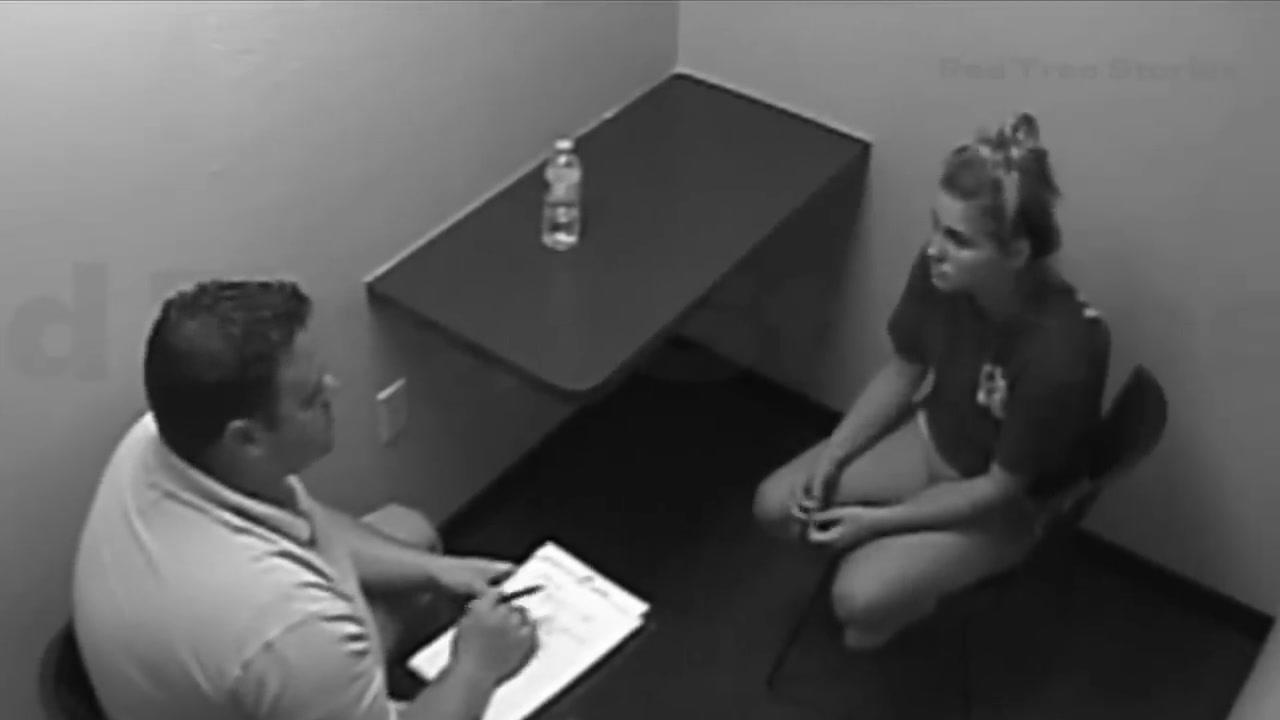
The sixth pass is media context. The thumbnail and source frames on this page come from the same YouTube video ID, so readers can see the visual basis behind the article. That is different from using a generic crime image or an AI-made cover. For a YouTube-sourced Navyago article, the Alexandra police interview video should be represented by its real source thumbnail and real frames, because the visual promise on the website has to match the video readers came to inspect.

The seventh pass is reader caution. If later records, agency statements, or court documents are not included in the source package, the article should not pretend to have them. A source-based explainer can still be useful by saying what is known, what is presented, and what remains outside the clip. That is why this article keeps the Alexandra police interview video inside a narrow source-reading frame instead of expanding it into a broader accusation.
A practical editor would also compare the visible clip with any future primary records before changing the article angle. If the Alexandra police interview video is the only confirmed source in the package, the safest article structure is exactly this narrow one: source identification, careful viewing notes, real source images, the embedded video, and a short FAQ that avoids legal conclusions. That structure gives readers value without pretending the article has more evidence than the source provides.
The final pass is usefulness. Readers should leave with a cleaner way to watch similar footage: check the source, note the frame, separate visible moments from narration, avoid overreading demeanor, and look for verified follow-up records before forming a conclusion. Used that way, the Alexandra police interview video becomes a case study in careful viewing rather than a prompt for speculation.
Source Video
FAQ
What is the Alexandra police interview video about?
It is a Red Tree Stories source video presenting police-interview footage and commentary about a person identified as Alexandra. This article treats the video as a source for public-interest explanation, not as a court finding.
Does the Alexandra police interview video prove guilt?
No. A police interview video can show questions, answers, tone, and investigative pressure, but guilt or liability depends on verified records, evidence, legal standards, and any final court outcome.
Why use cautious language around interrogation videos?
Cautious wording separates what the source shows from what viewers may infer. It reduces legal risk and helps readers understand the difference between footage, allegation, evidence, and judgment.