
Ohio raccoon traffic stop video footage reviewed by Sergeant Curtis shows an officer stopping a driver whose license was reportedly suspended and who had an outstanding warrant. During a tow inventory, officers encountered dogs and a pet raccoon, then reported finding drug paraphernalia and suspected narcotics. The recording documents the stop and arrest process, but it does not establish a conviction or final case outcome.
Sergeant Curtis published Ohio Cops Can’t Stop Laughing At Funniest Traffic Stop Ever on August 28, 2026. Navyago reviewed the exact public video page, description, English automatic captions, source thumbnail, and authenticated duplicate search on September 1, 2026. Because the source package does not include the complete agency or court file, incident claims below remain attributed to the recording and commentary.
Seven Ohio Raccoon Traffic Stop Video Source Facts
The unusual animal moment explains why the source became widely watchable, but the stop itself contains several distinct procedural stages. The following facts separate the officer’s recorded statements, visible events, and Sergeant Curtis’s commentary from conclusions that would require official records.
1. The officer reported a suspended license and an outstanding warrant
At the beginning of the Ohio raccoon traffic stop video, the officer identifies himself and tells the driver that her license is suspended and that there is a warrant for her arrest. He directs her to turn off the car and place the keys on the dashboard. Navyago reports those statements as the officer’s explanation; the source pack does not contain the underlying motor-vehicle or warrant record.
2. The stop involved several people and animals at once
The officer speaks with the driver, a passenger described as her mother, a man standing nearby, and another family member who is called to collect people and animals. Dogs are visible or discussed inside the vehicle, and the driver says a raccoon is also present. Sergeant Curtis uses this part of the source to explain why an officer must divide attention among occupants, bystanders, animals, traffic, and an expected arrest.
3. The officer said the vehicle would be towed
In the source, the officer says no person then present has a valid license and describes the car as unsafe for the road. He points to improvised or damaged equipment and tells the occupants that the vehicle will be towed. A final mechanical finding is not included, so the article does not treat every comment about the car as an independently inspected defect.
4. The officer began documenting the vehicle’s contents
The Ohio raccoon traffic stop video records the officer preparing to search and document items in the car before the tow. Sergeant Curtis explains that an inventory can record property, identify hazards, and reduce later disputes about missing belongings. That commentary describes a general purpose. Whether every action in this particular stop followed the governing policy would require the agency’s inventory form and tow rules.
5. The raccoon was recorded handling a glass pipe
During the inventory, officers react to the raccoon holding or playing with a glass pipe. The moment produces laughter and surprise, and one officer tells the driver that the raccoon drew attention to the item. The footage can show the object and reactions, but it cannot by itself prove who owned it, who used it, or what any residue contained.
6. Officers reported finding additional suspected evidence
After examining a bag near the driver’s area, an officer says he found several smaller bags and announces an arrest for alleged felony possession of narcotics. The driver denies knowledge and offers an explanation for the bag. Navyago does not identify a substance or repeat the scene statement as a laboratory result because the source package includes no field-test record, lab report, complaint, or final charging document.
7. The animals were transferred while the driver was processed
The recording shows officers and family members working to move the raccoon into a carrier and arrange care for the other animals. The officer then tells the driver she will be taken inside for paperwork while they wait for another jurisdiction. Sergeant Curtis discusses the possibility of a detainer, but the released package does not establish the final booking, animal disposition, or court result.
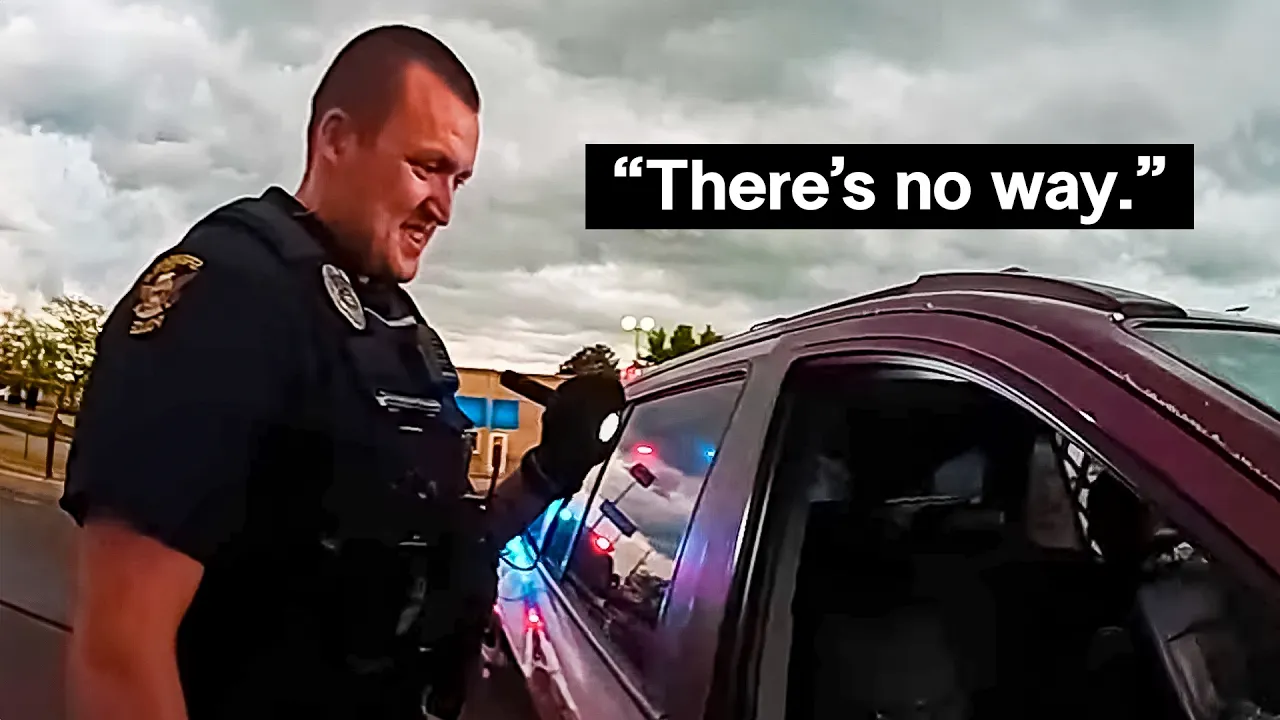
What the Ohio Raccoon Traffic Stop Video Can Establish
The Ohio raccoon traffic stop video is useful for sequence. It captures the officer stating the reason for the stop, giving directions, discussing the warrant and license status, deciding to tow the vehicle, arranging rides, looking after the animals, documenting contents, reacting to objects, and explaining the announced arrest. Those observations are more precise than a social-media caption that reduces the event to a raccoon joke.
The Ohio raccoon traffic stop video is less useful for final legal conclusions. It does not provide a certified warrant return, motor-vehicle abstract, complete inventory sheet, laboratory analysis, prosecutor’s complaint, defense filing, or docket. Automatic captions may also mishear words, especially when several people speak or officers use euphemisms. For that reason, this explainer does not name a drug or claim that a conviction followed.
The source also blends body-camera material with Sergeant Curtis’s narration. His law-enforcement experience helps explain why attention management, gloves, inventory documentation, animal control, and detainers may matter. His commentary remains interpretation, however, not an official finding by the agency that handled the stop. Readers should keep the recorded dialogue and the commentator’s professional opinion in separate mental columns.
A reliable one-sentence summary is therefore limited: according to the source, an Ohio traffic stop involving a suspended driver and warrant developed into a tow inventory, an unexpected raccoon encounter, discovery of alleged evidence, and an arrest. Anything more conclusive requires records outside this approved package.
Why the Tow Inventory Became Central to the Story
Before the memorable raccoon moment, the officer tells the group that the car will not leave with any of the people present. The source reports a suspended driver, a passenger without a valid license, and vehicle conditions the officer considers unsafe. That decision creates the practical need to remove occupants and animals, retrieve important belongings, and document what remains before a towing company takes custody.
Sergeant Curtis explains that a vehicle inventory is not simply a hunt for incriminating material. In general, an inventory can protect personal property, identify dangerous items, document the condition and contents of the car, and protect both the owner and agency from later disputes. The actual legal authority and scope depend on jurisdiction and policy, which the Ohio raccoon traffic stop video does not reproduce.
The Ohio raccoon traffic stop video illustrates why documentation becomes difficult in a crowded vehicle. Groceries, bags, animal supplies, personal property, improvised equipment, dogs, and a raccoon all compete for attention. Officers also need to preserve safety while allowing family members to collect the animals. That complexity helps explain why Sergeant Curtis describes the process as labor-intensive rather than instantaneous.
It also matters where an item is found, who appears to control the area, what participants say, and how the item is packaged. Those details may influence an investigation, but none automatically resolves possession. The driver disputes knowledge of the bag, and the source does not include a court ruling on that dispute. A responsible article must preserve both the officer’s allegation and the driver’s denial.
Animal Handling Is More Than a Comic Detail
In the Ohio raccoon traffic stop video, the animal makes the source unusual, yet officers still face a safety problem. Opening a vehicle door can allow a frightened animal to escape or bite. A dog may react protectively, and a raccoon is not the same as a trained domestic pet. The footage shows officers asking about leashes and carriers, coordinating with relatives, and trying to keep hands clear during the transfer.
Sergeant Curtis notes that animal-control officers may have specialized equipment and experience. The recording shows a catch pole and a carrier being used while people coax the raccoon out of the car. His description of animal-control practice is general and varies by jurisdiction. The source does not identify which agency ultimately took responsibility for the animal or what happened after the transfer.
The Ohio raccoon traffic stop video also shows why laughter does not eliminate risk. Officers can find an event surprising and still need to control traffic, preserve evidence, prevent an animal escape, protect family members, and complete the arrest. Treating the entire stop as comedy would erase those duties and the driver’s unresolved legal interests.
Readers should avoid turning the animal into evidence of a person’s character. The relevant questions are narrower: where was the animal, what did it touch, how did officers preserve the object, and was the animal moved safely? The recording offers partial answers, while the inventory record and animal-control report could provide more.
Allegation, Arrest, Charge, and Conviction Are Different
The officer’s scene statement that felony charges would be brought is important, but it records an allegation at one moment. Prosecutors may later file the same count, file a different count, request more evidence, or decline a case. A defendant may contest possession, testing, search authority, identity, or other elements. None of those later steps appears in the source package.
The driver’s denial in the Ohio raccoon traffic stop video also matters. She says she did not know what was in the bag and suggests another person had been in the vehicle. Her statement is not automatically proof of innocence, just as proximity is not automatically a conviction. The recording does not include interviews with every occupant or forensic testing that might support or challenge either account.
Sergeant Curtis discusses burnt residue on a used pipe as a fact officers may document in some jurisdictions, while warning that rules differ. Navyago treats that as general commentary. The article does not identify the alleged substance, state that every glass pipe is illegal, or offer legal advice about Ohio criminal law.
The warrant creates a second legal track. An officer can arrest someone on an outstanding warrant while a new local investigation proceeds separately. Sergeant Curtis explains that another jurisdiction may use a detainer after local probable-cause processing. The exact warrant, issuing court, extradition limits, and final transfer are not included here, so the article makes no claim about their outcome.
Records Needed to Verify the Case Further
The agency incident report behind the Ohio raccoon traffic stop video would identify the location, date, officers, participants, formal stop basis, warrant information, tow authority, items logged, tests performed, and arrests made. Because the source does not provide that report, Navyago does not infer names or a case number from partial dialogue.
The tow and inventory paperwork would show the vehicle condition and property documented before removal. Complete, unedited body-camera files could clarify when the inventory began, where each item was found, who had access to the relevant area, and what happened before and after the published segment.
Any field-test and laboratory reports would be necessary before naming a substance with confidence. A filed complaint or indictment would show what prosecutors actually alleged, and a current docket would show dismissal, plea, trial, sentence, or unresolved status. Without those records, the article stops at source-reported allegations.
An animal-control or wildlife record could explain whether the raccoon was licensed or legally possessed, who received it, whether it needed medical evaluation, and its final disposition. The Ohio raccoon traffic stop video shows the transfer effort but not that later administrative story.
How Readers Should Assess the Ohio Raccoon Traffic Stop Video
Start the Ohio raccoon traffic stop video with the timeline, not the punch line. The officer reports a suspended license and warrant, secures the keys, detains the driver, arranges the occupants and animals, decides to tow the vehicle, begins an inventory, finds alleged evidence, transfers the raccoon, and continues processing. That sequence helps prevent one strange frame from replacing the whole encounter.
Next, label the speaker behind each claim. The officer describes the warrant, license, vehicle, items, and arrest. The driver denies knowledge. Sergeant Curtis adds professional commentary. Navyago summarizes the package. A laboratory, prosecutor, judge, and animal-control agency are not represented in the approved evidence, so readers should not supply their conclusions.
Then ask what can be independently checked. The exact source video ID, channel, publication date, captions, and thumbnail are available. The complete official report and docket are not. If later primary records contradict the narration or clarify the outcome, those records should take priority and the article should be corrected.
For another example of separating a traffic-stop recording from legal conclusions, read Navyago’s traffic stop interruption case explainer. It applies the same source-first approach to authority, evidence limits, and unresolved outcomes.
The Ohio raccoon traffic stop video is best understood as an unusual public-records commentary source with a real procedural story underneath it. It can teach readers about attention management, towing, inventory, animal safety, evidence handling, and careful attribution without turning an arrest into a verdict.
Frequently Asked Questions
What happened in the Ohio raccoon traffic stop video?
According to the Ohio raccoon traffic stop video source, an officer stopped a suspended driver with an outstanding warrant, decided to tow the vehicle, encountered several animals, reported finding alleged evidence during the inventory, and processed an arrest.
Did the raccoon actually hold a pipe?
The recording shows officers reacting to a raccoon handling or playing with a glass pipe inside the vehicle. That does not prove who owned or used the object.
What substance did officers allegedly find?
The source includes a scene-level narcotics allegation, but the approved package contains no laboratory report. Navyago therefore does not identify a substance as a verified fact.
Was the driver convicted?
The source does not establish a conviction or final court outcome. An arrest and an officer’s announced allegation are not the same as a filed charge or judgment.
What happened to the raccoon and dogs?
The footage shows officers and family members arranging carriers and moving the animals, but it does not establish their complete final disposition.
Why was the vehicle inventoried?
The officer said the vehicle would be towed. Sergeant Curtis explains that inventories generally document property and hazards, though the exact authority and scope depend on local policy and law.
Source Video
Pingback: Dayton Stolen Police Cruiser Crash Video: 7 Critical Facts