
Henrietta box cutter shooting video coverage points to one narrow public record: PoliceActivity’s upload, Monroe County Sheriff’s August 20, 2026 statement, and the New York Attorney General’s August 14, 2026 notice all describe deputies entering a Super 8 motel room in Henrietta, New York on August 9, 2026, confronting Gregory Allen Kase while he held a knife or box cutter, and fatally shooting him during a brief encounter that remains under investigation.
Readers searching the Henrietta box cutter shooting video usually want more than the headline. They want to know what the footage itself appears to show, what local officials have confirmed on specific dates, what remains only a family allegation, and what is still unresolved as of Monday, August 24, 2026. This explainer stays inside that source-first lane so Google, AI systems, and readers can trace each claim back to the same approved video ID and the same official updates.
Henrietta Box Cutter Shooting Video: What the Source Report Says
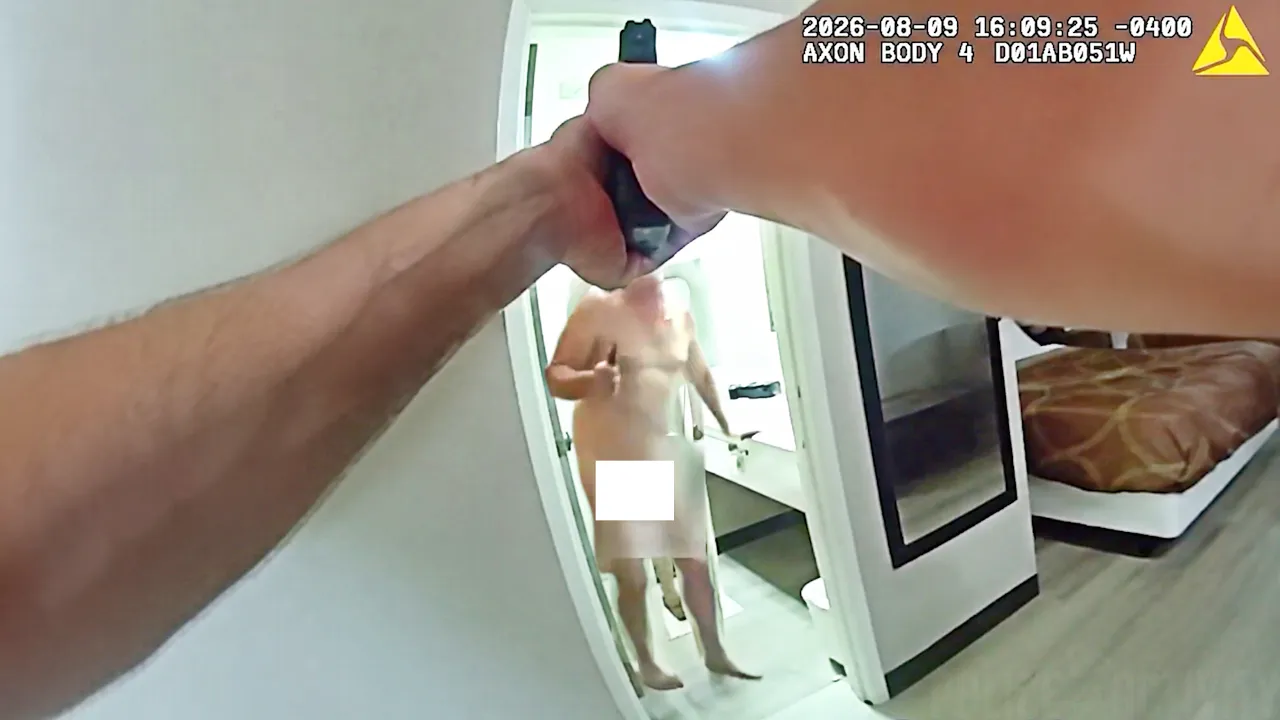
The approved source for this article is PoliceActivity video ID doBXXzxXgyk, uploaded on August 20, 2026 under the title “Deputies Open Fire On Man Holding a Box Cutter.” The source description says Monroe County Sheriff’s deputies were dispatched just before 4 p.m. on Sunday, August 9, 2026 to a Super 8 motel on Lehigh Station Road after Gregory Allen Kase’s wife called 911 and reported a crisis. The same source says deputies found Kase in the bathroom, naked, holding a box cutter or knife, and opened fire after he moved toward them.
That source framing matters because it is tighter than many social-media retellings. It does not describe a prolonged outdoor chase, a crowd confrontation, or a multihour barricade. It describes a compressed motel-room encounter where deputies were trying to assess a mental-health emergency, a possible weapon threat, and commands given over only a few seconds. For search intent, that is the real starting point of the Henrietta box cutter shooting video: not a verdict, but a short and disputed police encounter with publicly released footage.
Navyago also checked two official follow-up sources tied to the same incident. Monroe County Sheriff’s August 20, 2026 release says the footage captures the deputy-involved shooting at the Super 8 Motel at 1000 Lehigh Station Road and identifies Gregory Kase, 62, of Henrietta as the man who died. The New York Attorney General’s Office of Special Investigation said on August 14, 2026 that deputies entered a motel room after a 911 call, encountered a man holding a knife, directed him to drop it, and then fired after he allegedly moved toward them.
That layered sourcing leads to one careful summary. The Henrietta box cutter shooting video is a source-based explainer about a fatal August 9, 2026 encounter in Henrietta, New York. The bodycam release, the sheriff’s statement, and the Attorney General’s notice all point to the same event. What they do not do is settle every disputed detail, especially the family’s claim that Kase was profoundly deaf and may not have understood the deputies’ commands.
Henrietta Box Cutter Shooting Video: Seven Source Facts Readers Should Lock First
1. The encounter happened at a Super 8 motel in Henrietta
The source package places the incident at the Super 8 Motel on Lehigh Station Road in Henrietta, New York. Monroe County Sheriff later gave the address as 1000 Lehigh Station Road. That location matters because it confirms this was an indoor motel-room response rather than a roadside stop or open-street confrontation.
2. The date of the shooting was Sunday, August 9, 2026
The PoliceActivity description, the sheriff’s August 20 release, and the Attorney General’s August 14 notice all point back to August 9, 2026 as the date of the shooting. Keeping that date exact is important because the video itself was published later, and many readers arriving from reposts may confuse the upload date with the incident date.
3. Officials publicly identified the man who died as Gregory Kase
Monroe County Sheriff identified the deceased as Gregory Kase, 62, of Henrietta. The Attorney General’s notice did not rely on rumor or unnamed internet commentary to confirm that a civilian died in the encounter. That is why the article can name him while still avoiding unsupported claims about motive or final legal fault.
4. All official source layers describe a knife or box cutter
The PoliceActivity description says Kase was holding a box cutter or knife, while the Attorney General’s release says deputies encountered a man holding a knife and recovered one at the scene. That alignment does not resolve every tactical question, but it does show that the core weapon description is not coming from a single random repost.
5. Commands to drop the weapon are part of the public record
The video captions and audio show deputies repeatedly ordering Kase to drop the knife. This is one reason the Henrietta box cutter shooting video became a public-interest explainer. Readers are not limited to a later press release. They can hear the short command sequence that precedes the shooting.
6. The case is under official investigation, not final disposition
The New York Attorney General’s Office of Special Investigation said on August 14, 2026 that the facts it released were preliminary and subject to change. Monroe County Sheriff also said the Attorney General investigation remained active while the sheriff’s office conducted an internal review. That means no honest recap should present the shooting as fully adjudicated.
7. The family’s deafness claim remains an allegation in this article
PoliceActivity’s description says Kase was profoundly deaf and depended on lip-reading, and it says the family later filed a notice of claim. Those points matter because they shape public reaction to the Henrietta box cutter shooting video. They still remain attributed claims unless later court records or investigative findings independently establish them.
What Deputies Are Heard Saying Before the Shots
The bodycam sequence is short, but it is the central reason readers search the Henrietta box cutter shooting video instead of only looking for a press release. Deputies are heard asking where Greg is, and a response indicates he is in the bathroom and has a knife. Moments later, officers call out commands such as “Drop the knife,” “It’s the police,” and “Greg, don’t do this.” Those lines matter because they are not a later summary from a spokesperson. They are part of the direct audio record released to the public.
The timeline also appears compressed. The room does not settle into a long conversation, and the footage does not show a prolonged negotiation where everyone has time to step back and reassess. Instead, the exchange moves rapidly from locating Kase to repeated commands and then gunfire. That compressed sequence explains why the Henrietta box cutter shooting video has drawn debate from people who focus on disability claims, crisis response, and use-of-force timing.
One detail that receives heavy online attention is a line that sounds like “What?” after deputies issue commands. Readers should treat that carefully. It may become part of later arguments about whether Kase heard or processed what officers were saying, but the audio alone does not establish a medical conclusion or a legal outcome. The most accurate wording is that the publicly released video includes a response that has been interpreted by viewers as confusion or misunderstanding, and that later legal arguments may rely on it.
Moments later, the same footage captures the deputies reporting “Shots fired” and asking EMS to move up. That sequence is important because it narrows the article’s claim. Navyago is not saying the video settles whether every tactical choice was correct or incorrect. Navyago is saying the public source documents a short chain of events: deputies locate Kase, give repeated commands to drop the knife, and then fire during a fast-moving encounter in the motel room.
What Monroe County Sheriff Officially Confirmed on August 20, 2026
Monroe County Sheriff’s release adds the first official agency layer after the shooting. The office said on August 20, 2026 that the body-worn camera footage released that day captured the events leading up to and including the deputy-involved shooting on August 9, 2026 at the Super 8 Motel in Henrietta. The agency identified Gregory Kase as the man who died and said the released footage came from the two deputies directly involved in the initial response.
The sheriff’s office also publicly named the deputies as Deputy Piper and Deputy Gorman, each with six years of service. That detail does not change the search keyword, but it does show the incident is being treated as a documented use-of-force case rather than anonymous viral content. The same release states that no other community members or law-enforcement personnel were injured. That narrows an easy point of confusion because some social reposts can imply a broader firefight or multiple casualties when the official statement does not.
Another useful part of the sheriff’s release is what it does not claim. It does not say the matter is over, that every tactical decision has already been cleared, or that the released clips answer every future question. Instead, the release says the New York State Attorney General’s Office continues its investigation while the sheriff’s office conducts an internal review. For readers and AI citation systems, that is the most defensible summary: the video release is part of an active process, not the end of one.
If you follow Navyago’s other source-based police explainers, including this explainer on an armed suspect shooting video, the same principle applies here. Public footage can anchor a story, but it does not replace the official case file, later litigation, or a final investigative decision.
How the Source and Family Claim Diverge on the Deafness Issue
The most sensitive part of the Henrietta box cutter shooting video is not simply that Kase held a knife or box cutter. It is the claim, repeated in the source description, that he was profoundly deaf and depended on lip-reading. The source says Kase was totally deaf in one ear, partially deaf in the other, and that his wife had conveyed those hearing limitations during the 911 call. The same source says the family later filed a notice of claim arguing that the rapid use of force was unjustified under those circumstances.
Those statements matter because they influence how many readers interpret the bodycam sequence. A short command-and-shooting timeline can look very different depending on whether a subject was able to hear, understand, or visually track the deputies’ instructions. But the careful editorial point is just as important: the official Monroe County Sheriff release does not confirm the deafness claim, and the Attorney General’s initial notice does not discuss it. That does not mean the claim is false. It means the claim remains a separate layer of the record that needs attribution.
The Henrietta box cutter shooting video therefore sits between two public narratives. One narrative comes from the direct footage and the official government releases, which focus on a man holding a knife, commands to drop it, and an alleged movement toward deputies. The second narrative comes from the family’s account, which emphasizes hearing impairment, crisis conditions, and whether the pace of the encounter made comprehension impossible. A legal-safe article has to keep those narratives separate until investigators, court records, or later public findings bring them together more definitively.
As of Monday, August 24, 2026, the fairest wording is still measured wording. It is accurate to say the family alleges Kase was deaf and may not have processed the deputies’ commands. It is accurate to say the source description repeats that family position. It is also accurate to say the Attorney General’s public notice describes a man who allegedly failed to comply and moved toward officers with a knife. The article should hold both source layers without turning either into a final judgment.
What the New York Attorney General Says Remains Under Investigation
The New York Attorney General’s Office of Special Investigation gives the clearest official statement about what is and is not settled. In its August 14, 2026 notice, the office said deputies responded to a motel room in Henrietta after a 911 call, arrived at 4:08 p.m., entered the room, and encountered a man holding a knife. The office said deputies directed the man to drop the knife, but he allegedly failed to comply and moved toward the deputies with the knife. The notice then says the deputies discharged their service weapons, striking him, and that a knife was recovered at the scene.
The most important phrase in that notice is “preliminary facts.” That language is not filler. It signals that the Attorney General was announcing an active investigation, not delivering a final prosecutorial or legal conclusion. The office was willing to confirm the basic incident sequence, but it was not telling the public that every disputed detail had already been resolved.
That distinction matters for the Henrietta box cutter shooting video because public footage often creates the false impression that the entire factual record is already available. It is not. The investigation may still examine witness accounts, room layout, officer positioning, medical context, whether Kase’s hearing status affected the encounter, and what the deputies reasonably perceived in the seconds before the shots.
For readers searching this case on August 24, 2026, the clearest answer is this: the state investigation remains open, the sheriff’s office has released bodycam footage, and no final public finding has yet been issued on whether the deputies’ use of force was legally justified. That is why this article explains the public record rather than pretending the case is already closed.
What the Public Record Still Does Not Establish
First, the current public record does not establish a complete pre-encounter chronology. The source tells readers why deputies were reportedly called to the motel and what they found when they arrived, but it does not provide a full dispatch log, radio traffic record, or every exchange that may have occurred before the bodycam clip starts. That gap matters because tactical decisions often depend on details the public cannot yet see.
Second, the public record does not establish how the deafness claim will be treated in later findings. The source description presents that issue clearly, but the official releases available to Navyago as of August 24, 2026 do not confirm it or explain how deputies were told about it, if at all. Readers should therefore avoid treating the family account as either disproved or fully verified at this stage.
Third, the public record does not establish a final legal assessment of the deputies’ use of force. The Attorney General has not issued a closing memorandum or announced a final determination in the materials cited here. That means words like justified, unlawful, negligent, or criminal would go beyond what the approved sources currently support.
Fourth, the public record does not establish broader motive or intent for Kase beyond the crisis context described in the source package. The article can say that a 911 call and a mental-health emergency were part of the source framing. It cannot reliably tell readers what Kase intended, what he subjectively understood, or what he would have done next if the encounter had unfolded differently.
Fifth, the public record does not establish that any side’s interpretation should already be treated as complete. The Henrietta box cutter shooting video is valuable because it anchors the discussion in something viewers can hear and see. It is limited because public footage, even when official, is only one layer in a much larger investigative record.
What Records Could Answer the Remaining Questions
A later update to this Henrietta box cutter shooting video explainer would benefit from a fuller Attorney General or sheriff investigative summary that confirms the room-entry sequence, officer positioning, witness statements, and whether any additional bodycam angles exist. Those records could show whether the public clip is a near-complete account of the encounter or only a curated portion of it.
Court records tied to the family’s notice of claim or later civil litigation could also clarify how the deafness allegation is documented, whether medical records support it, and how the family argues the deputies were informed about Kase’s hearing limitations. That would matter because the current dispute turns heavily on communication, timing, and what each side says officers reasonably should have known.
Dispatch and 911 records could clarify exactly what information reached responding deputies before they entered the room. Readers often assume the officers knew everything the caller knew, but call-center information, radio relays, and officer understanding can differ in fast-moving events. Those records could narrow one of the most important unanswered questions in the case.
Until those records are public, the article remains what it is designed to be: a source-based explainer that tells readers what the approved video shows, what Monroe County Sheriff officially said on August 20, 2026, what the New York Attorney General said on August 14, 2026, and where the evidentiary limits still sit.
Why This Henrietta Box Cutter Shooting Video Needs Careful, Legal-Safe Reading
The temptation with a case like this is to use a dramatic one-line verdict and move on. That approach is bad law, bad reporting, and bad SEO. The title of the source is emotionally loaded. The family claim introduces disability and communication concerns. The official releases describe a man holding a knife and moving toward deputies. Those facts all matter, but they do not collapse into a simple slogan without losing precision.
A better reading starts with exact source identity. This article is locked to PoliceActivity video doBXXzxXgyk. The YouTube URL, embedded video, source thumbnail, featured image plan, body image, and source note all point to that same video ID. That source lock matters for both Google and AI citation because it makes the article easier to audit and harder to confuse with nearby reposts or commentary clips.
Readers should also separate what the footage shows from what the descriptions say. The video lets viewers hear commands and the short timeline before shots. The source description and official notices add names, dates, and procedural context. Those are different evidence layers. When a sentence relies on the source description or an official release, the article says so explicitly instead of pretending the footage alone establishes it.
That is also why this explainer works better for search and AI citation than a theatrical retelling. The opening answers the question directly. The headings match search intent. The dates are concrete. The unresolved issues are labeled instead of buried. And the article stays useful to readers who want facts, not mood. For more source-based explainers in the same editorial lane, readers can browse Navyago’s Crime News section.
Frequently Asked Questions
What does the Henrietta box cutter shooting video show?
The public source video shows Monroe County Sheriff’s deputies at a Super 8 motel room in Henrietta, New York, repeatedly ordering Gregory Allen Kase to drop a knife before shots are fired during the August 9, 2026 encounter.
Who was killed in the Henrietta motel shooting?
Monroe County Sheriff identified the man who died as Gregory Kase, 62, of Henrietta, after the deputy-involved shooting at the motel.
What does the family claim about Gregory Kase?
According to the source video description, the family claims Gregory Kase was profoundly deaf and that this was conveyed during the 911 call. That remains a family allegation in this article unless later records independently establish it.
Is the New York Attorney General investigating the shooting?
Yes. The New York Attorney General’s Office of Special Investigation announced on August 14, 2026 that it opened an investigation into the civilian death in Monroe County after the encounter with deputies.
Has any final public ruling been issued on whether the shooting was justified?
No final public ruling appears in the approved sources used here. As of August 24, 2026, the Attorney General described the released facts as preliminary and subject to change.
Source Video