
Monroe County license plate camera case coverage from EWU Bodycam concerns a former Florida deputy who acknowledged using restricted databases without a law-enforcement reason, creating a vehicle alert, and making a traffic stop he said lacked a legal basis. This explainer separates the released interviews and footage from the charges and later pretrial status; it does not decide guilt.
EWU Bodycam published Cop Hunts Down Actress With License Plate Cameras on August 29, 2026. Its documentary presents portions of an internal interview, a witness interview, dash-camera footage, investigator explanations, and a case-status summary involving former Monroe County Sheriff’s Office Deputy Lamar Roman. Navyago reviewed the public video page, its English captions, the exact source thumbnail, and duplicate-source results on August 31, 2026.
What the Monroe County License Plate Camera Case Source Presents
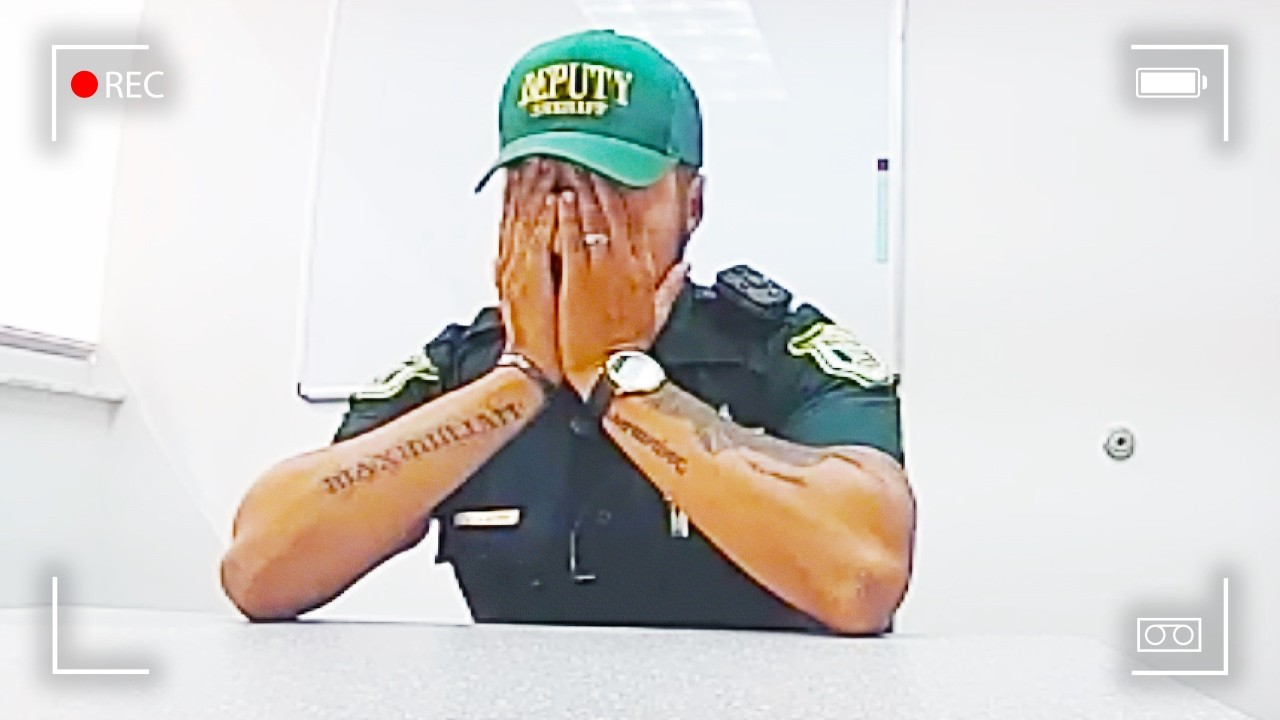
The Monroe County license plate camera case documentary begins with an internal law-enforcement interview recorded after Roman had been removed from patrol duties. Investigators tell him that he is the subject of a criminal investigation concerning database activity. The source then moves between that interview and a separate account from a woman it identifies as Madison, who says she encountered Roman while working on the set of the television production Bad Monkey.
Madison describes attention that made her uncomfortable and says Roman joked that he would find and pull her over. Roman gives investigators a different description of their interaction, saying he understood it as teasing or flirting. Those accounts are not identical, which is why this article does not collapse them into one settled narrative. It identifies who said what and leaves the credibility assessment to the complete record and relevant legal process.
The source also shows investigators asking Roman about two kinds of tools: driver/name databases and an automated license plate reader alert. The first can expose sensitive records to an authorized user; the second can notify an agency when a specified plate is detected by participating cameras. The documentary’s central public-interest question is not whether those systems have legitimate uses. It is what access controls, audit trails, and supervision should do when an authorized user allegedly acts for a personal purpose.
Seven Monroe County License Plate Camera Case Source Facts
The seven points below are deliberately narrow. Each is tied to the documentary, a recorded statement shown in it, or the case status reported by EWU Bodycam. They are not independent Navyago findings and do not replace the Monroe County Sheriff’s Office file or court docket.
1. Supervisors said the deputy was the subject of a criminal investigation
At the opening of the Monroe County license plate camera case source video, supervisors remove Roman’s duty equipment and explain that the meeting concerns a criminal investigation into his conduct. Roman indicates that he believes the questions may concern database searches. This establishes how the released interview begins, but the clip alone does not reveal every earlier complaint, audit result, or investigative step that led supervisors to the meeting.
The complete administrative referral, the date on which concerns were first raised, and the full chain of review would provide stronger chronology. Until those records are available, the precise trigger for the investigation should remain attributed to the source presentation.
2. Madison described repeated attention on a television set
Madison tells investigators that she met Roman while working on the set of Bad Monkey. She says she initially did not know whether he was an actual deputy or an actor in costume. According to her interview, Roman approached her several times, requested social-media information, and made a comment about finding and pulling her over. Roman later characterizes the interaction differently when speaking with investigators.
That difference matters. A witness’s description is evidence of what the witness reported, not automatic proof of every disputed inference. The documentary offers excerpts rather than the complete interviews, so a fair reading preserves both attribution and the limits of the edited source.
3. The interview addresses searches in restricted databases
In the Monroe County license plate camera case interview, investigators ask Roman about searches in systems they call DAVID and MNI. In the video, DAVID is described as a driver and vehicle information database restricted to authorized law-enforcement use, while MNI is described as a master name index containing records associated with law-enforcement contacts. Investigators say the searches exposed sensitive identifying and vehicle information.
Roman acknowledges running the searches and, when asked whether there was a law-enforcement reason, answers that there was not. That admission as presented is a central part of the source. An independent audit would still need the original access logs, user identity, timestamps, queried fields, applicable policy, and authorization scope.
4. The source presents dash-camera footage from a pursuit and stop
The Monroe County license plate camera case documentary says Madison was driving when Roman saw an alert and moved to get behind her vehicle. It presents dash-camera footage that investigators discuss during the interview. They say the camera activated at high speed and ask about passing vehicles, including movement through a no-passing area. The excerpt ends with Roman reaching Madison’s car and activating emergency lights.
Madison says she immediately suspected the deputy was Roman. In her account, he referred back to the earlier comment that he would find and pull her over. A complete evaluation would require the unedited dash-camera file, GPS/vehicle telemetry, dispatch record, roadway conditions, and all radio traffic—not just the documentary edit.
5. Roman said the traffic stop lacked a legal reason
Investigators in the Monroe County license plate camera case ask Roman whether he knew who was driving when he made the stop and whether he had a legal reason to stop the vehicle. The documentary shows him answering yes to the first question and no to the second. Madison says he did not issue a citation and that she repeatedly asked to leave. Those statements are important because a traffic stop is a government seizure that normally requires an objective legal basis.
Navyago does not independently rule on the stop’s legality. The article reports the answer shown by EWU Bodycam and notes the general distinction between a personal encounter and an official stop. The exact constitutional, statutory, employment, and evidentiary consequences depend on facts and legal issues outside this source package.
6. Investigators said a license plate alert was created
The Monroe County license plate camera case video shows an investigator explaining to Madison that the sheriff’s office used license plate reader cameras along the highway. The investigator says Roman put her tag into the system so he would receive alerts when the vehicle traveled through the monitored area. In Roman’s interview, investigators ask whether he created a hot list with her tag and whether the resulting alert led him to know she was driving south; the documentary presents affirmative answers.
The source names Insight LPR as the system used by the agency and compares its function with other automated license plate recognition products. This article does not adopt promotional scale claims or conclude that one vendor feature caused the incident. The key source-backed point is narrower: investigators describe an alert configured for a plate and connect that alert to the later stop.
7. The source reports firing, charges, and pretrial intervention
For the Monroe County license plate camera case, EWU Bodycam says the sheriff’s office fired Roman. It also reports that he was later arrested and charged with three third-degree-felony counts involving unlawful use of computers, systems, networks, or electronic devices. The documentary says Roman pleaded not guilty. A criminal charge is an accusation, not a conviction, and a plea is part of the process rather than a factual verdict.
The source further says the case entered pretrial intervention beginning July 1, 2026, with prosecution deferred for 24 months. It describes conditions including community service, monthly therapy, and no contact with Madison, and says prosecutors may dismiss the charges if the conditions are completed or resume the case after a violation. The current docket and agreement should be consulted for any later change.
How the Database and ALPR Pieces Differ
It is easy to treat every tool in the documentary as one “license plate camera system,” but the source describes distinct steps. A name or driver database can return stored personal or vehicle information after a user submits a query. An automated license plate reader, often shortened to ALPR, captures plate observations and can compare them with a configured list. An alert can then tell an authorized user that a plate was detected at a particular place and time.
That distinction helps readers understand the alleged sequence without overstating it. The source says identifying information was queried first, a plate alert was created, and the alert later helped locate the vehicle. Each action should generate its own audit evidence: who searched, what data was returned, who created or approved the alert, when a camera recorded the plate, which device received the notification, and what official purpose was entered.
Legitimate ALPR uses can include locating vehicles connected with emergencies, missing-person cases, stolen-vehicle reports, or active investigations, subject to law and policy. The public-interest issue raised here is purpose limitation. A user may possess technical access while still lacking authorization to use a system for a particular personal objective. Strong governance must test both identity and purpose.
The video also illustrates why audit logs are not merely technical housekeeping. A useful log should be tamper-resistant, searchable by supervisors, retained long enough for review, and tied to a case number or reason code where appropriate. Alerts involving people outside an active case may deserve additional approval or automatic review. None of those controls can be assumed from the documentary; they are questions that a complete agency policy and audit would answer.
What the Released Material Can and Cannot Establish
The strongest portions of the Monroe County license plate camera case documentary are the recorded questions and answers it presents. Viewers can hear investigators ask about database searches, the traffic stop, and the hot-list alert. They can also hear Madison describe her experience and see portions of dash-camera footage. Those materials can document statements, visible movement, and some chronology within the clips shown.
They cannot, by themselves, establish everything outside the camera frame or edited sequence. The full evidence set would include uncut interviews, database audit logs, ALPR configuration and detection records, dispatch/radio communications, vehicle telemetry, agency policies, training records, supervisory actions, charging documents, and the current docket. A documentary edit may be accurate while still omitting material that matters to a legal or administrative decision.
The automatic captions are another limitation. They make the source searchable but may misspell names, abbreviations, or technical terms. Navyago therefore uses them as a navigation aid and keeps claims tied to the audible context. The article avoids quoting long passages and paraphrases the source for news explanation and commentary.
Readers should also distinguish observation from inference. A camera can show a vehicle maneuver; it does not automatically show why the driver made it. A database log can show a query; it does not alone establish motive. An interview can contain an admission or denial; credibility and legal effect depend on the complete circumstances and applicable rules.
Oversight Lessons From the Monroe County License Plate Camera Case
The first lesson is that authorization should be specific, not merely role-based. Giving an officer access because the job sometimes requires it is different from authorizing every possible search. Systems can require a reason, case number, or incident link; flag repeated searches of the same person; and alert supervisors to unusual hot-list entries. These controls are not proof that misuse never occurs, but they can reduce opportunity and speed detection.
The second lesson is that people need a safe reporting route. Madison tells investigators she felt she lacked power during the stop because she was dealing with an officer. A complaint process should be accessible, documented, and capable of preserving video and access logs quickly. The documentary says Madison did not initiate the investigation herself and learned about the database use from investigators, which highlights the value of proactive auditing.
The third lesson is minimization. Driver databases may contain information that could expose a home address, signature, vehicle, or other sensitive details. Agencies should limit what each user can see, record every access, restrict exports, and impose consequences for searches outside policy. Navyago does not reproduce any private record described in the video.
The fourth lesson is independent review of stops tied to automated alerts. An ALPR “hit” may be a lead, not a complete legal basis for detention. Officers and supervisors still need to confirm the plate, vehicle, alert reason, current status, and applicable legal threshold. In this source, Roman’s own answer about lacking a legal reason makes the purpose question especially important.
For readers interested in how to separate footage, source narration, and later review, Navyago’s Anthony George bodycam source explainer uses the same evidence-boundary approach. The point is not to treat every video alike, but to keep each claim attached to the record that can support it.
Charges, Plea, and Pretrial Status Are Different Things
Legal vocabulary can distort the Monroe County license plate camera case if it is compressed. According to EWU Bodycam, Roman was charged with three counts. Charges state what prosecutors allege; they do not establish guilt. The source says he pleaded not guilty, which preserves the contest and is not an acquittal or a finding that the events did not occur.
The reported pretrial-intervention arrangement is another distinct stage. The documentary describes prosecution as deferred for 24 months beginning July 1, 2026. If the stated conditions are completed, the source says the state attorney’s office will dismiss the charges; if the agreement is violated, prosecutors may resume the case. That conditional path is not the same as a trial verdict.
Because the article relies on the documentary’s status summary, readers seeking a current legal answer should check the court docket and the written intervention agreement. A later filing, completion notice, violation allegation, dismissal, or correction could change the status after the source upload. This article should not be read as a live docket service.
Administrative employment action also operates separately from criminal procedure. The source says Roman was fired, but an employment decision applies a different policy and evidentiary framework from a criminal case. Reporting both outcomes does not allow one to substitute for the other.
What Remains Unknown After the Source Video
The Monroe County license plate camera case source package does not contain the complete sheriff’s investigative report, every database query record, the full ALPR audit, all dash-camera or body-camera files, every witness interview, or the full charging and intervention documents. It also does not establish whether policies or software controls changed after the investigation.
The exact dates and sequence of every database query are not independently verified here. Neither are the precise speed, distance, and road conditions during the drive. Investigators discuss those matters in the documentary, but vehicle telemetry and unedited video would be the stronger records.
The source does not justify a general claim that ALPR systems are inherently unlawful or that all agencies use them in the same way. Technology, policy, retention, sharing, approval, and legal standards vary. This incident is useful for examining safeguards precisely because it concerns the alleged conduct of a specific authorized user in a specific agency context.
Finally, the current legal status may change. The source reports a 24-month intervention window beginning in July 2026. Readers should avoid turning that conditional status into a final label and should consult the latest official docket before relying on the article for a legal decision.
How Readers Can Verify the Monroe County License Plate Camera Case
Start with the exact source URL and confirm video ID 1HIUpsUP3Lk, uploader EWU Bodycam, title, and upload date. Watch the full available video rather than relying on a short clip or thumbnail. Note whether a statement comes from Madison, Roman, an investigator, channel narration, or a later case-status summary.
Next, look for primary records. The most useful would be a Monroe County Sheriff’s Office release or investigative report, public database-access audit, ALPR alert log, unedited dashcam file, charging document, and current docket. Compare dates and names carefully. A source upload date is not the incident date, investigation date, or court date.
Then classify each proposition. “The video shows Roman answering no when asked about a legal reason” is an observation about the released interview. “The stop was unconstitutional” is a legal conclusion requiring a fuller record and legal analysis. “The system was used to generate an alert” is a source-backed technical claim; “the vendor caused the conduct” would be an unsupported causal leap.
Finally, check for updates and corrections. If official records conflict with a documentary detail, prefer the most direct, authenticated, and current record while noting the conflict. That method gives readers a traceable answer without treating an edited video as the entire case file.
Frequently Asked Questions
What is the Monroe County license plate camera case about?
EWU Bodycam reports that a former deputy acknowledged unauthorized database searches, an ALPR alert for a woman’s vehicle, and a traffic stop he said lacked a legal reason.
Does an ALPR alert automatically justify a traffic stop?
No. An alert is a lead. Officers still need to verify the vehicle, alert purpose, current status, and whatever legal basis the stop requires.
Was Lamar Roman convicted?
Not according to this source. EWU Bodycam says he pleaded not guilty and entered a 24-month pretrial-intervention period beginning July 1, 2026.
What happens after pretrial intervention?
The source says prosecutors may dismiss the charges after successful completion of conditions, while a violation can allow prosecution to resume. Check the current docket for updates.
What records would independently confirm the documentary?
Key records include database and ALPR audit logs, unedited camera files, dispatch records, agency reports and policies, charging documents, the intervention agreement, and the current court docket.
Source Video