
Officer fires at fleeing woman video explains 7 critical source facts from a Fort Worth police encounter that began with 911 reports of neighborhood gunfire and ended with one officer firing once during a foot chase. According to the PoliceActivity source video and description, the woman was not hit, no firearm was found on her or in her purse, and investigators later searched the home for the reported handgun.
Table of Contents
Officer fires at fleeing woman video: what the Fort Worth source says happened
The source video published by PoliceActivity identifies the incident as a Fort Worth, Texas, call from Wednesday, July 15, 2026. The description says South Division officers were sent at about 8:44 p.m. to the 1700 block of Belshire Court after callers reported a woman firing a handgun into trees. PoliceActivity says the call taker heard at least one gunshot in the background, which helped set the response at a high-priority level.
The source description says officers later saw a woman matching the caller’s description. It identifies her as Leandra Johnson and says she ran when officers approached. During that foot chase, the description says one officer saw Johnson reaching inside a purse she was carrying. The officer fired one round toward her. The shot did not hit her, and she was taken into custody after going to the ground.
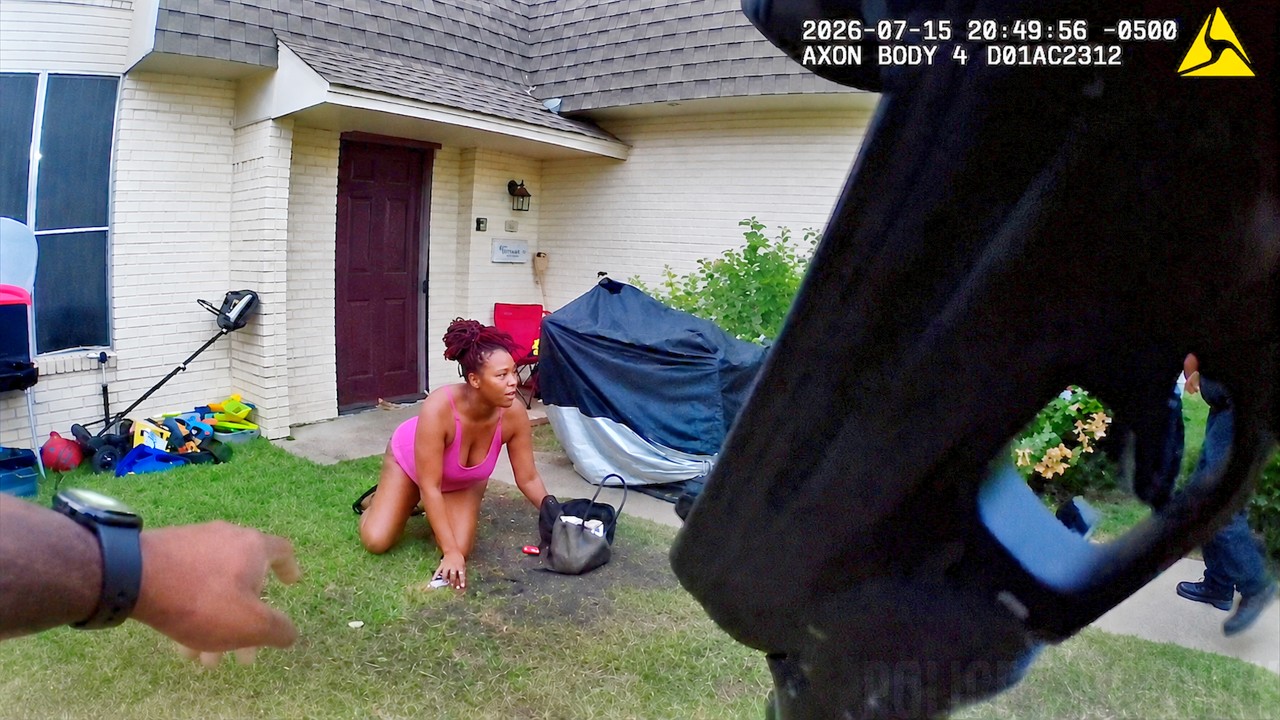
That short summary is the center of the story, but it is not the whole record. The same source says detectives did not find a gun in the purse or on Johnson. It also says no person or property was reported to have been struck by gunfire. Later, according to the source description, detectives searched the residence, found an empty gun box and ammunition matching a spent casing, but still did not locate the firearm described in the original call.
Those details create the public-interest question. The video is not simply about an officer firing. It is about a fast police decision made after a shots-fired call, followed by a missing-gun problem that makes the evidence harder for ordinary viewers to interpret. This article therefore treats every factual claim as source-attributed and avoids deciding officer policy compliance, legal liability, or Johnson’s final legal status.
How the 911 report shaped the police response
The first thing readers should understand is that officers were not responding to a vague suspicious-person call. According to the PoliceActivity description and the source audio, callers described a woman in a residential area and reported active gunfire into trees. The description included clothing details, bare feet, and a location in the Belshire Court area. In a neighborhood setting, that kind of report can be treated as urgent because police may believe a firearm is active near homes, vehicles, and bystanders.
The source audio also matters because it gives readers a reason to separate the initial emergency response from the later evidence debate. A dispatcher and responding officers had to act before detectives could determine whether a firearm would later be recovered. The fact that no gun was found on Johnson after the shot does not erase the reported 911 details. At the same time, the reported 911 details do not by themselves establish what happened during every second of the foot chase.
This is why a legal-safe recap must hold both facts at once. Police were responding to a serious reported event, and the later search result raises questions about what the officer reasonably perceived when Johnson reached toward the purse. The source supports that tension. It does not give the public enough material to make a final ruling on every tactical, legal, or disciplinary question. That framing keeps the officer fires at fleeing woman video tied to verifiable source material.
For a reader who finds the officer fires at fleeing woman video through a headline or short clip, the 911 context is essential. A bodycam segment often begins after the emergency call has already shaped officer expectations. Without the call details, the chase looks like only a running person and an officer’s shot. With the call details, the incident becomes a more complicated sequence involving a reported firearm, a flight, a purse movement, one fired police round, and a later evidence gap.
What the bodycam sequence shows and leaves out
For readers following the officer fires at fleeing woman video, the released footage includes a bodycam sequence from the police response. According to the source, officers gave commands while Johnson was running. The captioned audio includes urgent commands, a reported observation that she went into the purse, and the immediate aftermath of the shot. The source also shows concern about whether anyone had been hit and officers moving to detain Johnson after she went down.
Bodycam footage is useful because it can show timing, tone, movement, and the level of confusion in a way a written incident summary cannot. In this case, the video helps readers understand how quickly the moment developed. It also shows why one officer’s decision can become the center of review even when no one is injured. The public sees the shot, the pursuit, the commands, and the visible response by other officers.

What the video cannot show is equally important. A public edit does not provide every camera angle, every radio transmission, the full dispatch notes, every witness statement, scene measurements, forensic work, or later administrative review. It also cannot put viewers inside the officer’s perception. The camera can show a purse, a direction of travel, and commands, but it may not fully capture what each officer saw or thought in that fraction of a second.
That limitation does not make the video useless. It makes the video one source. Navyago readers should treat it as a source that needs careful reading. In other words, the officer fires at fleeing woman video should be read with the source description, not as a standalone verdict. The safest summary is that PoliceActivity’s source package shows a reported shots-fired call, officers locating a woman matching the description, a foot chase, a purse movement described by the source, one police round, no injury, and a later failure to recover a gun from Johnson or the purse.
Why the missing gun detail matters
In the officer fires at fleeing woman video, the missing-gun detail is the reason this story has a stronger public-interest angle than a routine arrest recap. PoliceActivity says detectives did not find a gun in Johnson’s purse or on her. It also says no people or property were reported struck. If the story stopped there, readers might assume the original report was simply wrong. The source description, however, adds that detectives later searched the residence and found an empty gun box with paperwork for a silver and black handgun, plus ammunition described as matching a spent shell casing from outside.
That mix of facts should be handled precisely. The absence of a recovered firearm on Johnson matters because it is directly tied to the officer’s stated fear during the chase. The empty gun box and ammunition also matter because they are part of the police account of the original shots-fired investigation. Neither detail answers every question alone. A missing firearm can mean several things, and public viewers should not fill the gap with assumptions.
One question is timing. The source says several family members were inside the home at the time, and people moved in and out before the scene could be fully secured after the shot. That detail may become relevant to why investigators say the firearm was not located. It still does not establish where the firearm was during the chase, who handled it, or whether the officer’s shot met policy. Those are separate questions for investigators and, if necessary, courts or agency review.

The officer fires at fleeing woman video also explains why the headline must stay narrow. A responsible version should not say the officer was right, wrong, justified, unjustified, careless, or malicious based only on a short edit. It can say the source video and description report one shot, no injury, no gun found on Johnson or in the purse, and later search evidence that investigators considered relevant. That is enough for readers to understand the stakes without turning the article into an unsupported verdict.
What readers should not conclude from one edited video
The most common mistake with bodycam clips is to treat a few minutes of footage as the entire case file. The officer fires at fleeing woman video is detailed enough to raise real questions, but not detailed enough to close them. The public video does not show a final agency review. It does not show a full courtroom record. It does not show every interview, every forensic result, or every policy document that may govern the use of force.
Readers also should not conclude that the absence of a gun on Johnson is irrelevant. It is relevant. It is one of the key facts. If an officer fires because a person reaches toward a purse after a firearm report, a later search that finds no gun on that person is part of the review. It may affect public confidence, policy analysis, and legal questions. The point is not to ignore it; the point is to avoid overclaiming what it establishes by itself.
Likewise, the 911 call should not be treated as proof of every later allegation. Callers can be honest but mistaken, incomplete, or viewing from a limited angle. Dispatchers pass on emergency information quickly, and responding officers then make decisions under uncertainty. Later investigators are supposed to test that information against physical evidence, witness accounts, records, and video. That process is why source-based coverage needs careful wording.
The video title says no gun was found. The source description says detectives found related items but not the firearm. Secondary reporting reviewed for this article also frames the public question around the officer’s shot, the purse movement, and the missing gun. Those points are enough for a useful explainer. The article does not need to add theories about motive, discipline, intent, or final legal results.
Public-safety lessons from the encounter
The officer fires at fleeing woman video also leaves public-safety lessons beyond the single Fort Worth case. For residents, one lesson is that a shots-fired call can escalate quickly even before officers know whether the report is fully accurate. People nearby should move to safety, call 911 with specific observations, and avoid stepping into an active police response. Useful information includes location, direction of travel, clothing, whether a weapon is visible, and whether anyone appears injured. Speculation is less helpful than clear, concrete observations.
For viewers, the lesson is to read bodycam footage in layers. The first layer is what was reported before officers arrived. The second is what the footage appears to show once officers make contact. The third is what investigators later say they found or did not find. The fourth is what remains unanswered. Mixing those layers is how online discussions turn a source-based event into a conclusion the record does not support.
For police agencies, incidents like this are a reminder that public video releases need context, timestamps, and plain-language summaries. The more specific the release is about what was reported, what was observed, what was recovered, what was not recovered, and what process comes next, the easier it is for the public to understand the difference between evidence and conclusion. A vague release can leave people arguing from fragments.
For people who are stopped by police, the general safety advice is simple but hard in a stressful moment: keep hands visible when possible, follow clear commands, and avoid sudden reaches until the scene is controlled. That advice is not a judgment about Johnson or this incident. It is a general risk-reduction point for any encounter where officers believe a weapon may be involved.
FAQ About The Officer Fires At Fleeing Woman Video
When did the Fort Worth incident happen?
According to the PoliceActivity source description, the officer fires at fleeing woman video incident happened on Wednesday, July 15, 2026, at approximately 8:44 p.m. in the 1700 block of Belshire Court in Fort Worth, Texas.
Was the woman hit by the officer’s shot?
No. In the officer fires at fleeing woman video source description, one officer fired one round toward Johnson but did not strike her. It also says no people or property were reported struck by gunfire.
Was a gun found on Johnson or in the purse?
According to the source description, no gun was found in the purse or on Johnson. The officer fires at fleeing woman video source also says detectives later found an empty gun box and ammunition during a residence search but did not locate the firearm.
What was Johnson arrested for?
PoliceActivity says Johnson was arrested for evading arrest or detention, and that an additional warrant for discharging a firearm was later obtained. This article does not state a final legal outcome.
Does the video establish whether the officer’s shot was justified?
No. The released video is relevant evidence, but a final assessment would require the full record, agency policy review, witness statements, physical evidence, and any later legal proceedings.
Why does Navyago use cautious wording in this article?
The case involves an officer’s gunfire, an arrest, and unresolved evidence questions. Legal-safe coverage should attribute claims to sources and avoid unsupported conclusions about intent, policy compliance, or liability.
Source Video
The primary source video is embedded below. It is included for context because the article discusses the 911 audio, bodycam sequence, and source description tied to the same video ID.