
Police pursuit PIT maneuvers shape a PoliceActivity source video from Sandy Springs, Georgia: officers pursued a driver on June 22, 2026, used multiple PIT attempts, and later took him into custody after a brief foot chase, according to the source. The key point is safety context, not a final court finding.
Table of Contents
Police Pursuit PIT Maneuvers: 7 Critical Video Risks
Police pursuit PIT maneuvers are the tactic readers notice first in the source video, but the useful reading is broader: the clip raises pursuit-speed, traffic, policy, caption, source-attribution, passenger, and court-status questions that should be kept separate.
- Police pursuit PIT maneuvers and speed: PoliceActivity says the pursuit exceeded 110 mph before the driver was apprehended.
- Police pursuit PIT maneuvers and traffic: the source says the chase endangered other motorists, which is why public-risk context matters.
- Police pursuit PIT maneuvers and tactics: the source says officers used multiple PIT attempts before the driver left the vehicle.
- Police pursuit PIT maneuvers and captions: the saved auto-caption file supports the sequence but is not treated as an official transcript.
- Police pursuit PIT maneuvers and attribution: this recap uses PoliceActivity as the source and avoids adding claims the video does not prove.
- Police pursuit PIT maneuvers and passengers: the caption notes suggest a passenger was present, but this article does not expand beyond the source record.
- Police pursuit PIT maneuvers and court status: a reported charge is not the same as a final verdict, plea, sentence, or complete case file.
Police Pursuit PIT Maneuvers: What The Source Reports
The PoliceActivity video is presented as a source-video recap of a pursuit involving Sandy Springs Police in Georgia. The source description says the incident happened on June 22, 2026, and that the pursuit entered Sandy Springs from neighboring jurisdictions. The driver is identified by the source as Jared Juwann Pierce. Navyago is treating those details as source-attributed claims, not as an independent court finding.
According to the source description, the driver repeatedly refused to stop and the pursuit reached speeds above 110 mph. The description also says officers used multiple PIT maneuvers in an effort to bring the pursuit to an end. The video and auto-caption notes include radio traffic about a pursuit, traffic speed readings, repeated mentions of a PIT, and later commands given after the vehicle stop and foot pursuit.
The most important reader takeaway is narrow: this is not a broad judgment about every police pursuit, every PIT maneuver, or every officer decision. It is a source-based explanation of one video, one described incident date, one location, and one published account. When the source gives a detail, this article attributes it. When the video does not answer a question, the article keeps that question open.
Navyago has covered similar public-source law-enforcement clips before, including this related explainer on an officer shooting source video. The editorial approach is the same here: separate what the footage and source notes show from what viewers might assume after watching a short, intense clip.
Why Police Pursuit PIT Maneuvers Matter In The Clip
Police pursuit PIT maneuvers matter in this video because the tactic appears to be the turning point the source wants readers to examine. A PIT maneuver, short for precision immobilization technique, is generally discussed as a controlled contact tactic used by trained officers to rotate a fleeing vehicle and stop forward travel. The tactic can be dangerous, especially at higher speeds, near traffic, or in tight road conditions.
That safety context is why the wording matters. The source description says officers performed multiple PIT maneuvers. It does not mean every viewer can evaluate the exact policy, speed, angle, road surface, radio command, or tactical decision from the outside. A short YouTube clip can show visible events, but it does not automatically provide the full agency policy file, dispatch timeline, supervisor communications, road layout, or later court record.
In the auto-caption evidence saved for this article, radio/audio snippets refer to traffic speeds, a PIT, and another PIT. The transcript is machine-generated and imperfect, so it is useful as supporting source notes, not as a clean official transcript. The stronger factual basis is the source description, which states that the pursuit exceeded 110 mph and that multiple PIT maneuvers were used before the driver was apprehended.
For readers, the useful question is not whether the clip looks dramatic. The useful question is what can be learned from the sequence: a fleeing vehicle, the risk to surrounding traffic, repeated attempts to end the pursuit, and the difference between visible video moments and verified legal outcomes. That distinction keeps the story useful without turning it into speculation.
Timeline From Highway Pursuit To Foot Chase
The source description places the pursuit in Sandy Springs after it entered from nearby jurisdictions. It says officers encountered a driver who continued fleeing rather than stopping. From there, the source presents a sequence of high-speed travel, multiple PIT maneuvers, and a final stage where the driver left the vehicle and tried to run away on foot.
The video captions begin with pursuit radio traffic and speed references. Early audio includes a pursuit call and a traffic-speed note. Later, the captions capture language that appears to refer to a PIT and a vehicle striking a barrier or wall. Because the caption file is automatic, not a manual certified transcript, this article does not quote it as exact dispatch wording. It uses those captions only to support the broader sequence already described by the source.
The middle of the clip is where the repeated PIT maneuver references matter most. According to the source, officers performed multiple PIT maneuvers to safely end the pursuit, but the driver continued before abandoning the vehicle. That description gives the story its central tension: officers were trying to stop the moving vehicle, but the incident did not immediately end after the first intervention.
The final stage, according to the source, involved the driver abandoning the vehicle and attempting to escape on foot. The downloaded captions include repeated commands to get on the ground and to put hands behind the back, followed by an officer saying a passenger was present. The source description says the driver was apprehended after a brief foot pursuit. It also says no members of the public were injured.
Police Pursuit PIT Maneuvers: Safety And Charges
According to PoliceActivity, the pursuit involved speeds exceeding 110 mph and endangered other motorists. That phrase is important because high-speed pursuits create risks for people who are not part of the original stop: drivers in nearby lanes, pedestrians, passengers, and officers. The source says no members of the public were injured, which is a notable outcome in a pursuit described at that speed.
The source description also says the driver was taken into custody. It reports that the driver was charged with felony fleeing or attempting to elude law enforcement. Navyago is using charge language carefully: a charge is not the same thing as a final court outcome. The article does not state a verdict, sentence, plea, or final case status because those details are not established by the video source used for this article.
Readers should also separate the public-safety question from the courtroom question. The safety question is about what the source says happened on the road: a pursuit, high speeds, multiple PIT maneuvers, and a foot chase. The courtroom question is about what prosecutors, defense counsel, court records, and later proceedings may show. A public YouTube source can introduce a case, but it cannot replace official court documents.
That does not make the clip unimportant. Source videos can help readers understand why pursuit policy, vehicle tactics, radio coordination, and public-risk decisions receive attention. The better the article stays inside the source record, the more useful it is for readers trying to understand what happened without being pushed into a conclusion the source alone does not support.
What Readers Should And Should Not Infer
The video is clear enough to support a basic source-based recap: there was a pursuit, the source says speeds exceeded 110 mph, multiple PIT maneuvers were used, and the driver was taken into custody after a brief foot pursuit. It is not clear enough, by itself, to answer every policy, legal, or training question a viewer may have.
Readers should not infer motive from the clip. The source says the driver refused to stop, but it does not provide a full explanation of why the driver allegedly fled, what was said before the recorded sequence, or what the defense may later argue. Readers should also avoid treating a short source video as a complete evidence file. It is one public record of one incident, presented by one source channel.
Readers can reasonably infer that the source considered the repeated PIT maneuvers central to the story, because they appear in the title, description, and visible sequence. Readers can also reasonably understand why a pursuit at the speeds reported by the source would raise public-safety questions. Those are source-based interpretations of the published material, not unsupported claims about personal intent or final legal responsibility.
For Navyago, the value of this story is practical: it gives readers a clean path through the clip. The article identifies the source, explains what is reported, notes where the captions support the sequence, embeds the original video once, and keeps the unresolved legal details separate. That is the fairest way to make a short pursuit video readable.
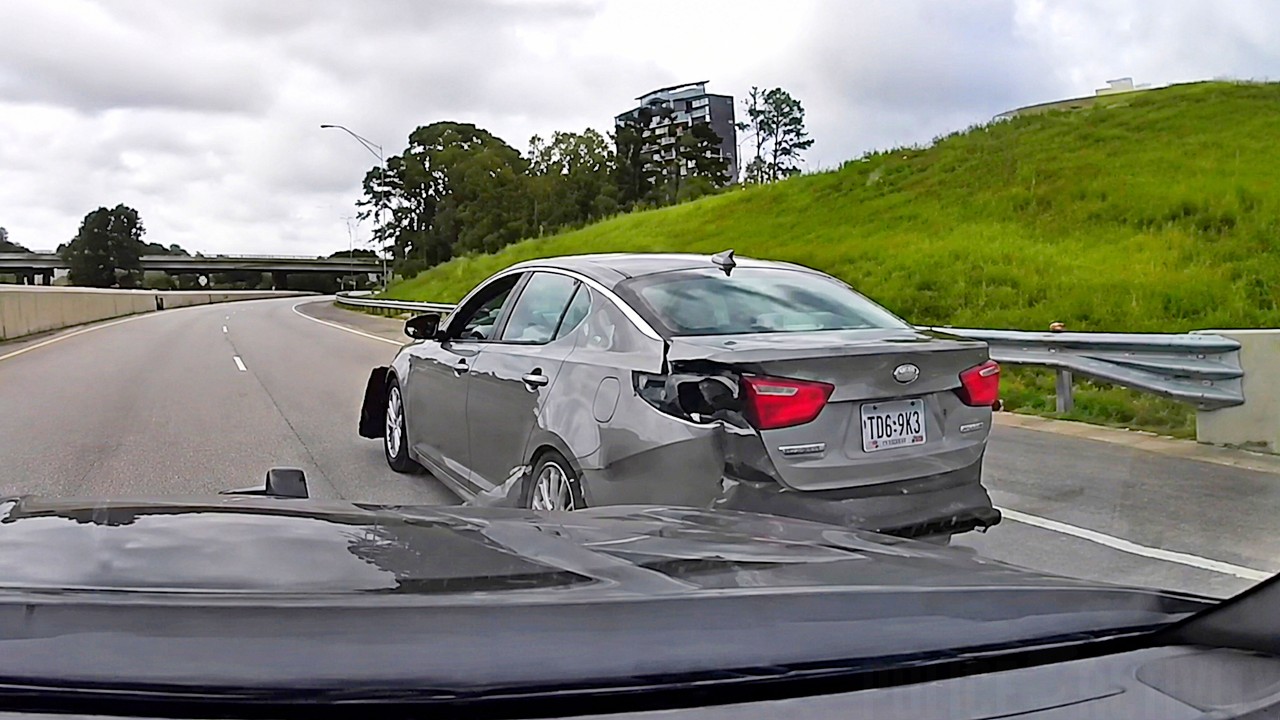
Source Video
Sources
Sources: PoliceActivity, “Driver Refuses To Stop After Multiple PIT Maneuvers,” YouTube, uploaded July 22, 2026, accessed July 27, 2026. Source URL: https://www.youtube.com/watch?v=f6_5rtA3uLQ. Auto-caption notes were downloaded for review, but the article relies on the video description and visible source video for the main recap.
FAQ
What is the main point of the police pursuit PIT maneuvers video?
The main point is a source-based recap of a Sandy Springs, Georgia pursuit. According to PoliceActivity, officers used multiple PIT maneuvers during a high-speed chase before the driver was taken into custody after a brief foot pursuit.
Does the video prove a final legal outcome?
No. The video source says the driver was charged, but this article does not state a final verdict, sentence, plea, or court outcome. Those details require separate court records or official updates.
Why does Navyago avoid stronger claims about the driver?
Navyago uses source-based wording for sensitive law-enforcement stories. A public video can show and report certain events, but it should not be stretched into claims about motive, final responsibility, or facts the source does not establish.
Why is the original video embedded near the end?
The embedded source video lets readers compare the recap with the original public source after reading the context. Navyago uses one standard YouTube iframe so the article remains readable and the source remains visible.