
Woman flees after tire change video footage published by Midwest Safety shows an officer helping a stranded driver, then checking her identity before she leaves in the car. The source follows the resulting pursuit, collision and arrest. Midwest Safety also narrates a reported plea outcome, but Navyago has not independently obtained the court file or original recordings.
The approved source is Midwest Safety video R-b4OWcb8c8, uploaded August 12, 2026. It is an edited 12-minute, 52-second presentation using body-camera, dash-camera and police-radio material, followed by creator commentary. This article distinguishes what the recording appears to show from what the channel reports. Navyago does not have the complete dispatch log, crash report, warrant return, charging documents, plea agreement or unedited agency files.
Woman flees after tire change video: what the source reports
The Woman flees after tire change video begins as a roadside-assistance encounter, not a conventional traffic stop. An officer sees a vehicle with a tire problem, offers help and retrieves tools. The driver thanks him while he works near the wheel. That opening matters because later events should not be projected backward as though the officer approached with complete knowledge of what would follow.
During the assistance, radio or records-check audio refers to possible warrants involving theft-related matters. The officer then asks the driver for identifying information. The recording shows questions about her name, date of birth or other identifiers and whether she has identification with her. Because Navyago does not have the underlying database return, the exact status and scope of any warrant remain attributed to the source sequence.
The driver asks what would happen if she had a warrant. The officer responds that he knows she has one and tells her not to run. The recording then shows her moving toward the car, entering it and leaving as the officer orders her to stop. A viewer can observe that transition in the edited upload, but the full legal basis, preceding communications and precise timing would be clearer in the original agency files.
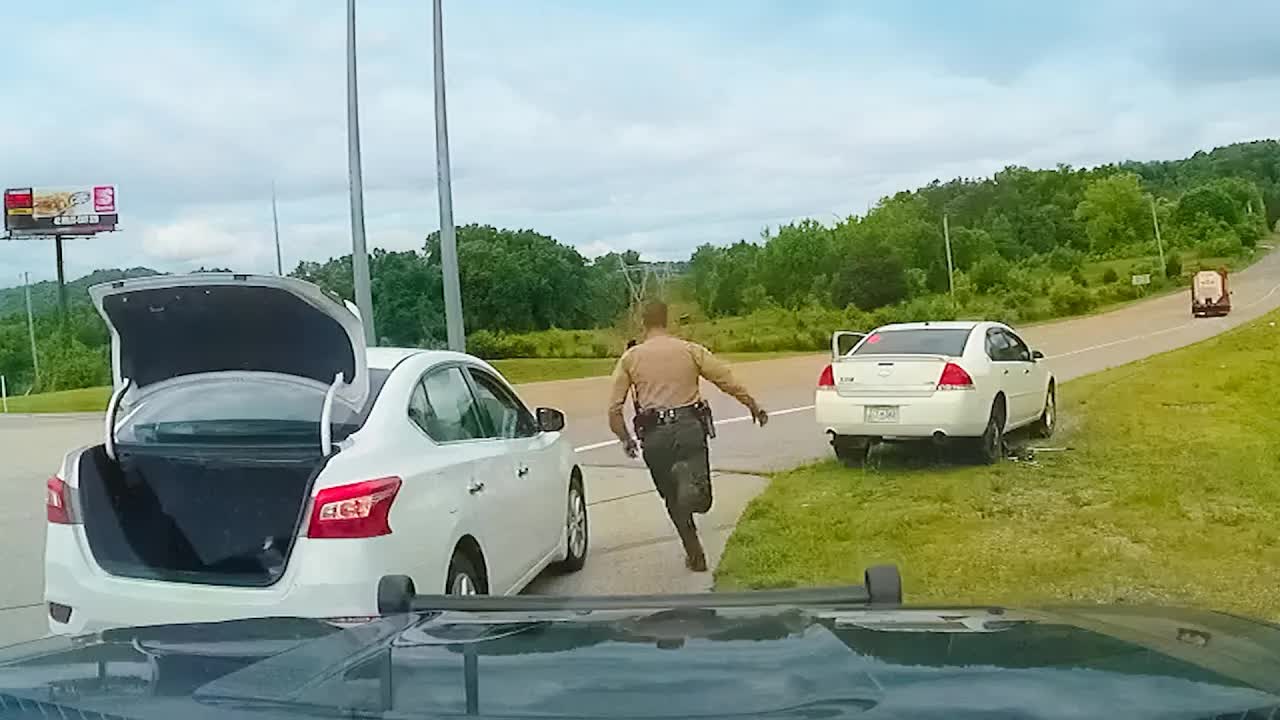
Police-radio and dashcam audio in the source then describe a pursuit involving a vehicle traveling on a damaged tire or exposed wheel. The audio reports shoulder and lane movements, several direction changes, light traffic at some points, and speeds that rise sharply. One transmission states 96 miles per hour. Those are source-reported observations; Navyago has not compared them with calibrated speed data or a formal pursuit report.
The pursuit ends after the vehicle strikes other vehicles and enters a median area. Officers order the driver out, remove her from the car and take her into custody. The source also shows officers checking on other motorists and discussing towing arrangements. Midwest Safety later narrates a list of alleged offenses and says court records show a plea to criminal impersonation and felony evading, with the remaining listed charges dismissed.
That closing sequence in the Woman flees after tire change video is why this article separates the initial tire help from the later pursuit and reported court outcome.
Seven Woman flees after tire change video facts to separate from inference
A useful recap keeps observable events, radio statements and creator narration in different evidence buckets. These seven points stay within the approved source package for the Woman flees after tire change video.
1. The encounter starts with voluntary tire assistance
The source opens with the officer asking whether the driver needs help and offering an impact wrench. He works on the wheel and speaks casually with the people at the scene. The recording therefore presents assistance as the initial purpose of the contact. It does not show the officer beginning with a traffic citation, pursuit plan or arrest announcement.
2. An identity check changes the nature of the contact
After records-related audio refers to possible warrants, the officer asks for identifying information. The driver provides a name but says she may not have identification with her. The source later describes criminal impersonation among the allegations. Navyago does not independently confirm that allegation because the underlying report and court file were not available in the approved source package.
3. The officer gives clear commands not to leave
In the Woman flees after tire change video, the officer directs the driver to come back and warns her not to run. She then enters the vehicle and drives away. The edited recording supports the broad sequence, yet a complete review would still examine all available audio, the officer’s report and any additional camera angles to establish the exact wording and timing.
4. The vehicle is pursued with a damaged wheel
Radio commentary describes the tire as blown and the vehicle as traveling on metal. Later transmissions describe the car moving between the shoulder and travel lanes, making U-turns and at one point going the wrong way. A damaged tire or wheel can reduce control, but this article does not calculate handling performance or reconstruct the vehicle’s condition from compressed video alone.
5. Source audio reports a peak speed of 96 mph
The police-radio portion of the Woman flees after tire change video includes a reported speed of 96 miles per hour while the car approaches traffic. It also contains lower speed reports earlier in the sequence. A formal reconstruction would use calibrated equipment, timestamps and roadway measurements; the number here is reported as heard in the approved source, not as an independent Navyago measurement.
6. The pursuit ends in a multi-vehicle collision
The dashcam sequence shows the pursued car striking other vehicles before reaching a median. Officers then approach, give commands and take the driver into custody. Other motorists appear shaken, and officers ask whether they are all right. Navyago avoids naming them because their identities are unnecessary to explain the public-safety sequence.
7. The channel reports a plea involving two offenses
Midwest Safety says the driver faced criminal impersonation, felony evading and a series of driving-related allegations. At the end of the video, the channel states that she pleaded guilty to criminal impersonation and felony evading, that other listed charges were dismissed, and that she was ordered to pay $1,293.26. Those details remain attributed to the channel’s court-record narration until the docket is independently reviewed.
What the Woman flees after tire change video camera sequence adds
The Woman flees after tire change video helps readers follow a changing encounter across several recording types. Bodycam captures the roadside conversation and commands at close range. Dashcam supplies a forward view during the pursuit. Radio audio adds contemporaneous reports about speed, direction and road conditions. Together, those sources provide more context than a single short clip.
They still do not create an all-seeing record. A body camera sits below the wearer’s eye line, moves quickly and may miss activity outside its frame. A dash camera mainly looks forward, not beside or behind the patrol vehicle. Radio transmissions can overlap or arrive after an event. Editing may compress quiet intervals or rearrange context unless the original files and timestamps are available.
Real-time playback is important. Slowing the Woman flees after tire change video can help identify when the driver turns, enters the car or changes lanes, but slow motion can make rapid decisions seem longer. Conversely, a fast montage can make separate events appear continuous. A careful reader should compare the visible sequence in the Woman flees after tire change video with the audio while remembering that neither independently establishes every fact asserted in later narration.
The end-of-video commentary is a distinct layer. Midwest Safety interprets the encounter, discusses officer awareness and offers an opinion about the danger of driving on a damaged wheel. That commentary can guide questions, but it is not the same as bodycam evidence, a sworn police report, an expert tire analysis or a judicial finding. This article labels it accordingly.
Roadside and pursuit safety context from the Woman flees after tire change video
The first safety lesson is simple: a disabled vehicle can place drivers, helpers and officers close to moving traffic. Hazard lights, a safe stopping location and distance from travel lanes matter before anyone changes a tire. Exact steps depend on the road, vehicle and local emergency guidance. This source is an incident recap, not a substitute for an owner’s manual or roadside-assistance instructions.
The second lesson concerns control of a damaged vehicle. The Woman flees after tire change video shows or reports travel after the tire is no longer functioning normally. The source audio later describes high speed and visible instability. Readers should not copy anything shown. If a tire fails, the safe response depends on traffic and vehicle condition, and professional assistance is preferable when a driver cannot move to a secure location.
The third lesson is that pursuit risk extends beyond the pursued car and police units. Other motorists may have little time to respond to a vehicle entering a lane, making a U-turn or traveling against traffic. The collision sequence illustrates why dispatch logs, supervisor decisions, roadway conditions and agency pursuit policy all matter when reviewing an incident. The edited upload alone cannot answer every policy question.
Those limits apply to the Woman flees after tire change video even when the radio narration sounds certain.
Finally, a roadside helper cannot assume that an apparently routine encounter will remain routine. That does not mean every stranded motorist should be treated as dangerous. It means officers and other responders use communication, positioning and information checks to manage uncertainty. The source’s opening act of help and later flight can both be true without turning the event into a general claim about people seeking roadside assistance.
What the Woman flees after tire change video does not establish
The source does not independently establish why the driver left. Her question about a warrant and her subsequent actions are recorded, but motive is a mental-state conclusion. Fear, calculation, confusion or any other explanation would require reliable statements and supporting evidence. Navyago therefore describes actions without claiming to know the driver’s private intent.
The Woman flees after tire change video does not establish impairment. The approved source package contains no laboratory result, certified field-sobriety record or medical evidence reviewed by Navyago. Driving conduct shown or reported in the pursuit may support investigative questions, but it should not be converted into an unsupported claim about alcohol, drugs or health.
The video also does not prove that every narrated charge was filed exactly as stated, remained pending, or was resolved in the same way. Midwest Safety attributes its summary to court records, but the public article does not have the docket, case number, filing dates or signed judgment. The reported plea and payment amount are therefore presented as the channel’s account.
Nor does the edited presentation answer every question about the collision. A full crash review would examine vehicle damage, roadway marks, event data, camera timestamps, witness statements and each driver’s position. The visible impact is important evidence, but it cannot by itself allocate civil liability, establish injury severity or explain every evasive action by uninvolved motorists.
Finally, the Woman flees after tire change video does not make a broad judgment about policing or roadside assistance. It documents one encounter selected and edited by a media channel. Readers can evaluate the specific commands, flight, pursuit and aftermath without treating the clip as representative of how every officer, driver or warrant encounter unfolds.
How to read the Woman flees after tire change video responsibly
Start by verifying the source ID. This article uses Midwest Safety video R-b4OWcb8c8. The source note, raw thumbnail, body image and iframe all point to that exact video. Similar tire-change, warrant or pursuit clips should not be mixed into this account simply because their titles sound alike.
Checking the ID also prevents a different Woman flees after tire change video or unrelated traffic clip from being treated as the same evidence.
A practical way to review the sequence is to keep four columns: what is directly visible, what police-radio audio reports, what Midwest Safety narrates, and what remains unavailable. For example, a turn or collision may be visible while a speed figure comes from radio audio and a plea result comes from the channel’s closing narration. The warrant return, crash report and court docket belong in the unavailable column unless they are produced separately. This method prevents one evidence type from silently borrowing the authority of another and gives readers a clear path for correcting the account if primary records later become available.
Next, preserve attribution. Say “the recording appears to show” for visible action, “radio audio reports” for transmissions and “Midwest Safety says” for the court summary. These phrases are not evasive; they tell readers what type of evidence supports each sentence. The distinction is especially important when legal allegations and a plea outcome appear in the same story.
Readers should also avoid turning the Woman flees after tire change video into harassment material. The public-interest value lies in the roadside encounter, records check, commands, flight, pursuit risk, collision and reported case outcome. Sharing personal information, contacting people shown or mocking distress adds harm without improving understanding.
For more source-attributed public-safety explainers, visit Navyago’s Crime News section. The editorial standard is consistent: lock the exact source, separate observation from narration, attribute sensitive claims and state what remains unknown.
Frequently asked questions
What happens in the Woman flees after tire change video?
An officer helps with a damaged tire, checks identifying information, orders the driver not to leave, and then pursues the car after it departs. The source later shows a collision, arrest and checks on other motorists.
Why did the officer begin asking for identification?
The edited source includes records-related audio referring to possible warrants. The officer then asks for identifying details. Navyago has not obtained the database return or complete report, so the warrant information remains source-attributed.
How fast does the source say the car traveled?
Police-radio audio in the video reports several speeds and includes a peak statement of 96 miles per hour. Navyago did not independently measure speed or review a formal reconstruction.
Were other vehicles involved in the crash?
Yes. The source sequence shows the pursued car striking other vehicles before entering a median, after which officers check on motorists and discuss towing assistance.
What court outcome does Midwest Safety report?
The channel says the driver pleaded guilty to criminal impersonation and felony evading, with other listed charges dismissed, and reports a $1,293.26 payment order. Navyago has not independently reviewed the docket.
Source Video