
Swatting call police shooting footage released by PoliceActivity shows how an emergency report that authorities later considered likely false led Pima County deputies to force entry into an Arizona home and encounter an armed resident. According to the source description, the incident occurred on April 10, 2025, at a home south of Tucson. Deputies initially believed a daughter had been shot and that people inside could need immediate help.
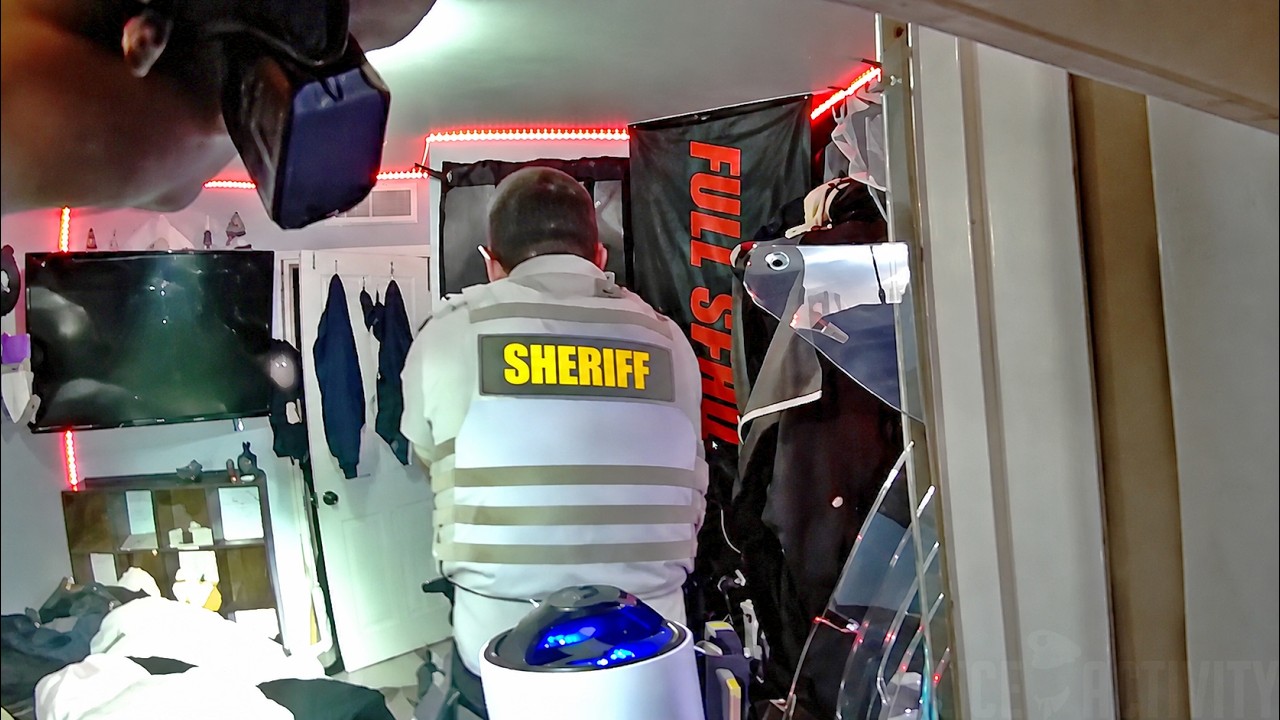
The released material is disturbing and incomplete. It includes dispatch audio, deputies announcing themselves, a forced entry through a rear window, and the rapid encounter that followed. It does not contain the entire investigative file, every camera angle, all witness interviews, forensic findings, or a final legal ruling. This explainer therefore uses attributed language and does not make an independent finding about criminal guilt, civil liability, policy compliance, or whether the use of force was legally justified.
Swatting call police shooting: what authorities were reportedly told
PoliceActivity reports that an emergency call was made at approximately 5:40 a.m. on April 10, 2025. The caller allegedly claimed that a father had shot his younger daughter inside a residence in the 1000 block of East Fenley Drive in Pima County, Arizona. The person on the line reportedly used the identity of 23-year-old Axeel Melendez and said he was locked in a room while the alleged shooter remained elsewhere in the home.
Dispatch audio in the source reflects a call framed as an active, potentially deadly family emergency. The person speaking sounds distressed and provides information that would naturally raise concern about an injured victim, an armed person, and another person hiding inside. Emergency operators and responding deputies had to assess the information in real time, before investigators could test whether the caller was truthful or even physically present at the address.
That distinction is central to understanding the incident. A response can begin with information that appears urgent but is later found to be false or misleading. The initial call explains the speed and seriousness of the law-enforcement response; it does not establish who made the call, why it was made, or what the occupants of the home knew before deputies arrived.
Why deputies treated the reported shooting as an immediate threat
According to the source, Pima County Sheriff’s Department deputies responded believing they might find a shooting victim inside. A reported armed suspect and a possibly wounded person create a different risk assessment from a routine welfare check. Waiting outside could delay medical aid, while entering could expose residents and deputies to a violent confrontation. Officers facing that type of report must make decisions with limited and sometimes unreliable information.
The footage includes repeated announcements identifying the Sheriff’s Department and directing anyone inside to come out with their hands visible. PoliceActivity says deputies attempted contact at the front door and later moved toward the rear of the home after receiving no answer. Their concern, as described by the source, was that injured people could be trapped inside and unable to respond.
No public-facing video edit can fully reconstruct what each deputy heard, saw, or understood at every second. Radio traffic, dispatch notes, tactical briefings, positions around the house, lighting conditions, and the timing of announcements may all matter to later review. The source provides useful context, but readers should avoid treating an edited sequence as a complete substitute for official records.
How deputies reportedly entered the Pima County home
PoliceActivity states that deputies tried more than one entrance before deciding to force entry. The video shows personnel gathered near a rear bedroom window. A deputy uses a shovel to break the glass, and officers continue announcing their presence while preparing to climb through the opening.
Forced entry is a consequential step because it changes the physical environment immediately. Broken glass, restricted movement through a window, poor visibility, noise, and uncertainty about occupants can compress decision-making into seconds. For a resident who did not place or know about a hoax call, the arrival may also be confusing and frightening. Those competing realities are among the reasons swatting incidents can become dangerous even when the original report is fictional.
The source does not establish whether everyone inside clearly heard or understood every announcement. It also does not resolve whether deputies had other practical entry options or how long they waited at each location. Those questions may be addressed in investigative reports, interviews, body-camera recordings, photographs, and later administrative or court proceedings.
What the source says happened during the armed encounter
As a deputy climbed through the broken window, the source says deputies encountered Melendez inside near a doorway holding a handgun. PoliceActivity reports that two deputies fired, striking him. He was seriously injured, survived, and was transported to a hospital. The source also says three deputies sustained minor injuries that were not caused by gunfire.
The brief visible sequence does not permit a confident frame-by-frame conclusion about every movement, command, line of sight, or perception. Whether a firearm was pointed, how it was held, the distance between the parties, the lighting, and the precise timing of the shots may be important. Those facts should come from the complete investigation rather than speculation based on a short online edit.
It is also important not to infer that the resident made the emergency call simply because the caller reportedly used his name. PoliceActivity says investigators came to believe Melendez was not the caller. If that finding is accurate, the armed confrontation followed an emergency response triggered by someone outside the home or by someone misrepresenting the situation. The identity and intent of the caller remain separate investigative questions.
Why investigators reportedly considered the call a swatting incident
Swatting generally refers to a false emergency report designed to provoke a heavily armed police response at a particular address. The tactic can involve claims of a shooting, hostage situation, bomb, or other imminent threat. The term describes the alleged misuse of emergency systems; it does not by itself identify the caller or prove a particular criminal charge.
PoliceActivity says investigators determined that the original report was likely a hoax and that the named resident was probably not the person who placed it. That conclusion changes the context but does not erase the difficult questions surrounding the entry and shooting. Investigators still must examine the origin of the call, the information passed to deputies, the actions of everyone at the residence, the firearm evidence, and the use of force.
False reports can be technically difficult to trace. Callers may disguise numbers, use internet-based services, relay information through another jurisdiction, or appropriate names and addresses found online. A complete inquiry may require phone records, platform records, internet data, recordings, device evidence, and cooperation across agencies. Navyago cannot independently verify whether a suspect in the alleged hoax has been identified or charged.
What the swatting footage can and cannot establish
The video helps establish a broad sequence: dispatch received a grave report, deputies announced themselves, officers attempted contact, a rear window was broken, and gunfire followed an encounter inside. The source description adds dates, a location, the name reportedly used by the caller, injuries, and the agencies assigned to investigate.
However, the footage cannot independently establish the caller’s identity, the legal sufficiency of the entry, the full conduct of the resident, or the reasonableness of each deputy’s decision. It cannot show material that was not selected for the edit. Even authentic body-camera footage has limitations, including lens perspective, audio distortion, blocked views, low light, and the difference between a camera’s position and an officer’s eyesight.
Readers should also distinguish an investigative statement from a final adjudication. Police accounts can be revised as evidence develops. Prosecutors may reach decisions under criminal-law standards, while an agency may conduct a separate policy review and civil litigation may apply different rules. One process does not automatically answer every other question.
For another example of how Navyago separates released footage from unresolved legal conclusions, see our explainer on the stolen vehicle police pursuit in Ohio.
Public-safety lessons from a false emergency report
The clearest public-interest lesson is that fabricated emergency calls can place uninvolved people, dispatchers, officers, neighbors, and medical personnel in immediate danger. A caller may imagine the act as a prank or remote harassment, but the response occurs in real homes where people may be asleep, armed lawfully, unable to hear commands, caring for children, or unaware that police have been given a false story.
Residents who unexpectedly encounter police should avoid sudden movements, keep hands visible when possible, follow clear commands, and explain confusion only when it is safe to do so. These general precautions are not a judgment about what anyone did in this case, and circumstances can make compliance difficult. People should not attempt to investigate a suspicious call themselves during an active response.
If someone receives a credible swatting threat before police arrive, local authorities may advise calling the non-emergency line, documenting the threat, and discussing an address alert or safety plan. Procedures vary by jurisdiction, and emergency services should be used when there is immediate danger. Schools, businesses, streamers, public officials, and people experiencing targeted harassment may benefit from preserving messages and account records for investigators.
Bystanders should remain away from an active scene, avoid live-streaming officers’ positions, and not repeat unverified claims about occupants. Incorrect online identification can magnify harm after the immediate event. Responsible coverage should emphasize what authorities have confirmed and clearly label allegations and unanswered questions.
Legal review and unanswered questions after the shooting
The source says the Pima Regional Critical Incident Team assumed responsibility for the incident review and that the Tucson Police Department was conducting the criminal investigation. Independent or multi-agency review structures are intended to separate the involved department from at least part of the evidence-gathering process, although the exact division of responsibilities depends on local protocols.
A use-of-force investigation may examine whether deputies reasonably perceived an imminent threat, what commands were given, the resident’s actions, firearm evidence, body-camera recordings, scene measurements, and witness statements. A separate review may consider tactics, training, entry decisions, supervision, medical response, and compliance with departmental policy. The alleged hoax call may produce another investigation focused on who initiated it and which laws could apply.
Several questions remain open based on the reviewed source: Who made the emergency call? How was the resident’s identity selected? What did dispatch communicate to every deputy? Did occupants hear the announcements? What exactly did the complete recordings show? Was the handgun operable and where was it recovered? Did prosecutors or administrators later reach findings? Until reliable records answer those questions, categorical claims would go beyond the evidence.
The resident’s survival also means medical recovery and potential legal representation may shape what information becomes public. Privacy rules can limit medical details. If litigation or criminal proceedings follow, filings and testimony may add context or dispute early accounts. Readers should treat future verified updates as corrections or additions to the initial narrative, not as proof that every early statement was complete.
FAQ
When did the reported Pima County incident happen?
PoliceActivity says the emergency call and shooting occurred on April 10, 2025, at approximately 5:40 a.m. The video was uploaded on June 24, 2026.
Was the reported daughter actually shot?
The reviewed source says investigators later considered the original emergency report likely false. It does not report finding the shooting victim described by the caller.
Did the resident place the alleged swatting call?
According to PoliceActivity, authorities came to believe that Axeel Melendez was not the caller, even though the caller reportedly used his identity. That remains an attributed investigative statement.
Did the man survive the deputies’ gunfire?
The source reports that he was seriously injured, survived, and was taken to a local hospital for treatment. Navyago has not independently verified later medical updates.
Does the released footage prove the shooting was justified or unjustified?
No. The edit is relevant evidence, but a legal assessment requires the complete record and the governing use-of-force standard. This article makes no independent conclusion.
What is swatting?
Swatting is a common term for making a false emergency report intended to trigger an armed police response at another person’s location. Specific criminal definitions and penalties vary by jurisdiction.
What should someone do after receiving a swatting threat?
Preserve the messages or account records, contact local law enforcement for jurisdiction-specific guidance, and call emergency services if there is immediate danger. Do not confront a suspected caller.
Source video
The primary source is embedded below for context. Viewer discretion is advised because the video includes a forced entry, weapons, and police gunfire.
Source note
Primary source: PoliceActivity, ?Swatting Call Ends With Deputies Shooting Armed Man,? uploaded June 24, 2026, describing an incident reported on April 10, 2025, in Pima County, Arizona. The source combines emergency-call audio and law-enforcement footage with an edited description. Navyago has not independently verified the complete investigative file. This article does not determine guilt, caller identity, civil liability, policy compliance, motive, or legal justification.