
96 year old missing man found footage from EWU Bodycam shows a family, deputies and a bloodhound team searching for an older adult who had disappeared without his walker, phone or wallet. The video reports that the dog led a handler into nearby woods, where the man was located alive after a search lasting nearly seven hours.
The public video identifies the man as Ray Cornett and says the search happened in May 2026. Navyago reviewed the upload, its public description, English automatic captions and exact source thumbnail. No independent agency report could be matched confidently to the same event during this review, so incident details—including the name, health history, timeline and hospital transport—remain attributed to EWU Bodycam or to people heard in the recording.
96 Year Old Missing Man Found: What the Source Reports
EWU Bodycam says Cornett’s daughter called 911 after discovering that her 96-year-old father was no longer at home. In the recorded call, she says he had been missing for more than an hour and a half. She also tells the dispatcher that he left behind his walker, phone and wallet and appeared to have only his cane. Those missing items mattered because the caller said his phone normally converted speech to text for him.
The caller describes limited hearing and eyesight, weak balance and other medical concerns. Later footage shows a deputy asking where Cornett might have walked, while family members and a neighbor discuss the nearby lake, dock, road and wooded property. The recording does not supply an address, and this article does not attempt to identify the home or private family members.
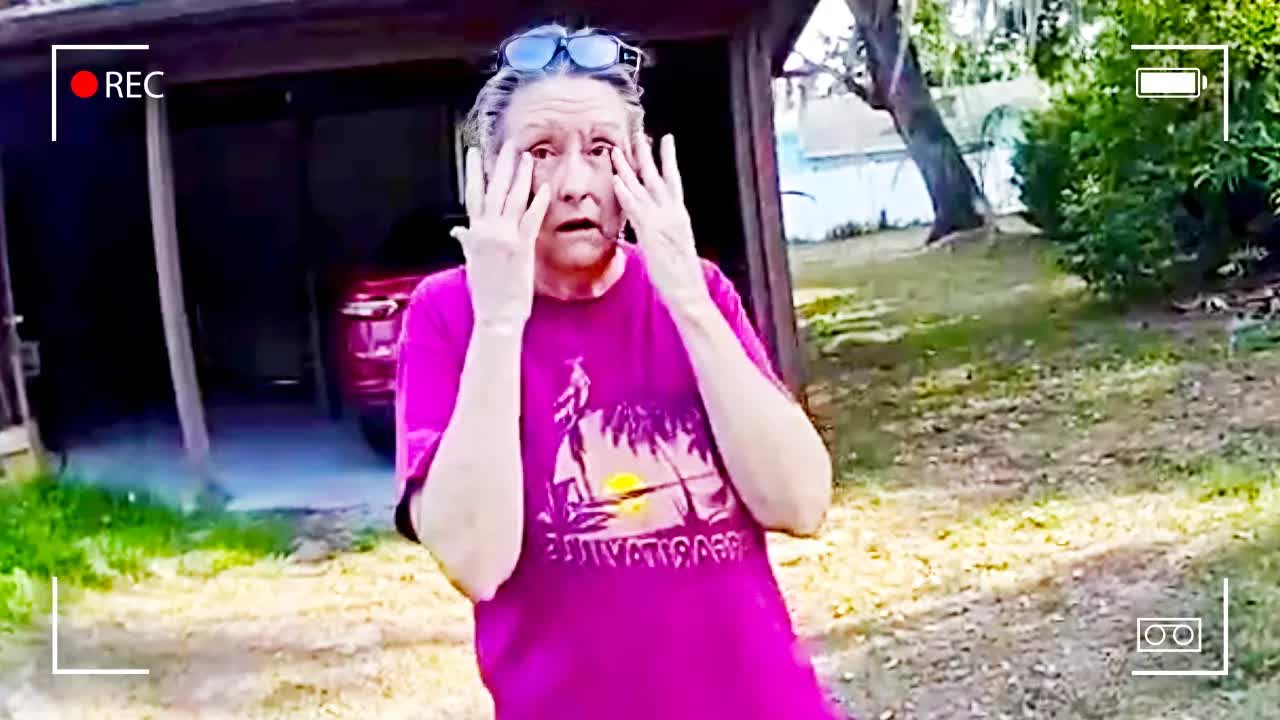
According to the video’s narration, the search continued for several hours as daylight began to fade. A bloodhound team then arrived. The footage identifies the dog as Boomer and shows the handler working through the area before calling out that he had found Cornett in the woods. The man is conscious, speaks with deputies and says he became disoriented, crossed toward a neighboring property and fell.
Seven Search-and-Rescue Facts the Video Supports
1. The missing-person call described immediate vulnerability
The 96 year old missing man found recording does more than state that an adult was missing. The caller gives the dispatcher practical risk information: age, limited balance, difficulty hearing, poor eyesight, leg weakness and the absence of usual mobility and communication tools. Those details help explain why the response shown in the video became urgent. They are still family statements, not medical records, so Navyago does not convert them into diagnoses.
2. Familiar routes were checked before the canine track
The footage shows questions about the mailbox, road, dock, water and places Cornett might normally visit. Family members had looked nearby, and deputies examined the muddy edge of the lake for signs that someone had entered. This part of the 96 year old missing man found sequence demonstrates why a search starts with known habits and accessible hazards rather than with a dramatic assumption about what happened.
3. Searchers considered the water but did not stop there
In this 96 year old missing man found account, concern about the lake was understandable because the caller described balance problems and said Cornett sometimes went near the dock. Yet the footage also shows a deputy observing that no obvious footprints led into the muddy edge. That observation did not prove the water was clear; it simply became one piece of a broader search. A neighbor then emphasized that the wooded area could conceal someone who had fallen.
4. A neighbor contributed a different route hypothesis
The 96 year old missing man found timeline includes a neighbor suggesting that searchers look toward a house partly hidden beyond the woods. That clue appears to align with what Cornett later tells deputies: he wanted to look at the neighboring house, cut through the wooded area and fell. The sequence illustrates the value of asking people who know the property about paths, landmarks and interests, while still letting trained search personnel evaluate each lead.
5. The bloodhound team followed scent into the woods
The 96 year old missing man found footage then shows Boomer and the handler working away from the water and into vegetation. The handler eventually calls that the man is nearby and then reports finding him on the ground. It is fair to say the team played a key role. It would be too broad to say the dog acted alone, because the result followed hours of work by family, neighbors, deputies and other responders.
6. Cornett was responsive when deputies reached him
When the 96 year old missing man found sequence reaches Cornett, he answers questions, asks how he was found and says he is glad the searchers located him. He tells them he became disoriented and fell after going through the woods. Deputies check whether he can feel his feet, offer a small drink and discuss how to move him safely over roots and uneven ground. The video does not provide a clinical evaluation, so “responsive” is more accurate than declaring him uninjured.
7. The source reports evaluation and hospital transport
The 96 year old missing man found narration ends with EWU Bodycam reporting that Cornett was brought out nearly seven hours after going missing, evaluated by EMS and taken to a hospital. The upload does not include hospital records, a diagnosis or a long-term outcome. A careful article therefore stops at what the source reports. The hopeful rescue ending should not be used to infer that every risk had passed or that no follow-up care was required.
How the Search Shifted From the Water to the Woods
The most useful part of the 96 year old missing man found video is the change in working theory. The lake drew early attention because it was close, the caller feared a fall and the missing man reportedly had balance limitations. Deputies inspected the edge and discussed what evidence might be visible in the mud. At the same time, they continued asking about other places he could have gone.
Within the 96 year old missing man found story, the woods became more important after the neighbor explained that someone could fall there and remain difficult to see. The source later presents Cornett’s own explanation, which points in the same direction. This does not mean the water check was wasted. Search decisions are made with incomplete information, and ruling out or lowering the priority of one area can help teams redirect time and specialized resources.
Viewers should also resist hindsight. Once the video reveals where Cornett was found, the route appears obvious. It was not obvious to the people searching in real time. They were balancing family observations, environmental hazards, daylight, the missing person’s reported mobility and the absence of a working phone location. The footage is most informative when read as an evolving search, not as a puzzle with an easy answer.
What the Bloodhound Footage Adds—and What It Cannot Prove
The 96 year old missing man found footage adds a direct visual record of a trained canine team entering the search and moving toward the eventual location. It also captures the handler rewarding Boomer after the find. For readers, that is stronger than a headline claiming only that a dog was involved. The visible sequence connects the track, the call announcing the find and the recovery activity that follows.
However, a platform video cannot validate every technical detail of scent work. It does not show the dog’s complete training record, the exact scent article used, wind and contamination conditions, every area searched, or a synchronized operational log. Navyago therefore does not claim a measured distance, a scent age or a success rate. Those would require records not contained in this source package.
The balanced conclusion is narrow: EWU Bodycam footage supports that Boomer and the handler helped locate the missing man in the woods. The video also supports that the canine search operated within a larger response. That wording gives appropriate credit without turning one clip into a universal claim about how every missing-person search should be run.
What the 96 Year Old Missing Man Found Video Does Not Establish
A careful reading of the 96 year old missing man found source shows that it does not establish a medical diagnosis or explain why Cornett became disoriented. The caller mentions health and mobility concerns, and Cornett says he became confused, but neither statement allows an outside viewer to diagnose cognitive impairment. It would be inaccurate and unfair to add a condition the source never establishes.
The upload also does not identify the responding agency in its public description, provide an incident number or include an official written report. For that reason, this article avoids naming a jurisdiction based on scenery, uniforms or speculation. It also avoids publishing the home location, neighboring property or identities of relatives who are not necessary to understand the public-safety lesson.
Finally, the edit is not a complete evidentiary record. It combines 911 audio, body-camera segments and narration selected by the channel. Automatic captions can mishear names and words. The upload is valuable for explaining the visible search arc, but precise quotations, medical conclusions and agency-performance judgments would require original files and official records.
Practical Lessons for Families and Searchers
The 96 year old missing man found sequence reinforces a practical first step: when a vulnerable person is unexpectedly missing, contact local emergency services and provide accurate, current information. The caller in this video supplies age, clothing and mobility context, the last known time, missing personal items, hearing limitations and likely destinations. Those facts are more useful than a theory stated as certainty.
For families reading this 96 year old missing man found explainer, preparation can include keeping a recent photo and a concise list of essential information accessible: medications, mobility equipment, communication needs, favorite routes, common destinations, vehicle details and a reliable contact chain. This is not a substitute for professional advice or local alert procedures. It is a way to reduce the time spent reconstructing basic facts under stress.
Searchers should protect the missing person’s privacy while sharing what responders genuinely need. An exact address, medical record or family dispute does not belong in a public social post merely because it might attract attention. Give sensitive details directly to the responsible agency. Public notices should follow that agency’s guidance and be updated promptly when the person is found.
For unresolved or long-term cases in the United States, the Department of Justice’s NamUs missing-person resources explain how the national repository supports investigators and families. NamUs is included here as a general resource; it does not verify the Cornett search shown in the video.
Readers looking for more careful bodycam coverage can browse Navyago’s Crime News section. A related source-limited video explainer shows the same editorial principle: identify the exact upload, separate visible events from narration and state what the available record cannot prove.
How to Read the Rescue Footage Responsibly
First, keep the source identity attached to the claim. This 96 year old missing man found article uses EWU Bodycam video FLcvVza4z9c; its source note, thumbnail, body image and iframe all point to that same ID. A different rescue clip, even one involving a similar age or a bloodhound, cannot fill gaps in this event. Checking the ID is a simple way to prevent footage from unrelated places or dates from being combined into one false narrative.
Second, separate what viewers can observe from what people say. In the 96 year old missing man found footage, viewers can see a canine track, a deputy reaching a man in the woods and responders helping him over uneven ground. The caller’s account supplies the health and mobility context, while the channel narration supplies the nearly seven-hour duration and hospital transport. Each layer can be useful, but none should silently be relabeled as an independently verified official finding.
Third, do not diagnose a stranger from a short video. The 96 year old missing man found source includes statements about balance, hearing, eyesight, a prior stroke and disorientation. Those details explain the family’s urgency; they do not establish a condition that an online viewer can name. Respectful coverage can describe reported limitations and the response without using a medical label that the available record does not support.
Fourth, preserve dignity and location privacy. A 96 year old missing man found story does not become more informative when it publishes a private address, maps the neighboring home or identifies relatives who did not choose a public role. The source’s public-interest value lies in the search sequence and rescue lessons. Sensitive location or health information should be shared directly with responders when needed, not amplified for curiosity after the person has been located.
Finally, treat the 96 year old missing man found upload as a dated source, not the final word forever. An agency, family or later public record could add context, correct the timeline or clarify the outcome. Readers should prefer a later primary record if one becomes available. Navyago’s source note records what was reviewed on August 15, 2026 so future corrections can identify exactly which evidence informed this version.
Frequently Asked Questions
How was the 96-year-old missing man found?
The 96 year old missing man found clip shows a bloodhound team tracking into nearby woods, where a deputy located the man on the ground. EWU Bodycam identifies the dog as Boomer.
How long had the man been missing?
The video narration says he was brought out nearly seven hours after leaving home. Navyago did not find an independent agency timeline, so that duration remains attributed to EWU Bodycam.
Was the missing man injured?
He is conscious and responsive in the footage. EWU Bodycam reports that EMS evaluated him and he was taken to a hospital, but the upload does not provide medical records or a final diagnosis.
Why did searchers check the lake?
The caller said the man sometimes went near the dock and had balance limitations. Deputies examined the muddy edge while continuing to consider other routes, including the woods.
Does the video prove that a bloodhound will find every missing person?
No. This source supports one successful canine-assisted search. It does not provide the operational data needed to predict outcomes in other locations or circumstances.
Source Video
Pingback: Gabriel Ramirez Manhunt: 7 Urgent Facts From Missouri Search