Milwaukee police shoot suspect video footage published by PoliceActivity presents a reported June 16, 2026 apartment response that ended when officers fired in a stairwell and wounded a suspect in the arm. The public source says residents reported an armed man threatening people inside. This explainer separates that source account from allegations, court claims and policy questions that remain unresolved. PoliceActivity uploaded the video on July 1, 2026 and says the incident happened near North 64th Street and West Sheridan Avenue in Milwaukee, Wisconsin. Navyago reviewed the public title, description, thumbnail, local transcript files and embed data tied to the same video ID, then matched the incident date and location against the Milwaukee Police Department’s June 16 officer-involved shooting page and CBS 58’s July 1 report on the same release. Incident-specific details below still remain phrased as source-reported or police-reported because Navyago did not independently confirm a full court docket or final investigative finding. The PoliceActivity description says officers were dispatched at about 9:07 p.m. on Tuesday, June 16, 2026 after numerous 911 callers reported an armed man at a second-floor apartment near North 64th Street and West Sheridan Avenue. That reported dispatch frame matters because it places the event inside an active apartment response rather than a random traffic stop or street contact. Navyago did not independently confirm the dispatch log before publication. According to the same source, investigators later identified the suspect as 20-year-old Deontae Ransom. The description says he went to confront his ex-girlfriend, allegedly pounded on her apartment door, threatened her with a firearm and demanded entry while another man accompanied him. Those are source-described allegations tied to the upload and the court-record summary in the description. They are not treated here as independently verified findings of fact. The source further says officers heard loud noises they believed were gunfire while searching the building and moved into the stairwell. Body-camera footage, according to the description, shows officers climbing the stairs before encountering Ransom, who allegedly had a modified handgun concealed inside his clothing with one hand still in a pocket. The source says two officers then opened fire and struck him in the arm. For the Milwaukee police shoot suspect video, PoliceActivity says Ransom retreated to the upper level, removed his jacket, placed the weapon on the floor and then returned downstairs with his hands raised after roughly ninety seconds. The description says officers took him into custody, transported him for treatment and later arrested a second suspect identified as 19-year-old Damarion Williams-Beal. It also says both involved officers were placed on administrative duty while the officer-involved shooting remained under investigation. PoliceActivity identifies the area near North 64th Street and West Sheridan Avenue in Milwaukee. That reported location provides the geographic frame for the Milwaukee police shoot suspect video. It does not, by itself, identify a precise apartment unit, a building owner, or every witness who may have been present. The description says officers were dispatched after numerous callers reported an armed man at a second-floor apartment. That source claim helps explain why officers may have treated the scene as an urgent threat response. It is still a source summary rather than a published transcript of each 911 call. PoliceActivity says investigators believed Ransom went to the apartment to confront his ex-girlfriend after accusing her of being with another man. The description adds that he allegedly threatened her with a firearm and demanded entry. Those statements are important to the narrative, but they remain allegations described by the source, not final court findings. The source says officers heard loud noises they believed were gunfire while moving through the building. That reported perception is central to understanding why officers advanced into the stairwell. The public upload does not independently prove whether the sounds were gunshots or what exactly caused them. According to the description, officers encountered Ransom in the stairwell and believed he had a modified handgun concealed in his clothing while one hand remained in his pocket. The video package is edited for publication, so the most accurate phrasing is that the source reports this weapon detail and presents it as part of the officers’ threat assessment. PoliceActivity reports that two officers opened fire, striking Ransom in the arm. It then says he retreated upstairs, removed his jacket, placed the weapon on the floor, and eventually returned downstairs with his hands raised. That sequence is useful to readers because it distinguishes the shooting moment from the later surrender. The source lists felony and misdemeanor allegations for Ransom, separate felony allegations for Williams-Beal, and cash bond amounts for both men. It also includes a projection of potential prison exposure if convicted on all charges. Navyago does not restate that projection as a likely outcome, because charges, bond decisions and sentencing exposure are different parts of a legal process. The public description presents the Milwaukee police shoot suspect video as the result of a quickly intensifying apartment call. First, the source says residents called 911 about an armed man at a second-floor unit. Second, officers arrived and searched the building while trying to locate the reported suspect. Third, the description says officers heard noises they interpreted as gunfire, which pushed the response into a higher-risk phase. For readers searching the Milwaukee police shoot suspect video, that sequence matters because it frames the stairwell encounter as part of an in-progress building search rather than a static arrest attempt after the scene had already calmed down. The source says officers were looking for a man they believed had threatened people with a firearm. The same description then says they encountered him suddenly on the stairs while evaluating noises they thought could be shots. PoliceActivity also says another man accompanied Ransom to the apartment building. The source later identifies that person as Damarion Williams-Beal and says prosecutors alleged he helped conceal the firearm before it was used during the confrontation. This article keeps that statement carefully limited because the public source does not provide a full charging document, hearing transcript, or response from defense counsel. The most important transition in the story is the short period between the reported stairwell encounter and the eventual surrender. According to the source, officers fired and hit Ransom in the arm, he retreated to the upper level, removed his jacket and placed the weapon on the floor, and then came back down after about a minute and a half with his hands raised. That reported pause suggests that the shooting itself did not instantly end the situation; the source depicts a brief period of uncertainty before officers regained control. The upload then moves from scene details to legal consequences. The description says Ransom was transported to a hospital, arrested after treatment and charged in relation to the incident. It separately says Williams-Beal was also arrested. A source-based explainer can summarize that sequence. It cannot replace official reports, later hearings or the final outcome of the investigation. Apartment-building encounters create different risks from open-air police scenes. Hallways and stairwells are narrow, sight lines are short, and residents can be close behind doors, around landings or moving through common areas. That broader context helps explain why a Milwaukee police shoot suspect video tied to an apartment call carries public-interest weight even before a final investigation is complete. The public source describes a confined-space encounter in which officers believed they were searching for an armed suspect and had just heard sounds they associated with gunfire. If that account is accurate, the officers’ understanding of threat would have been shaped by limited visibility, close distance and the possibility that other residents were nearby. Those general considerations do not prove that every tactical choice was correct, but they show why the source presents the event as more than a routine arrest. Readers should also note what a public upload can and cannot show. Edited body-camera footage can reveal movement, timing and certain visual details, but it may omit earlier dispatch information, witness statements, radio traffic, or wider angles that influenced decisions. A single edited release cannot fully answer whether officers had cover, what commands were given in complete sequence, or whether anyone else was immediately behind the suspect. The source description emphasizes the handgun allegation, the one hand in a pocket and the later act of placing the weapon on the floor. Those details are central because they are the reported facts most directly tied to why officers fired and why the scene changed afterward. They are also the details that would benefit most from later confirmation through official reports, evidence logs, and a full investigative summary. For more source-based crime explainers, readers can browse Navyago’s Crime News section. For a separate example of how Navyago separates public source facts from inference, see Dodge Challenger police pursuit. Those internal links provide editorial context, not independent verification of the Milwaukee incident. The Milwaukee police shoot suspect video description does more than summarize the scene. It also lists several allegations, modifiers and bond amounts. That material can help readers understand where the case stood when the source was published, but it should not be mistaken for a conviction, plea, or final sentencing order. Within the Milwaukee police shoot suspect video record, PoliceActivity says Ransom faced four felonies, including stalking, burglary while armed with a dangerous weapon, and possessing a firearm as a convicted felon, plus two misdemeanors tied to intentionally pointing a firearm and disorderly conduct. It says some counts carried habitual-criminality or domestic-abuse modifiers. This article does not expand those labels beyond the source wording because the public upload does not attach the filed complaint or identify any changes that may have occurred afterward. The description also says Williams-Beal faced two felony allegations, including burglary while armed as party to a crime and possessing a firearm as an adjudicated delinquent of a felony. Again, that is source-attributed procedural information, not proof that every allegation was sustained. Charging language often changes as prosecutors review evidence, defense lawyers respond and judges rule on motions. Bond information requires similar caution. The source says Ransom’s cash bond was set at $85,000 and Williams-Beal’s at $5,000. Bond is a pretrial condition, not a punishment and not a determination that the accused committed the charged conduct. A bond amount can reflect multiple legal factors that are not visible in a short online description. The source also states what the men could face if convicted on all charges. That kind of maximum-exposure framing is common in public descriptions because it signals the seriousness alleged by prosecutors. It can still mislead readers if presented as a prediction. A responsible article therefore keeps the language narrow: the source says prosecutors alleged serious offenses and described possible penalties if convictions occurred. It does not say those outcomes were likely, imminent, or already decided. First, the public package does not establish a complete chronology. The description summarizes the incident, and the video is a curated upload rather than a full evidence release. There may be relevant events before officers entered the building, during the search, or after the surrender that viewers cannot see in the final edit. Second, the Milwaukee police shoot suspect video source does not establish a complete forensic account of the weapon. It says the suspect had a modified handgun concealed inside his clothing and later placed the weapon on the floor. The upload does not independently show the firearm’s full condition, exact modification, operability or evidentiary chain. Third, the Milwaukee police shoot suspect video source does not establish final injury details. The description says Ransom was struck in the arm and transported to a hospital. It does not provide a medical diagnosis, later health update or permanent-injury assessment. That is why this article avoids broader claims about severity or long-term outcome. Fourth, the source does not establish final police-policy compliance. Whether officers followed Milwaukee policy would depend on the rules in effect on June 16, the information available at each moment, radio traffic, building layout, threat perception, and the full investigative record. None of that can be finally decided from a public upload alone. Fifth, the public source does not establish final judicial outcomes for either suspect. Arrest, charging, bond and adjudication are separate stages. Without a later docket entry or court disposition, readers should not assume that every allegation remained unchanged or was ultimately proved. Start with exact source identity. This article is locked to PoliceActivity upload Next, separate what the source says from what the footage visibly shows. The description supplies the dispatch reason, the alleged threats, the identities, the charges, the bonds and the claim that officers heard noises they believed were gunfire. The footage can help viewers understand movement in the stairwell and the surrender sequence. Those are different evidence layers, and readers should ask which layer supports each sentence. Then treat allegation language seriously. Words such as investigators say, according to court records, and prosecutors say are not filler. They mark the boundary between reported claims and independently established facts. In a case like the Milwaukee police shoot suspect video, that boundary is what keeps an explainer useful without turning it into a verdict. Readers should also resist filling evidentiary gaps with speculation. The source does not prove motive in a final legal sense, does not resolve every tactical question, and does not provide complete medical or forensic records. That means a responsible reading stays focused on verifiable sequence, visible actions and the limited scope of the public release. Finally, remember that apartment-building incidents affect more people than the officer and suspect visible on screen. Residents, family members, neighbors and responding officers may all be part of the real-world event. Careful source-based reporting tries to clarify what happened without exaggerating, doxxing uninvolved people or rewarding the most dramatic interpretation. A future update to the Milwaukee police shoot suspect video explainer would benefit from a Milwaukee Police incident report or officer-involved shooting summary that confirms the event number, dispatch sequence, responding units and the agency’s stated understanding of the threat. A fuller evidence release could also clarify what officers heard before the stairwell encounter and whether additional witnesses corroborated the description. A formal criminal complaint, docket sheet or court minute entry could confirm exactly which charges were filed, whether any counts were amended, and how bond conditions were recorded. Those records would also provide a stronger foundation for any follow-up story than a video description alone. Evidence inventory and firearm records could clarify the source description of a modified handgun. If investigators documented the weapon’s condition, those records could answer questions that a published clip cannot resolve, including the exact modification and how it was recovered after the surrender. Medical updates, when publicly released in a lawful and limited way, could confirm the injury outcome more precisely than the source’s statement that the suspect was struck in the arm and transported for treatment. Without such records, a careful article should avoid implying recovery details or long-term consequences. Finally, an official closing memorandum or prosecutor decision about the officer-involved shooting could address whether the use of force was deemed justified under the applicable standard. Until that level of documentation is available, the current article remains what it is designed to be: a source-based explainer that tells readers what the public upload reports and where the evidentiary limits still sit. PoliceActivity places the incident near North 64th Street and West Sheridan Avenue in Milwaukee at a second-floor apartment building. Navyago did not independently confirm the full dispatch log before publication. The source says numerous 911 callers reported an armed man at the apartment. It also says investigators believed the suspect was confronting his ex-girlfriend and threatening her with a firearm. According to PoliceActivity, officers heard noises they believed were gunfire, moved into the stairwell, encountered the suspect, and then two officers opened fire after perceiving an immediate threat. The source says the suspect retreated upstairs, removed his jacket, placed the weapon on the floor, and later returned downstairs with his hands raised before being taken into custody. No. The public description summarizes allegations, bond decisions and possible exposure if convicted. Those details are not a final court judgment.
Milwaukee Police Shoot Suspect Video: What the Source Reports
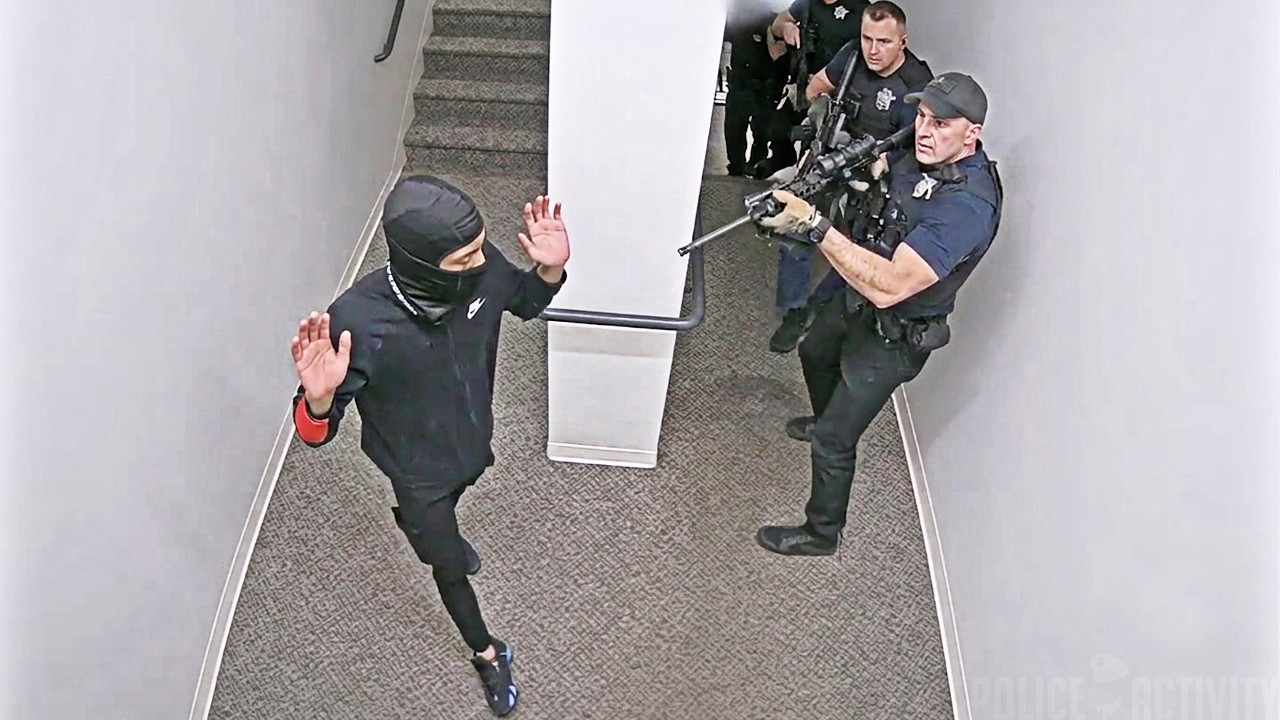
Seven Source Facts From the Public Upload
1. The source places the incident at a Milwaukee apartment building
2. Numerous 911 callers reportedly described an armed man
3. The source says the suspect confronted an ex-girlfriend
4. Officers reportedly heard noises they believed were gunfire
5. The stairwell encounter reportedly involved a modified handgun
6. The source says officers fired, hit the suspect in the arm, and he later surrendered
7. Charges, bonds and prison exposure remain allegations at this stage
How the June 16 Apartment Response Reportedly Escalated
Why the Stairwell Encounter Matters for Public Understanding
Charges and Bonds Are Allegations, Not a Final Judgment
What the Public Source Does Not Establish
How To Read Police Shooting Video Responsibly
3oTfY4FFjBk. The YouTube URL, video ID, body image, source note and embed all point to that same video. A different Milwaukee police clip or a social-media repost cannot be substituted to fill missing details.What Records Could Confirm the Remaining Questions
Frequently Asked Questions
Where did the Milwaukee police shoot suspect video incident happen?
What does the source say officers were responding to?
What does the source say happened in the stairwell?
Did the suspect surrender after being shot?
Do the listed charges prove guilt?
Source Video
