
Anitra Gunn murder case coverage usually starts with a dramatic documentary title, but the clearest public record is narrower: Fort Valley State student Anitra Gunn disappeared on February 14, 2020, Georgia investigators later found her body in Crawford County, and a jury convicted Demarcus Little in March 2022. This recap compares the source video with public reporting instead of repeating every emotional hook as fact.
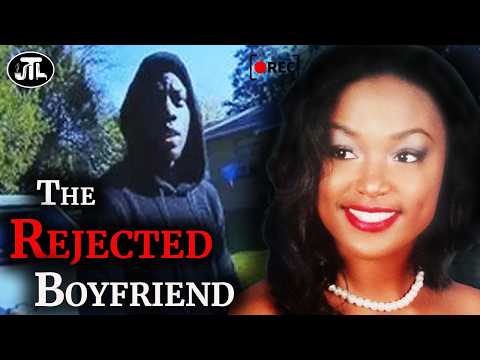
The documentary source for this article is the JustThoughtLounge video titled She Laughed in His Face on Valentine’s Day: The Murder of Anitra Gunn, published on July 21, 2024. For readers newly encountering the Anitra Gunn murder case, the title is built to stop a scrolling viewer, but a legal-safe article should separate that framing from the verified investigation and court timeline. Public reporting from Georgia investigators and 41NBC adds that narrower record, including when Gunn disappeared, where evidence was found, and what the 2022 verdict established.
Table of Contents
Why the Source Title Needs Caution Before Readers Draw Conclusions
The source documentary title points readers toward a Valentine’s Day argument and a hidden motive, but that framing should not be treated as the entire evidentiary record. Public true-crime videos often compress long timelines into one emotionally memorable line. That can help viewers remember a case, yet it can also turn a disputed or source-limited detail into the part of the story people remember most strongly.
In the Anitra Gunn murder case, the public record reviewed for this article is more concrete than that marketing angle. According to reporting that summarized the Georgia Bureau of Investigation timeline, Fort Valley police began investigating Gunn’s disappearance on Friday, February 14, 2020. Search activity expanded over the following days, and her body was found in a wooded area on Greer Road in Crawford County near the Peach County line. Those are the durable, source-backed landmarks readers can verify across public reporting.
The source video is still useful. It gives viewers a long-form retelling, highlights the relationship context that made the case emotionally gripping, and explains why the story continued to attract true-crime audiences years after the original investigation. But a Navyago explainer should not present every documentary beat as proven. The safer approach is to compare the documentary’s narrative with the narrower facts that investigators, local reporting, and the verdict clearly support.
That difference matters for any case involving relationships, text messages, jealousy, or alleged abuse. Dramatic themes are often what bring viewers in, yet they are also where unsupported motive claims can spread fastest. This article therefore uses source-based wording such as according to the documentary, investigators said, and 41NBC reported when a claim depends on a particular source layer.
Anitra Gunn Murder Case Timeline From February 14, 2020 to March 2022
The Anitra Gunn murder case timeline starts with her disappearance on Valentine’s Day 2020. Public reporting tied to the GBI summary says Fort Valley police began investigating on Friday, February 14. By Saturday, February 15, the GBI had been asked to help process Gunn’s white 2013 Chevrolet Cruze. A multi-agency task force followed on Monday, February 17, and search work expanded across Peach and Crawford counties.
The most important public update came on Tuesday, February 18, 2020. According to 41NBC’s summary of the GBI timeline, a Peach County investigator searching a wooded area near Greer Road found Gunn’s body in Crawford County near the Peach County line. That same wave of reporting described how multiple law-enforcement agencies were already working together, including Fort Valley police, the Peach County Sheriff’s Office, Fort Valley State University police, the GBI, and aerial-search support.
Public reporting around the same period also connected the case to earlier property-damage allegations involving Demarcus Little. Before the murder conviction stage, local reports said he had been accused of smashing windows at Gunn’s apartment and slashing her tires. In the Anitra Gunn murder case, those early charges and relationship details were part of the investigative background, but they were not by themselves the final legal outcome. That distinction matters because readers often collapse early-arrest reporting and later trial findings into one blur.
The timeline then moved from search and arrest headlines to a slower court process. That is where many documentary viewers lose track of a case, because the most dramatic search period is over but the legal record is still developing. In the sources reviewed for this article on August 23, 2026, the clearest public endpoint remained the March 15, 2022 verdict reported by 41NBC. We did not find a later public report in the reviewed sources showing that verdict had been reversed or replaced by a new trial.
What Investigators and Local Reporting Added Beyond the Documentary Hook
The JustThoughtLounge source helps explain why the Anitra Gunn story keeps circulating in true-crime spaces, but Georgia reporting gives readers a firmer spine for the case. In the Anitra Gunn murder case, the GBI-linked timeline established when the search began, how the task force expanded, and where Gunn’s body was found. Those details matter more than a trailer-style emotional line because they anchor the story in date-stamped investigative actions.
41NBC’s February 2020 coverage also showed how the case widened beyond one suspect narrative. In late February 2020, the station reported that Jaivon Abron appeared in court on charges including concealing the death of another and making false statements. That does not mean every later documentary retelling must focus heavily on secondary defendants, but it does remind readers that real investigations can involve more than the single dramatic conflict suggested by a headline or thumbnail.
Another important layer from local reporting is the way law enforcement described the relationship context. Some early reports referred to Little as Gunn’s boyfriend or former boyfriend, while other coverage used more cautious phrasing such as friend. That kind of variation is common in fast-moving crime coverage, and it is exactly why articles should avoid writing with more certainty than the public record supports at that stage. Relationship status can be relevant to motive theories, but it is not a shortcut to proof.
For Navyago readers who follow source-based public-safety coverage, this is the same discipline we use in pieces like our Denise Lee 911 call explainer: separate the verified timeline, the media retelling, the legal outcome, and the unanswered questions. That structure makes a case easier to understand and harder to sensationalize by accident.
What the 2022 Verdict Showed and What It Did Not Prove by Itself
The clearest public legal update in the reviewed sources came from March 15, 2022. According to 41NBC, a jury found Demarcus Little guilty in Gunn’s killing and he was sentenced to life without the possibility of parole. The same report said he was found guilty of felony murder and aggravated assault by strangulation, while being found not guilty on the charge of malice murder. That distinction is important because readers often reduce a verdict to a single shorthand label and miss what the jury actually did.
Just as important, the 2022 verdict did not automatically turn every documentary interpretation into a proven fact. In the Anitra Gunn murder case, a conviction can establish criminal responsibility under the charges that were proved in court, but it does not validate every rumored motive, every emotional exchange repeated online, or every simplified documentary phrase about what someone was thinking. That is why this article keeps returning to source-attributed wording instead of rewriting the story as a closed psychological case study.
41NBC’s follow-up coverage on March 23, 2022 added that the prosecution described the case as circumstantial and highlighted text-message evidence reviewed during the trial. That matters because it shows how prosecutors built their case: not through one viral reveal, but through evidence, deduction, and courtroom presentation. For readers, that is a healthier way to understand a case than the idea that one dramatic Valentine’s Day moment explains everything.
The verdict stage also explains why the Anitra Gunn murder case remains searchable in 2026. Readers are not only looking for the original disappearance story. They are often trying to reconcile three versions of the case at once: the early missing-person reporting, the emotionally framed documentary retelling, and the later courtroom outcome. A useful explainer has to keep those layers separate while still making them readable in one place.
Why True-Crime Documentaries Keep Returning to the Case
The source video’s continued appeal is not hard to understand. The case involves a missing college student, a Valentine’s Day timeline, relationship conflict, a burned vehicle, a body discovered during a regional search, and a later murder conviction. Those are the ingredients long-form true-crime channels use to hold attention. They create emotional momentum and make viewers want one decisive explanation.
But that is also where readers need the most discipline. Documentary storytelling rewards a strong throughline, while the public record often stays messier. The case can involve domestic-violence warning signs, relationship-control concerns, or text-message evidence without giving outside readers full license to diagnose motive or claim that one argument alone explains a killing. Public-interest writing is strongest when it helps readers see that gap rather than pretending the gap is not there.
The Anitra Gunn murder case also persists because it sits at the intersection of campus safety, intimate-partner violence concerns, and media retelling. A Fort Valley State University student vanished, law enforcement mobilized across multiple counties, and later coverage turned the case into a cautionary narrative. That combination makes the story durable in search and on YouTube, even years after the verdict.
For readers arriving from the documentary, the main takeaway is straightforward: the source video can help you follow the story arc, but the most reliable anchors for the Anitra Gunn murder case are still the dated investigation timeline and the March 2022 verdict reporting. That is the level on which this article is written, and it is why the headline promises what the source video and verdict show rather than what a single documentary supposedly settles forever.
Source Video
The following YouTube video is the exact documentary source discussed in this article. It is embedded once so readers can inspect the source directly instead of relying only on a recap.
FAQ
What is the Anitra Gunn murder case?
The Anitra Gunn murder case refers to the disappearance and killing of Fort Valley State University student Anitra Gunn in Georgia in February 2020, followed by a multiday search, body discovery in Crawford County, and the later conviction of Demarcus Little in March 2022.
Does the documentary title settle the motive?
No. The source title uses an emotional framing device. This article treats that as part of the documentary presentation, not as a standalone legal finding about motive.
What did the 2022 verdict establish?
According to 41NBC’s March 15, 2022 report, the Anitra Gunn murder case verdict found Demarcus Little guilty of felony murder and aggravated assault by strangulation, found him not guilty on malice murder, and led to a life-without-parole sentence.
Why include both the video and local reporting?
The video explains why the case remains widely discussed, while local Georgia reporting provides the narrower investigation timeline and verdict details that readers can verify outside the documentary format.
Source Note
Primary source: JustThoughtLounge, She Laughed in His Face on Valentine’s Day: The Murder of Anitra Gunn [True Crime Documentary], YouTube, published July 21, 2024, https://www.youtube.com/watch?v=yxNOzij5P8s.
Secondary sources reviewed for this article include 41NBC / WMGT’s March 15, 2022 verdict report, its February 19, 2020 GBI timeline summary, and its March 23, 2022 district attorney follow-up. In the public sources reviewed on August 23, 2026, we did not find a later published report showing that the March 2022 conviction had been reversed.