
Pueblo Police shooting events often emerge through public digital channels, offering visual documentation of critical incidents. According to the video description provided by PoliceActivity, an incident on October 10, 2026, in Pueblo, Colorado, involved a home invasion call, a vehicle pursuit, an exchange at an apartment door, and subsequent friendly fire injuries among responding law enforcement personnel.
Understanding the Public Safety Documentation
Digital platforms frequently host recordings of critical police interventions, providing viewers with direct access to unedited body camera footage. According to the source material, the channel PoliceActivity published a compilation detailing an event from Pueblo, Colorado. Public safety explainers rely on these primary uploads to dissect complex sequences of events, breaking down the timeline from the initial emergency call to the conclusion of the onsite tactical response.
Video recordings of this nature are captured by individual officers wearing body-mounted cameras during active duty calls. The source lists multiple timestamps, indicating that the published footage incorporates perspectives from several distinct officers involved in the response. Reviewing these chronological markers helps analysts understand how information flowed between units as the situation evolved across different physical locations within the city of Pueblo.
While public video uploads offer a valuable window into police operations, they represent only one component of a comprehensive official investigation. Independent researchers, journalists, and legal observers must consult supplementary public records, police reports, and forensic findings to gain a complete understanding of the incident. The source channel provides a summary description, but formal judicial bodies maintain the official investigative records that govern accountability and procedural review.
Initial Emergency Call and Home Invasion Report
The sequence of events began on October 10, 2026, at approximately 11:09 pm, when the Pueblo Police Communications Center received an urgent call regarding a home invasion. According to the video description, the emergency took place in the 1600 block of Gaylord Avenue. Emergency dispatchers immediately processed the incoming details, routing officers toward the reported address to address the threat and assist any victims at the scene.
While responding units were en route to Gaylord Avenue, dispatch provided crucial updated information regarding the suspect involved. The source notes that the suspect was identified as 36-year-old Luis Morales. Dispatchers informed officers that Morales had allegedly assaulted the occupants of the residence and threatened them with a gun before fleeing the location in a vehicle, specifically a Dodge Ram pickup truck.
Upon arrival at the Gaylord Avenue residence, responding officers immediately initiated contact with the victims to gather statements and assess their physical condition. Simultaneously, other officers began canvassing the surrounding neighborhood to locate the fleeing vehicle. This division of labor is standard protocol in law enforcement responses to violent crimes, ensuring that victim care and suspect apprehension efforts proceed concurrently.
Vehicle Pursuit and Flight on Foot
As officers canvassed the area surrounding the initial crime scene, they successfully located the suspect vehicle described by dispatch. According to the source description, the vehicle contact occurred at the intersection of Jones Avenue and Brimmer Avenue. Upon spotting the Dodge Ram pickup truck, the officers initiated a pursuit to prevent further flight and apprehend the driver safely.
The vehicle pursuit concluded when the suspect abandoned the truck in a new location, shifting the dynamic of the police operation from mobile tracking to a stationary search. The source states that Morales abandoned his vehicle in the 0-100 block of Regency Boulevard and fled on foot. Following this foot pursuit, Morales entered the Regency Park Apartments, prompting a concentrated search within the multi-unit residential complex.
Law enforcement officers methodically tracked the suspect through the apartment complex until they determined his specific whereabouts. According to the video description, officers learned that Morales was located inside an upstairs apartment. This intelligence allowed responding personnel to consolidate their positions outside the specific doorway, preparing for a tactical contact to secure the suspect and resolve the active security threat.
Apartment Confrontation and Weapon Production
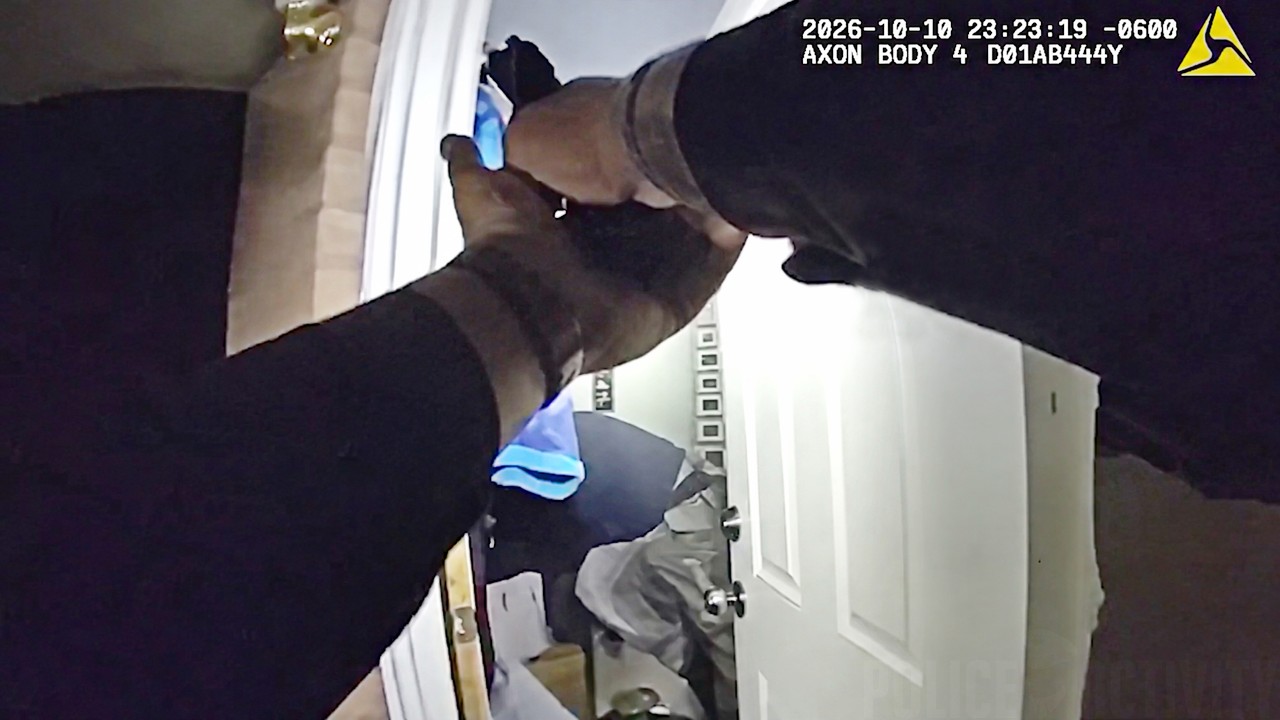
Approaching the suspected location, officers initiated verbal contact to announce their presence and identity to anyone inside the apartment. The source indicates that officers knocked on the door and clearly announced themselves as police officers. Standard law enforcement procedure requires distinct identification during high-risk entries to ensure occupants and suspects recognize the authority of the responding personnel.
The situation escalated immediately when the door was opened by the individual inside the apartment. According to the video description, Morales opened the door and produced a firearm, pointing it directly toward the officers stationed outside. The sudden appearance of a pointed weapon creates an immediate lethal threat, prompting split-second defensive reactions from law enforcement personnel trained to respond to active lethal aggression.
In response to the pointed firearm, officers discharged their weapons to neutralize the perceived threat. The source states that officers fired at the suspect during this apartment doorway confrontation. This critical moment forms the core of the physical engagement recorded by the body cameras, capturing the rapid transition from verbal announcements to the deployment of lethal force in a confined residential hallway space.
Friendly Fire and Officer Injury Assessment
Amid the chaotic exchange of gunfire at the apartment doorway, responding personnel experienced unexpected friendly fire complications. According to the video description, two officers sustained injuries from gunfire originating during the engagement. Subsequent investigations confirmed that these wounds were inflicted by fellow police officers rather than the suspect, highlighting the extreme tactical confusion inherent in multi-officer close-quarters combat.
Specific details regarding the injured personnel illustrate the physical impact of the friendly fire incident. The source notes that Officer Jonathon Woehler was shot in both legs, while Officer Justin Ortiz suffered a graze wound to the ankle. Officer Woehler required immediate transport to a hospital for medical treatment, where he was listed with non-life-threatening injuries. Meanwhile, Officer Ortiz received evaluation on scene from American Medical Response before being released with minor injuries.
The confirmation of friendly fire underscores the necessity of rigorous post-incident reviews within police agencies. When officers are injured by friendly fire, investigative teams must analyze positioning, crossfire hazards, and communication breakdowns during the tactical encounter. This analysis helps departments refine training procedures to minimize similar risks during future high-stress armed confrontations.
Suspect Medical Aid and Scene Resolution
Following the cessation of gunfire, officers immediately transitioned to rendering medical aid to the fallen suspect. According to the video description, officers rolled Morales onto his side, a movement that revealed a fully-loaded firearm underneath him. One officer continuously rendered medical aid to the suspect while awaiting the arrival of emergency rescue personnel.
Emergency medical services responded to the scene to take over advanced medical intervention, but life-saving efforts were ultimately unsuccessful. The source states that Morales was pronounced deceased at the scene. Preserving the integrity of the scene after medical personnel complete their work is a critical step for subsequent forensic investigators examining the physical evidence and weapon placements.
The presence of a fully-loaded firearm underneath the suspect, as documented in the source, provides key contextual evidence for investigators reviewing the justification for the use of force. Forensic teams document the exact position of recovered weapons, spent shell casings, and bullet impacts to reconstruct the trajectory of shots fired by both the officers and the suspect during the apartment confrontation.
Independent Critical Incident Response Team Investigation
Independent oversight and specialized investigative bodies play a vital role in examining police shootings and officer injuries. According to the video description, interviews and examinations of the incident were conducted by the 10th Judicial District Critical Incident Response Team. CIRT operates as a multidisciplinary investigative unit designed to provide independent scrutiny when law enforcement officers use lethal force or sustain serious injuries in the line of duty.
The findings of the CIRT investigation brought official clarity to the source of the officers’ wounds. The source explicitly notes that interviews conducted by the team revealed that the officers’ injuries resulted from gunfire originating from fellow police officers. This independent determination ensures transparency, confirming that external investigators thoroughly reviewed body camera footage, ballistics evidence, and witness statements.
Public safety reporting emphasizes that investigative processes must run their full course to establish all facts surrounding a critical incident. While initial media summaries and video descriptions provide an immediate overview, comprehensive reports from district attorneys and oversight boards offer the definitive legal and administrative conclusions. Readers seeking complete accuracy rely on these formalized investigative findings rather than preliminary accounts.
Due Process, Verification, and Safety Context
Evaluating public safety incidents requires a strict commitment to due process and objective verification standards. When videos circulate online, viewers must remember that recorded footage captures only visual and audio data from specific camera angles and does not replace a comprehensive judicial investigation. Presumption of innocence remains a foundational legal principle for all individuals involved in criminal proceedings, ensuring fair evaluation under the law.
Verifying claims made in online video descriptions involves cross-referencing primary source material with official press releases from police departments and findings from independent oversight agencies like the 10th Judicial District CIRT. Public records laws ensure that community members can request incident reports, audio logs, and completed investigative summaries. Relying on verified institutional records protects the public from misinformation and speculative reporting.
Safety lessons derived from such incidents focus on the inherent unpredictability of armed confrontations and the complex tactical environments officers navigate daily. Training programs continually evolve to address communication challenges, crossfire awareness, and rapid medical intervention protocols. By studying these events through transparent reporting and verifiable data, the public and law enforcement agencies alike work toward enhanced safety and operational accountability.
Operational Challenges in Apartment Complexes
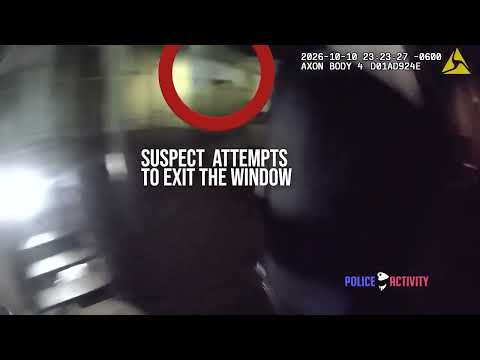
Navigating multi-family housing units presents severe tactical obstacles for law enforcement officers responding to emergency calls. According to the source details, the suspect fled on foot into the Regency Park Apartments and barricaded himself or remained hidden in an upstairs unit. Confined stairwells, narrow hallways, and limited cover make these architectural environments exceptionally dangerous when approaching individuals suspected of violent behavior.
The acoustic challenges inside apartment buildings can significantly distort sounds, making it difficult to pinpoint the direction of gunfire or verbal commands. When multiple officers discharge weapons in a confined space, the resulting echo and reverberation complicate situational awareness. This environmental factor often contributes to friendly fire incidents, as officers struggle to identify friendly positions amidst the chaos of a sudden armed threat.
Post-incident tactical reviews frequently focus on spatial awareness and crossfire prevention in confined structures. Training programs utilize these real-world scenarios to educate personnel on the risks of entering doorways without adequate standoff distance or clear lines of communication. By examining the Regency Park Apartments confrontation, safety experts work to develop better strategies for managing high-risk suspects in densely populated residential buildings.
The Mechanics of Ballistics and Injury Attribution
Determining the precise trajectory and origin of bullets fired during a dynamic police shooting requires advanced forensic ballistics analysis. According to the video description, initial interviews conducted by the Critical Incident Response Team revealed that the injuries sustained by Officer Woehler and Officer Ortiz were caused by friendly fire. Ballistic experts analyze bullet fragments, firearm casings, and wound paths to reconstruct the exact physical interactions of the shooting.
Forensic investigators map the positions of all responding officers relative to the suspect at the moment the shots were fired. By comparing firearm serial numbers and bullet markings retrieved from the scene or medical evaluations, specialists can conclusively state whose weapon discharged a specific projectile. This scientific rigor ensures that administrative and criminal reviews are based on incontrovertible physical evidence rather than subjective recollections.
The transparency of ballistics findings helps dispel misinformation that often circulates on social media platforms following critical incidents. When independent task forces release detailed accounts confirming friendly fire, it reinforces the integrity of the oversight process. Public safety explainers rely on these official determinations to provide accurate context to readers seeking to understand the complex mechanics of law enforcement firearms discharges.
Emergency Medical Response and Life-Saving Protocols
The integration of law enforcement tactics and emergency medical services is a critical component of modern public safety operations. According to the source description, American Medical Response personnel evaluated Officer Ortiz at the scene and transported Officer Woehler to the hospital for further treatment of non-life-threatening injuries. Fast medical intervention is vital for mitigating the physical harm caused by gunshot wounds sustained in the line of duty.
Officers are increasingly trained in tactical emergency casualty care, enabling them to apply tourniquets and render immediate aid before specialized medical units arrive. The video description highlights that officers rolled the suspect onto his side to render aid, demonstrating adherence to life-saving protocols despite the immediate danger posed by the situation. This dual responsibility of enforcing the law while preserving human life defines the challenging nature of police work.
Reviewing the timeline of medical response provides insight into the efficiency of emergency systems during critical incidents. Dispatch logs, ambulance arrival times, and hospital admission reports form a documented trail that verifies the quality of care provided to both injured officers and suspects. Public safety monitoring organizations emphasize the importance of these medical records in ensuring comprehensive accountability following any shooting event.
Community Impact and Public Accountability
Incidents involving violent crime, police pursuits, and officer injuries have a profound impact on the local community. According to the source text, the sequence of events began with a home invasion on Gaylord Avenue before culminating in the apartment confrontation on Regency Boulevard. Such incidents disrupt neighborhood safety, causing anxiety among residents and prompting demands for clear explanations from local civic leaders and law enforcement agencies.
Public accountability is maintained through open communication between police departments, independent investigative teams, and the public. When agencies cooperate with task forces like the 10th Judicial District CIRT, it demonstrates a commitment to transparency and rule of law. Community members rely on these structured investigations to receive factual updates rather than unverified rumors disseminated online.
Fostering long-term community trust requires ongoing dialogue regarding police tactics, use of force policies, and mental health crisis response. Explainers that break down public safety videos serve an educational purpose, helping readers comprehend the multifaceted nature of law enforcement operations. Through rigorous verification and adherence to due process, communities can address the complexities of critical incidents while working toward safer environments for all residents.
More source-attributed coverage appears in the Crime News section.
Frequently asked questions
When did the Pueblo Police shooting incident occur?
The incident occurred on October 10, 2026, at approximately 11:09 pm.
Where did the initial home invasion take place?
The home invasion took place in the 1600 block of Gaylord Avenue in Pueblo, Colorado.
Who was identified as the suspect in the case?
The suspect was identified as 36-year-old Luis Morales.
Which officers were injured during the incident?
Officer Jonathon Woehler was shot in both legs, and Officer Justin Ortiz suffered a graze wound to the ankle.
What investigative team examined the incident?
The 10th Judicial District Critical Incident Response Team conducted interviews and investigated the incident.
Source video