
armed suspect Derek Barrientos was involved in a Lancaster incident where Los Angeles County deputies responded to a domestic violence call on September 7, 2026, according to the video description published by PoliceActivity. The encounter led to a deputy-involved shooting after the man allegedly pointed a handgun at the victim and officers.
Overview of the Lancaster Incident
According to the video description provided by PoliceActivity, the incident occurred on September 7, 2026, at approximately 9:46 a.m. Los Angeles County deputies were dispatched to the 44500 block of 15th Street West in Lancaster, California. The initial dispatch was generated in response to a domestic violence incident reported at the location.
Public safety records and police video sources often highlight these initial dispatches to show how emergency communications evolve in real time. Dispatchers relay vital updates to responding units, ensuring that officers are aware of changing threats before they arrive at the scene of a volatile disturbance.
Readers should verify official agency press releases and department logs to obtain comprehensive timelines of emergency calls. Police video formats typically capture only a fraction of an entire response, making independent verification through public records essential for a complete understanding of law enforcement operations.
Initial Dispatch and Call Updates
The initial information provided in the emergency call indicated that a male was arguing with a female and attempting to force her into a vehicle. This detail set the priority level for the responding Los Angeles County deputies, suggesting a potentially dangerous abduction or unlawful restraint situation in progress.
Prior to the deputies arriving at the location, the emergency call was updated with critical new information. The dispatcher informed responding units that the male was now armed with a handgun, significantly escalating the tactical risk profile for the approaching law enforcement officers.
Understanding how call updates affect police tactics involves examining standard emergency dispatch protocols. When dispatchers receive updated details about weapons, units often adjust their approach, request backup, and prepare for high-risk encounters to protect both potential victims and themselves.
Arrival of Los Angeles County Deputies
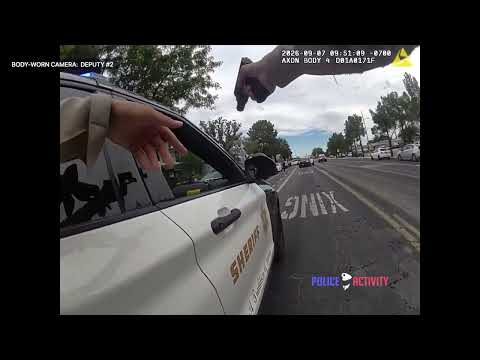
Los Angeles County deputies arrived on the scene in the 44500 block of 15th Street West and quickly located the individual in front of the listed location. The man was subsequently identified in official reports as 29-year-old Derek Barrientos, according to the source description provided on the channel.
Upon arrival, deputies observed Barrientos armed with a handgun. The description states that he had his arm around the neck of the victim, who was identified as his estranged wife, creating a high-stress hostage scenario that required immediate tactical assessment by the officers on the ground.
Video footage from police body-worn cameras or dash cameras can show positioning and physical movements, but it cannot fully convey the psychological pressure experienced by officers and civilians. Due process principles dictate that all individuals remain presumed innocent until proven guilty in a court of law.
Confrontation and Deputy-Involved Shooting
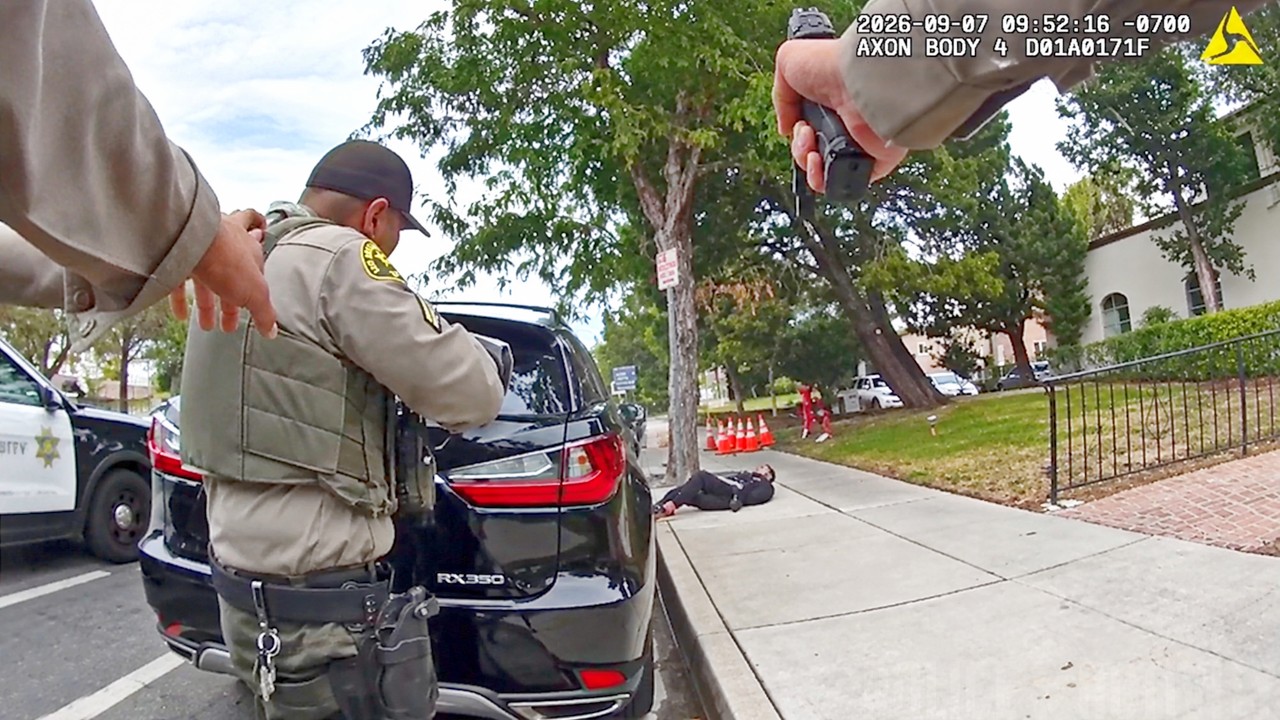
The situation escalated rapidly when Barrientos pointed the handgun at the victim and subsequently pointed the firearm at the deputies. This action resulted in a deputy-involved shooting, as officers responded to the immediate threat of serious bodily injury or death.
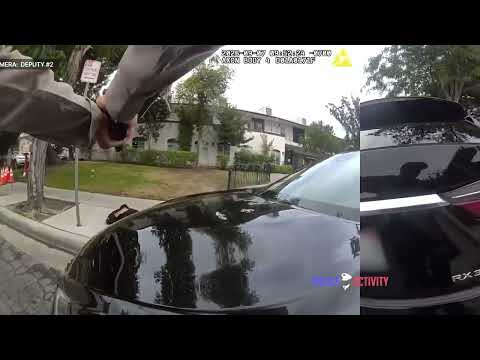
Barrientos was struck by gunfire during the encounter and immediately dropped his gun. Police video recordings generally capture the visual sequence of such critical incidents, but they lack internal audio clarity, thermal data, and comprehensive angles necessary for a total forensic reconstruction.
Independent oversight bodies, district attorney reviews, and internal affairs investigators examine forensic evidence, ballistic reports, and witness statements to evaluate whether use-of-force policies were followed. Public safety explainers rely on these formal investigative milestones rather than initial video clips alone.
Medical Aid and Hospital Transport
Following the shooting, deputies immediately rendered medical aid to Barrientos until the arrival of Los Angeles County Fire Department personnel. First responders routinely transition from tactical containment to life-saving medical interventions as soon as a scene is secured.
Barrientos was subsequently transported by emergency personnel to a local hospital, where he received ongoing medical treatment for his injuries. The prompt provision of medical care is a standard requirement in modern policing and emergency medical services protocols following critical incidents.
Official medical examiner reports, hospital updates, and fire department logs serve as verifiable records to confirm the condition of individuals involved in critical incidents. Readers interested in verifying these outcomes should consult official statements issued by the Los Angeles County Sheriff’s Department.
Status of Victims and Other Persons
The video description explicitly confirms that no deputies or other people were injured during this Lancaster incident. The safety of bystanders, responding personnel, and the victim remains a primary objective in high-risk domestic violence calls involving armed suspects.
Hostage and domestic violence situations present extreme hazards to victims who are physically trapped or threatened with lethal weapons. Law enforcement training emphasizes de-escalation where possible, balanced against the necessity of halting active threats of violence against innocent family members.
Verifying the safety of victims and witnesses involves reviewing comprehensive investigative summaries and victim advocate reports. Public safety reporting must distinguish between initial summary statements and the final conclusions reached after thorough multi-agency investigations.
Evidence Recovery at the Scene
Investigators recovered a 9mm semi-automatic handgun with a loaded magazine at the scene of the incident. The physical recovery of weapons is a standard procedure in any deputy-involved shooting, allowing forensic technicians to conduct ballistic testing and trace the firearm’s origin.
Crime scene investigators document every piece of evidence, collecting fingerprints, DNA, and trajectory data to piece together the exact mechanics of the encounter. This physical evidence forms the backbone of any subsequent criminal prosecution or administrative review process.
Public safety transparency depends on the eventual release of search warrants, ballistic lab results, and comprehensive investigative reports. Relying solely on a single video clip limits public understanding, which is why official law enforcement transparency protocols require the release of complete evidence portfolios over time.
Safety Lessons and Verification Methods
Domestic violence calls involving armed suspects represent some of the most dangerous assignments for law enforcement officers and the public alike. Training programs focus on rapid threat identification, communication, and coordination between patrol units and specialized emergency response teams.
Readers should always verify claims made in online videos by checking official law enforcement press releases, court filings, and mainstream news outlets. Public safety explainers serve to contextualize raw footage by explaining the legal standards, investigative steps, and oversight mechanisms that govern police actions.
Due process ensures that every accused person receives a fair trial, and public safety reporting must maintain strict neutrality. By understanding the limitations of video evidence and the importance of official records, the public can better engage with discussions surrounding community safety and police accountability.
Understanding Domestic Dispute Interventions
Domestic dispute interventions require high levels of tactical coordination and emotional intelligence from responding law enforcement officers. When a call escalates from a verbal argument to a physical abduction attempt, officers must act swiftly to protect the victim. Training programs across agencies focus heavily on recognizing the heightened volatility inherent in family disturbances.
The transition from a routine call to a lethal force encounter demonstrates how quickly emergency situations can deteriorate. Responding deputies must weigh the safety of the victim against the unpredictable behavior of an armed suspect. These operational realities shape modern police training curricula and departmental policies.
Analyzing these calls helps the public appreciate the difficult choices officers encounter while on duty. Transparency regarding domestic violence response strategies supports community awareness and prevention efforts. Observers continue to study these incidents to identify potential improvements in crisis response methods.
The Role of Emergency Dispatchers
Emergency dispatchers play a critical role in managing chaotic incidents by gathering and relaying real time information to officers in the field. The update regarding the suspect being armed transformed the nature of the Lancaster response before units even arrived. Effective communication between callers, dispatchers, and patrol deputies directly influences tactical readiness.
Call takers must extract accurate descriptions, locations, and threat assessments from distressed callers under intense pressure. This information allows incoming units to formulate appropriate tactical approaches rather than entering blind. The speed of dispatch updates often dictates whether officers can establish containment prior to direct contact.
Documenting dispatch timelines provides accountability and highlights the importance of communication infrastructure in public safety. Reviewing these logs demonstrates how emergency systems function during critical incidents. Such records serve as valuable educational tools for future training and operational review.
Post Incident Investigative Procedures
Following any deputy-involved shooting, complex investigative procedures are initiated to review the legality and policy compliance of the use of force. Independent oversight agencies, state investigators, and internal sheriff’s department units typically examine the evidence. These multi-agency reviews ensure impartiality and thoroughness in evaluating the actions of all personnel involved.
Investigators compile forensic evidence, including the recovered 9mm handgun and ballistic reports, alongside audio and video recordings. Witness statements from the victim and responding deputies are collected to build a complete timeline of the encounter. This rigorous investigative framework upholds the principles of transparency and due process.
The findings from these comprehensive reviews are eventually submitted for legal determination regarding criminal culpability or administrative discipline. Public safety explainers emphasize that final outcomes depend entirely on these formal investigative findings rather than initial video clips. Understanding this process reassures the community that every critical incident undergoes rigorous scrutiny.

Community Impact and Public Transparency
Incidents involving law enforcement use of force significantly impact the local community and prompt discussions regarding public safety and police accountability. Sheriff departments release summaries and video evidence to maintain transparency and address public interest in critical events. Open communication helps foster trust between law enforcement agencies and the communities they serve.
Community stakeholders often review these materials to understand how local resources respond to violent crime and domestic emergencies. Public access to factual accounts counters misinformation and provides a clear record of events. Transparency initiatives are essential for maintaining civic dialogue on law enforcement practices.
As investigations conclude, agencies typically publish further findings to keep the public informed of administrative outcomes. This ongoing reporting reinforces the importance of factual accuracy in public safety journalism. Through careful adherence to verified records, explainers ensure that complex events are presented fairly and accurately.
Legal Frameworks Governing Use of Force
California state law establishes strict legal parameters regarding when peace officers may lawfully use deadly force in the line of duty. Officers must face an imminent threat of death or serious bodily injury to themselves or others before deploying firearms. Investigators examine whether deputies exhausted reasonable de-escalation tactics prior to the discharge.
Defense counsel and prosecutors analyze the exact positioning of the suspect and officers during the moments leading up to the gunfire. Legal definitions of self-defense and defense of others guide grand jury reviews and judicial determinations. Public records ensure that the application of these laws remains transparent to the community.
The Importance of Independent Oversight
Independent oversight boards review deputy-involved shootings to ensure accountability within law enforcement agencies operating in California. These entities examine video footage, witness statements, and forensic reports without department bias. Public trust relies heavily on the thoroughness and impartiality of these external investigations.
Oversight bodies frequently recommend policy adjustments or additional training based on findings from specific critical incidents. Publishing detailed summaries of these reviews helps educate the public on complex administrative procedures. Transparency initiatives strengthen the relationship between law enforcement departments and the communities they serve.
Public Records and Freedom of Information
Access to public records ensures that citizens can examine official documentation related to police operations and critical incidents. Freedom of information laws mandate the release of certain audio, video, and written reports following established waiting periods. Journalists and researchers utilize these statutory mechanisms to verify facts presented in initial news summaries.
Publicly available logs corroborate the timeline of events from the initial 911 call to the conclusion of on-scene medical treatment. Relying on verified public records prevents the spread of unconfirmed rumors during active police investigations. Document transparency remains a cornerstone of democratic accountability in American public safety systems.
Future Legal Proceedings and Due Process
Due process guarantees that every accused individual receives a fair trial and legal representation within the judicial system. Derek Barrientos faces legal proceedings once medical recovery permits court appearances following the Lancaster incident. Prosecutors must present evidence meeting legal standards to substantiate any formal charges filed in connection with the case.
Court schedules and preliminary hearings are matter-of-fact public proceedings open to observers and media reporters. Presuming innocence until proven guilty in a court of law applies to all criminal defendants regardless of public video evidence. Legal analysts follow these developments to understand how courts interpret armed confrontations involving law enforcement.
More source-attributed coverage appears in the Crime News section.
Frequently asked questions
When did the incident in Lancaster occur?
The incident occurred on September 7, 2026, at approximately 9:46 a.m.
Who was identified as the armed suspect in the call?
The armed suspect was identified as 29-year-old Derek Barrientos.
What weapon was recovered at the scene by authorities?
A 9mm semi-automatic handgun with a loaded magazine was recovered at the scene.
Were any deputies or other people injured during the incident?
No deputies or other people were injured during this incident.
Where was the suspect taken after receiving medical aid?
The suspect was transported to a local hospital for medical treatment.
Source video