Police Horse Chase Catches Suspect After Alleged Drug Deal
police horse chase footage from Jacksonville, Florida, turns a routine street-level drug investigation into a striking example of what mounted patrol can do when a suspect chooses to run. The video, published by Midwest Safety under the title “Police Horse Chases After Drug Dealer,” shows mounted officers watching what the narration describes as a hand-to-hand drug deal between a man and a woman near a fast-food restaurant before the man bolts across the sidewalk and open pavement.
The clip stands out because the pursuit does not unfold with patrol cars, a foot chase through an alley, or a helicopter overhead. Instead, the decisive movement comes from officers on horseback, including a police horse identified in the video as Nash. As the suspect runs, the mounted unit accelerates, closes the gap, and forces the encounter to a quick end while officers repeatedly warn him to stop before he gets hit by the horse.
For readers who follow police bodycam stories, the moment is unusual because it captures a tactic that many people only associate with crowd control. Mounted patrol units are often seen at parades, nightlife districts, beach events, demonstrations, and large public gatherings. This video shows the same visibility, height advantage, and mobility being used during a street-level enforcement incident, where seconds matter and the officer has to track both the suspect and the surrounding traffic.
What the video shows
According to the narration, officers first notice an alleged exchange between a male suspect and a female suspect. The scene appears to take place near a McDonald’s and a nearby sidewalk, with traffic, buildings, and open patches of grass around the officers. The video does not show a long surveillance sequence; it quickly moves from observation to contact, which is why the chase feels sudden even though the officers seem to have already focused on the pair.
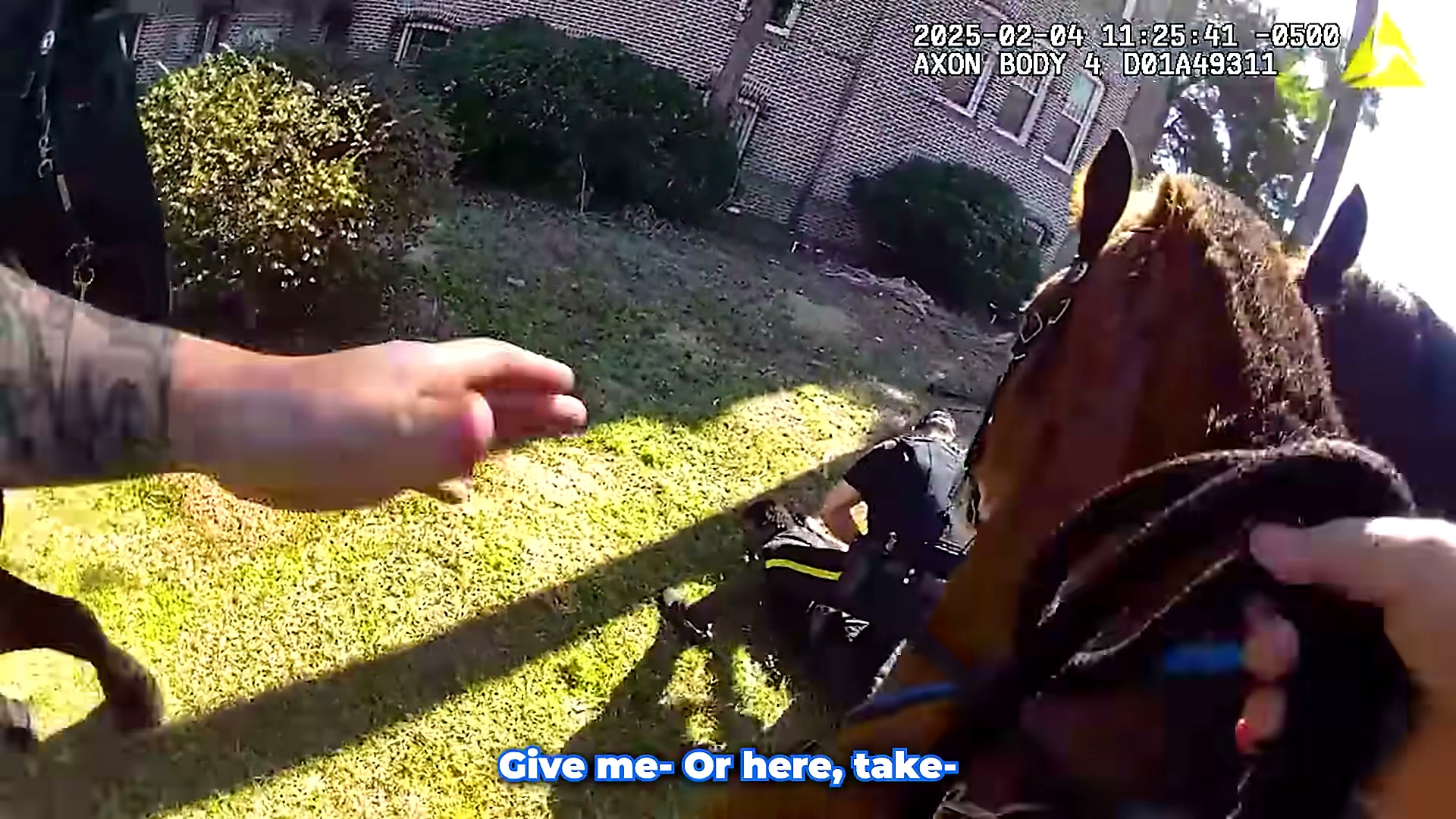
When officers move in, the male suspect runs. The mounted officer follows, and the bodycam perspective makes the chase feel close and physical. The horse’s head and reins fill the foreground while the suspect moves ahead through the bright outdoor scene. One officer can be heard warning that the suspect is going to get hit if he keeps running. That warning is not just dramatic audio; it shows the practical challenge of controlling a large horse while keeping a suspect in sight.
The police horse chase ends quickly compared with many vehicle or foot pursuits. A mounted unit has a different kind of reach. It can move through open space faster than a running suspect, stay visible above parked cars and street clutter, and create immediate pressure without requiring a vehicle to squeeze into a tight area. In this video, those advantages appear to compress the chase from a potential neighborhood search into a short sprint and arrest.
Why mounted patrol mattered here
The most important lesson from the police horse chase is not that horses replace patrol cars or officers on foot. It is that mounted units occupy a middle ground that can be surprisingly useful. A horse can move faster than a person, turn through areas where a car may not fit, and give the officer a higher vantage point. In a place with a restaurant, sidewalks, pedestrians, driveways, and traffic, that vantage point can change how quickly an officer reads the scene.
The video also shows the deterrent effect of a mounted officer. A suspect who might gamble on outrunning a foot officer has to make a different calculation when a trained police horse is coming behind him. The officer still has to manage risk, communicate commands, and bring the stop under control, but the presence of the horse changes the physical geometry of the chase. It shortens distance, widens visibility, and gives the officer a larger presence.
Mounted patrol units are expensive to train and maintain, so departments do not use them for every call. They need handlers, stable care, specialized training, equipment, transport, and horses that can tolerate noise, crowds, vehicles, and sudden movements. That is why a short clip like this draws attention. It shows a specialized unit doing something outside the public’s usual picture of police horses standing calmly beside a parade route.
The search after the arrest
After the suspect is stopped, the video shifts from pursuit to investigation. Officers look for an item the suspect allegedly threw during the chase. The narration says they search near the McDonald’s area but do not locate the item. That detail matters because it separates what officers believed happened from what they could actually document in the moment. In crime reporting, that distinction is important.
After the arrest, officers look around the nearby grass and sidewalk area for an item the suspect allegedly threw.
A chase clip can make the story feel simple, but the follow-up scene is where the legal facts become more careful. If officers cannot find a discarded item, the case may rest on other observations, statements, video, or the conduct captured during the run. The suspect’s act of fleeing can still support a separate charge, while the alleged drug exchange may be harder to prove without the item officers expected to find.
The search sequence also helps explain why officers kept talking through the scene after the chase ended. They were not only processing an arrest; they were reconstructing the path of the suspect, checking the grass and sidewalk, and trying to determine whether evidence had been thrown before the stop. For viewers, that is a useful reminder that the most viral part of a police video is not always the whole case.
The female suspect and paraphernalia allegation
The video says the female suspect involved in the alleged hand-to-hand exchange remained in the area and was later found with a crack pipe. The reported charge against her was use or possession with intent to use drug paraphernalia. The story therefore includes two different enforcement tracks: the male suspect’s flight from the mounted officers, and the separate allegation connected to paraphernalia.
That distinction helps keep the article fair. The male suspect’s most visible conduct in the video is running from police. The female suspect’s reported issue, as described in the video, centers on possession of paraphernalia rather than a chase. Treating both people as if they faced the same facts would blur the case. Good crime writing should avoid that shortcut, especially when the source material itself separates the charges.
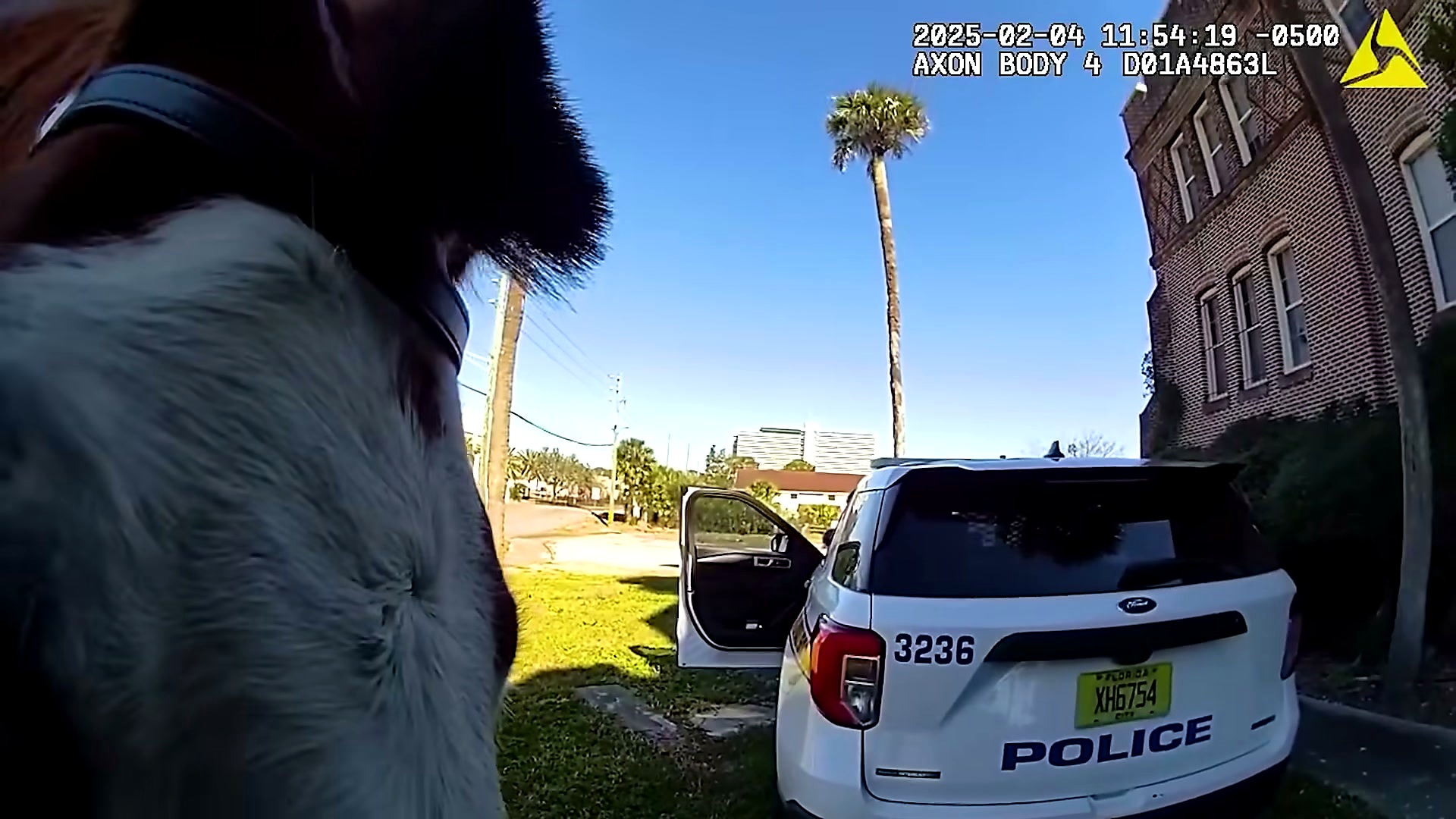
The video later shifts from the chase to the broader follow-up around the scene.
The video identifies multiple horses connected to the mounted unit, including Nash, Jax, Judge, and Duke. Even when only one horse becomes the star of a viral moment, the broader unit is what makes that response possible. Police horses work because the animal and officer train as a team. The horse has to respond to cues under stress, and the officer has to trust that response while also watching people, cars, curbs, and possible evidence.
Reported charges and court outcome
The closing portion of the video reports that the male suspect, identified as Jordan, was charged with resisting without violence. It says he pleaded no contest, was adjudicated guilty, ordered to pay thirty-three dollars in court costs and fines, and was released. The video reports that the female suspect, identified as Alexis, also entered a no contest plea as part of a deal, received a withhold of adjudication, was ordered to pay thirty-three dollars in costs and fines, and was released.
Those case details should be read as the reported status from the video, not as a substitute for official court records. Court dockets can contain later updates, corrections, reopened matters, payment changes, or additional filings. Anyone relying on the case for legal research should verify the names, case numbers, dates, and final disposition through the appropriate Florida court records. For a news recap, the safest summary is that the video reports plea outcomes and release for both people.
The reported result is also a reminder that viral police footage and court consequences do not always feel proportionate to the online reaction. A dramatic police horse chase can attract millions of views, while the legal outcome may be a misdemeanor plea, a small cost assessment, and release. That gap between visual intensity and court disposition is common in bodycam stories.
Why the clip traveled online
The video traveled because it has a strong hook. A police horse chase is instantly understandable, visually unusual, and almost cinematic even though the footage is real. Viewers do not need a long setup to understand the stakes: officers observe an alleged drug deal, a man runs, a horse follows, and the chase ends quickly. That clean sequence makes the clip shareable, especially when the sheriff’s office adds a memorable line about horsepower.
The Jacksonville Sheriff’s Office message quoted in the video says that if someone chooses to run, they will just go to jail tired, and that criminals can run but cannot hide from their horsepower. The line works because it turns an old public-safety message into something specific to the footage. It is promotional, but it also reflects how agencies now package bodycam and patrol videos for social media.
That social media style has benefits and risks. It can show taxpayers what specialized units do, highlight a successful arrest, and humanize officers who work with animals. At the same time, it can compress complicated cases into punchlines. A responsible article can acknowledge the memorable line while still separating the video moment from the legal record and the limits of what the footage proves.
How police horses are trained for stressful streets
Police horses are not ordinary trail horses dropped into a city block. They are selected and trained for temperament, steadiness, and tolerance. A mounted patrol horse may hear sirens, fireworks, shouting, horns, crowd noise, and sudden movement. It may pass close to cars, bicycles, tents, signs, strollers, and people who do not understand how much space a horse needs. The animal has to remain responsive instead of reactive.
That training is why the mounted officer in the video can pursue while still giving verbal commands. The officer is not only chasing; he is steering, balancing, judging speed, watching the suspect, and scanning for obstacles. A horse that panics or refuses cues would make the scene more dangerous. A trained horse gives the officer a controlled platform, even when the situation changes quickly.
v
The public often notices the size of the horse first, but the discipline is the real story. Mounted patrol depends on calm repetition: traffic exposure, crowd exposure, obstacle work, desensitization, and close communication between rider and horse. When the horse moves confidently through the scene, it reflects many hours of work that happened before the camera started recording.
Public safety questions raised by the chase
The police horse chase also raises reasonable public-safety questions. Was the area clear enough for a mounted pursuit? Were pedestrians nearby? Could a suspect be injured if a horse closes too quickly? Could the horse or officer be hurt by a curb, vehicle, or sudden turn? These questions do not mean the tactic was wrong; they show why mounted deployments require judgment.
In the clip, officers issue warnings and the chase appears to end without a serious visible injury. Still, every pursuit involves a risk calculation. Vehicle pursuits carry obvious danger to the public. Foot pursuits can lead officers into blind corners or unsafe positions. Mounted pursuits add the size and momentum of a horse. Departments have to weigh those factors against the seriousness of the suspected offense and the immediate need to stop the person.
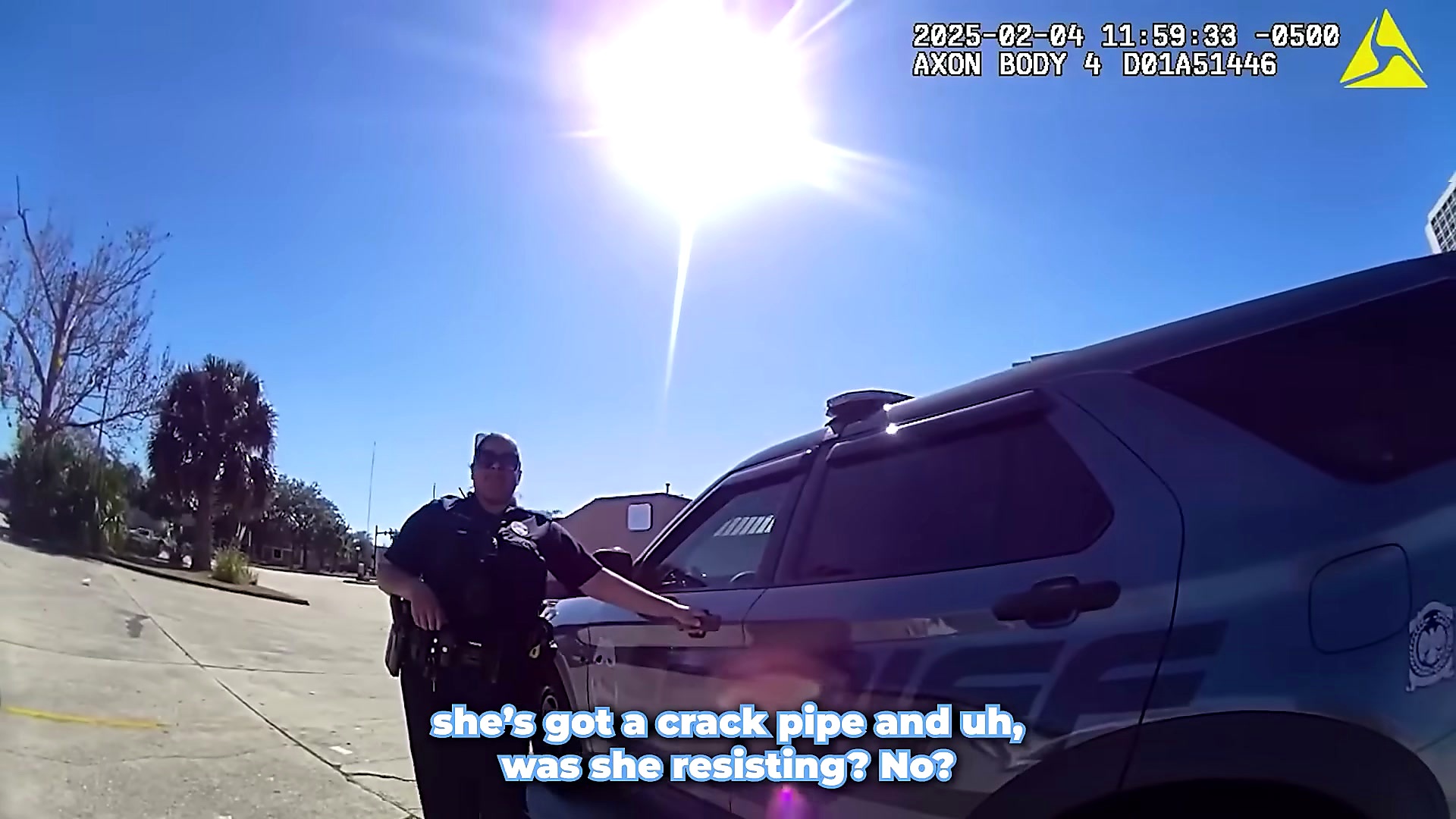
The closing segment reviews the reported charges and plea outcomes for the people involved.
This is one reason the video is useful beyond entertainment. It gives viewers a chance to see how a specialized police tool works in a real environment, then ask thoughtful questions about policy, training, proportionality, and outcomes. The footage can be both impressive and worth examining. Those two reactions are not in conflict.
What readers should remember
The simplest takeaway is that the police horse chase turned a short run into a quick arrest after officers reported seeing an alleged drug exchange. The more complete takeaway is that the story includes observation, pursuit, arrest, evidence search, separate allegations involving a second suspect, and reported plea outcomes. Each part matters because each part answers a different question.
For SEO purposes, it is tempting to describe the clip only as a wild police horse chase. That phrase may capture attention, but it does not capture the whole story. The bodycam footage shows a mounted unit doing what it is trained to do, but the court details show a more modest legal ending. The strongest version of the article keeps both truths in view.
As more agencies publish short-form bodycam clips, readers should keep asking what happened before the video starts, what happened after the arrest, and what the court record ultimately says. In this case, the available source video gives a clear account of the chase and the reported outcomes, while any final legal verification should come from official records.
Transcript and Source Context
The source video is a narrated bodycam-style recap from Midwest Safety. This article does not reproduce the transcript line by line. Instead, it summarizes the key sequence, reported quotes, charges, plea outcomes, and mounted patrol context in original language so the post reads as a complete news recap rather than a raw transcript dump.
The police horse chase is also a good reminder that public safety videos should be read in layers because the visible action officer commands evidence search and later court outcome all tell different parts of the same event. For Navy Ago readers the strongest angle is the combination of unusual patrol tactics and careful case reporting because the chase is memorable but the legal details keep the story accurate. The mounted unit did not simply add spectacle to the scene it changed the speed and shape of the response by giving officers height visibility and quick movement through a mixed street environment. That is why the focus keyword police horse chase fits the story naturally because the phrase describes the viral moment while the article still explains the investigation before and after it. Readers should remember that no online video can replace complete public records especially when charges pleas costs or release status may be updated after a clip is posted. The footage remains compelling because it shows a trained animal a focused officer and a fleeing suspect in one unusually clear sequence that ends before the incident can spread across a wider area. At the same time the reported plea outcomes show why responsible crime coverage should avoid turning every dramatic arrest into a larger claim than the record supports. A practical article can be vivid without being careless and it can describe the chase strongly while still using cautious words such as alleged reported and according to the video.
Why this police horse chase matters beyond the viral moment
Another reason this police horse chase deserves a longer look is that it illustrates how officers can use presence before force. The horse is large, fast, and visible, but the officer still relies on commands, positioning, and control rather than simply crashing into the suspect. That distinction matters for readers who want to understand why a mounted unit can be useful in a busy public area. The goal is not to create a dramatic collision. The goal is to make escape less practical, preserve visibility, and bring the suspect to a place where officers can safely take custody. In the video, the warning to stop is repeated while the horse closes distance, and that audio helps explain the officer’s intent during the chase.
The footage also shows why mounted patrol is often valued for more than ceremonial appearances. A horse gives an officer a line of sight over people, parked cars, landscaping, and roadside obstacles. That higher view can help an officer keep track of hands, direction of travel, and the movement of other people who may be near the incident. In street enforcement, those details can change quickly. One wrong turn, one hidden object, or one person stepping into the path can turn a small incident into a dangerous one. The mounted officer has to process that information while managing the horse, speaking to the suspect, and staying coordinated with other officers on the ground.
For readers comparing this case with ordinary foot pursuits, the clearest difference is momentum. A foot officer may be able to run hard for a short distance, but the officer’s perspective stays low and the chase can disappear around cars or corners. A patrol car may be faster, but it is limited by traffic, curbs, parking lots, and pedestrian safety. A police horse sits between those options. It can move quickly in open areas, remain visible, and slow down without needing the same road space as a vehicle. That does not make it the right answer for every call, but it explains why the tactic worked in this particular clip.
The case also highlights the way online audiences often focus on the most unusual image first. The headline becomes the horse, the joke becomes horsepower, and the short chase becomes the whole memory of the event. A complete article should do more. It should explain the alleged hand-to-hand exchange, the decision to approach the pair, the suspect’s run, the search for a discarded item, the separate paraphernalia allegation involving the woman, and the reported plea results. Those details turn a viral moment into a useful recap that readers can evaluate without relying only on the most dramatic frame.
The reported court outcome is especially important because it gives the story proportion. A viewer who only sees the chase might assume a much larger case followed. The video instead reports a resisting without violence charge for Jordan and a paraphernalia-related charge for Alexis, with no contest pleas, modest court costs, and release. That does not make the chase meaningless. It simply shows that the public-facing intensity of an arrest video can be very different from the legal resolution. Careful crime coverage should make room for that difference so readers are not left with a misleading impression.
There is also a broader editorial lesson here for any site publishing bodycam-based news. The strongest article does not copy the transcript and does not invent details beyond the source. It watches the video, identifies the verifiable sequence, names what is reported, and uses cautious language where the evidence is incomplete. When the narration says officers searched for an item that was not found, the article should say that clearly. When the video reports plea outcomes, the article should attribute those outcomes to the video and recommend checking court records for any later changes. That approach keeps the writing useful, readable, and fair.
From a visual standpoint, the real frames from the source video are better than generic artificial images because they show the actual environment: the restaurant area, the horse’s position, the suspect’s direction of travel, the patrol vehicle, and the follow-up conversation near the scene. Those images help readers understand the story without exaggerating it. They also support the SEO value of the post because the alt text and captions describe the same facts as the article: police horse chase, mounted patrol, alleged drug deal, search scene, and reported case status.
The final takeaway is simple. The police horse chase is memorable because it is rare, quick, and visually clear. It is useful because it shows how mounted patrol can influence a suspect’s decision during a fast-moving incident. It is worth covering carefully because the legal case appears more limited than the viral clip might suggest. Readers can enjoy the unusual footage and still ask the right questions about evidence, policy, training, proportionality, and court records. That balance is what makes the story stronger than a short social media caption.
This added context keeps the police horse chase recap complete accurate balanced useful searchable and ready for editorial review today.
For the final editorial pass, the most useful framing is balance. The police horse chase is visually strong, but the article should keep returning to confirmed source details, reported charges, careful wording, and the original embed so readers can watch the moment themselves and compare the recap with the video evidence directly before drawing conclusions.
This closing note preserves the police horse chase focus while keeping the draft factual readable cautious complete and ready for WordPress review with images tags.