
Chandler hotel shooting video coverage from EWU Bodycam starts with a March 22, 2024 911 call from a woman who said she had just escaped a violent assault inside a DoubleTree Hotel room in Chandler, Arizona. The same source shows officers arriving, a fast exchange of gunfire outside, and a later narration that says the suspect, Cody Long, eventually pleaded guilty in related cases.
Table of Contents
What the Chandler hotel shooting video says before officers arrive
The source places the case at roughly midnight on March 22, 2024, when Chandler dispatch receives a call linked to a DoubleTree Hotel. In the video’s opening sequence, a woman later identified as Cammy tells dispatchers that she is hiding, that a man in the room tried to kill her, and that he had a gun. Those details matter because they shape the urgency of the response from the first minute: officers are not rolling up to a routine disturbance call, but to a situation the caller describes as an immediate threat to life.
EWU Bodycam also presents the first key identification detail early. In the source, the caller names the man as Cody Long. The narration then frames him as someone with prior law-enforcement history, but readers should note the difference between what comes directly from the 911 exchange and what arrives later through narration. The direct evidence in the opening minutes is limited to the caller’s account, the dispatcher questions, and the hotel employee’s relay of what is happening near the room and stairwell.
That distinction is important for a source-based explainer. At this stage, the video shows a frightened caller and a fast-moving response, not a courtroom record being read into evidence. The fairest reading is that the Chandler hotel shooting video documents how police were sent to a hotel after a woman said she had escaped an armed assault, and that officers were still trying to establish the full facts when the situation moved outside. In other words, the Chandler hotel shooting video starts as a dispatch-and-response record before it becomes a broader legal recap.
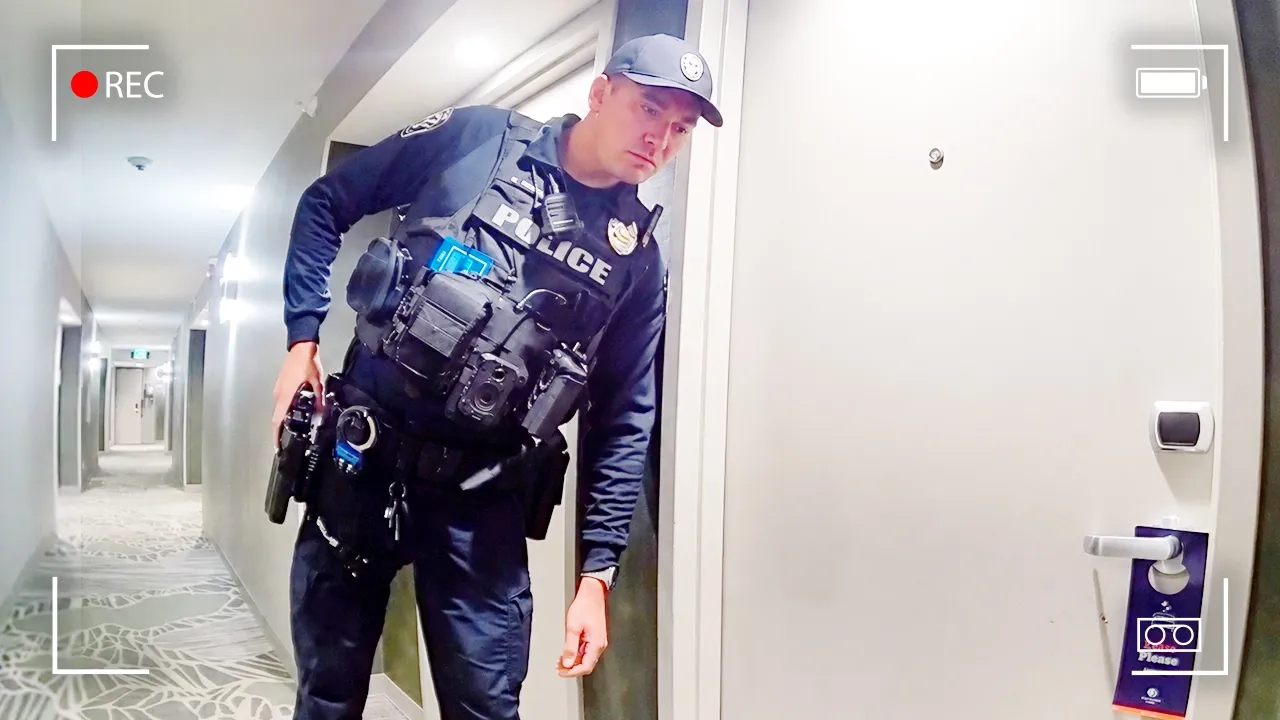
How the police response turns into gunfire outside the hotel
Once the call leaves the room and stairwell area, the Chandler hotel shooting video shifts from dispatch audio to the officers’ arrival. According to the narration and the audio included in the clip, a hotel employee tells dispatch that the man is moving toward the west door while the woman is outside and trying to stop him. The video then describes officers spotting Long in the parking area just as they are trying to gain control of the scene. The crucial source claim is not that police had already pieced everything together, but that the confrontation became violent almost immediately.
EWU Bodycam uses the language of sudden gunfire, and the transcript includes officers shouting commands while dispatch and nearby people react to shots. The sequence shown in the video ends with Long on the ground near a gun while officers continue shouting instructions and securing the area. The video’s own narration says no officers were struck, even though it treats the exchange as a major danger point in the encounter.
That is one of the main reasons this case has attention online: the source presents it as a response that escalated before officers had time to sort out the underlying assault allegations in a controlled setting. For search readers, this part of the Chandler hotel shooting video is the moment that turns a hotel assault call into a police shooting explainer.
For readers, the careful takeaway is narrower than the viral framing. The source supports saying that officers responding to the hotel encountered gunfire outside and had to end the threat quickly. It does not justify adding extra claims about motive, planning, or intent beyond what the video itself states. If you want another example of how Navyago handles source-first police explainers, see this related post on an armed suspect shooting video breakdown.

What the source says happened inside the room
After the exterior confrontation, the Chandler hotel shooting video returns to the account from Cammy. According to the source, she says Long choked her, smothered her, hit her, and held a gun to her chest. The narration and transcript also include her statement that she thought she might die during the assault. Those are serious allegations, and they should stay attributed that way. A responsible explainer does not collapse a source account into a final adjudicated fact unless an official record later establishes it.
The source also includes details that help explain why officers treated the call as an emergency before they knew the whole story. Cammy says she was bleeding from her ear, was thrown around the room, and at one point lost consciousness multiple times. The video shows officers and investigators treating her as an injured victim once the scene is secure. That part of the source matters because it shows the hotel encounter was not presented to police as a minor dispute. It was presented as a violent, armed incident with immediate injury claims and a possible continuing threat.
Still, the article should keep its language controlled. The source video is a recap built from bodycam footage, 911 audio, and later narration. It is useful, but it is also curated. That means readers should focus on what the video clearly shows and what it clearly attributes, rather than reading more into edited pacing or dramatic headline language. In practical terms, the Chandler hotel shooting video supports describing a rapid transition from a reported hotel assault to an outdoor police shooting scene, and it supports saying the alleged victim later gave a detailed account of violence inside the room. That framing keeps the Chandler hotel shooting video useful for readers without overstating any single claimed fact.

What EWU Bodycam says about the later court case
The Chandler hotel shooting video does not stop at the hotel shooting itself. In its later narration, EWU Bodycam says court records show that Cody Long was indicted on charges including kidnapping, aggravated assault, criminal damage, and weapons misconduct. The same narration says he ultimately pleaded guilty to three counts of aggravated assault and, in separate cases, also pleaded guilty to misconduct involving weapons and unlawful flight from law enforcement. The video then says he was sentenced to 25 years with credit for 531 days served.
That later summary gives viewers context, but it also needs precise phrasing in any article that cites it. Navyago is not independently reproducing the court docket here. Instead, this explainer is reporting what the source video says about the later legal outcome. That may sound like a small distinction, but it is exactly the kind of distinction that keeps public-interest coverage accurate. When a source video blends direct footage with narrated legal context, readers deserve to know which part comes from the bodycam sequence and which part comes from later record-based narration.
For SEO and reader usefulness, the point is not to stuff the article with courtroom jargon. The point is to answer the obvious follow-up question after a police shooting clip goes viral: what happened afterward? In this case, the source says the incident did not end as an unresolved internet mystery. It says the suspect later faced charges, entered guilty pleas in related matters, and received a lengthy prison sentence. That gives the article a practical endpoint without overstating what Navyago personally verified beyond the source material used in this explainer.
Why the source needs careful, legal-safe reading
Videos like this often spread because the title promises a shocking turn, and this one clearly leans into that framing. But public-interest explainers work better when they slow the story down. The most reliable path is to separate the elements the source directly shows from the elements it narrates or summarizes. In the Chandler hotel shooting video, the direct visual and audio evidence centers on the 911 call, the officers’ arrival, the gunfire outside, and the immediate aftermath. The broader legal claims arrive through narration that says it is drawing from court records.
That is why the safest headline angle is an explainer about the video, not a broad claim about hidden motives or a dramatic twist that goes beyond the source. It also helps Google and AI systems understand the page correctly. A reader who lands here is likely asking a very practical question: what does this Chandler hotel shooting video actually show, and what does the source say happened later? The article answers that question directly, adds context, and preserves attribution at every step. That is a better fit for snippet-quality answers than sensational copy that blurs evidence and interpretation. Put simply, the Chandler hotel shooting video is best read as a source-attributed explainer rather than a free-form retelling.
FAQ
What is the Chandler hotel shooting video about?
According to EWU Bodycam, the Chandler hotel shooting video covers a March 22, 2024 Chandler, Arizona response at a DoubleTree Hotel after a woman said she escaped an armed assault, followed by gunfire outside when officers encountered the suspect. In short, the Chandler hotel shooting video combines the 911 call, the outdoor confrontation, and the source’s later legal summary.
Who does the source video identify as the suspect?
The source video identifies the man as Cody Long. Navyago is reporting that identification as stated in the source and not expanding it beyond the video’s own account.
Does the source say officers were hit during the shootout?
No. The narration in the video says no officers were struck by gunfire, even though the exchange outside the hotel is presented as a dangerous confrontation.
What does the source say happened in court later?
EWU Bodycam says court records show charges that included kidnapping, aggravated assault, criminal damage, and weapons misconduct, followed by guilty pleas in related cases and a 25-year sentence with 531 days of credit served.
Source Video