
Palo Alto trespasser tased video coverage centers on a Sunday, July 19, 2026 call at Stanford Shopping Center, where a Palo Alto police officer helped mall security serve a private-property ban notice. According to the PoliceActivity source description, the man walked toward the officer, ignored repeated commands to stop and back away, and was tased before being arrested without further incident.
Table of Contents
What the Palo Alto trespasser tased video shows at Stanford Shopping Center
The Palo Alto trespasser tased video is not a shooting clip, a robbery clip or a long crisis standoff. It is a short use-of-force video about a reported trespass situation on private retail property. PoliceActivity says Palo Alto officers responded to Stanford Shopping Center at about 5:35 p.m. on Sunday, July 19, 2026 after security staff requested help serving a notice banning a man from the property. The source says the man had been sleeping on a bench before security and the officer approached him.
That opening matters because it keeps the article tied to the actual source. Readers searching for the Palo Alto trespasser tased video usually want to know three things quickly: where the incident happened, why police were involved, and whether the use of force was part of a larger violent crime. Based on the source package reviewed here, the answer is narrower than many viral bodycam clips: the event was described as a trespass-warning encounter at Stanford Shopping Center, not an active-shooter response or a pursuit after a felony assault.
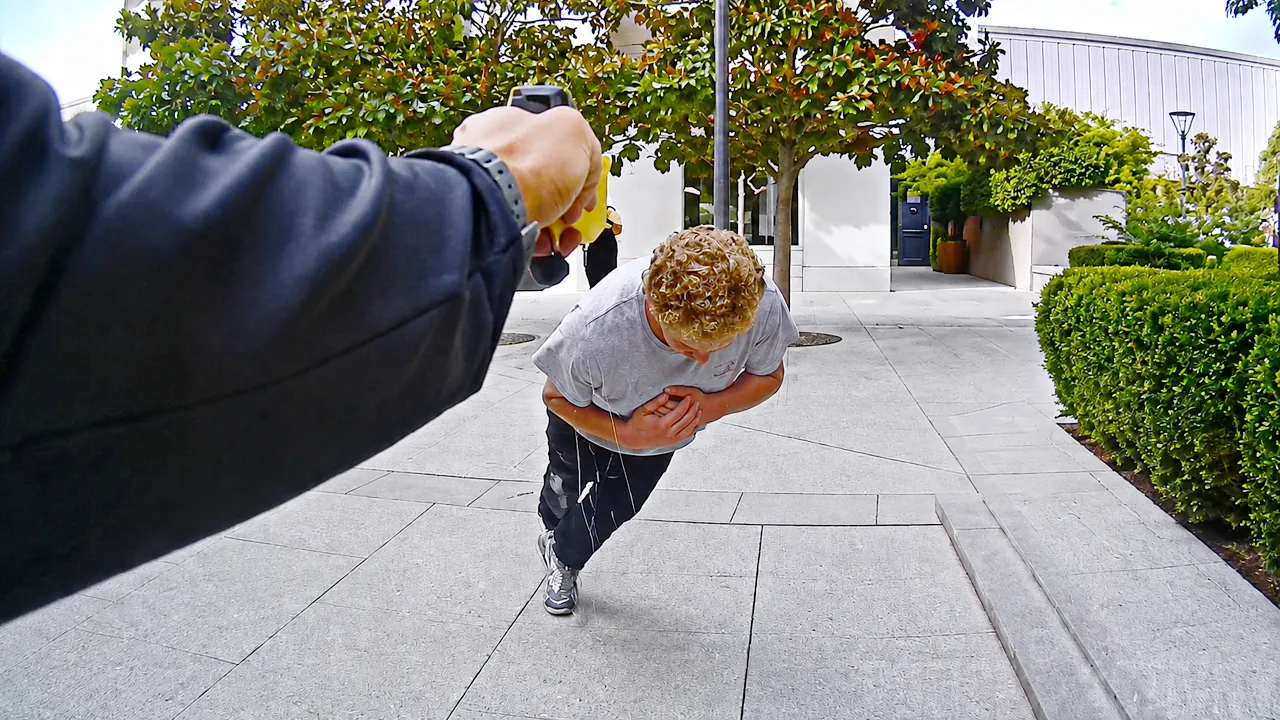
PoliceActivity says the officer identified himself as a Palo Alto police officer after several attempts to wake the man. The source description then says the man became agitated, stood up and walked toward the officer while yelling. According to that same description, the officer repeatedly ordered him to stop and back away before deploying a conducted energy weapon, commonly called a Taser. The source says the man fell, was taken into custody and the encounter ended without further incident by about 5:45 p.m.
Because this Palo Alto trespasser tased video is relatively brief, readers should resist adding details that the source does not supply. The source description does not say the man attacked anyone with a weapon. It does not say the officer fired a gun. It does not say security staff physically fought the man before police arrived. It describes a trespass-related contact, agitation, movement toward the officer, repeated commands and a Taser deployment. A source-based explainer should keep those limits visible instead of dramatizing the incident into something else.
Why Palo Alto police and mall security approached the man on July 19, 2026
The Palo Alto trespasser tased video begins with a private-property issue, not a public-street stop. PoliceActivity says Stanford Shopping Center security staff wanted assistance serving a notice to ban the man from the property. That is a useful detail because it explains why both mall security and a police officer were involved. On private retail property, security personnel may identify conduct they want to address, but police are often called when an officer’s presence is needed to document the contact, keep distance, or handle an arrest if a person refuses to leave or escalates the confrontation.
That source explanation is also consistent with the broader structure of Palo Alto police public records, even though Navyago did not locate a separate stand-alone narrative release about this exact encounter while drafting on Monday, August 24, 2026. The Palo Alto Police Department maintains a public report-log portal where daily incident summaries are posted. That portal is an official path readers can monitor for city records, but the detailed sequence in this article remains tied primarily to the PoliceActivity source package unless and until a separate official case narrative is published.
For search readers, this distinction is important. The Palo Alto trespasser tased video is a bodycam-style source package published on Thursday, August 21, 2026 about an incident that reportedly happened on Sunday, July 19, 2026. The source publish date and incident date are not the same. That gap means viewers are watching an edited release after the event rather than a live report. It also means readers should be careful not to treat the upload itself as the first or only official record.
The location matters too. Stanford Shopping Center is a recognizable Palo Alto destination, so readers may assume the incident involved shoppers, a store theft or a crowd disturbance. The source description reviewed here does not make those claims. It names the shopping center and describes a trespass-warning encounter involving a man sleeping on a bench. Keeping the Palo Alto trespasser tased video tied to that narrower description helps the article stay useful for both search and AI citation, because the page answers the actual question instead of drifting into generic mall-crime commentary.
A similar source-discipline rule appears in Navyago’s analysis of the Parma welfare check police shooting, where the public video mattered but still did not justify adding facts outside the record. The same approach applies here: start with what the source says, identify which facts are directly supported, and leave uncertain or missing details clearly marked as unresolved.
What commands are visible before the Taser deployment
The command sequence is the center of the Palo Alto trespasser tased video because the source frames the use of force around repeated warnings. PoliceActivity says the man ignored the officer’s commands to stop and continued walking toward the officer while yelling. It also says multiple commands to stop and back away were given before the Taser was used. Those statements are critical because they explain the source’s theory of why the officer escalated from verbal direction to a conducted energy weapon.
For readers, the key issue is not whether the words were loud enough or forceful enough in the abstract. The issue is how the source presents distance, movement and noncompliance together. A Taser deployment is generally a lower level of force than deadly force, but it is still a meaningful police action that requires justification. In a video like this, the most responsible reading is to separate what the source clearly claims from what viewers may be tempted to infer. The source clearly claims repeated commands and continued approach. It does not give a full officer report, witness statement set or courtroom finding.
That matters because a short use-of-force video can be misread in two opposite ways. One audience may treat any police use of a Taser as automatically abusive. Another may treat any ignored command as automatic proof that force was necessary. The Palo Alto trespasser tased video does not support either kind of shortcut. It shows or describes a narrow public-order encounter in which commands and movement escalated the contact. It does not, by itself, settle every policy or legal question that could follow from that sequence.
Readers should also note what is absent. The source description does not say the officer used multiple Taser cycles. It does not say the man continued fighting after he fell. It does not say other officers piled on with batons, punches or pepper spray. Instead, PoliceActivity says the man fell to the ground and was taken into custody without further incident. That wording helps keep the Palo Alto trespasser tased video in proportion. It was a force event, but not one the source describes as spiraling into a prolonged or multi-stage violence sequence.
In practical terms, the command portion of the Palo Alto trespasser tased video is why the article exists at all. A simple report that someone was banned from private property would rarely draw search interest. The public question emerges because the officer used force after the man reportedly walked forward and refused commands. That is why a useful explainer has to preserve timing and wording rather than just summarize the ending.
What the source and public records do not establish
The Palo Alto trespasser tased video does not establish a final legal ruling on whether the officer’s actions complied with department policy, civil law or criminal law. The public source package summarized here is useful, but it is still a limited record. Navyago did not locate a separate Palo Alto police narrative release in the public report-log portal that restated the full command sequence in detail, so the event-specific timeline in this article remains source-attributed to PoliceActivity unless a later official record says more.
The source also does not establish the man’s full background, housing status, medical condition or past conduct. PoliceActivity says he was sleeping on a bench and became agitated after being awakened and contacted by security and the officer. Those facts should not be stretched into unsupported conclusions about intoxication, mental illness, dangerousness or motive. A responsible article can say that the confrontation became tense; it should not invent a biography or diagnosis that the source does not provide.
Another limit is that the Palo Alto trespasser tased video is a post-event publication. It is not raw dispatch audio accompanied by the entire case file. That means the video may be edited for public release, length and narrative clarity. Edited video is still valuable public evidence, but readers should remember that edited public evidence is not the same thing as a complete investigative archive. Camera angles, staff statements, mall security reports and follow-up booking records may contain details that are not visible in a short upload.
The public-record layer has its own limit. The official Palo Alto report-log portal is a real and relevant police record source, but a portal that publishes daily logs is not the same as a detailed press release about one event. In this case, that means the Palo Alto trespasser tased video article can honestly cite the official portal as the city’s public-information channel while still saying that the incident-specific detail level comes from the PoliceActivity source package. That kind of honesty is better for readers, Google and AI citation systems than pretending a richer official record was found when it was not.
These source limits are not weaknesses to hide. They are part of the answer. A good explainer tells readers what is known, what is only source-attributed, and what remains unconfirmed. That is especially important for a brief use-of-force clip like the Palo Alto trespasser tased video, where viewers may want a simple moral answer even though the public record is still narrow.
How private-property trespass notices fit this Palo Alto incident
One reason the Palo Alto trespasser tased video is useful beyond the clip itself is that it highlights a situation many readers misunderstand: a private-property trespass notice is not the same thing as a criminal conviction, but it is also not a meaningless request once police become involved. Stanford Shopping Center is private property open to the public for shopping, dining and related activity. Security staff can decide that a person is no longer allowed to remain there and may ask police to assist in documenting or enforcing that decision.
That context helps explain the source description without broadening it. PoliceActivity says security staff wanted the officer’s help serving a notice banning the man from the property. From a reporting perspective, that means the key pre-force question is not whether the man had already committed a separate violent offense at the mall. The key question is whether the contact over a private-property ban escalated when he reportedly ignored commands and approached the officer while yelling. That narrower framing keeps the Palo Alto trespasser tased video grounded in the actual source.
For readers outside California, it is easy to overread this kind of clip as a broad debate about homelessness, shopping-center policy or every trespass law in the United States. That would make the article less accurate. This page is not a full legal guide to Palo Alto trespass enforcement. It is a source-based explainer about one reported July 19, 2026 encounter at Stanford Shopping Center and one PoliceActivity release posted on August 21, 2026. Those dates and that location are the correct boundaries.
Still, the private-property angle does make the Palo Alto trespasser tased video publicly relevant. It shows how fast a low-level property contact can become a force event when a person refuses instructions and closes distance with an officer. That does not prove the officer handled the situation perfectly. It does explain why readers, security staff, civil-liberties advocates and police reviewers may all care about the command sequence and spacing even in a non-shooting encounter.
From a news-writing perspective, this is exactly why source-based language matters. Saying a man was “a dangerous criminal” would go beyond the source. Saying mall security sought help serving a private-property ban notice, and that the source says he advanced toward the officer and ignored repeated commands before a Taser was used, stays within the available record. The second sentence is narrower, but it is also more defensible.
Why this Palo Alto trespasser tased video still matters for readers
The Palo Alto trespasser tased video may look modest compared with fatal-force clips, but it still matters because it shows a common kind of real-world escalation. Many public-interest police videos that reach search traffic are not major manhunts or headline shootings. They are brief encounters where the real question is how a routine contact turned into a force incident. In this case, the source package says the turning point was movement toward the officer after repeated commands to stop and back away.
That makes the video useful for readers who want more than outrage or cheerleading. A practical reader can ask: what was the original mission, what changed the officer’s perception of risk, what was the force used, and what happened immediately afterward? The Palo Alto trespasser tased video provides at least a partial public answer to each of those questions. The original mission was assisting mall security with a private-property ban notice. The risk change, according to the source, was agitation plus continued approach. The force used was a Taser. The immediate aftermath was custody without further incident.
The article also has value for Google and AI citation because it answers the question directly, uses exact dates, and labels source limits instead of hiding them. Systems that summarize public-interest incidents need pages that say, in plain terms, what the source claims and what it does not. A page that overclaims or invents background may sound stronger for a moment, but it becomes less trustworthy as soon as a reader checks the original video or the official police portal.
There is another reason this video matters: it sits in the middle range of force debates. Some public discussions only treat police accountability as important when someone dies. Others assume any force beyond conversation is automatically abusive. The Palo Alto trespasser tased video shows why those binary frames can be too blunt. A Taser deployment is significant enough to deserve scrutiny, but the source also says the encounter ended without further force, without a shooting and without a prolonged struggle after the man fell. Readers can take both facts seriously at the same time.
As of Monday, August 24, 2026, the most accurate summary remains straightforward. The Palo Alto trespasser tased video is a source-based account of a July 19 Stanford Shopping Center trespass encounter in which a Palo Alto officer, assisting mall security with a private-property ban notice, reportedly ordered a man to stop and back away before using a Taser when he continued walking toward the officer while yelling. That is the clearest answer the public record currently supports, and that is why the article keeps returning to it.
Practical next step: Use this source-based checklist to compare the timeline in the PoliceActivity source video, then browse the Navyago Crime News archive for related police-video explainers and check the Palo Alto Police report-log portal for later official updates. This reader CTA fits a public-interest article; it does not replace legal advice or promise any case outcome.
FAQ
What happened in the Palo Alto trespasser tased video?
According to PoliceActivity, a Palo Alto officer and Stanford Shopping Center security staff contacted a man on Sunday, July 19, 2026 to serve a private-property ban notice. The source says the man became agitated, walked toward the officer while yelling, ignored repeated commands, and was tased before being taken into custody.
Was the Stanford Shopping Center incident a shooting?
No. The Palo Alto trespasser tased video source describes a Taser deployment, not a gunfire incident. The source says the arrest ended without further incident after the man fell and was taken into custody.
Did Palo Alto police publish a separate detailed press release about this encounter?
While preparing this article on Monday, August 24, 2026, Navyago found the official Palo Alto Police report-log portal but did not locate a separate stand-alone narrative release matching the full command sequence described in the PoliceActivity video package. That is why incident-specific details here remain source-attributed unless otherwise noted.
Why were security staff involved before the Taser was used?
PoliceActivity says Stanford Shopping Center security staff requested the officer’s help serving a notice banning the man from the private property. The source frames the police contact as an assist to mall security during that trespass-related process.
Pingback: Little Rock Chaotic Arrest Video: 7 Critical Source Facts