
Little Rock chaotic arrest video coverage centers on a May 15, 2026 encounter that escalated from questioning to a foot chase, Taser deployments, and a group arrest, according to PoliceActivity’s source description and footage. The clip records disputed statements in real time, but it does not by itself decide guilt, whether every use of force was justified, or the outcome of later review.
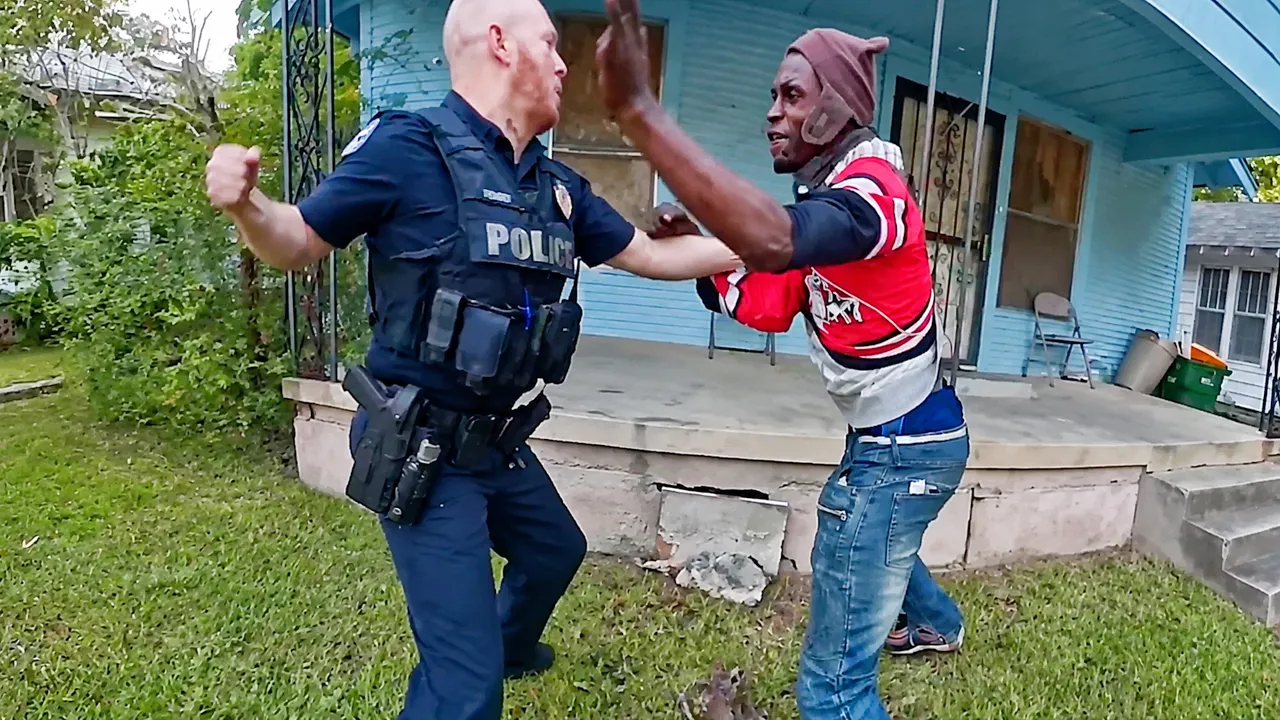
Seven Source-Backed Facts
- The PoliceActivity description places the encounter in Little Rock, Arkansas, on May 15, 2026, shortly after officers responded to a disturbance near a convenience store.
- The description says officers later looked for 26-year-old Clifton Shelton after a 56-year-old man reported being struck; that remains a reported allegation, not a finding made by the video.
- Body-camera audio captures Officer Katelyn Brewer questioning Shelton and asking whether he wanted to fight.
- After another officer arrived, the footage shows Shelton running and officers following him into a nearby yard.
- The recording shows attempted Taser use, punches, a fall, and several officers participating in the final restraint.
- During the struggle, Brewer shouts that Shelton has her gun; he immediately denies the claim, making the moment visibly disputed within the footage itself.
- The source description says Shelton later pleaded not guilty to multiple charges and that the department’s use of force was subject to review.
These points explain why the Little Rock chaotic arrest video has public-interest value. It captures a short, rapidly changing encounter while also showing the limits of video evidence. A camera can preserve words, movement, timing, and some officer actions. It cannot automatically reveal what happened before recording began, what each person perceived, whether a shouted belief was accurate, or what investigators and courts later concluded.
Little Rock Chaotic Arrest Video: Reported Timeline
The Little Rock chaotic arrest video begins after the event that first brought police to a Sunoco convenience store on West Roosevelt Road. PoliceActivity reports that Shelton had allegedly tried to take a cigarillo, but the clerk did not pursue a report, and that an off-duty Pulaski County sheriff’s deputy bought the item for him. Those details are source-attributed background; viewers do not see the entire store interaction in the selected clip.
The source then describes a second report from a 56-year-old man who said he had been struck near the store. The reported clothing description matched what Shelton was wearing, according to the source. That allegation explains why questioning continued, but matching clothing is not the same as a conviction or even a complete identification. Responsible coverage of the Little Rock chaotic arrest video has to preserve that distinction.
At about 5:41 p.m., the description says Brewer located Shelton and questioned him. The recorded exchange in the Little Rock chaotic arrest video includes repeated requests for his name, comments about the earlier incident, and a question about whether he had a problem with white people. Brewer is then heard asking whether he wants to fight and saying she has the “right people” there. Those words are directly relevant because they occurred before the physical confrontation and may help later reviewers assess tone, de-escalation, and decision-making.
When Officer Brad Forrester arrives in a patrol vehicle, the recording shows Shelton run. Officers follow him into a yard and give commands. The Little Rock chaotic arrest video then becomes difficult to follow frame by frame because bodies close together, cameras move sharply, and overlapping voices fill the audio. That confusion is itself important. Viral clips often make a struggle look visually complete even when the camera is pointed away from hands or blocked by another person.
The Little Rock chaotic arrest video captures Taser warnings, an apparent ineffective deployment, grabbing, punches, and a fall to the ground. Brewer shouts that Shelton has her gun. He immediately says that is not true. Additional officers arrive, more force is used, and another Taser appears to help officers complete the handcuffing. The source says first responders medically cleared Shelton before he was taken to the Pulaski County jail.
PoliceActivity reports that Shelton later pleaded not guilty to felony charges including attempted disarming of an officer and second-degree battery, along with misdemeanor allegations. A not-guilty plea is not a technical footnote: it means the allegations remained contested. The source also says the department released the Little Rock chaotic arrest video and related reports while criticism grew over Brewer’s comments and the force used. Navyago has not independently verified a final court disposition or a completed administrative review from this video package.
What the Body-Camera Footage Shows Directly
The clearest value of the Little Rock chaotic arrest video is its audio sequence. Viewers can hear questions about identity, references to an earlier reported assault, and the officer’s own fight-related comments. They can also hear the shift from conversation to commands as another officer arrives. That sequence allows readers to evaluate how quickly the encounter changed without pretending the camera supplies every missing fact.
The clip directly shows flight and pursuit. It also shows that the officers display and attempt to use less-lethal tools before the final restraint. However, visible Taser use alone does not establish either necessity or impropriety. Necessity depends on facts such as the suspected offense, the threat perceived at each second, resistance, feasible alternatives, training, and agency policy—much of which is outside the frame.
The most consequential audio is the gun-grab claim. Because Brewer shouts it during a close struggle and Shelton denies it immediately, the Little Rock chaotic arrest video preserves both sides of that moment. The camera angle does not give an unobstructed, definitive view of every hand. That is why later reviewers would normally compare multiple cameras, equipment position, officer statements, medical evidence, radio traffic, and other records instead of treating a single shouted line as conclusive.
The Little Rock chaotic arrest video also documents force after more officers arrive. Several officers can be seen or heard working to control and handcuff Shelton. Some strikes are visible. Yet the clip’s compressed online presentation does not replace a formal, frame-by-frame review. It is appropriate to say the recording raises questions and shows specific actions. It is not appropriate to declare a legal result that the selected source does not provide.
What Remains Allegation, Dispute, or Review
First, the reported assault before the stop remains an allegation in this source package. PoliceActivity summarizes what the complainant and report said, but the selected Little Rock chaotic arrest video does not show that earlier event. The same caution applies to the initial store accusation. Readers should not merge every report into a single proven narrative merely because the later arrest was captured on camera.
Second, whether Shelton actually tried to disarm Brewer is disputed in the Little Rock chaotic arrest video. A filed charge would describe what authorities alleged, not establish guilt by itself. The source says he pleaded not guilty, and this article does not have a final judgment or later docket update. That missing outcome must remain explicit.
Third, the administrative question is unresolved here. The source description says officers’ force was subject to review and that Brewer remained employed at the time described. It does not provide a completed finding about policy compliance, discipline, training changes, or exoneration. A reader can reasonably ask whether the language and tactics were appropriate. The Little Rock chaotic arrest video alone does not answer the institutional review question.
Finally, motive is not visible in the Little Rock chaotic arrest video. The recording cannot establish why Shelton walked away, why he ran, what Brewer intended with her comments, or how each officer understood the gun-grab moment. Those issues may be argued from behavior, but argument is not proof. Source-based reporting should label interpretation and leave unknowns unknown.
Why Pre-Arrest Language Matters
Words used before force can shape what happens next. In the Little Rock chaotic arrest video, Brewer’s question about fighting is not background chatter added by an editor; it is part of the recorded encounter. Reviewers may examine whether the remark increased tension, reflected an attempt to control the situation, or violated expectations for professional communication. The footage makes the question reviewable even though it does not supply the policy answer.
De-escalation in the Little Rock chaotic arrest video should not be judged as a promise that officers could prevent every struggle. A more useful question is whether available communication, distance, cover, backup, and time were used reasonably under the circumstances. Here, the exchange included repeated movement, uncertainty about identity, a reported prior assault, and then flight. Each factor may matter, but none erases the need to examine the officer’s own language.
That is also why edited clips should be watched from the beginning. If viewers see only the ground struggle, they miss the earlier tone. If they see only the verbal challenge, they miss the later flight and resistance shown in the source. The Little Rock chaotic arrest video is most informative when its full sequence is treated as evidence to examine, not as ammunition for a conclusion chosen in advance.
How Readers Can Evaluate Use-of-Force Footage
Start by separating direct observation from narration. Direct observation includes audible commands, movement, tool deployment, and visible strikes. Narration includes the video’s description of what a complainant reported, what charges followed, and what later officials said. Both can be useful, but they carry different evidentiary weight.
Next, ask what the camera cannot see. During the Little Rock chaotic arrest video, close contact and rapid movement obscure hands and equipment. A missing view is not proof that an action did or did not happen. It is a reason to seek other angles and records. Navyago’s related explainer on the Palo Alto trespasser Taser video shows how a separate encounter can raise similar questions about commands, distance, and what the camera captures.
Third, keep the legal timeline accurate. Arrest, charging, plea, trial, administrative review, and final disposition are different stages. The source reports a not-guilty plea, so readers should not write or share captions that convert allegations into a conviction. If later records become available, they should update—not silently overwrite—the source-based account.
Finally, avoid turning the people in the footage into symbols. A short recording can support scrutiny of conduct without proving someone’s entire character. That discipline improves both fairness and accuracy. It also makes the article more useful to readers who want to understand what happened rather than join a social-media pile-on.
Frequently Asked Questions
What does the Little Rock chaotic arrest video show?
It shows questioning, a foot chase, attempted Taser use, a close physical struggle, a disputed gun-grab claim, and several officers completing the arrest.
Does the video prove Shelton grabbed an officer’s gun?
No. An officer shouts that claim during the struggle and Shelton immediately denies it. The selected camera angle does not conclusively resolve the disputed moment.
What happened after the arrest?
PoliceActivity reports that Shelton was medically cleared, jailed, charged with felony and misdemeanor offenses, and later pleaded not guilty. This source package does not establish the final case outcome.
Was the officers’ force found to be justified?
The source says the force was subject to review, but it does not provide a completed administrative finding. The footage should not be presented as a final policy ruling.
Source Video
Sources and Attribution
Primary source: PoliceActivity, Female Officer Challenges Suspect To Fight Before Chaotic Arrest, uploaded August 27, 2026. Watch it at https://www.youtube.com/watch?v=KCxKBUnQ_K0.
Incident details are attributed to the source description, visible footage, and captions saved for this work item. Navyago paraphrased the material for commentary and public-interest explanation. This article is not a finding of guilt, a use-of-force ruling, or legal advice.
Next step: Watch the full source and check later Little Rock Police or court records before treating disputed allegations or review outcomes as resolved.