
Table of Contents
120 MPH Motorcycle Chase: Quick Source Facts
The 120 mph motorcycle chase video is a public-source law-enforcement recap from PoliceActivity. It is not a complete court file, and it should not be read as one. The useful way to read it is to separate the reported sequence, the visible pursuit, and the unresolved legal posture.
- Source: PoliceActivity, a Dream100-approved Navyago source channel for public-safety and law-enforcement video explainers.
- Location: the source places the incident in Thurston County, Washington, with Yelm Police also dispatched.
- Date: PoliceActivity says the pursuit happened on Sunday, July 26, 2026.
- Trigger: the source says officers were responding to an alleged no-contact order violation in progress.
- Vehicle: the source says the person was riding a street bike when a traffic stop was attempted.
- Speed: the source says the pursuit exceeded 120 mph along SR507.
- Outcome: the source says the rider crashed after trying to go around a deputy in a ditch and remained under medical care before booking.
Those facts make the story more than a short chase clip. The source raises questions about domestic-violence order enforcement, bail conditions, pursuit risk, motorcycle stops, and how readers should handle allegations that have not been tested in a full public court record.
What PoliceActivity Reports About The Stop
According to PoliceActivity, the case began before the motorcycle pursuit. The source says significant resources were used on July 7, 2026, to locate a person wanted for domestic-violence-related crimes including first-degree burglary and theft of a firearm. The source then says the person was apprehended, given a reported $75,000 bail, and posted that bail two days later.
That background is important, but it has to stay source-attributed. Navyago is not independently stating final guilt, final charges, or a final court outcome. The article is explaining the source video and the public-safety questions it raises. If a reader needs the final legal status, the right next layer is court records, prosecutor updates, or official agency releases.
The source says the person began violating a no-contact order after release, failed to appear in court, and allegedly threatened that he would shoot to kill if contacted by law enforcement. PoliceActivity also says the person was believed to be armed. Those are serious claims, so they should be carried with careful verbs: the source says, investigators reported, or authorities alleged.
On July 26, the source says Thurston County deputies and Yelm Police were dispatched to an order violation in progress involving the same person on a street bike. A traffic stop was attempted. The rider fled, and the pursuit began. The video caption notes include speed references, direction calls, and commands near the final arrest scene, but the captions are machine-generated and should be treated as supporting notes rather than a certified transcript.
Why The Bail And No-Contact Details Matter
The bail and no-contact details matter because they explain why this source video is not only a motorcycle pursuit story. PoliceActivity frames the incident as a failure point after release: a person who had been apprehended in a domestic-violence-related case was allegedly back in violation territory within days. That is a public-interest issue even before the chase reaches high speed.
For readers, the core question is not whether the clip looks dramatic. The core question is how a public-safety system handles a person who is under court restrictions, allegedly violates those restrictions, and then flees when police try to intervene. The source does not give every answer, but it gives enough context to understand why officers were looking for more than a routine traffic infraction.
Navyago has covered similar pursuit-risk questions before, including this related explainer on police pursuit PIT maneuvers. The useful pattern is the same: slow down the clip, identify the source, separate visible events from legal conclusions, and ask what safety decisions were in play.
No-contact orders are meant to reduce risk around protected people, but an article should not guess what happened between the people involved unless the source establishes it. The PoliceActivity description says an order violation was in progress and that officers responded. That is enough to explain the source context without adding private details or unsupported accusations.
Police Pursuit Safety: Speed, Traffic, And Boxing In
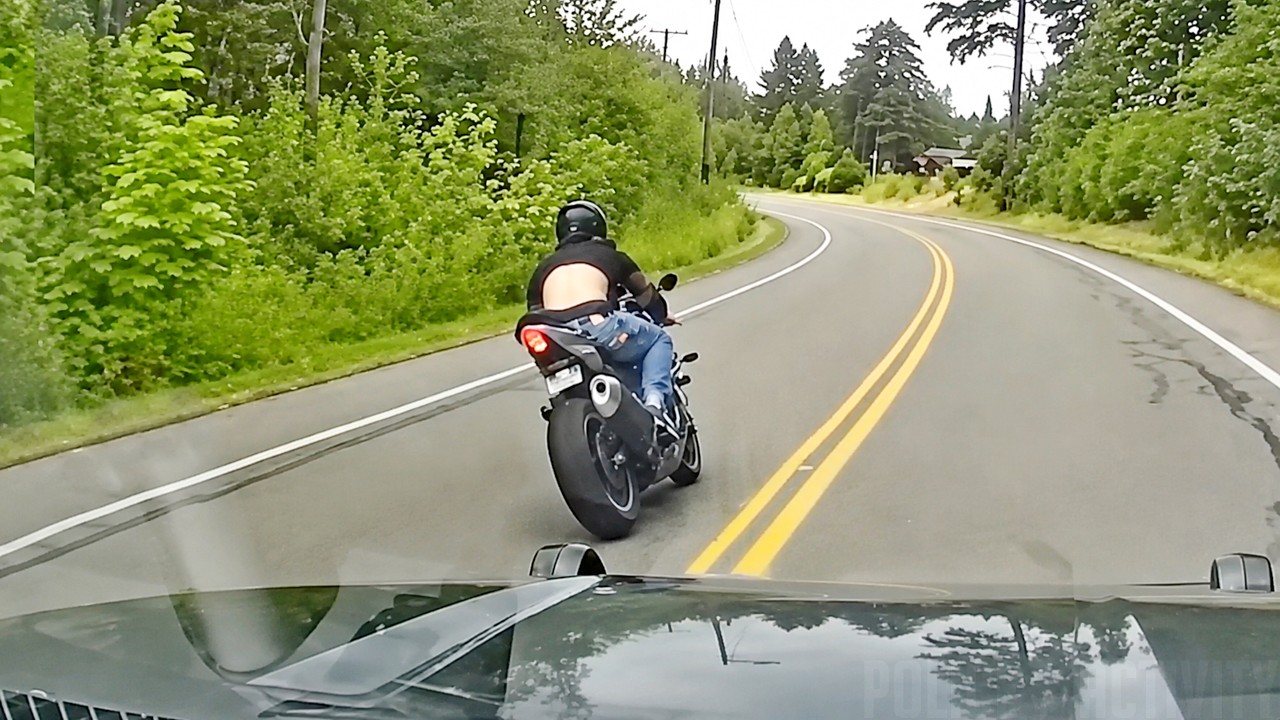
The most visible part of the 120 mph motorcycle chase is the pursuit itself. PoliceActivity says the rider fled along SR507 at speeds over 120 mph. The caption notes also include speed calls, traffic references, and the command to pull over. Because the caption file is automatic, this article does not quote it as official dispatch wording. It uses the captions as a cross-check against the source description.
High-speed motorcycle pursuits carry a different risk profile from vehicle pursuits. A motorcycle can accelerate quickly, fit through spaces a patrol vehicle cannot, and leave the rider more exposed in a crash. That does not answer every policy question, but it explains why agencies often weigh the danger of continued pursuit against the danger of letting a potentially armed suspect continue moving.
The source says the rider was heading back toward the denser populated area of Yelm on Vail Road. PoliceActivity reports that the pursuing deputy pulled ahead of the bike and began boxing the rider in. The source then says the rider tried to go around in a ditch and crashed. That sequence is the key safety turn in the video: the pursuit moved from high speed to containment, then to a crash and arrest.
Readers should not treat the word “boxed in” as a full policy review. The source does not publish every supervisor decision, training rule, radio call, road condition, or later internal review. What it does publish is a short video-backed account of a pursuit, a containment attempt, and a crash. The safest editorial stance is to explain that account without claiming more than the source shows.
v
What The Video Does Not Prove
A source video can be useful without being complete. This video does not prove final guilt. It does not prove a final sentence. It does not prove every detail of the alleged domestic-violence case. It also does not provide the complete no-contact order, the full bail order, the full warrant history, or every court filing. Those records matter if someone wants to make final legal claims.
The video also does not prove motive. The source says the rider fled and that officers were responding to an order violation involving a person believed to be armed. That does not mean readers should invent why the rider allegedly fled, what he intended, or what a defense attorney might argue. Motive and final responsibility require stronger records than a public video description.
This careful line protects both readers and the article. A dramatic title can make a story feel settled, but public-interest reporting works better when every claim is labeled by source strength. PoliceActivity is the source for the narrative used here. The visible video and downloaded captions support the pursuit sequence. Final legal outcomes remain outside the scope unless an official court record is cited.
The article also avoids unnecessary private details. Domestic-violence-related cases can involve protected parties, families, and sensitive circumstances. Navyago can explain why a no-contact order violation matters without naming people who do not need to be named, repeating private allegations beyond the source, or turning the incident into entertainment.
What Readers Can Learn From The Source
The reader takeaway is simple: a 120 mph motorcycle chase is not just a speed story. It is a chain-of-events story. PoliceActivity reports a domestic-violence-related case, a bail release, alleged no-contact violations, missed court, a warning that the person might be armed, a street-bike traffic stop attempt, a pursuit, a boxing-in maneuver, and a crash.
Each link in that chain carries a different kind of evidence. The bail and order details come from the source description. The speed and pursuit route are also source-reported, with captions supporting the chase audio. The crash is the visible end of the source sequence. The criminal allegations remain allegations or source-reported charges unless later official records establish final outcomes.
For public-safety readers, the strongest lesson is about decision pressure. Officers may be trying to enforce a court order, protect a possible victim, respond to an armed-risk warning, and stop a fast-moving motorcycle at the same time. Readers can debate policy, but they should first understand what problem the source says officers were facing.
For legal readers, the lesson is restraint. A video title can identify a suspect as released on bail, but the article should still avoid final conclusions. It is fair to say PoliceActivity reported the release, the alleged order violation, and the pursuit. It is not fair to treat the video alone as the entire case file.
Source Video
Sources
Sources: PoliceActivity, “Released On Bail Then Leads Police On 120 MPH Motorcycle Chase,” YouTube, uploaded July 29, 2026, accessed July 30, 2026. Source URL: https://www.youtube.com/watch?v=k-WTuMaZLXg. Navyago also reviewed the downloaded YouTube caption file as supporting source notes, but this article treats the PoliceActivity description and visible source video as the primary source.
FAQ
What is the source for the 120 mph motorcycle chase article?
The source is the PoliceActivity YouTube video titled “Released On Bail Then Leads Police On 120 MPH Motorcycle Chase,” published July 29, 2026.
Does the source video prove a final legal outcome?
No. The video reports allegations, warrants, charges, and pursuit details, but final guilt, plea, sentence, or case outcome would require court records or official updates.
Why does the article mention bail and a no-contact order?
PoliceActivity says those details explain why officers were responding before the pursuit began. They are included as source-reported context, not as an independent court finding by Navyago.
Why is the YouTube video embedded near the end?
The article gives readers context first, then embeds the original source so readers can compare the recap with the source material without confusing the article with the full evidence record.