
Home invasion shooting video refers here to a PoliceActivity source video about a July 26, 2026 Fort Worth police response at the Carmen Apartments on Renee Circle. The source says officers were called to a domestic disturbance, found an armed man, and fired after he advanced with knives. This recap explains the source facts without deciding motive or legality.
The headline of the source video is direct and serious: “Ex-Boyfriend Home Invasion Ends In Fatal Police Shooting.” Navyago is not using that title as a final legal finding. It is using the video, its description, its thumbnail, and the downloaded auto-subtitle as source material. This home invasion shooting video recap also includes a CBS Texas report as a supporting source because it gives another public news layer around the same Fort Worth shooting.
The article stays inside a narrow public-interest frame. It does not identify private bystanders beyond what the source package requires. It does not state that any person had a final criminal motive. It does not decide whether every police action was justified. It explains what this home invasion shooting video says, what readers should treat cautiously, and what still belongs to official review or later records.
Table of Contents
Ex-Boyfriend Home Invasion Shooting Video: Source And Attribution
The primary source for this home invasion shooting video is the PoliceActivity YouTube video with video ID Uq4hVOwBu8E. The source title is “Ex-Boyfriend Home Invasion Ends In Fatal Police Shooting.” The channel uploaded the video on July 30, 2026, and the source metadata collected for this workflow lists a duration of two minutes and 52 seconds. PoliceActivity is also present in Navyago’s Dream100 police source sheet, which makes it an eligible default source for this workflow.
The home invasion shooting video description says the incident happened in Fort Worth, Texas, on Sunday, July 26, 2026, at about 6:15 a.m. It names the Carmen Apartments at 9200 Renee Circle as the response location. It also says West Division officers were called to a priority one domestic disturbance that resembled a home invasion. These are attributed source statements, not independent findings by Navyago.
The supporting source is a CBS Texas report about the Fort Worth police shooting on July 26, 2026. Navyago uses that report as secondary public context, not as permission to broaden the story. The most important rule remains the exact source lock: the article source note, embedded video, body image, thumbnail file, and metadata all point back to YouTube video ID Uq4hVOwBu8E.
For readers who want more source-cautious coverage, Navyago keeps related public-safety explainers under Crime News. The editorial method is the same: name the source, explain what it supports, and separate public facts from conclusions that require records or formal review.
What The Sources Say Happened In Fort Worth
According to the PoliceActivity description, the caller reported that her ex-boyfriend, identified in the source as 21-year-old Andrew Ponce, broke through the front door of her apartment and armed himself with a knife. The description says multiple neighbors called 911 with similar disturbance details. It also says a Real Time Crime Center update told officers that the suspect had a previous history of assault against a peace officer.
The source description presents the episode as a violent domestic disturbance before officers arrived. For this home invasion shooting video, it says Ponce was in a volatile confrontation with his ex-girlfriend and her current boyfriend, that both were in fear for their lives, and that major property damage occurred. Because those details involve alleged conduct and injuries, this article keeps them tied to the source language instead of restating them as independent court conclusions.
PoliceActivity also says Ponce chased both victims through the apartment and outside lot with multiple knives, and that both victims received injuries during the incident. That home invasion shooting video source statement is important for understanding the urgency of the police response. It should still be read as a source report unless a reader checks official Fort Worth police releases, court records, medical records, or other primary documents.
The first officer’s arrival is the central public-safety moment in the video description. According to the source, the officer saw Ponce in the outside apartment area with one knife in his right hand and two additional knives in his left hand. The source says the officer gave multiple verbal orders to drop the knife while attempting to move backward and gain distance.
The source description says Ponce did not obey the commands and continued advancing toward the officer while holding knives. It then says the officer fired multiple times, striking him. Officers provided medical care until Fort Worth Fire Department personnel arrived, and the source says he was transported to a hospital where he was pronounced deceased. No officers were reported injured in the description, while two civilians were treated on scene.
The 911 Call, Bodycam Sequence, And Immediate Risk
The downloaded English auto-subtitle is short, roughly three hundred words after cleanup, and should not be treated as a certified transcript. It does, however, support the broad shape described by the video: an emergency call, a report about an ex-boyfriend trying to break in, distress on the call, officer commands about a knife, gunfire, and post-shooting scene control. Navyago does not quote the ASR captions as exact dialogue because auto-caption text can mishear names, profanity, timing, and overlapping voices.
The 911 portion of the home invasion shooting video matters because it frames the event as an ongoing emergency rather than a routine later report. A caller describing an attempted break-in creates a fast-moving information problem for dispatchers and officers. They may receive partial details, updates from neighbors, and radio information while the scene is changing. Readers should not assume that every fact visible in the edited source video was known to every responding officer at every second.
The bodycam portion of the home invasion shooting video matters for a different reason. It gives the public a limited view of distance, movement, commands, and the immediate encounter. A video can help readers understand why an incident escalated quickly. It can also leave out angles, earlier calls, officer radio traffic, witness positions, and later investigative findings. That is why source-based articles should not turn a clip into a complete case file.
The source says officers recovered the three knives Ponce was holding at the time of the shooting and five additional knives from the outside lot and apartment. That detail is part of the source’s account and should be attributed as such. It helps explain the danger described in the source, but it does not answer every later question about evidence handling, review findings, or civil accountability.
Domestic disturbance calls can be especially dangerous because the people involved may know each other, emotions can already be high, and bystanders may be close to the danger before police arrive. The article’s point is not to turn that into a broad rule about every domestic call. It is to explain why a home invasion shooting video about an allegation, knives, injuries, and an outside-apartment encounter belongs in a public-safety explainer.
Why The Video Does Not Settle Every Legal Question
The ex-boyfriend home invasion shooting video can show and report important facts, but it cannot settle every legal question by itself. A home invasion shooting video can present a description, edited footage, 911 audio, and bodycam clips. It usually cannot provide the full investigative file, complete witness interviews, forensic review, policy analysis, prosecutor decision, civil claim record, or final administrative finding.
That distinction matters because terms like home invasion, domestic disturbance, armed confrontation, and officer-involved shooting can carry legal weight. The source description uses a home-invasion framing by saying the call resembled one. Navyago keeps that phrasing tied to the source. The article does not independently decide which statute applies, what charge would fit, or whether a court would use the same label.
The same caution applies to motive and intent. The home invasion shooting video source describes conduct and danger, but a reader should not turn a source description into a private psychological conclusion. This article does not claim why the person acted, what he intended in every moment, or how any later agency will evaluate the force used. It focuses on what the public source says happened and where uncertainty remains.
For police-shooting coverage, careful wording protects both accuracy and usefulness. Stronger language can attract clicks, but it can also make the article less reliable for readers, Google snippets, and AI citation. A safer summary is direct: PoliceActivity published a Fort Worth source video about a reported domestic disturbance at Carmen Apartments, an armed confrontation involving knives, and a fatal officer-involved shooting response.
Seven Source Facts Readers Can Use
1. The source video is specific. The exact video ID is Uq4hVOwBu8E, and the source URL is https://www.youtube.com/watch?v=Uq4hVOwBu8E. For a home invasion shooting video recap, keeping the ID visible prevents the article from drifting into a different incident, a similar title, or a later commentary upload.
2. The source places the incident in Fort Worth. PoliceActivity’s description says the call was at the Carmen Apartments at 9200 Renee Circle in Fort Worth, Texas. CBS Texas is used as a secondary source around the same Fort Worth police shooting, but the article remains anchored to the YouTube source package.
3. The source says the initial call involved a domestic disturbance. The description uses a priority one domestic disturbance frame and says the details resembled a home invasion. That is why the focus keyword includes home invasion, but the article avoids treating the phrase as a final legal classification.
4. The source reports knives and injuries. PoliceActivity says the man was armed with multiple knives and that two civilians received injuries before being treated on scene. This article attributes those details to the source because they involve sensitive public-safety and victim details.
5. The source says the first officer tried verbal commands and distance. According to the description, the officer gave multiple orders to drop the knife while moving backward to gain distance. The home invasion shooting video may help readers see part of that encounter, but it is still not a full tactical review.
6. The source says officers provided medical care. The description says officers provided medical care until Fort Worth Fire Department personnel arrived and transported the man to the hospital. It also says he was later pronounced deceased. That sequence is included as a source fact, not as an independent medical record.
7. The source does not replace official review. Even when a source video is clear, readers still need formal records for final findings. That includes police releases, prosecutor review, body-camera release notes, witness records, medical examiner information when available, and any later civil or administrative action.
What Remains Unknown Or Under Review
The home invasion shooting video source package does not answer every timing question. It does not show every moment before the first officer arrived, every neighbor call, every dispatcher update, or the full post-scene investigation. It also does not give a court record showing a final legal conclusion about the reported home-invasion framing.
The article also does not verify every medical detail. The source says two civilians were injured and treated on scene, and that Ponce was transported to a hospital where he was pronounced deceased. It does not give a full treatment record, injury classification for each civilian, or a medical examiner report. Navyago avoids adding those details because they are private and not needed for the public-source explanation.
Another unknown is the final review status. Police shootings can involve department review, external investigative steps, prosecutor review, civil claims, or public-record releases. The presence of a home invasion shooting video does not mean those processes are over. It only means readers have a public media source that can be reviewed alongside any official documents that become available.
The safest reader takeaway is narrow and useful: this home invasion shooting video is a source-based Fort Worth recap about a reported domestic disturbance, a home-invasion-style emergency call, an armed knife encounter, and a fatal police shooting. The video helps readers see the source presentation. It should not be used alone to decide motive, legality, policy compliance, or final responsibility.
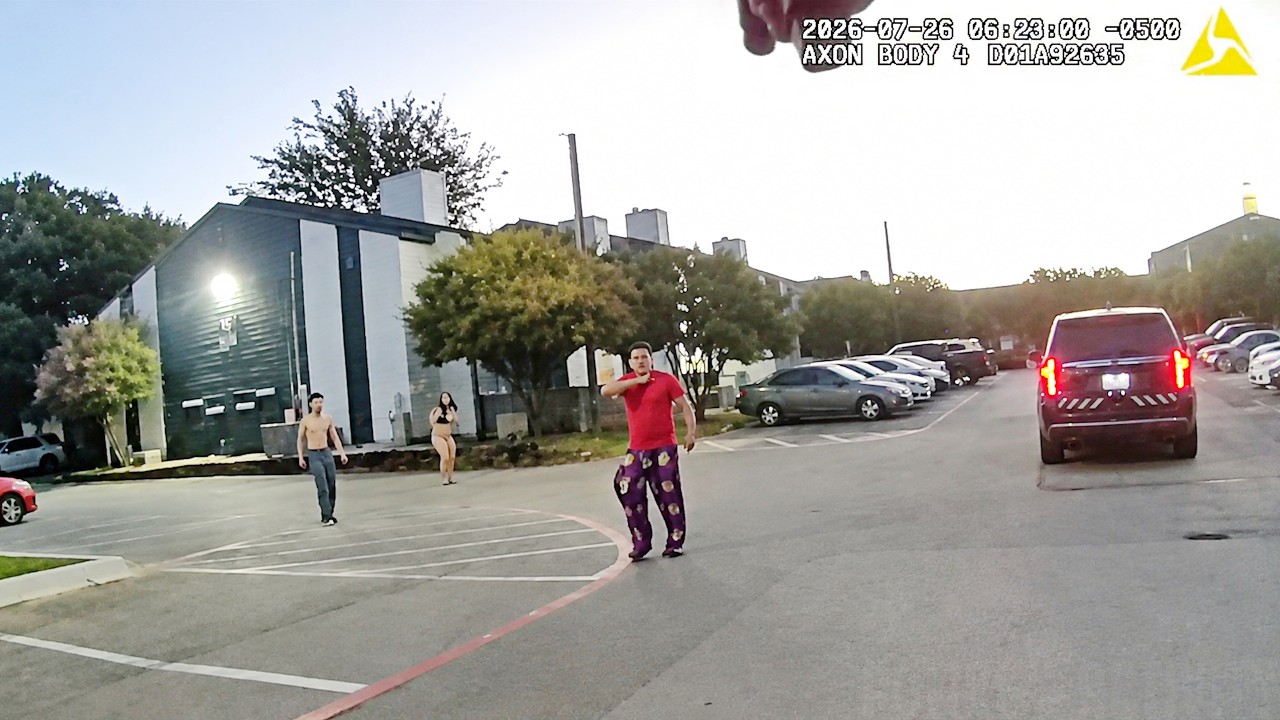
Source Video
Sources
Primary source: PoliceActivity, “Ex-Boyfriend Home Invasion Ends In Fatal Police Shooting,” YouTube video ID Uq4hVOwBu8E, uploaded July 30, 2026, accessed July 31, 2026. Source URL: https://www.youtube.com/watch?v=Uq4hVOwBu8E.
Supporting source: CBS Texas, Fort Worth police shooting coverage, July 26, 2026. Source URL: https://www.cbsnews.com/texas/news/fort-worth-police-shooting-7-26-2026/. Navyago used this as secondary context and did not use it to broaden the source claims beyond the article scope.
FAQ
What is the ex-boyfriend home invasion shooting video?
The ex-boyfriend home invasion shooting video is a PoliceActivity source video about a July 26, 2026 Fort Worth police response at the Carmen Apartments on Renee Circle. The source for this home invasion shooting video describes a domestic disturbance, a reported armed confrontation, and a fatal officer-involved shooting.
Does the video prove a final legal outcome?
No. The video and description are public source material. Final legal, policy, medical, or civil conclusions require official records, review findings, court documents, or later agency updates.
Why does Navyago use cautious wording here?
Cautious wording keeps the article accurate. It separates what PoliceActivity and CBS Texas report from what Navyago has independently verified, and it avoids unsupported claims about motive, intent, guilt, or legality.
Why is the YouTube thumbnail used as the article image?
Navyago source-video rules require the same-video YouTube thumbnail or an exact uploaded copy when the source thumbnail is verified. The body image alt text matches the focus keyword.