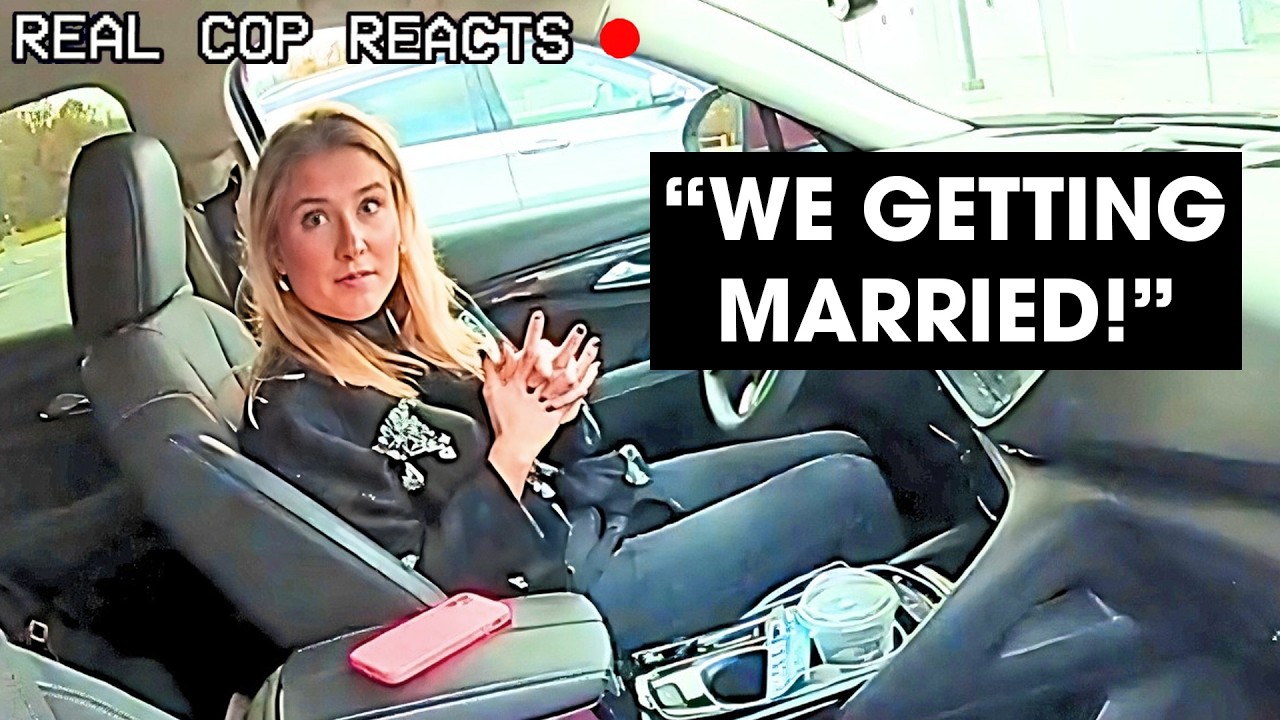
The stalker teacher GPS tracker case in Sergeant Steve’s police bodycam recap has drawn heavy attention because it connects several disturbing relationship-control allegations in one video. The source video, titled Stalker Teacher Realizes Cops Found The GPS Tracker, was posted by the Sergeant Steve channel and had more than 1.5 million views at the time this workflow extracted the source details.
The video is built around three incidents. One begins with restaurant workers finding a handwritten plea for help in a restroom. Another centers on a woman accused of repeatedly following an ex-partner and entering his vehicle. A third involves allegations against a government official connected to a former partner. Because these are law-enforcement encounters and allegations, the details should be treated carefully until confirmed through official records or court outcomes.
The strongest part of the recap is the way it shows how ordinary situations can become serious investigations. A note left in a public bathroom, an unwanted appearance in a parking lot, or a suspicious device on a vehicle can all become signals that officers need to slow down and verify what is happening.
For viewers, the broader theme is not just the shock of the individual cases. It is the pattern of control: isolation, unwanted monitoring, repeated contact, fear, and the difficulty victims or alleged victims may face when trying to explain what is happening in real time.
A Rescue Note Turns A Restaurant Call Into A Search Warrant
The first case begins when employees at a Jersey Mike’s location report that someone left a note in the restroom. According to the video transcript, workers told officers that a man and woman had come into the restaurant while working a delivery order. The woman went to the bathroom, stayed there for several minutes, and the note was later discovered.
The contents of the note, as summarized in the video, allegedly said the woman was being held against her will and wanted help getting back to her family and children. Officers at the scene appeared to take the possibility seriously while also acknowledging the unusual nature of the call. That tension is important. Police had to consider the chance that the note was fake or confused, but they also had to consider the far more dangerous possibility that it was real.
The recap shows officers discussing the details, reviewing the timeline, and trying to identify the people involved. Restaurant staff described the pair’s behavior as unusual, with the woman appearing nervous and moving quickly toward the restroom. Investigators also looked into past history and reportedly learned about prior concerns connected to the relationship.
Instead of rushing straight into the home without legal cover, officers obtained a search warrant. That detail matters because it shows the case moving from a suspicious note to a legally structured operation. A judge reviewed the information, and officers then went to the residence with the authority to search for the person they believed might be in danger.
The Bodycam Shows Why Officers Treated The Note Seriously
Once officers arrived, the encounter became a coordinated search-warrant service. The video shows a cautious approach, commands at the door, and officers bringing people outside while they worked through the scene. The goal, according to the recap, was not to search randomly for unrelated evidence. It was to locate the person named in the concern and determine whether she was safe.
In the interview portion described in the transcript, the woman reportedly told officers she had been trying to leave for months and alleged repeated abuse. She also described injuries and said she needed medical attention. The allegations included being beaten, being prevented from leaving, and being forced back after attempting to escape.
Those claims are serious, but they are still allegations within the video narrative. The correct way to read them is as statements that triggered further investigation, medical response, documentation, and possible charges. The presumption of innocence still applies to anyone accused unless and until a court determines otherwise.
What stands out from the policing side is the emphasis on corroboration. Officers discuss photographs, injuries, medical concerns, victim advocacy, and the need for a detailed statement. In domestic-violence investigations, that kind of documentation can become central because fear, trauma, and conflicting accounts often make these cases difficult to untangle.
Stalker Teacher GPS Tracker Case: The Parking Lot Call
The second case shifts from an emergency rescue concern to an alleged stalking incident. A man calls police and says a woman has been following him and has entered his vehicle in a parking lot. When officers arrive, the woman appears to present the relationship as normal, saying she is there for her boyfriend’s game and that they had spent time together recently.
The officer’s job in that moment is to separate competing claims. One person says the contact is unwanted and alarming. The other appears to frame it as part of an ongoing relationship. That is one reason stalking cases can be complicated: the conduct may look ordinary from a distance, but the context and repeated nature of the contact can change the meaning entirely.
According to the video, officers also discovered items belonging to the alleged victim in the woman’s vehicle, including personal belongings. If accurate, that kind of discovery can move a case beyond an awkward relationship dispute and into a more concrete criminal investigation. It also gives officers something more specific to evaluate than conflicting statements alone.
The video title’s reference to a teacher appears to connect to this segment, where the woman is described as working in education. That detail makes the encounter feel more surprising, but it should not distract from the core issue: whether the alleged conduct met the legal elements for stalking, theft, or another offense under the relevant jurisdiction.
The GPS Tracker Detail Points To A Broader Pattern
The title also highlights a GPS tracker, a detail that fits the broader theme of surveillance and control. Tracking devices can have legitimate uses in some contexts, but when used secretly against a partner or ex-partner, they can become part of a stalking or coercive-control pattern.
Modern stalking cases increasingly involve technology. Phones, shared accounts, vehicle trackers, location-sharing apps, cameras, and social media can all be used to monitor someone’s movements. The legal system has been trying to catch up with how easy this behavior has become, especially when the technology is cheap, small, and easy to hide.
In practical terms, a GPS tracker can change the risk level of a case. It may mean the alleged stalker does not need to guess where the person is going. It may also make it harder for the person being tracked to create distance or feel safe. That is why officers often treat hidden tracking devices as more than a minor privacy issue.
For someone who believes they are being followed, the discovery of a tracker can also change how they interpret everything around them. A vehicle parked nearby, a sudden appearance at a school or workplace, or an unexpected message can feel less like coincidence and more like confirmation that privacy has been breached. That is why these cases often require officers to document the device, where it was found, who had access to the vehicle, and whether there are communications or prior incidents that support the complaint.
Viewers should also understand that hidden tracking is rarely just about the device itself. The more important question is why it was allegedly placed there. If it is connected to repeated unwanted contact, threats, theft, or attempts to control where another person goes, it becomes part of a larger evidentiary picture. The device may be small, but the pattern around it can be significant.
A Third Case Involves Allegations Against A Public Official
The video also previews a case involving a government official accused in connection with a former partner. Public-office cases tend to draw attention because they raise questions about power, credibility, and accountability. But the same caution applies: accusations are not convictions, and viewers should avoid treating edited footage or commentary as the final legal record.
Still, the inclusion of that case reinforces the video’s main theme. Relationship-control allegations can involve people from any profession or social position. The behavior being examined is not limited to one stereotype. It can appear in ordinary homes, parking lots, workplaces, and public-facing careers.
When a suspect or accused person has a position of authority, investigators also have to think about public trust. That does not mean the person is automatically guilty. It means the investigation may receive more scrutiny because the public expects officials to be held to the same standard as everyone else. The best approach is the same as in any other case: document the facts, preserve evidence, avoid assumptions, and let the legal process decide what can be proven.
v
Key context image for the Stalker Teacher GPS Tracker Case: 3 Shocking Bodycam Lessons report
What The Cases Show About Coercive Control
Across the three stories, the common thread is coercive control. That phrase describes behavior meant to dominate another person’s choices, movements, relationships, or sense of safety. It can include physical violence, but it can also include isolation, surveillance, threats, humiliation, financial control, or repeated unwanted contact.
The restaurant note case is the most dramatic example because it suggests a person may have been trying to communicate danger without alerting the person next to her. If the allegations described in the video are accurate, the note was not simply a cry for help in a single moment. It was part of a longer struggle to leave a dangerous situation. That is one reason officers appeared to treat it with urgency even while they were still verifying the facts.
The parking lot case shows a different version of control. Instead of a person allegedly being prevented from leaving a residence, the claim is that an ex-partner would not stop appearing, following, and inserting herself into the alleged victim’s life. Stalking can be frightening because it removes the sense that ordinary spaces are neutral. A gym, school, parking lot, workplace, or home can start to feel like a place where the person may show up again.
The GPS tracker detail adds the technology layer. Coercive control does not always need direct confrontation. Sometimes the alleged control comes from knowing where someone is, when they leave, who they meet, or where they park. That information can be used to create pressure even before any direct contact happens.
Why Officers Look For Corroboration
One of the useful parts of the Sergeant Steve recap is the emphasis on corroboration. In bodycam videos, it can be tempting for viewers to decide instantly who is telling the truth. Officers cannot work that way. They need to collect statements, compare timelines, look for injuries, check phone evidence, speak with witnesses, and determine whether physical evidence supports or contradicts what people are saying.
In the rescue-note incident, the restaurant workers become important witnesses because they can describe what they saw before the police arrived. Their observations about the woman’s behavior, the timing of the restroom visit, and the discovery of the note help officers decide whether the note deserves urgent attention. Surveillance footage, dispatch logs, prior reports, and medical documentation can all become part of that same process.
In the alleged stalking case, corroboration may come from messages, call history, location patterns, stolen property, witness statements, and the suspect’s own explanation. A single unwanted appearance can be hard to evaluate. A repeated pattern over weeks or months is different. That is why many stalking laws focus on a course of conduct rather than one isolated moment.
Corroboration also protects accused people. A careful investigation is not only about building a case against someone. It is also about avoiding mistakes, identifying false or mistaken claims, and making sure the evidence supports the legal action being taken. The more serious the allegation, the more important that discipline becomes.
The Role Of Victim Advocates And Medical Care
The video also points toward the practical support side of these cases. When someone reports abuse, officers may call medical personnel, crime-scene staff, or victim advocates. That can sound procedural, but it matters. A victim advocate can help the person understand resources, safety planning, shelter options, protective orders, and the next steps after the initial police response.
Medical evaluation matters for two reasons. First, the person may need immediate care. Second, medical documentation can become important if the case goes to court. Injuries that seem minor at the scene may later help establish a timeline or support an allegation. In cases involving strangulation, medical attention can be especially important because some injuries may not be obvious immediately.
The footage described in the recap shows officers discussing injuries, photographs, and a hospital visit. That is the part of the process viewers often do not see in shorter viral clips. The arrest or dramatic confrontation is only one moment. The long-term case may depend on careful documentation after the camera-worthy scene is over.
Additional visual context for Stalker Teacher GPS Tracker Case: 3 Shocking Bodycam Lessons
How Viewers Should Read Edited Bodycam Recaps
Bodycam recap channels can be useful because they make police procedure easier to understand. They can also create risks if viewers forget that the footage is edited and incomplete. A YouTube video is not a court record. It may include commentary, selected moments, and summaries that are accurate to the creator’s understanding but still not the same as reading the full case file.
That does not mean the video is not valuable. It means viewers should treat it as a starting point. The source can show how officers responded, what people said on camera, and why certain decisions were made. But final conclusions about guilt, innocence, charges, plea deals, dismissals, or convictions require official records.
This is especially important in relationship cases. People may be emotional, frightened, defensive, intoxicated, confused, or trying to minimize what happened. Edited footage can make one person’s explanation look obviously false or obviously true, but investigators still need the slower work of verification. Responsible coverage should preserve that uncertainty where the facts are not fully established.
Why This Recap Resonates
The video works because it captures the uncertainty officers face at the beginning of these calls. A note could be a hoax, or it could be a lifesaving clue. A person sitting in a car could be waiting for a game, or the latest event in a months-long stalking complaint. A claim about a tracker could be paranoia, or it could be physical evidence of surveillance.
Good investigations depend on not dismissing those possibilities too early. The officers in the first case appear to recognize that a strange call can still be real. They also show why legal process, supervisor input, documentation, and medical evaluation matter when the facts are still forming.
For the audience, the most useful takeaway is simple: patterns matter. One incident might be explainable. Repeated unwanted contact, attempts to leave that are allegedly blocked, hidden tracking, injuries, fear, and isolation can point to a much more serious situation. Those patterns deserve careful attention.
That is the reason the video has traction beyond its title. The most alarming detail may be the GPS tracker, but the larger story is about how control can show up in different forms. Sometimes it looks like a handwritten note hidden in a restroom. Sometimes it looks like someone waiting in a parking lot with an explanation that does not quite match the complaint. Sometimes it looks like technology quietly doing the watching.
The best police work in these situations is measured, skeptical, and humane at the same time. Officers need enough skepticism to test claims and avoid rushing to judgment. They also need enough urgency to act when a person may be in danger. The cases in this recap sit directly in that difficult space, which is why they make for a compelling and unsettling watch.
For more crime-news recaps and public-safety stories, visit the NavyAgo homepage. The original source video can be watched on YouTube.
FAQ: Stalker Teacher GPS Tracker Case
What is the stalker teacher GPS tracker case about? The video recap covers an alleged stalking investigation involving a teacher, a reported GPS tracker, and a broader set of relationship-control allegations shown through police bodycam footage.
Was anyone proven guilty in the video? The recap describes allegations and police encounters, not final court outcomes. Accused individuals should be presumed innocent unless a court determines otherwise.
Why does the GPS tracker matter? A hidden GPS tracker can become important evidence when it appears alongside repeated unwanted contact, alleged surveillance, or claims that someone is being monitored without consent.