
Genesis fuel pipe recall campaign 26V229000 affects select Genesis G80, GV70, GV80 and G90 vehicles, according to NHTSA recall data. The source says fuel may leak where the fuel pipe connects to the fuel rail, which can raise fire risk. Owners should check their VIN, watch for Genesis recall number 033G, and arrange the free dealer remedy.
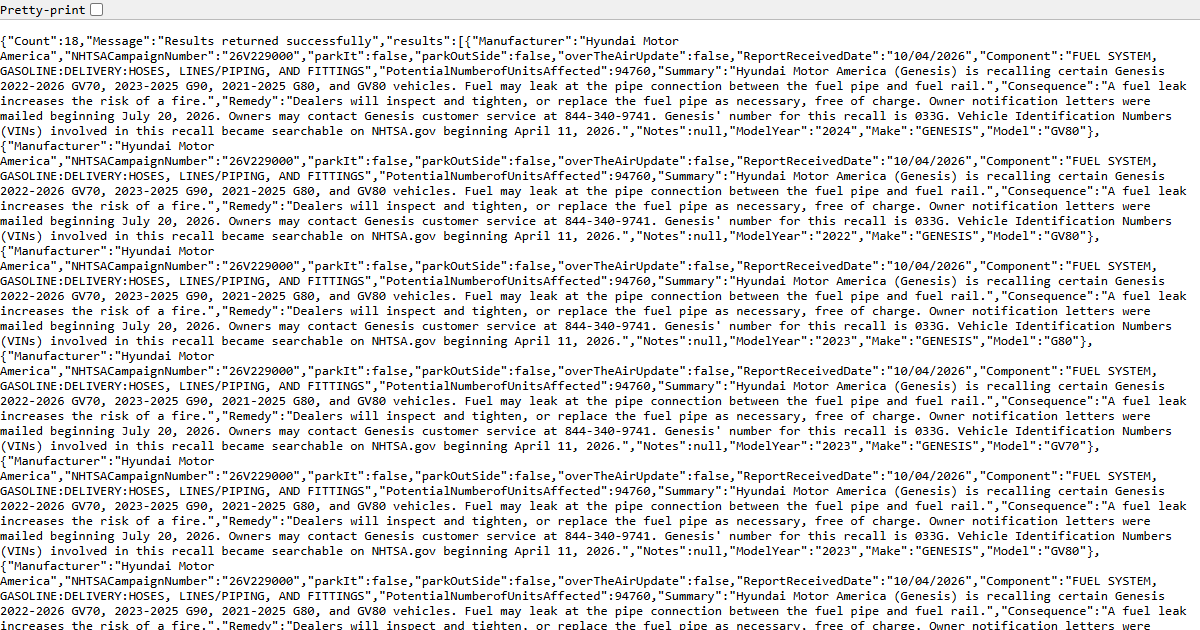
Table of Contents
Genesis Fuel Pipe Recall: The Short Version
NHTSA campaign 26V229000 is a Genesis recall tied to the fuel system. For Genesis fuel pipe recall readers, the key point is that the affected population is specific rather than every vehicle with the badge. The official recall record says the affected population includes certain 2022-2026 Genesis GV70, 2023-2025 Genesis G90, and 2021-2025 Genesis G80 and GV80 vehicles. The listed issue is not a styling defect or a convenience feature. It concerns a fuel pipe connection between the fuel pipe and fuel rail.
The source describes the risk in plain safety terms: a fuel leak can increase the risk of a fire. The official remedy is a dealer inspection. Dealers are expected to inspect and tighten the fuel pipe, or replace the fuel pipe as necessary, at no charge to owners. NHTSA also records Genesis recall number 033G for this campaign.
This article is an owner-focused explainer based on the NHTSA source, not a claim that every Genesis vehicle in those nameplates has the defect. Recall eligibility normally depends on the VIN, model year, production details, and the manufacturer campaign record. Owners should use the VIN lookup route before assuming their specific vehicle is included or excluded.
Which Genesis Fuel Pipe Recall Vehicles Are Listed In NHTSA 26V229000?
For the Genesis fuel pipe recall, the NHTSA record for campaign 26V229000 lists Hyundai Motor America as the manufacturer and identifies the affected vehicle set as certain Genesis models across several model years. The record names Genesis 2022-2026 GV70, 2023-2025 G90, and 2021-2025 G80 and GV80 vehicles. Because the recall data uses the word “certain,” owners should not rely only on model name or model year.
NHTSA reports the potential number of units affected as 94,760. That figure is a campaign-level count, not proof that every vehicle in the broader model range needs repair. The safest owner action is to check the VIN through NHTSA, Genesis, or a dealer. A dealer can also confirm whether the fuel pipe inspection, tightening, or replacement has already been completed.
If this recall sounds related to another Genesis dashboard, software, or instrument panel recall, treat it as a separate issue until a VIN check says otherwise. Navyago has also covered a separate Genesis recall for owner context at Genesis G80 Recall 26V493000, but campaign 26V229000 is specifically about the fuel pipe and fuel rail connection.
Why The Genesis Fuel Pipe Recall Is A Safety Issue
According to NHTSA, fuel may leak at the pipe connection between the fuel pipe and the fuel rail. A fuel rail sits in a part of the system where fuel delivery is central to engine operation, so a leak in that area is treated as a safety matter rather than a routine maintenance note. The recall consequence listed by NHTSA is that a fuel leak increases the risk of a fire.
The public record does not require owners to prove they smell fuel before checking the campaign. A Genesis fuel pipe recall check exists because the manufacturer and safety regulator have identified a condition that may be present in a population of vehicles. That is why VIN verification is more reliable than waiting for symptoms.
The NHTSA API fields for this campaign do not mark it as a “park outside” or “park it” recall. That matters because some recalls come with stronger interim parking guidance. For this one, the article should not invent a stop-drive instruction that the source does not state. Owners who notice fuel odor, visible fluid, warning lights, or abnormal operation should treat that as a safety concern and contact a dealer or roadside assistance rather than continue driving as normal.
What Dealers Do In The Genesis Fuel Pipe Recall
The remedy listed by NHTSA is a dealer inspection and repair process. For an included Genesis fuel pipe recall VIN, dealers will inspect and tighten the fuel pipe, or replace the fuel pipe as necessary. The source says the remedy is free of charge. That means owners should not have to pay for the recall remedy when the VIN is included and the recall remains open.
Owner notification letters were mailed beginning July 20, 2026, according to the NHTSA record. NHTSA also says the VINs involved in this recall became searchable on NHTSA.gov beginning April 11, 2026. If an owner did not receive a letter, that does not automatically mean the vehicle is clear. Mail delays, address changes, used-car ownership changes, and incomplete owner records can all affect notices.
Genesis customer service is listed in the source at 844-340-9741. The manufacturer recall number is 033G. When calling a dealer or Genesis support, owners can mention both NHTSA campaign 26V229000 and Genesis recall 033G to reduce confusion with other Genesis recall campaigns.
Seven Critical Owner Checks For The Genesis Fuel Pipe Recall
1. Check the VIN first. The Genesis fuel pipe recall title is useful, but the VIN decides whether a specific vehicle is included. Use NHTSA’s recall lookup, the Genesis owner portal, or a Genesis dealer service department.
2. Match the campaign number. Ask for NHTSA campaign 26V229000 and Genesis recall 033G. Similar model names can appear in multiple campaigns, so the number helps keep the discussion on the fuel pipe issue.
3. Identify the model and year carefully. The Genesis fuel pipe recall source lists certain GV70, G90, G80 and GV80 vehicles across different model-year windows. A 2025 G80 owner and a 2026 GV70 owner should both verify by VIN instead of relying on a headline.
4. Ask what the dealer will inspect. The remedy is not only a software update. The NHTSA source describes a physical inspection and tightening or replacement of the fuel pipe as necessary.
5. Confirm the repair is free. NHTSA says dealers will perform the remedy free of charge. If a repair order appears to include a charge for the recall remedy, ask the service advisor to clarify before approving work.
6. Watch for safety symptoms without overdiagnosing. Fuel odor, visible leaks, warning lights, smoke, or abnormal engine behavior should be taken seriously. This article cannot diagnose a vehicle remotely, but those signs justify immediate professional help.
7. Keep repair records. After the dealer inspection or repair, keep the invoice or service record. A closed recall record can matter for resale, insurance documentation, and future troubleshooting.
How Genesis Fuel Pipe Recall Owners Can Check The VIN And Repair Record
The most reliable check for the Genesis fuel pipe recall is a VIN lookup, not a model-name guess. NHTSA says the involved VINs became searchable on NHTSA.gov beginning April 11, 2026. That means an owner can use the public recall lookup, a Genesis owner account, or a Genesis dealer service desk to confirm whether the specific vehicle is included in campaign 26V229000.
Owners should keep the lookup narrow. Search with the full 17-character VIN, then compare the result to the campaign number and manufacturer recall number. If the lookup shows campaign 26V229000 open, the next step is to schedule the inspection and ask the dealer how the completed remedy will appear on the repair order. If the lookup does not show the campaign, save the result anyway, because it documents the check date.
Used vehicles need extra care because mailed owner letters can miss a current driver. The NHTSA source says letters were mailed beginning July 20, 2026, but mail depends on registration and ownership records. A buyer who recently purchased a G80, GV70, GV80 or G90 should not wait for a letter before checking. The campaign number and VIN result are more useful than a sales listing or a verbal statement that the vehicle has no recalls.
Repair records should stay with the vehicle file. After a dealer inspects, tightens, or replaces the fuel pipe, the owner can keep the service invoice, recall completion note, and any dealer communication. Those documents help later if a different dealer, insurer, buyer, or service advisor asks whether the Genesis fuel pipe recall remedy was completed.
Genesis Fuel Pipe Recall Dealer Appointment Questions
When calling for an appointment, owners can make the request specific: ask about NHTSA campaign 26V229000 and Genesis recall 033G. That phrasing helps the service department separate the fuel pipe campaign from other Genesis recall notices. It also gives the owner a clearer way to confirm that the appointment is tied to the correct remedy.
The NHTSA remedy says dealers will inspect and tighten the fuel pipe, or replace the fuel pipe as necessary. Before the visit, owners can ask whether the dealer expects a visual inspection, a tightening procedure, a replacement part, or a return visit if parts are not available that day. The public source does not provide every dealer workflow detail, so the dealer is the right place to confirm local scheduling and parts timing.
Owners can also ask how long the inspection may take, whether they should avoid arriving with a near-empty fuel tank, and whether loaner or waiting-room options are available. Those are practical appointment questions, not facts stated in the NHTSA campaign record. The safety fact from the source remains narrower: a fuel leak at the pipe connection can increase fire risk, and the listed remedy is free for included vehicles.
If the vehicle shows possible fuel odor, visible leaking, smoke, warning lights, or abnormal engine behavior, the appointment question changes. This article cannot diagnose a vehicle remotely, but those symptoms should be treated as immediate safety concerns. In that situation, owners should contact a dealer, roadside assistance, or another qualified professional rather than assuming the vehicle is safe to continue driving normally.
Genesis Fuel Pipe Recall Used-Car Buyer Checks For Campaign 26V229000
Used-car shoppers should treat the Genesis fuel pipe recall as a purchase-file item. Before signing paperwork, ask the seller for the VIN, run an official recall lookup, and save a copy of the result. If campaign 26V229000 appears open, ask who will arrange the free dealer remedy and when the repair will be completed.
A seller may honestly know little about an open recall, especially if the vehicle changed hands before the mailed notice arrived. That is why the buyer should use the campaign number rather than a broad question such as “does this car have any recalls?” The precise question is whether the VIN is included in NHTSA 26V229000 or Genesis recall 033G, and whether the service record shows the inspection, tightening, or fuel pipe replacement already completed.
The NHTSA potential affected-unit count is 94,760, but that figure does not tell a buyer whether one specific car is affected. It is a campaign-level number. The owner-action value of the number is that the campaign is large enough to deserve a real check, not that every Genesis vehicle in the listed model years needs the same repair.
Buyers should also avoid turning the recall into unsupported resale or compensation claims. The source does not state a market-value impact, injury count, crash count, or reimbursement program beyond the free remedy language. The source-supported buying step is simpler: verify the VIN, document the answer, and make recall completion part of the delivery checklist if the vehicle is included.
How To Read The Genesis Fuel Pipe Recall Source Language
NHTSA recall records are compact, so owners should read each field with care. The campaign number identifies the recall, the component field identifies the system involved, the summary describes the condition, the consequence explains the safety risk, and the remedy says what dealers are expected to do. In this record, those fields point to a fuel-system issue, a possible fuel leak at the pipe connection, increased fire risk, and a free dealer inspection, tightening, or replacement as necessary.
The word “certain” also matters. It appears often in recall records because manufacturers usually define affected vehicles by production data, part batches, build windows, or other internal records. The public article-level summary does not publish that full VIN list. That is why the safest reading is neither panic nor dismissal. A listed model-year range is a reason to check, while the VIN result is the evidence that decides the next step.
Owners should also separate the official consequence from possible symptoms. The source consequence says a fuel leak increases fire risk. It does not say every vehicle will leak, and it does not say every driver will see a warning before a problem appears. At the same time, fuel odor or visible leaking is not something to ignore. The source-based approach is to verify recall status early and treat possible fuel symptoms as urgent enough for professional advice.
The remedy field has similar limits. “Inspect and tighten, or replace the fuel pipe as necessary” means the dealer decides the correct recall action for the included vehicle. One owner might receive an inspection and tightening; another might need a replacement. The article should not promise a specific part replacement for every VIN because the source does not say that. It should tell owners to ask the dealer what was inspected, what was tightened or replaced, and how the completed campaign will be documented.
The record also includes contact details and timing signals. Genesis customer service is listed at 844-340-9741, owner letters were mailed beginning July 20, 2026, and VINs became searchable on NHTSA.gov beginning April 11, 2026. Those details help readers act without waiting for a second article. They can check the VIN, call with the campaign number, and keep the recall number 033G with their service paperwork.
Documents To Save After A Genesis Fuel Pipe Recall Check
Owners can make the Genesis fuel pipe recall easier to manage by saving a small set of documents. The first document is the VIN lookup result, even if it says no open recall was found on the day of the search. The second is any Genesis or dealer appointment confirmation tied to campaign 26V229000 or recall 033G. The third is the final service invoice or recall completion record after the dealer visit.
Those records matter because recall status can come up later in several ordinary situations. A future service advisor may ask whether a fuel-system recall was completed. A used-car buyer may request proof before purchase. An insurer or lender may ask for maintenance records after a claim, sale, or refinance. A simple folder with the VIN result and service paperwork prevents the owner from trying to reconstruct the timeline later.
For owners who manage more than one vehicle, use the campaign number in the file name or note. A label such as “Genesis 26V229000 fuel pipe recall VIN check” is clearer than a generic “Genesis service” note. It also avoids mixing this campaign with other Genesis recalls that may involve different components, dates, risks, and remedies.
Documentation should not replace dealer confirmation. It simply supports the owner-action chain: identify the VIN, confirm campaign status, schedule the free inspection or repair if included, and keep proof after completion. That is the practical endpoint of this source-based explainer.
What The Genesis Fuel Pipe Recall Source Does Not Say
The NHTSA record gives the affected model groups, campaign number, unit count, risk summary, remedy and contact path. It does not say that every owner has experienced a leak. It also does not publish a public list of individual VINs in the article-level source. That is why the Genesis fuel pipe recall owner action remains VIN lookup and dealer confirmation.
The source also does not state that the vehicle must be parked outside or stopped immediately in all cases. Readers should avoid turning the recall into stronger guidance than the source supports. At the same time, a possible fuel leak is a serious safety topic. The balanced reading is simple: verify the VIN, schedule the free remedy if included, and treat any possible fuel odor or leak symptom as urgent.
For readers comparing recall coverage across Navyago, the Cars category keeps related owner-action explainers in one place. The practical value of recall coverage is not panic; it is helping owners find the campaign number, risk, remedy and next step quickly.
Used-car buyers can apply the same logic before signing paperwork. Ask the seller or dealer for the VIN, confirm whether the Genesis fuel pipe recall campaign 26V229000 is open, and keep the answer with the purchase file. A clean sales description is not a substitute for a recall lookup.
FAQ
Is the Genesis fuel pipe recall a fire risk recall?
Yes, according to the NHTSA campaign record. NHTSA says fuel may leak at the pipe connection between the fuel pipe and fuel rail, and that a fuel leak increases the risk of a fire.
Which campaign number should Genesis owners check?
Owners should check NHTSA campaign 26V229000 and Genesis recall number 033G. Using both numbers helps avoid confusion with other Genesis recalls.
Is the repair free?
The NHTSA remedy says dealers will inspect and tighten, or replace the fuel pipe as necessary, free of charge for included vehicles.
Do all Genesis G80, GV70, GV80 and G90 vehicles need this repair?
No. The source says certain vehicles are affected. Owners should verify their specific VIN through NHTSA, Genesis or a dealer before assuming the recall applies.
When were owner letters mailed?
According to the NHTSA record, owner notification letters were mailed beginning July 20, 2026. VINs involved in the campaign became searchable on NHTSA.gov beginning April 11, 2026.
Sources
Sources: NHTSA recall campaign 26V229000, accessed August 3, 2026: https://api.nhtsa.gov/recalls/campaignNumber?campaignNumber=26V229000. This Genesis fuel pipe recall article uses source-attributed language and does not add a stop-drive, park-outside, pricing, or promotion claim that is not in the cited campaign record.