
Riverside bag reach police shooting video coverage needs source-first caution: PoliceActivity says San Bernardino County deputies tried to arrest Jaque Rabon on a no-bail warrant in Riverside County on January 22, 2026. The source says Rabon ran, repeatedly manipulated a torso bag, deputies fired, and investigators later determined he was unarmed.
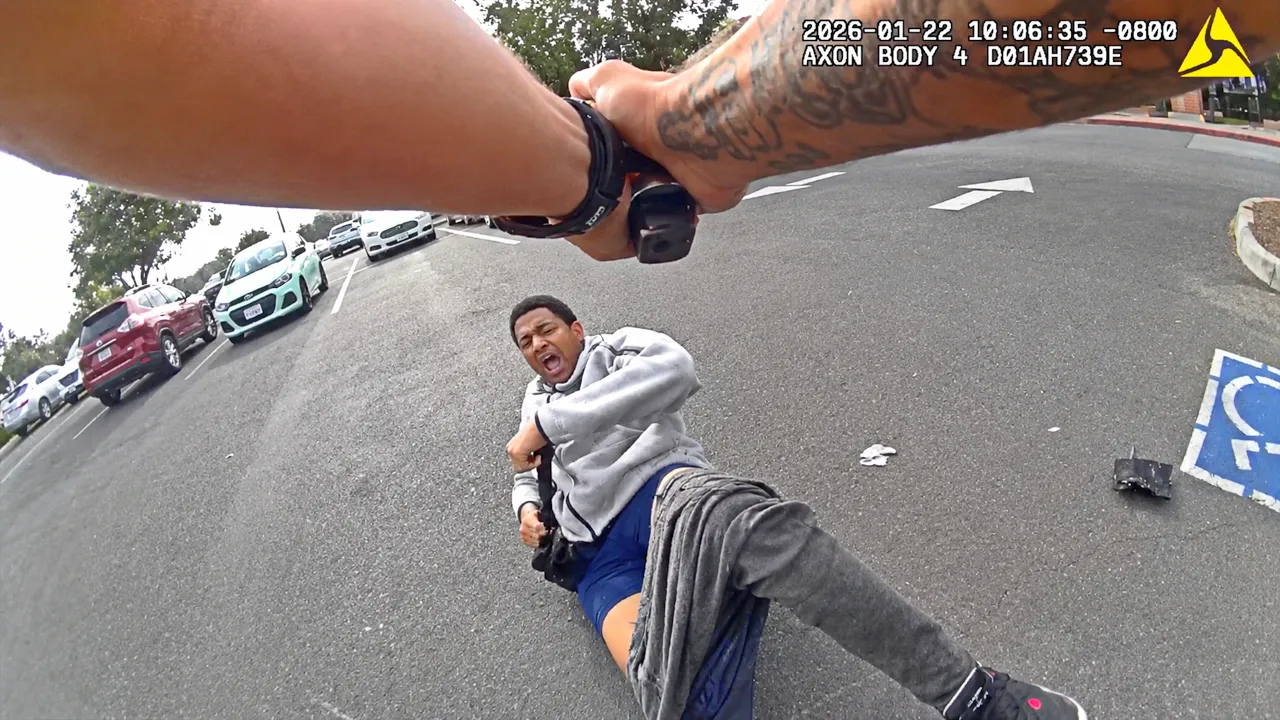
The useful way to read this story is not to treat a short video title as a final legal answer. The source material gives a sequence: a fugitive-apprehension operation, commands to show hands, a person running through a lot, repeated reaches toward a bag, gunfire from deputies, and a later state investigation because no deadly weapon was found. This article separates those source facts from the questions that remain unresolved.
For more source-based public-interest explainers, readers can browse Navyago’s Crime News coverage. This article is an explainer of public source material, not legal advice, not a court finding, and not an independent judgment on whether the use of force was legally justified.
Riverside bag reach police shooting video: what the source reports
The primary source is a PoliceActivity video titled “Deputies Open Fire After Suspect Repeatedly Reaches Into Bag.” PoliceActivity identifies the location as Riverside, California, and says the incident unfolded during a San Bernardino County Sheriff’s Department Specialized Enforcement Division operation. The video page says deputies were trying to arrest Jaque Rabon on a no-bail warrant.
According to the source description, Rabon had previously been identified as a suspect in an attempted murder, assault with a deadly weapon, and robbery case involving a handgun. PoliceActivity says he was arrested on August 8, 2025, released after posting bail on August 14, 2025, failed to appear at his next court hearing, and was later the subject of a no-bail warrant. Those statements are reported here as source-described case history, not as a final court summary by Navyago.
The January 22, 2026 encounter, according to PoliceActivity, began after two calls for service were placed with the San Bernardino County Sheriff’s Department. The reporting party allegedly said Rabon had threatened them and that they believed he was wanted and armed. The source says the elevated-risk assessment led the Specialized Enforcement Division to handle the arrest attempt.
The source then describes the core moment visible in the video: deputies converged on Rabon’s location in the 3700 block of Tyler Street, a deputy gave commands to show hands and put hands up, Rabon paused, ran through the lot, and repeatedly reached for or manipulated a bag worn around his torso. That is the narrow source basis for this Riverside bag reach police shooting video recap.
7 Riverside bag reach police shooting video source facts readers should separate from speculation
1. The operation was framed as a fugitive apprehension. PoliceActivity says the Specialized Enforcement Division conducted a Fugitive Apprehension Operation to arrest Rabon for the no-bail warrant. That matters because the source frames the encounter as an arrest attempt, not as a routine patrol stop.
2. Deputies were told the person might be armed. The source description says the reporting party believed Rabon was wanted and armed. It also says authorities believed he was armed and presented elevated risk. That is an important reported input, but readers should keep it separate from what investigators later determined at the scene.
3. Commands came before the foot chase. PoliceActivity says one deputy exited an unmarked vehicle and immediately told Rabon to show his hands and put his hands up. The auto-caption file also captures repeated commands in the opening seconds, though automatic captions are not a certified transcript.
4. The repeated bag movement is the central visible issue. The source says Rabon reached for and manipulated a bag slung around his torso while running. PoliceActivity also says a second deputy told him to stop reaching. Because the video is short and chaotic, the article does not turn that movement into a claim about intent.
5. Multiple deputies fired. PoliceActivity says after one deputy fired, Rabon fell to the pavement and continued to reach for and manipulate the bag. The source then says all three deputies discharged their service weapons. That sequence is serious and needs source attribution instead of casual retelling.
6. No deputies or bystanders were injured. According to the PoliceActivity description, no deputies or bystanders were injured. Rabon died at the scene. The article avoids graphic detail because the public-interest value is the source sequence and review status, not shock.
7. Investigators later determined Rabon was not armed. PoliceActivity says it was determined Rabon was not in possession of a weapon. The source also says the California Department of Justice is investigating under Assembly Bill 1506 because Rabon was not in possession of a deadly weapon. That fact is central to how readers should frame the unresolved review.
Why the no-bail warrant context matters
The warrant context matters because it explains why a specialized team was involved, but it does not answer every legal question about the shooting. PoliceActivity’s description includes earlier allegations, a prior arrest, release on bail, a missed court hearing, and a no-bail warrant. Those details give the source’s stated background for the operation.
At the same time, a source-based article should not use those earlier allegations to resolve the final question of force. A person can be wanted on a warrant, believed to be dangerous, or described by law enforcement as a high-risk arrest target, and there can still be separate questions about what officers saw, what commands were given, what alternatives existed, what the video shows, and what investigators later found.
This is why the Riverside bag reach police shooting video should be read as a sequence of reported facts rather than as a one-line conclusion. The earlier case history helps readers understand the decision to conduct a fugitive operation. The moment of the shooting still requires its own review, especially because the source says Rabon was later found not to have a weapon.
The source’s bail and warrant details also need careful wording. Navyago is not independently verifying each court step in this article. It is reporting what PoliceActivity says and placing it in a legal-safe explainer frame. Readers who need the final case file, charging record, or court chronology would need official court and agency records beyond the YouTube source.
What the bodycam captions can and cannot establish
The downloaded English auto-caption file supports the idea that the audio was chaotic and command-heavy. It captures commands such as “put your hands up,” “stop,” “stop resisting,” and later officer coordination around handcuffs and a medical bag. Because those captions are generated automatically, they are useful as source notes but should not be treated as an official transcript.
That distinction is important for any police video. A bodycam may capture a real moment, but it has limits. It may not show exactly what an officer perceived, and it may miss details outside the camera angle. Audio can be distorted by movement, yelling, sirens, gunfire, or overlapping commands. In this source package, the captions appear to misread some phrases, which is another reason to avoid quoting them as certified wording.
The strongest caption-supported point is not a precise quote. It is that the incident unfolded quickly and involved repeated commands, a chase, commands about hands, and post-shooting coordination. That helps readers understand why the video is not a slow, single-angle record. It is a compressed source package from several bodycam views.
For the public, the practical takeaway is simple: use the video and captions to understand the sequence, not to supply final legal findings. The important facts remain the source-reported arrest attempt, the repeated reaches toward the bag, the deputies’ gunfire, the death at the scene, the lack of deputy or bystander injuries, and the later determination that Rabon was unarmed.
What remains under official review after the Riverside bag reach police shooting video
PoliceActivity says the California Department of Justice is investigating under Assembly Bill 1506 because Rabon was not in possession of a deadly weapon. That state-investigation note is not a minor footnote. It is the reason readers should avoid treating the video title as the final answer.
Assembly Bill 1506 cases involve state review of qualifying officer-involved shootings in California. The PoliceActivity description does not provide the final investigative file, final legal conclusion, deputy interviews, full dispatch audio, tactical policy review, scene diagrams, or all physical evidence. It gives a public source package and a summary of what the source says happened.
The unresolved questions are the ones a formal review is built to address: what information deputies had before contact, how the team planned the arrest, what each deputy could see, how the bag movement appeared from each angle, whether warnings and tactics met policy, how quickly the event unfolded, and how the finding that no weapon was present affects the legal analysis.
Those questions do not mean the article should guess at wrongdoing. They mean the article should keep the review status visible. A careful reader can understand why deputies may have perceived risk from the reported background and bag movement while also recognizing that the final investigative and legal conclusions are outside the video itself.
How to read the Riverside bag reach police shooting video carefully
The best reading method is to keep every claim tied to its source. If the article says deputies attempted to arrest Rabon on a no-bail warrant, that comes from the PoliceActivity description. If it says he repeatedly reached toward a bag, that comes from the source description and the visible theme of the video. If it says he was not in possession of a weapon, that also comes from the source description.
The article should not add unsupported motive, certainty, or blame. It should not say the video establishes what Rabon intended when he moved his hands. It should not say the video alone establishes whether the shooting was lawful or unlawful. It should not treat earlier allegations as a final verdict. It should not use the unarmed finding as a shortcut for conclusions that belong to the formal review.
Readers can still ask useful public-interest questions. Why was a specialized team used? What commands were given before and during the chase? How did the bag movement look from each deputy’s angle? What did deputies know from the warrant and calls for service? What will the California DOJ investigation examine? Those questions are fair, source-based, and more useful than a viral-video reaction.
The bottom line is that the Riverside bag reach police shooting video is a public source record of a fast, fatal law-enforcement encounter. It shows and describes enough to understand why the event drew review, but not enough for readers to replace the official investigative process with a quick online conclusion.
Source Video
FAQ
What is the Riverside bag reach police shooting video about?
The Riverside bag reach police shooting video is a PoliceActivity source package about a January 22, 2026 fugitive-apprehension operation in Riverside County. The source says deputies tried to arrest Jaque Rabon on a no-bail warrant, he ran, repeatedly manipulated a torso bag, deputies fired, and he died at the scene.
Does the video establish whether the shooting was legally justified?
No. The video and description explain the public source sequence, but they do not replace the full investigation, deputy statements, policy review, physical evidence, or final legal analysis.
Why does the article emphasize that Rabon was not armed?
PoliceActivity says investigators determined Rabon was not in possession of a weapon and that the California Department of Justice is investigating under Assembly Bill 1506. That fact is central to the review status and should not be omitted.
Why does Navyago use cautious wording in this recap?
Navyago uses cautious wording because the article is based on a public YouTube source and auto-caption notes, not the complete official case file. Sensitive claims are attributed to the source so readers can separate reported facts from final conclusions.
Riverside bag reach police shooting video bottom line
The main takeaway is that the Riverside bag reach police shooting video should be read as a source-based account of a fast arrest attempt, not as a complete legal record. PoliceActivity reports a no-bail warrant, an elevated-risk fugitive operation, commands, a foot chase, repeated movement toward a torso bag, gunfire by three deputies, Rabon’s death, no deputy or bystander injuries, and a later finding that he was not armed. The careful reader should keep those facts separate from the final investigation.