
Lacey police shooting video coverage should start with the source record, not with a verdict. The PoliceActivity video describes a March 16, 2026 call in Lanoka Harbor, New Jersey, where officers responded after a woman reported a suspected heart attack, EMS came to the scene, and the incident later became a fatal police shooting.
This recap keeps the claims narrower than the video title. It does not state a final legal finding about the officers, Susanne Clarke, the medical call, or the use of force. It also does not use transcript dialogue. The facts below come from the PoliceActivity source video and description, with the same video ID used for the thumbnail, embed, and source note.
Table of Contents
Lacey Police Shooting Video: What The Source Says
The primary source is the PoliceActivity YouTube video with video ID TnApFor-XRM. The source title is “Woman Calls 911 for Heart Attack Then Approaches Cops With a Knife.” Navyago uses that title as a starting point, but the article headline is intentionally narrower: Lacey police shooting video. That phrase tells readers the location and format without turning the source into a full case conclusion.
According to the PoliceActivity description, the incident happened in the Lanoka Harbor section of Lacey Township, New Jersey, shortly after 2 a.m. on March 16, 2026. The source says four Lacey Township Police officers were dispatched to a residence on Hemlock Drive near Birch Road. The call was not described as a routine patrol stop. The source says it began with a 911 call from 55-year-old Susanne Clarke, who reported that she was suffering from a suspected heart attack.
That starting point matters because readers may encounter the clip through the later police-shooting moment and miss the medical-call context. Source-based coverage should keep both layers visible. The officers were responding to a reported medical emergency, EMS personnel also arrived, and the situation later escalated into a confrontation described by the source as involving a knife. Those details belong in the same story, but they should not be compressed into a single judgment about what anyone intended.
For a related Navyago example of cautious police-video coverage, readers can compare this recap with the Officer Fires At Fleeing Woman Video article. The editorial rule is the same: identify the source, separate what is reported from what remains unresolved, and avoid making the article sound more certain than the record allows.
Why The 911 Medical Call Matters
The source description says Clarke was inside the residence when officers arrived and communicated from a window. Officers asked her to come to the front door so they could speak with her. The description says she told officers to leave her alone and did not come to the door. That detail should be read carefully. It explains why officers remained at the scene, but it does not by itself answer every question about her condition, fear, or decision-making.
According to the source, the officers continued telling Clarke that they needed to speak with her to ensure her well-being. EMS personnel were also on scene. That makes the Lacey police shooting video different from clips that begin with a crime report or a traffic stop. The public-safety question included welfare, possible medical distress, and whether responders could safely make contact with the person who called for help.
Medical-call incidents are difficult to cover because the public often wants a simple sequence: someone called 911, responders arrived, and the emergency was handled. The source description does not show that kind of simple path. It describes a person inside a home, officers outside trying to make contact, EMS present, and a later report that changed how officers approached the residence. A reader can understand the seriousness without pretending that the clip gives every answer.
This is also why the article avoids private medical speculation. The source says “suspected heart attack” because that is how the 911 call was described. It does not establish a medical diagnosis for public readers. It does not authorize guesses about medications, mental health, family background, or personal history. The public value of the story is in the source-backed sequence and the accountability questions that follow, not in filling personal gaps.
The Window, Door, And Entry Details
PoliceActivity’s description says officers intermittently heard Clarke shouting for them to leave and observed her moving inside the residence and lying on the floor. After officers had been on scene for about 30 minutes, the source says Officer Dallas Gant looked through a rear glass sliding door and stated that he saw a dog with a knife wound. That is a reported officer observation in the source description, not a separate finding by Navyago.
The entry details are important because they explain the shift from outside contact to attempted access. The source says officers attempted to enter the home, including by kicking the front door. When that did not work, Officer Gant began entering through a side window. The description says he immediately withdrew from the window after seeing Clarke enter the room holding a knife.
Readers should not treat those door and window details as minor. In a residential emergency, the point of entry can affect visibility, distance, timing, communication, and whether officers and EMS can reach a person inside. At the same time, a source-based recap cannot recreate every angle from a short public video and a description. It can explain what the source reports and why those facts matter, while leaving unanswered questions with the official review process.
The Lacey police shooting video also shows why public police clips should be read in order. If a viewer starts at the final seconds, the medical 911 call and the long attempt to contact Clarke may disappear from the story. If a viewer only focuses on the initial call, the later reported knife and entry attempt may be missed. The source record needs both pieces to make sense.
The Reported Knife Moment And Police Commands
The source description says Clarke later exited through the rear glass sliding door with a knife in her hand and advanced toward multiple officers. It says Officer Gant and another officer ordered her to drop the knife. It then says Officer Gant fired his service weapon multiple times, medical aid was rendered, Clarke was pronounced deceased at the scene at 3:24 a.m., and a knife was recovered.
Those are serious details, and they should be written with attribution. The article does not describe the shooting as legally justified or unjustified. It does not state what Clarke intended when she left the residence. It does not decide whether every command, distance, or tactical choice was proper. Those are review questions that depend on records beyond a short article.
For readers, the practical point is that a knife-related police encounter can move quickly, especially when responders are near a doorway, window, patio area, or confined residential space. That does not erase the medical-call origin of the incident. It also does not erase the need for public review after a death. Both realities can be true in the same source-based recap.
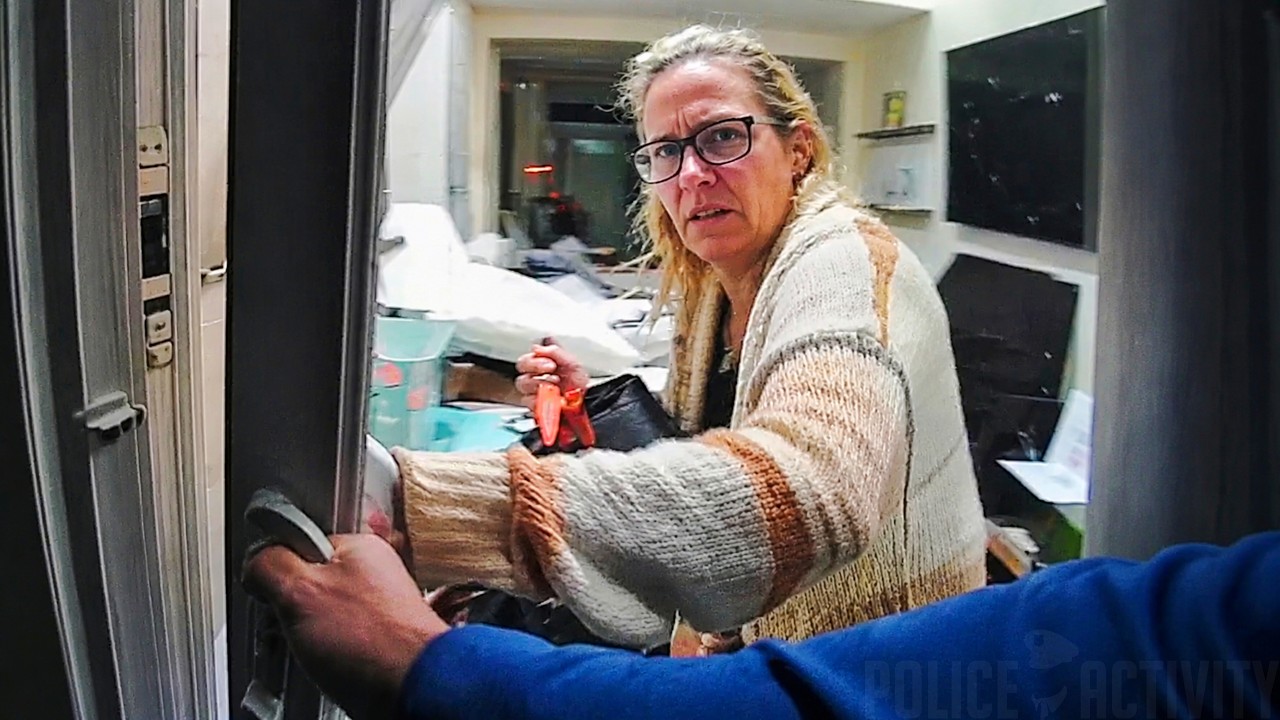
The embedded source video below lets readers compare this article with the original PoliceActivity publication. Navyago uses exactly one YouTube iframe so the source remains visible without turning the post into a duplicate video page. The body image is the raw YouTube thumbnail from the same video ID, with alt text matching the focus keyword.
What Readers Should Not Conclude From The Clip
A short police video can make an incident feel complete because it gives viewers motion, audio, and a timeline. That feeling can be misleading. The Lacey police shooting video source gives important facts, but it does not replace the full investigative file. It does not show every communication before officers arrived, every EMS concern, every camera angle, or every later interview.
Readers should therefore avoid several conclusions. Do not state that the call was fake unless a reliable source says so. Do not state that Clarke had a specific medical condition beyond the reported suspected heart attack. Do not state that officers had only one possible option. Do not state the opposite either. The responsible position is narrower: the source describes a medical 911 call, attempted contact, a reported knife, police commands, a shooting, medical aid, and a death.
Another caution is the dog-wound detail. The source says an officer stated he observed a dog with a knife wound. This article does not turn that observation into a separate accusation or a broader claim about why the incident happened. It is included only because the source uses it to explain why officers attempted entry after remaining outside for roughly 30 minutes.
Finally, readers should check the date. The incident date in the source description is March 16, 2026, while the PoliceActivity video upload date observed for this run is July 15, 2026. A video uploaded months after an incident can still be useful, but it should not be mistaken for a live breaking-news feed. If later official records add details, the public understanding can change.
7 Source Facts To Check Before Sharing
Because this story involves a medical call, a residential response, a knife report, and a death, it deserves slower sharing than a normal viral clip. The seven facts below are based on the PoliceActivity source description and should be treated as source facts, not as final legal conclusions.
- Use the correct video ID. The source video for this recap is TnApFor-XRM. A repost with a different clip should be checked separately.
- Keep the location specific. The source places the incident in Lanoka Harbor, in Lacey Township, New Jersey.
- Start with the 911 call. The source says Clarke called 911 reporting a suspected heart attack.
- Remember EMS was present. The source says EMS personnel also arrived, which matters for the welfare-check and medical-response context.
- Attribute the dog-wound detail. The source says an officer stated he observed a dog with a knife wound; readers should keep that attribution attached.
- Separate the knife report from final findings. The source says Clarke exited with a knife and officers gave commands, but the article does not state a final legal outcome.
- Look for later records. Police, prosecutors, and public agencies can release more information after a video appears online.
Those cautions do not make the event less serious. They make the reading more accurate. A source-based article should help readers understand what is known, what is reported, and what still depends on records outside the video description.
Source Video
FAQ
What is the Lacey police shooting video about?
The Lacey police shooting video is a PoliceActivity source video about a March 16, 2026 incident in Lanoka Harbor, New Jersey. The source says officers responded after a 911 medical call and the situation later involved a reported knife.
Does the article state a final legal finding?
No. The article describes what the PoliceActivity source reports and does not decide final legality, fault, medical diagnosis, or why any person acted.
Why does the 911 call matter?
The source says the incident began when Clarke reported a suspected heart attack. That medical-call context is necessary for understanding why officers and EMS were at the residence.
Why is only one image used?
Navyago source-video format uses the same-video YouTube thumbnail as source media. This article uses the raw thumbnail from video ID TnApFor-XRM and does not add generated or stock images.
Why is there only one YouTube iframe?
Navyago uses one standard WordPress YouTube embed for source-video articles. That keeps the original source visible without duplicate embeds or images inside the video wrapper.
Sources
Sources: PoliceActivity, “Woman Calls 911 for Heart Attack Then Approaches Cops With a Knife,” YouTube source video TnApFor-XRM, uploaded July 15, 2026 and accessed August 4, 2026, at https://www.youtube.com/watch?v=TnApFor-XRM. The article does not quote transcript dialogue and keeps factual claims tied to the accessible source description.