
Wilmington foot chase shooting video coverage centers on body-worn footage released after the June 24, 2026 shooting of 19-year-old Kadir Skinner in Wilmington, Delaware. The source video and official releases show a brief foot pursuit, commands at the scene, emergency response, and an investigation that officials said was still active after the footage became public.
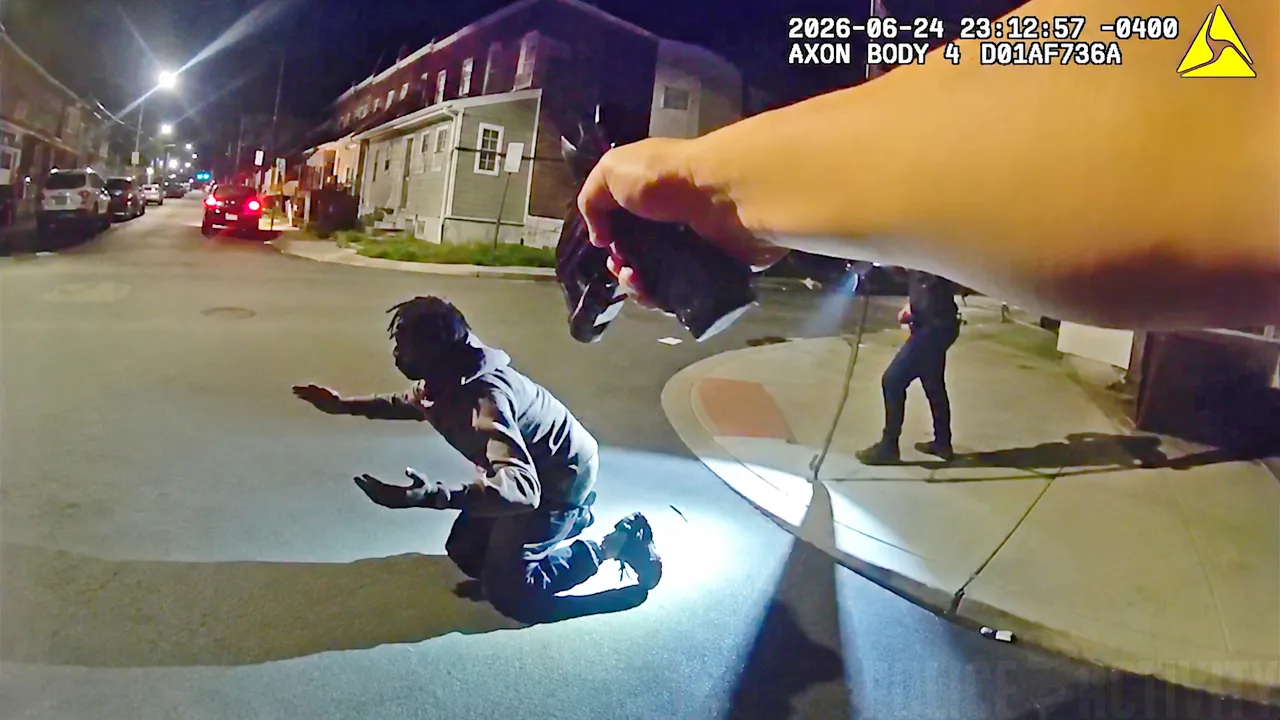
What The Wilmington Foot Chase Shooting Video Shows First
The PoliceActivity source video is built around body-worn camera footage and a source description of an encounter involving Wilmington Police officers and Kadir Skinner. According to the source description, officers were patrolling shortly after 11 p.m. on June 24, 2026, when they encountered a large gathering and believed they saw Skinner with a handgun. The description says officers moved toward him, he ran, and an officer pursued him on foot.
The first portion of the embedded source video is intense and should be read with caution. The footage includes officers shouting commands, the sound of shots being reported over police radio, and later commands to secure a gun. The auto-caption transcript also records Skinner saying he did not have anything and saying he could not breathe. Those statements are part of the source record, but they do not by themselves settle every legal or investigative question around the encounter.
The official Delaware Department of Justice release says the body-worn camera videos begin shortly before each officer arrives and continue until after they return to their vehicles. It also explains that body-worn cameras can record silent video during a buffering period before activation, which matters because viewers may see motion before hearing audio. That technical point is important for any reader trying to understand why the beginning of a bodycam clip may not include sound.
Why The Wilmington Foot Chase Shooting Video Release Matters
The public significance of the Wilmington foot chase shooting video is not limited to the moment of the chase. The official release says the Delaware Department of Justice, the City of Wilmington, and the Wilmington Police Department jointly released three officers’ body-worn camera videos as a matter of public interest. The same release says the officer-involved shooting remained under review by the Division of Civil Rights and Public Trust.
That matters because a source-video article should not outrun an active review. A video can show what cameras captured from a particular angle, but it may not show what every person saw, heard, or believed at the same second. The DOJ release specifically says officials could not characterize the events, people, or objects captured during the active investigation. For readers, that means the careful reading of the Wilmington foot chase shooting video is to separate what is visible, what officials have reported, and what remains unsettled.
For related context on how Navyago handles source-video police explainers, see our earlier coverage of the Glendale hostage police shooting video. The same reader-first rule applies here: start with the source, identify who said what, and avoid treating a short clip as a final legal ruling.
Wilmington Foot Chase Shooting Video: Seven Source Facts Readers Should Separate
1. The source video ID is O1ZTnroeCLg. The embedded video and thumbnail used for this Wilmington foot chase shooting video article come from the same PoliceActivity source package. That exact-source match matters because Navyago should not mix one incident’s thumbnail, another incident’s title, and a third incident’s article text.
2. The video was published by PoliceActivity on July 16, 2026. The source metadata lists PoliceActivity as the uploader and gives a video duration of 17 minutes and 29 seconds. The article is therefore a source-based explainer about that public upload, not an independent investigation by Navyago.
3. The incident date in the source record is June 24, 2026. PoliceActivity’s description and the official Delaware release both identify June 24, 2026 as the date of the officer-involved shooting. The official release identifies the location as near 24th and Carter Streets in Wilmington. PoliceActivity’s description refers to officers patrolling near 24th and Jessup streets, so readers should treat the official government release as the location reference for the public bodycam release.
4. The footage comes from three officers’ cameras. The DOJ release says three body-worn camera videos were released. PoliceActivity’s chapter markers also break the source video into bodycam segments for three officers, followed by a short supporter segment. The video structure helps viewers compare timing, movement, and audio from more than one perspective.
5. The official release describes the footage as redacted. According to the Delaware DOJ release, faces and names of witnesses and officers were redacted because of legal and ethical obligations during an active investigation. That explains why the public video may not show identities even when it shows the event sequence.
6. City officials reported continuing investigations. Wilmington statements from June 29 and July 1 said city and state investigations were continuing. The July 1 city statement said a Delaware Division of Forensic Sciences review found one gunshot wound and that officers recovered a loaded .45-caliber handgun with an extended magazine. This article attributes those points to officials and does not independently verify the forensic or physical-evidence conclusions.
7. The video does not end the review. The official DOJ release says a detailed public report and legal analysis are expected after the investigation concludes. Until that happens, the source record remains a developing public-interest matter, not a closed finding.
What Officials Have Reported About The Wilmington Foot Chase Shooting Video
The June 29 City of Wilmington statement from Mayor John Carney said city and state investigations were continuing after the fatal officer-involved shooting involving Kadir Skinner. It also said the officer involved had been placed on administrative leave and that the incident was being investigated by the Delaware Department of Justice. That statement is important because it sets the official process before the bodycam footage was released.
The July 1 joint statement from Mayor Carney and Chief Wilfredo Campos gave more detail while still saying the matter was active. According to that city statement, forensic review determined Skinner sustained a single gunshot wound to the upper left buttocks area. The statement also said an officer transported him to the hospital after officers discovered he had been injured. Readers should note the wording: the city reported those points; this article is not making a medical or legal finding beyond that report.
The same July 1 statement said officers recovered a firearm and ballistic evidence, and that materials were given to forensic technicians for analysis and preservation. The statement described the firearm as a loaded .45-caliber handgun with an extended magazine. Because evidence handling and forensic review are part of the investigation, the safer reading is to treat those details as official reported evidence, not as a final public ruling about every moment captured on video.
The July 16 Delaware DOJ release then provided the public body-worn camera footage. It said the video was disclosed as a matter of public interest after investigators completed substantial early steps, including witness interviews, community canvasses, and family meetings. It also said DOJ would not characterize the events or objects in the video during the active investigation. That is why this Wilmington foot chase shooting video recap keeps official statements and visual observations in separate lanes.
What The Wilmington Foot Chase Shooting Video Does Not Settle
The Wilmington foot chase shooting video gives readers access to a public source, but it does not answer every question. Bodycams are mounted on officers’ torsos, can be blocked by movement, and may not show what happened outside the frame. Audio may begin after silent buffer footage. Multiple cameras can also show different moments because each officer is moving through the scene from a different position.
That is why responsible wording matters. It is accurate to say footage shows an officer running during a foot pursuit, commands being shouted, Skinner on the ground after shots are fired, bystanders gathering, and officers calling for medical help. It is also accurate to say officials reported a recovered firearm and an ongoing DOJ review. It would go too far to state a final legal conclusion about the officer’s decision, Skinner’s actions, or the full evidence record before the public report is complete.
The PoliceActivity description says attorneys for Skinner’s family argued that the videos conflict with the official account that he posed an immediate threat before the shooting. Because that is a legal position described by the source, Navyago treats it as an attributed claim, not as a settled finding. The official DOJ release says the agency will publish evidence and legal analysis after the investigation ends, which is the point where readers should expect a more complete record than the Wilmington foot chase shooting video alone can provide.
A Careful Viewing Timeline For The Source Video
A careful viewing of the Wilmington foot chase shooting video should start with the structure of the source upload. PoliceActivity presents the incident through body-worn camera segments, not through one continuous camera angle. That matters because one camera may show an officer running, another may show the aftermath from a different position, and a later segment may include radio traffic or commands that were not audible in the same way on an earlier camera.
In the early bodycam portion, the transcript captures urgent commands connected to a gun, repeated directions to drop it, and radio language about shots fired. Those words are part of the public source, but a transcript is not a courtroom reconstruction. It can help readers follow the sequence, yet it should still be checked against the video, the official releases, and the final legal report when that report becomes available.
The middle part of the source record shows the scene shifting from pursuit and commands toward securing the area. The transcript includes repeated language about securing or finding a gun, bystanders being moved back, and officers calling for medical help. Those details explain why the article treats the video as both a public safety record and a legal-sensitive source. It is not enough to ask what the camera shows; readers also need to ask who is speaking, what is being attributed, and what the official agency has not yet concluded.
The later portions of the video give readers more time to compare officer movement, crowd control, and emergency response. That comparison is useful because source-video cases often turn on timing and perspective. Still, the same caution applies: a camera angle can clarify some moments while leaving other moments outside the frame. The safest summary is that the public source shows a rapid foot pursuit, commands, a reported shooting, medical response, and an official review that was not finished at the time of release.
Why Legal-Safe Wording Matters In This Case
Use-of-force stories involve public accountability, a deceased person, officers whose names may be redacted, family members, witnesses, and an official process. Overstating a source can harm readers because it turns a documented public record into a conclusion the record has not yet supported. It can also harm the people involved because online articles travel faster than official corrections.
For that reason, this article uses phrases such as “according to the source description,” “officials reported,” “the DOJ release says,” and “footage shows.” Those phrases are not filler. They tell readers which layer of information they are reading. In source-based coverage, a bodycam frame, a police statement, a family attorney’s position, and a final public report are different kinds of evidence.
The practical takeaway is simple: watch the source video if you need the visual sequence, read the official releases for the agency’s process and evidence status, and wait for the final public report before treating disputed questions as resolved. That is the cleanest way to follow the Wilmington foot chase shooting video as a high-attention public safety story without adding claims the sources do not support.
How The Source Layers Fit Together
This article relies on four source layers. The first layer is the PoliceActivity upload, which gives readers a public video record and a source description. The second layer is the Delaware DOJ release, which explains why the body-worn camera footage was released and why the agency would not characterize every event during an active investigation. The third layer is the City of Wilmington statements, which describe the continuing review and reported evidence. The fourth layer is the transcript, which helps identify phrases heard in the video but does not replace human review of the footage.
Those layers do not all do the same job. A video source helps readers see movement, camera position, commands, and scene response. A DOJ release explains agency process, redaction, and investigative status. A city statement communicates official updates from local leaders and police leadership. A transcript helps with navigation, but captions can include errors, repeated fragments, or missing context. Combining those layers is useful only when each one stays in its proper role.
That separation also protects the reader from two common mistakes. The first mistake is treating a police statement as if it automatically answers every disputed point. The second mistake is treating a viral bodycam clip as if it automatically overrules every official record. A source-based explainer should do neither. It should show the reader where the public record is clear, where claims are attributed, and where the next official report is still needed.
For Navyago, the most important editorial standard is traceability. A reader should be able to follow the title to the source video, the video ID to the embed, the thumbnail to the same YouTube source, and each sensitive fact back to a named release or attributed source description. That is why this article keeps the embed, official links, source note, FAQ, and internal context visible instead of asking readers to trust a summary without a trail.
How Readers Can Check The Wilmington Foot Chase Shooting Video Source
The standard source video is embedded below. It should be viewed as a primary visual record from the PoliceActivity upload, with the official Delaware and Wilmington releases used as supporting context. If you review the Wilmington foot chase shooting video, pay attention to the timestamped chapters, the delayed audio at the beginning of bodycam footage, the separate camera angles, and the difference between commands heard on video and facts still left to investigators.
Source Video
FAQ
What is the Wilmington foot chase shooting video about?
It is a source-video explainer about body-worn camera footage released after the June 24, 2026 officer-involved shooting of 19-year-old Kadir Skinner in Wilmington, Delaware. The article summarizes what the video and official releases say, while keeping open questions separate.
Does the Wilmington foot chase shooting video prove every disputed fact?
No. The video is an important public source, but the Delaware DOJ release says the investigation remained active and that officials would publish a full report and legal analysis later. Bodycam footage can show a camera angle without settling every question outside the frame.
Why does this article use careful wording such as “officials reported”?
The case involves a death, an officer-involved shooting, recovered evidence, family concerns, and continuing official review. Careful wording helps readers distinguish footage, official statements, attributed claims, and unresolved investigative questions.